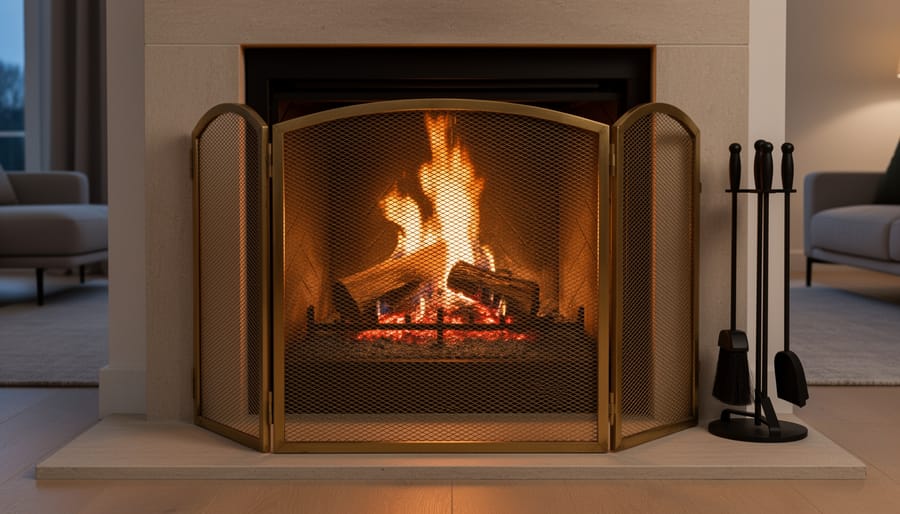


A crackling fire brings unmatched warmth and ambiance to your home, but every year, thousands of house fires start from a single wayward ember that escaped the hearth. That popping sound you love? It’s actually small pieces of burning wood launching from your fire at speeds up to 30 feet per second, capable of igniting carpets, furniture, and clothing within seconds.
Fireplace spark guards stand as your essential first line of defense against these dangers. These protective barriers contain flying embers while still allowing you to enjoy the full beauty and heat of your fire. Whether you’re burning seasoned hardwood in a traditional masonry fireplace or enjoying a modern gas setup, the right spark guard protects your family, pets, and belongings without compromising your home’s aesthetic.
The challenge lies in choosing from dozens of available styles, each designed for different fireplace types and safety needs. Single-panel flat screens work beautifully for decorative gas fireplaces with minimal spark risk, while three-panel folding guards offer maximum coverage for wood-burning fireplaces that produce vigorous flames. Mesh curtain screens provide convenient access for tending your fire, and glass doors deliver the ultimate protection while maintaining radiant heat efficiency.
Understanding spark guard options, safety certifications, proper sizing, and installation requirements ensures you select protection that works seamlessly with your lifestyle. This guide walks you through everything you need to make an informed decision that keeps your home safe while preserving the timeless appeal of your fireplace.
What Exactly Is a Fireplace Spark Guard?
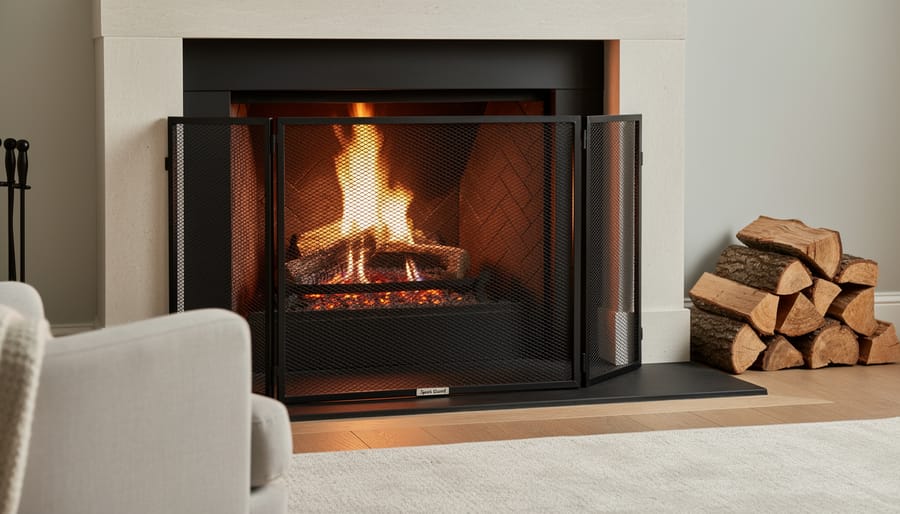
Spark Guards vs. Fireplace Screens: Understanding the Difference
While many people use the terms interchangeably, spark guards and fireplace screens actually serve different primary purposes. Understanding this distinction helps you choose the right protection for your home.
Fireplace screens are primarily decorative barriers that add visual appeal to your hearth while providing basic protection. They typically feature ornate designs, attractive finishes, and open mesh patterns that prioritize aesthetics over maximum safety.
Spark guards, on the other hand, are purpose-built safety devices designed specifically to contain flying embers and prevent them from landing on your floor or nearby furnishings. They feature tighter mesh weaving and more robust construction focused on protective function.
Here’s the good news: many modern products beautifully blend both worlds. Quality manufacturers now offer spark guards with elegant designs that complement your home’s decor while delivering serious safety protection. When shopping, look for products clearly labeled with their safety certifications and mesh specifications rather than relying solely on appearance.
The key is identifying your primary need. If you’re actively burning wood and concerned about ember protection, prioritize functional spark guards. For gas fireplaces or purely decorative purposes, traditional screens might suffice.
The Real Dangers of Skipping a Spark Guard
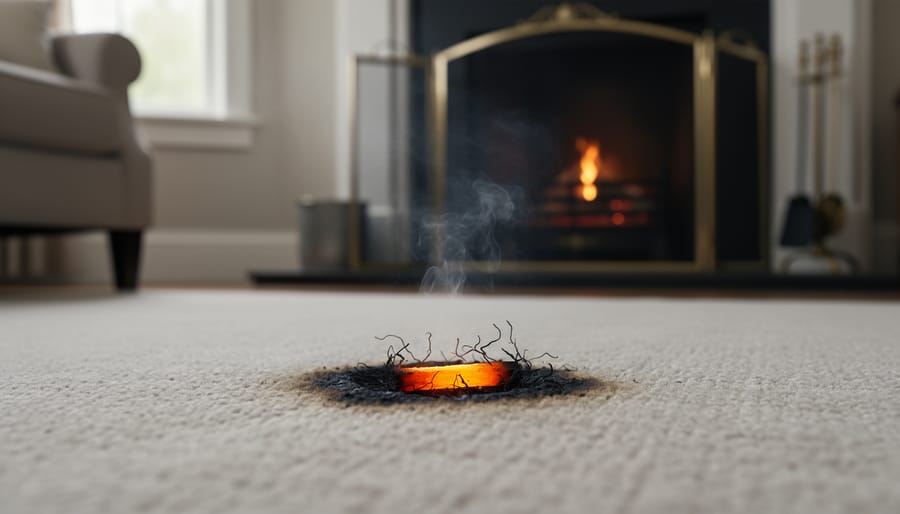
What Happens When a Single Spark Lands on Your Rug
You might think a single ember floating onto your carpet is no big deal—just a tiny glowing speck that’ll burn out in seconds, right? Unfortunately, that’s not how physics works. A spark from your fireplace can reach temperatures exceeding 1,000 degrees Fahrenheit, and it takes just 30 seconds for that seemingly harmless ember to ignite synthetic carpet fibers. Within two minutes, you could have a full-blown fire spreading across your floor.
The danger varies dramatically depending on your flooring material. Wool rugs might smolder slowly, giving you a bit more reaction time, while polyester and nylon carpets can ignite almost instantly. Hardwood floors offer better resistance but aren’t completely safe—sparks can land in cracks, on nearby furniture, or catch dust and debris that’s accumulated in corners.
Here’s what surprises most homeowners: sparks don’t just pop out a few inches. They can travel anywhere from three to ten feet from your fireplace opening, carried by heat currents and drafts in your room. That cozy reading chair you’ve positioned “safely” away from the hearth? It might actually be right in the danger zone. This is precisely why a quality spark guard isn’t just recommended—it’s essential for anyone who values both their home’s ambiance and their family’s safety.
Types of Spark Guards for Different Fireplaces
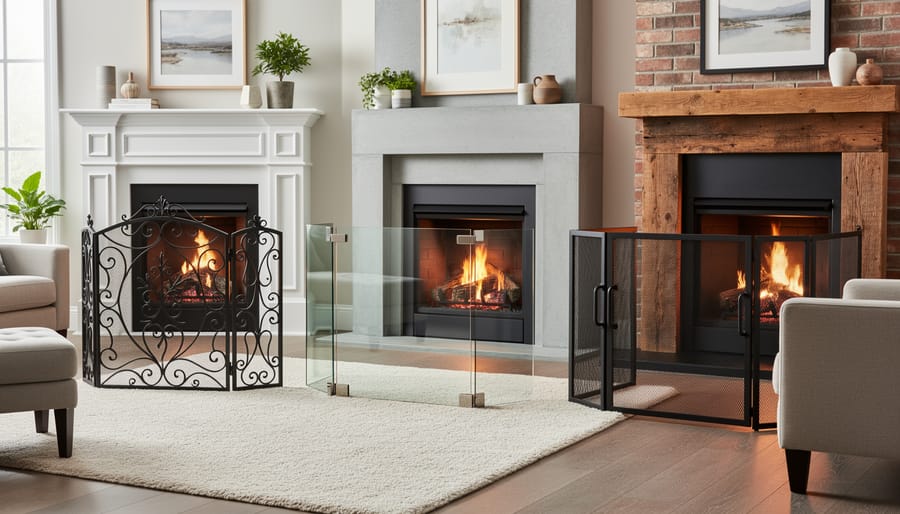
Mesh Screens and Curtain Guards
Mesh screens offer an elegant solution for homeowners who want unobstructed views of their dancing flames while maintaining essential spark protection. These fine-weave metal screens act as a transparent barrier, blocking embers and sparks from escaping while allowing you to enjoy every flicker and glow of your fire.
Single-panel mesh curtains work beautifully for smaller fireplace openings and offer easy access when you need to tend the fire. Simply pull the curtain aside, add your logs, and draw it closed again. For larger hearths, bi-fold or three-panel screens with mesh panels provide both flexibility and comprehensive coverage. These curtain-style guards typically hang from a mounted rod, making them simple to slide open or closed as needed.
The mesh material itself is usually constructed from heat-resistant steel or aluminum with a tight weave that catches even the smallest sparks. This design makes them particularly valuable for wood-burning fireplaces, where popping embers are common. Plus, mesh screens complement any décor style while keeping your living space safe and inviting.
Glass Doors with Mesh Screens
If you’re looking for the best of both worlds, combination glass doors with mesh screens deliver superior protection without compromising your fireplace’s visual appeal. These versatile units feature sturdy tempered glass panels that contain sparks and embers while radiating warmth into your room, plus built-in mesh screens that allow you to enjoy the open-fire experience when you want it.
The dual-layer design makes these guards particularly ideal for families with children and pets. The outer glass barrier stays cooler to the touch than mesh alone, reducing burn risks when curious hands or paws get too close. When you’re not actively using the fireplace, the glass doors create a sealed barrier that prevents little ones from accessing the firebox entirely.
Many combination units feature easy-sliding or bi-fold designs that let you switch between the mesh screen for ambiance and glass doors for maximum safety. This flexibility means you won’t have to choose between creating that cozy, crackling atmosphere and maintaining peace of mind. While they represent a higher initial investment, these comprehensive systems offer unmatched versatility and protection for your home.
Freestanding Spark Guards
Freestanding spark guards offer flexible protection that adapts to your needs, making them particularly popular among homeowners with open hearths, wood-burning stoves, and irregularly shaped fireplaces. These portable screens typically feature weighted bases or angled feet that keep them securely in place without any installation required.
The beauty of freestanding guards lies in their versatility. You can position them exactly where you need protection, move them aside when adding logs, and store them away during warmer months. They work wonderfully for protecting wood stove areas or when entertaining guests around the fire, creating an effective safety barrier while maintaining your home’s aesthetic appeal.
When selecting a freestanding guard, stability is paramount. Look for models with wide, heavy bases that won’t tip easily—especially important if you have children or pets. Quality screens should stand firmly on their own while remaining light enough to reposition safely. Consider the screen’s coverage area to ensure it extends beyond your fireplace opening on all sides, catching any wayward sparks or embers that might escape. For those with a wood stove insert, these guards provide an extra layer of protection during loading and maintenance.
How to Choose the Right Spark Guard for Your Home
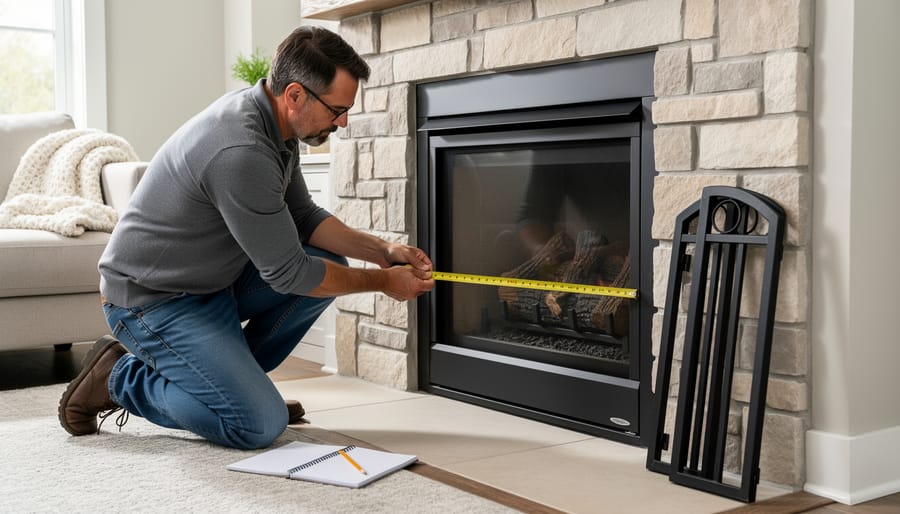
Measuring Your Fireplace Opening Correctly
Getting accurate measurements is essential for finding a spark guard that truly protects your home while complementing your fireplace’s design. Let’s walk through the process together so you can shop with confidence.
Start by measuring the width of your fireplace opening at its widest point, going from one side of the opening to the other. Next, measure the height from the hearth floor to the top of the opening. For freestanding spark guards, you’ll also want to note the depth of your firebox, measuring from the front of the opening to the back wall.
Here’s an important tip many homeowners miss: always add a few extra inches to your width and height measurements. Your spark guard should overlap the fireplace opening by at least two to three inches on each side to prevent stray sparks from escaping around the edges. This overlap is your safety buffer and makes all the difference in protecting your living space.
A common mistake is measuring only at one point across the opening. Older fireplaces especially can have slight variations in width or height, so take measurements at multiple spots and use the largest dimension. Also, double-check your measurements before ordering—it’s much easier to measure twice than to deal with a guard that doesn’t fit properly.
Material Matters: Steel, Brass, and Iron Considerations
Choosing the right material for your spark guard isn’t just about safety—it’s about creating a cohesive look that complements your home while standing up to the intense heat your fireplace generates.
Steel guards offer excellent durability and heat resistance at an affordable price point. They’re perfect for families seeking reliable protection without breaking the bank. Many steel options come with powder-coated finishes in various colors, letting you match your existing décor. Keep in mind that steel requires occasional cleaning to prevent rust, especially in humid climates.
Brass brings timeless elegance to any hearth, developing a beautiful patina over time that adds character to your living space. This material naturally resists corrosion and handles high temperatures beautifully. While brass requires periodic polishing to maintain its shine, many homeowners embrace the aged look as part of their fireplace’s charm. It’s an investment piece that elevates your room’s aesthetic.
Iron guards, particularly wrought iron designs, offer exceptional strength and often feature intricate scrollwork that becomes a focal point in traditional or rustic homes. Cast iron retains heat well, making it ideal for those seeking both safety and supplemental warmth. Regular maintenance involves checking for chips in protective coatings and treating any exposed areas to prevent rust.
Consider how each material fits your lifestyle—busy families might prefer low-maintenance steel, while design enthusiasts may appreciate brass’s warmth or iron’s artisanal appeal.
Special Considerations for Families with Kids and Pets
When you’re sharing your fireplace with little ones and furry friends, choosing the right spark guard becomes even more important. Look for models with cool-touch frames that remain safe even during extended use—little hands exploring the living room won’t get burned if they touch the guard’s exterior. This feature gives you peace of mind while your family enjoys the dancing flames together.
Stability is non-negotiable in busy households. Opt for spark guards with weighted bases or extended feet that prevent tipping if a toddler pulls up on them or an energetic dog bumps into them. Some manufacturers design their guards specifically for family homes, incorporating lower centers of gravity that make them nearly impossible to knock over during playtime.
Pay close attention to mesh spacing and panel design. Guards with fine mesh or closely-spaced bars prevent tiny fingers and curious paws from poking through toward the flames or hot embers. The spacing should be narrow enough that even the smallest hands can’t reach dangerous areas, yet still allow you to enjoy watching the fire’s glow.
Consider freestanding models that create a larger buffer zone around your fireplace, giving active kids and pets room to move without getting too close to the heat source. This extra space transforms your fireplace into a safer lifestyle element that the whole family can gather around comfortably.
Safety Standards and What to Look For
Mesh Size and Spark-Blocking Effectiveness
When choosing a spark guard, mesh size is your first line of defense against wayward embers that could damage your rug or start a fire. The sweet spot for mesh openings is typically between 1/4 inch and 1/2 inch. This size effectively catches even tiny sparks and glowing embers while still allowing you to enjoy the mesmerizing dance of flames and maintain proper airflow for efficient burning.
Steer clear of spark guards with mesh openings larger than 1/2 inch, as these simply won’t protect you from smaller embers that can still cause damage. On the flip side, extremely fine mesh might seem safer, but it can actually restrict airflow too much, potentially causing smoke to billow into your living space rather than up the chimney.
Look for tightly woven metal mesh made from durable materials like steel or iron. Quality construction means the mesh won’t sag or develop gaps over time, maintaining consistent protection throughout the years. As a practical test, hold the guard up to light before purchasing. If you can clearly see through while still observing a secure barrier, you’ve found the right balance between safety and enjoying your cozy fire.
Installation and Proper Use Tips
Creating a Safe Zone Around Your Fireplace
A spark guard is your first line of defense, but it works best as part of a comprehensive safety zone around your fireplace. Think of this area as your fireplace’s personal bubble—a space where flames can’t reach anything flammable, no matter how energetic those sparks get.
Start by maintaining safe clearances from combustible materials. Keep furniture at least three feet away from your fireplace opening, and consider even more distance for particularly active fires. This creates a buffer zone where wayward embers can safely land and extinguish without finding fuel.
Your area rug might look cozy near the hearth, but synthetic fibers and flames don’t mix well. If you want that warm, inviting look, opt for natural fiber rugs or better yet, position them outside your safety perimeter. The same goes for decorative elements—dried flowers, wooden mantels adorned with garlands, and fabric throws all need to stay clear of potential spark landing zones.
Consider using non-combustible hearth extensions or fire-resistant mats in front of your fireplace. These create an additional safety layer that complements your spark guard beautifully while protecting your flooring. Remember, creating this safe zone isn’t about sacrificing style—it’s about enjoying your fireplace with complete peace of mind.
Maintenance That Keeps Your Guard Working
A spark guard that’s well-maintained is a spark guard that does its job effectively. The good news? Keeping yours in top shape doesn’t require much time or effort—just a little regular attention.
Start with routine cleaning after every few fires. Once your fireplace has cooled completely, remove the guard and gently brush away ash and soot with a soft-bristled brush. For glass or metal mesh guards, a simple solution of warm water and white vinegar works wonderfully—it’s effective, affordable, and far better for your home’s air quality than harsh chemical cleaners. Simply spray or wipe on the solution, let it sit for a few minutes, then wipe clean with a damp cloth. This eco-friendly approach keeps your guard sparkling while protecting your family from unnecessary chemical exposure.
Regular inspections are equally important. Every month during active fireplace season, check your guard for signs of wear. Look for bent or damaged mesh, loose hinges, warped panels, or any gaps that might allow sparks to escape. Metal guards can develop weak spots from repeated heat exposure, while glass panels might develop small cracks that compromise their integrity.
If you notice any damage, address it immediately. Small issues can often be repaired, but sometimes replacement is the safer choice—your family’s protection is worth the investment. Between uses, store freestanding guards in a dry location to prevent rust and deterioration.
Think of maintenance as part of your fireplace ritual—a few minutes of care ensures countless cozy evenings ahead, all while knowing your home stays safe and protected.
At the end of the day, a fireplace spark guard isn’t just another accessory to consider adding to your hearth—it’s essential safety equipment that belongs in every home with a working fireplace. Whether you’re drawn to the crackling warmth of a wood-burning fire or the cleaner burn of gas logs, protecting your family and home from flying embers should never be optional.
Take a moment to honestly assess your current setup. Do you have a properly fitted spark guard in place? Is it showing signs of wear that might compromise its effectiveness? If you’re using your fireplace without adequate protection, now is the time to make that change. The investment is minimal compared to the peace of mind it provides and the potential damage it prevents.
The beauty of modern fireplace safety is that you don’t have to sacrifice style for security. Today’s spark guards complement your decor while serving their crucial protective function, letting you embrace the fireplace lifestyle responsibly. With the right guard in place, you can settle in with confidence, enjoying those cozy evenings by the fire knowing you’ve created a safe, warm gathering space for the people you love most.