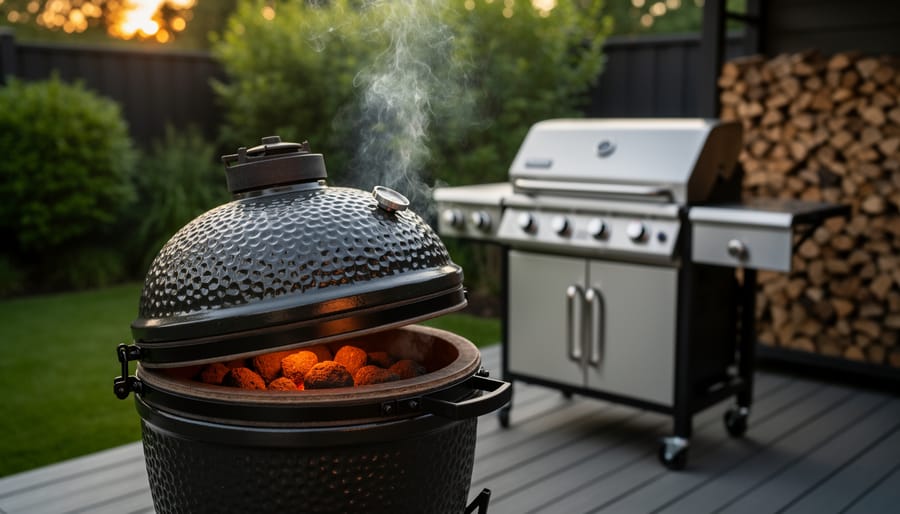


Picture yourself standing before two kamado grills at your local outdoor living store. One gleams with polished ceramic walls nearly two inches thick. The other showcases sleek, double-walled steel construction. Both promise exceptional cooking performance, but your choice will fundamentally shape your outdoor cooking experience for years to come.
Ceramic kamado grills represent the traditional approach to this ancient cooking method, tracing their lineage back thousands of years to clay cooking vessels in Asia. These thick-walled grills have earned a devoted following among backyard chefs who prize heat retention, fuel efficiency, and the unmistakable flavor that comes from cooking over natural lump charcoal. The ceramic construction creates an environment similar to a wood-fired oven, wrapping food in consistent, radiant heat that produces restaurant-quality results.
Yet ceramic isn’t your only option anymore. Modern metal kamados have entered the market with promises of lighter weight, lower prices, and comparable performance. This evolution mirrors what we’ve seen in indoor heating, where traditional methods meet contemporary innovation to serve different lifestyle needs.
The decision between ceramic and metal kamado grills isn’t about which is objectively better. It’s about understanding how each material performs in real-world conditions, how they fit into your outdoor living space, and which aligns with your cooking style. Your investment deserves this clarity, because the right kamado becomes more than a grill—it becomes the centerpiece of memorable gatherings and exceptional meals.
What Makes Ceramic Kamado Grills Different
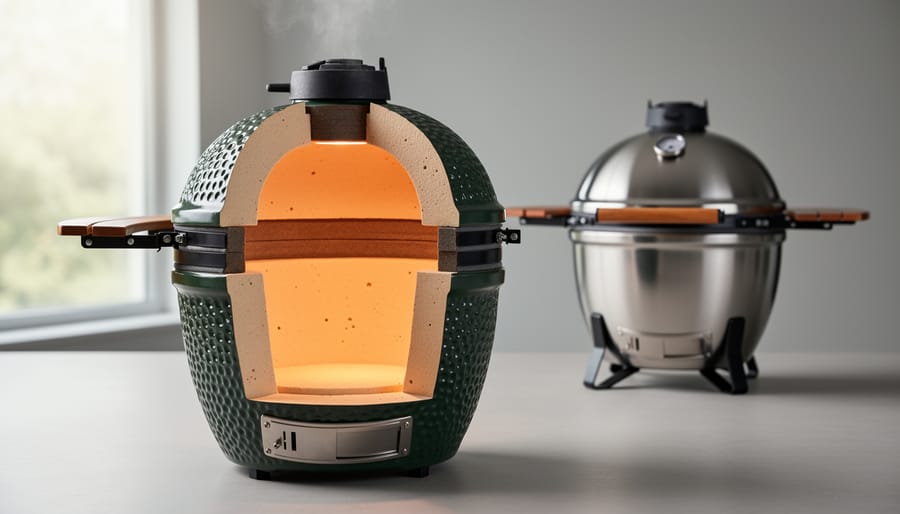
The Science Behind Ceramic Heat Retention
Think of ceramic like a thermal battery for your outdoor cooking space. When you fire up a ceramic kamado grill, something remarkable happens that’s quite different from traditional metal grills. The thick ceramic walls absorb heat slowly and steadily, storing it deep within the material itself. This is what experts call thermal mass, and it’s the secret behind why ceramic grills perform so beautifully.
Here’s what makes it special: metal heats up quickly but also loses that heat just as fast. Ceramic, on the other hand, takes a bit longer to reach temperature, but once it’s there, it holds onto that warmth like a cozy blanket. The walls essentially become heat radiators, releasing consistent, even warmth back into your cooking chamber for hours.
This means you’re not constantly adjusting vents or adding fuel to maintain your target temperature. The grill naturally stabilizes, creating a reliable cooking environment whether you’re searing steaks at 700 degrees or slow-smoking a brisket at 225. It’s similar to how a masonry fireplace continues warming your home long after the flames have died down.
The ceramic construction also creates exceptional insulation, keeping heat where it belongs and making these grills surprisingly fuel-efficient. You’ll use less charcoal while achieving better temperature control, which is both economical and eco-friendly. For homeowners who appreciate quality craftsmanship and sustainable outdoor living, this efficient heat retention transforms your backyard into a year-round cooking destination.
Traditional Craftsmanship Meets Modern Design
Ceramic kamado grills beautifully bridge centuries-old cooking traditions with today’s outdoor living conveniences. These distinctive egg-shaped cookers trace their ancestry back over 3,000 years to ancient clay cooking vessels, honoring time-tested methods that created incredibly flavorful, moisture-rich dishes. What makes modern ceramic kamados special is how they’ve elevated this heritage craft with thoughtful contemporary upgrades.
Today’s ceramic kamados feature precision-engineered airflow systems that give you remarkable control over your cooking environment. Dual-vent designs let you fine-tune oxygen flow with incredible accuracy, whether you’re smoking brisket low and slow or searing steaks at blazing temperatures. Modern temperature gauges and even wireless thermometer capabilities mean you can monitor your cooking without constantly lifting the lid and losing precious heat.
The thick ceramic walls remain true to tradition, providing exceptional heat retention and even temperature distribution that metal alternatives simply can’t match. This ancient material paired with modern engineering creates an eco-friendly cooking solution that uses significantly less charcoal than conventional grills. It’s this thoughtful marriage of old-world craftsmanship and new-world innovation that makes ceramic kamados such a compelling addition to your outdoor living space.
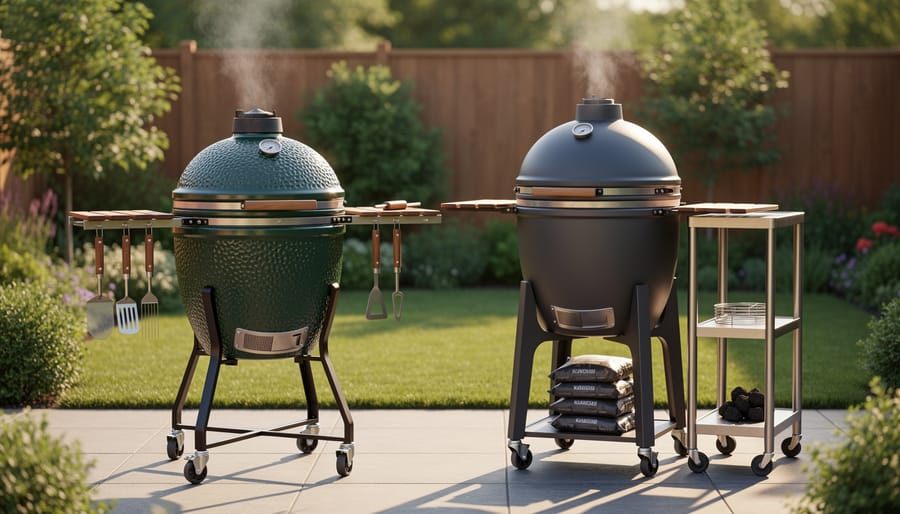
Ceramic vs. Metal Kamados: The Real Performance Differences
Temperature Stability and Fuel Efficiency
When you’re planning those low-and-slow smoking sessions that define memorable backyard gatherings, temperature stability becomes your best friend. Ceramic kamado grills excel here thanks to their thick ceramic walls, which act like a cozy blanket around your fire. Once you dial in your target temperature, that ceramic construction holds it remarkably steady for hours, sometimes requiring only minor vent adjustments throughout an entire smoking session.
This temperature consistency translates directly to fuel efficiency that can surprise even experienced grillers. A ceramic kamado might use just a handful of quality lump charcoal to maintain 225°F for 12 to 18 hours, making it an eco-friendly heating solution for your outdoor cooking space. The ceramic walls trap heat so effectively that you’re not constantly feeding the fire to compensate for heat loss.
Metal kamados, while improving with modern insulation, typically require more frequent monitoring and fuel additions during extended cooks. Their thinner walls simply can’t match the thermal mass of ceramic construction, leading to more temperature fluctuations when wind picks up or ambient temperatures shift.
For homeowners who view outdoor cooking as part of their lifestyle, this efficiency matters beyond just fuel costs. It means more time enjoying your gathering and less time babysitting the grill. That peace of mind, knowing your brisket is cooking at a rock-solid temperature while you relax with family, makes the ceramic kamado’s superior heat retention a genuine lifestyle upgrade for your outdoor living space.
Heat-Up Time and Flexibility
When it comes to heating up and shifting between cooking styles, ceramic kamado grills and their metal counterparts take noticeably different approaches. Think of it like the difference between warming your home with a traditional masonry fireplace versus a quick-start gas unit—each has its place depending on your needs.
Ceramic kamado grills typically require 15-20 minutes to reach smoking temperatures and up to 30 minutes for high-heat searing. This slower heat-up comes from their thick ceramic walls, which need time to absorb and radiate heat evenly. However, this thermal mass becomes your ally once they’re hot, maintaining rock-steady temperatures with minimal fuel adjustments. They excel at long, low-and-slow smoking sessions where temperature stability matters most.
Metal kamados, by contrast, heat up in about 10-15 minutes thanks to their thinner walls. This makes them ideal for spontaneous grilling when you want dinner ready fast. However, they require more attention during temperature transitions and consume more charcoal to maintain consistent heat.
Both styles can handle smoking, grilling, and searing—it’s really about patience versus speed. If you enjoy the ritual of fire-building and appreciate eco-friendly fuel efficiency during extended cooks, ceramic’s slower warm-up becomes a meditative part of the outdoor cooking experience rather than a drawback.
Weather Resistance and Outdoor Durability
When it comes to weathering the elements, ceramic kamados truly shine as outdoor lifestyle investments. Think of ceramic as nature’s armor – these grills handle rain, snow, and harsh sunlight remarkably well thanks to their glazed exterior that repels moisture and resists UV damage. You can leave a quality ceramic kamado outdoors year-round without worrying about rust or corrosion, though a cover still helps protect your investment.
Metal kamados, while more affordable upfront, require greater vigilance. Despite powder coating or enamel finishes, metal units are more vulnerable to moisture penetration, especially at seams and joints. Over time, exposure to rain and snow can lead to rust formation, particularly in coastal or humid environments. Temperature swings can also cause expansion and contraction that may crack protective coatings.
The ceramic advantage extends to extreme temperatures too. Whether facing scorching summer heat or winter freezes, ceramic maintains its structural integrity without warping. Metal units can develop hot spots or distortion over years of thermal cycling.
For homeowners seeking a true outdoor centerpiece that becomes part of their home’s character, ceramic kamados offer superior longevity. While both types benefit from protective covers during extended non-use periods, ceramic requires far less maintenance to keep looking and performing beautifully season after season.
Moisture Retention and Food Quality
One of ceramic kamados’ most impressive qualities is their ability to lock in moisture during cooking. The thick ceramic walls create a nearly airtight seal that traps steam and natural juices inside, resulting in incredibly tender, flavorful meals. When you cook a brisket or pork shoulder low and slow, that moisture circulates throughout the chamber, keeping your meat from drying out even during marathon cooking sessions.
Metal kamados, while functional, can’t quite match this moisture retention. They tend to have slightly less precise seals and don’t hold humidity as effectively. This means you might need to use water pans or spray bottles more frequently to keep foods moist. The difference becomes especially noticeable with lean cuts of meat or poultry, where ceramic grills consistently deliver juicier results with less babysitting. For outdoor cooking enthusiasts who value that restaurant-quality tenderness and flavor, ceramic’s natural moisture management creates an environment where your food practically cooks itself to perfection.
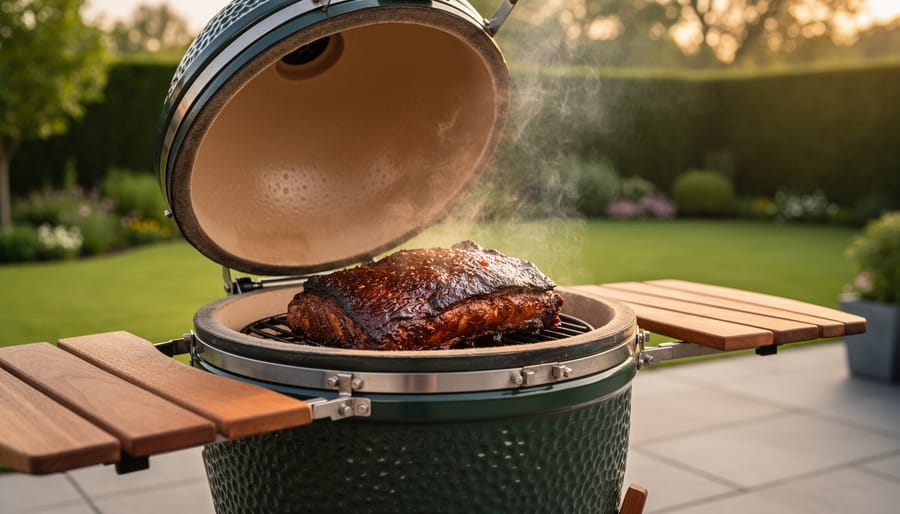
The Practical Side: Weight, Portability, and Installation
Placement and Permanence in Your Outdoor Space
Unlike portable grills that move around your patio, a ceramic kamado becomes more like a permanent outdoor fixture in your home. Weighing between 150 to 400 pounds depending on size, these grills aren’t something you’ll casually relocate once they’re set up. Think of it like choosing where to install an outdoor fireplace – you’re making a long-term decision about your space.
When selecting the perfect spot, consider both practical and lifestyle factors. Your kamado needs a stable, level surface that can support its weight – a concrete patio, stone pavers, or dedicated grill pad work beautifully. Position it with adequate clearance from your home’s exterior, overhangs, and combustible materials, typically at least three feet.
Beyond safety, think about how this cooking centerpiece fits into your outdoor living spaces. Many homeowners place their kamado within easy reach of their outdoor kitchen or dining area, creating a natural gathering point. Consider wind patterns, proximity to your indoor kitchen for ingredient access, and whether you’ll want some weather protection overhead. This thoughtful placement transforms your kamado from just a grill into an integral part of your outdoor lifestyle.
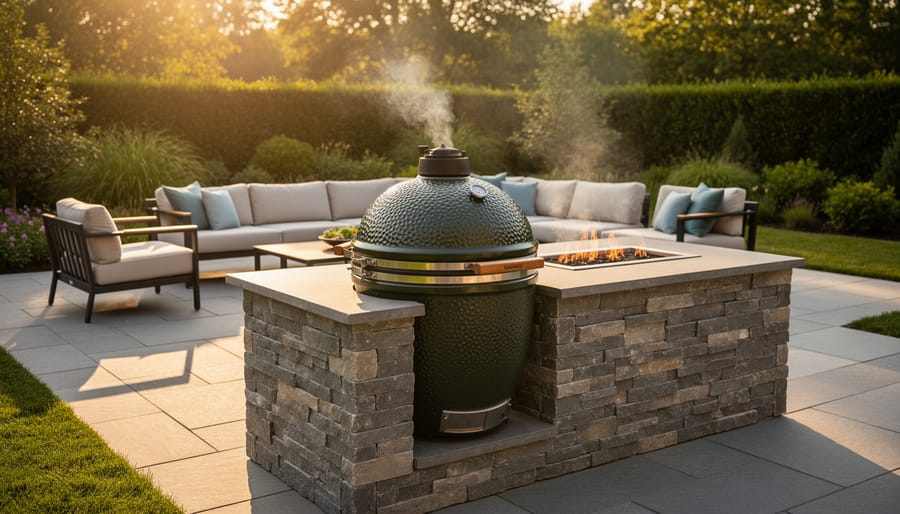
Setup and Moving Considerations
Setting up your ceramic kamado grill is straightforward, but it’s worth taking time to get it right from the start. These grills are heavy—typically 150-300 pounds depending on size—so choose your location carefully. You’ll want a level, stable surface like a concrete patio, stone pavers, or a dedicated grill table rated for the weight. Think of this decision as permanent; while technically movable, the weight and fragility make frequent relocation impractical.
Position your kamado at least ten feet from your home and away from low-hanging branches or patio covers. These grills radiate considerable heat from all sides, much like an outdoor fireplace, and proper clearance ensures safe operation. Many homeowners invest in a sturdy cart with locking wheels or a custom outdoor kitchen setup for a more permanent installation.
Before your first cook, perform a proper burn-in by gradually bringing the grill up to temperature over several hours. This cures the ceramics and burns off any manufacturing residues. Remember that ceramic can crack from thermal shock, so always allow the grill to cool naturally—never douse hot ceramics with water. With thoughtful placement and proper care, your kamado becomes a cherished centerpiece of your outdoor living space for decades.
Durability and Long-Term Investment
What Can Go Wrong (And How Often)
Let’s be honest about what can go wrong with your outdoor cooking investment, because understanding the risks helps you make a better choice.
Ceramic kamado grills face one primary concern: cracking. The good news? Modern manufacturers have significantly reduced this risk through improved clay formulations and better firing techniques. Most ceramic cracks happen due to thermal shock, like pouring cold water on a hot grill or moving it roughly during winter. With proper care, ceramic failure rates sit around 2-5% over a grill’s lifetime. When cracks do occur, they’re usually hairline surface issues that don’t affect performance. Complete structural failures are rare, typically occurring in less than 1% of units.
Metal kamados present different challenges. Steel models can rust if the coating chips or scratches, particularly in humid coastal environments. Quality powder-coating helps, but expect some oxidation after 5-7 years of regular use. Stainless steel options resist rust beautifully but may experience slight warping around welds after years of high-heat cooking. The failure rate for metal kamados depends heavily on coating quality, with budget models showing issues in 10-15% of cases within five years, while premium versions rarely experience problems.
The reality? Both types are remarkably durable when treated right. Think of ceramics as requiring gentle handling but offering longevity, while metals need occasional touch-ups but forgive rougher treatment. Your outdoor environment and how you maintain your grill matter more than the material itself. Neither option should be considered fragile, they’re just different approaches to creating that beautiful outdoor cooking experience you’re investing in.
Maintenance Requirements Over the Years
One of the most appealing aspects of ceramic kamado grills is their remarkably low maintenance requirements, making them an excellent long-term investment for your outdoor living space. Unlike their metal counterparts, ceramic kamados won’t rust, corrode, or require regular repainting or protective coatings. A simple wipe-down of the exterior and occasional cleaning of the cooking grates is typically all that’s needed to keep your ceramic grill looking pristine for decades.
The primary maintenance task for ceramic kamados involves replacing the felt gasket around the lid every few years, depending on usage. This is a straightforward process that most homeowners can complete in about thirty minutes. High-quality replacement gaskets are widely available and inexpensive, usually costing less than twenty dollars. Beyond gasket replacement, you’ll want to clean out ash buildup periodically, which actually helps maintain efficient airflow and temperature control.
Metal kamados, by contrast, demand more attention. They require protective covers when not in use, regular inspection for rust spots, and often need recoating or repainting to maintain their appearance and structural integrity. The powder coating on metal versions can chip or fade over time, especially in harsh weather conditions, leading to oxidation issues that ceramic never faces.
The minimal upkeep required for ceramic kamados means more time enjoying your outdoor cooking experience and less time worrying about maintenance schedules. This hands-off approach aligns perfectly with the effortless elegance these grills bring to your outdoor entertaining space.
Cost Analysis: Initial Investment vs. Lifetime Value
Let’s talk about what you’re really investing in when you choose a ceramic kamado grill. Yes, the initial sticker shock is real. Quality ceramic kamados typically range from $800 to $3,000, while metal versions start around $300 to $1,500. That’s a significant difference that deserves honest consideration.
Here’s what you’re actually paying for with ceramic: a lifetime cooking companion. The thick ceramic walls are the heart of superior heat retention and fuel efficiency. You’ll use approximately 30-40% less charcoal per cook compared to metal alternatives, which translates to hundreds of dollars saved over the years. Think of it as investing in an eco-friendly heating solution for your outdoor cooking space that pays dividends every time you fire it up.
Ceramic kamados rarely need replacement parts beyond gaskets and hardware, which might run you $50-100 every few years. Metal kamados, while initially cheaper, often require replacing rust-prone components, inner rings, or even entire fireboxes within 5-10 years. These replacement costs can quietly add up to match or exceed your initial savings.
The durability factor matters too. A well-maintained ceramic kamado can easily last 20-30 years or more, becoming a permanent fixture in your outdoor living space. Metal versions typically show their age within a decade, even with diligent care.
Consider your cooking frequency and commitment. If you grill occasionally, a metal kamado might serve you well. But for serious outdoor cooking enthusiasts who view their grill as a lifestyle element rather than just equipment, ceramic’s superior performance and longevity make it the financially smarter choice over time. You’re not just buying a grill; you’re investing in decades of memorable meals and gatherings.
Who Should Choose Ceramic (And Who Shouldn’t)
Best Scenarios for Ceramic Kamados
Ceramic kamados truly shine for those who embrace the art of slow cooking and view outdoor cooking as a lifestyle choice. If you’re someone who dreams of smoking brisket for 12 hours or roasting a whole chicken to perfection, the exceptional heat retention of ceramic makes it your ideal companion. These grills excel when you’ve established a permanent outdoor cooking area, as their substantial weight means they’re not meant for frequent repositioning.
Traditional cooking enthusiasts particularly appreciate the authentic connection ceramic kamados provide to centuries-old cooking methods. There’s something deeply satisfying about working with a grill that honors time-tested techniques while delivering consistent, reliable results. The thick ceramic walls create an environment that mimics old-world clay ovens, perfect for anyone who values heritage cooking methods in their backyard cooking setup.
From an eco-conscious perspective, ceramic kamados stand out as remarkably sustainable choices. Their superior insulation means you’ll use significantly less charcoal compared to traditional grills, reducing both your environmental footprint and ongoing fuel costs. If minimizing waste and maximizing efficiency align with your values, a ceramic kamado represents an investment in responsible outdoor cooking that pays dividends for years to come.
When Metal Makes More Sense
Let’s be straightforward: ceramic kamados aren’t for everyone, and that’s perfectly okay. If you’re renting your home or apartment, investing in a 200-pound ceramic grill might not make practical sense, especially when you’re planning your next move. Metal kamados shine here, offering significantly lighter designs that won’t require recruiting friends with strong backs every time you relocate.
Tailgaters and camping enthusiasts will find metal versions far more practical. While we love the romance of outdoor cooking experiences, there’s nothing romantic about herniating a disk loading a ceramic grill into your truck bed. Metal kamados typically weigh 30-50% less, making them genuinely portable for game days and road trips.
Budget-conscious buyers also benefit from metal options, which generally cost less upfront while still delivering excellent cooking performance. If you’re just exploring the world of kamado-style cooking and aren’t ready for a long-term commitment, starting with a metal version makes financial sense. You can always upgrade to ceramic later once you’ve fallen in love with the cooking style and are ready to invest in that superior heat retention and fuel efficiency for your permanent outdoor living space.
At the heart of every outdoor cooking decision lies something deeper than temperature charts and material comparisons. Whether you’re drawn to ceramic or metal kamado grills, you’re really choosing how you want to gather, connect, and create memories around fire in your outdoor living space.
Both ceramic and metal kamados bring the ancient art of live-fire cooking into modern backyards, transforming patios and decks into warm gathering spaces where family and friends naturally congregate. The glow of hot coals, the aroma of wood smoke, and the ritual of tending a fire create an atmosphere that transcends simple meal preparation. This is about building a sustainable outdoor cooking tradition that can last for decades.
Ceramic kamados offer something particularly special in this regard. Their connection to centuries-old cooking methods and their ability to last multiple generations align beautifully with creating enduring outdoor spaces. The heft and permanence of ceramic makes it feel like an investment in your home’s outdoor living experience, much like a quality fireplace or fire pit becomes a focal point for warmth and togetherness.
That said, the right choice ultimately depends on your personal priorities. Consider how you actually live and cook outdoors. Do you value portability and quick heat-up times, or does the romance of traditional craftsmanship and superior heat retention speak to you? Neither option is universally superior. The best kamado is the one that fits seamlessly into your outdoor lifestyle and brings you joy every time you fire it up.