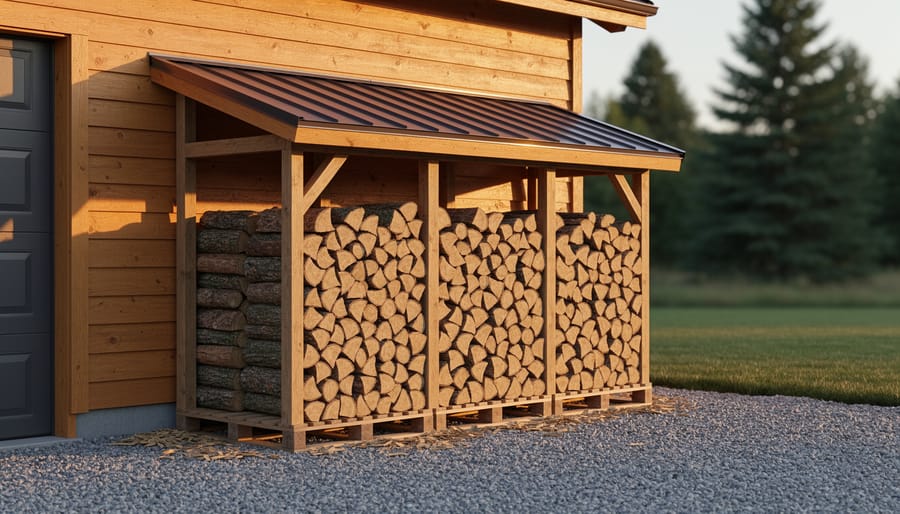


Build your firewood lean-to against an existing structure like a shed or garage wall to create natural overhead protection while minimizing construction materials and costs. Position the open side away from prevailing winds and ensure at least six inches of clearance between stacked wood and the back wall to promote crucial air circulation that prevents moisture buildup and mold growth.
Elevate your firewood stack on pallets, pressure-treated lumber, or gravel to keep logs off ground contact where they absorb moisture and attract insects. This simple foundation layer transforms damp, difficult-to-burn wood into properly seasoned fuel that ignites quickly and burns cleanly, reducing creosote buildup in your chimney and delivering the cozy, efficient warmth your fireplace was designed to provide.
Design your lean-to roof with a minimum 30-degree slope to shed rain and snow effectively, extending the overhang at least twelve inches beyond your wood pile for maximum weather protection. Cover only the top portion of your stack while leaving sides exposed—this balance shields logs from precipitation while allowing wind to carry away moisture during the critical seasoning process.
Stack wood bark-side up in single rows rather than random piles to accelerate drying time from months to weeks, ensuring each log receives adequate airflow. A well-designed firewood lean-to isn’t just outdoor storage; it’s an investment in better fires, reduced heating costs, and the sustainable warmth that transforms your house into a welcoming home throughout the coldest months.
What Makes a Lean-To Perfect for Firewood Storage
The Science of Airflow and Seasoning
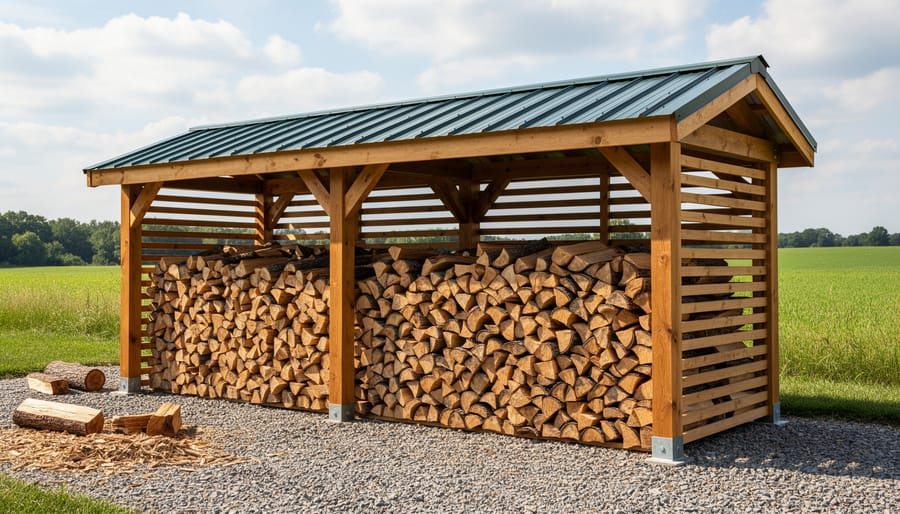
Think of a lean-to firewood storage structure as nature’s perfect drying system. The magic happens because of what the lean-to doesn’t have: walls blocking every side. This simple, open-sided design creates exactly what your firewood needs to season properly and maintain its quality.
When you stack wood in an enclosed space like a garage or shed, air gets trapped and moisture has nowhere to go. But a lean-to’s angled roof and open front work together like a breath of fresh air, literally. Wind passes through your wood pile from multiple directions, carrying away the dampness that naturally evaporates from the logs. This constant airflow is the secret ingredient that transforms freshly cut green wood into the perfect fuel for your fireplace.
The slanted roof does double duty here. Rain and snow slide right off instead of pooling on top of your wood pile, while still allowing breezes to sweep through. Meanwhile, keeping your firewood elevated off the ground prevents ground moisture from creeping back up into your stack.
This natural ventilation system directly impacts how long firewood lasts and how well it burns. Properly seasoned wood from a well-ventilated lean-to means easier lighting, hotter fires, less smoke, and that wonderful crackling ambiance you’re looking for. You’re essentially harnessing the power of sun and wind to create premium firewood, all while embracing an eco-friendly approach to home heating that works with nature rather than against it.
Space Efficiency Near Your Home
One of the most appealing advantages of a lean-to firewood storage design is how brilliantly it maximizes your available space. By positioning your lean-to against an existing structure like your home, garage, or shed, you’re essentially borrowing wall space that’s already there. This approach eliminates the need for a fourth wall while creating a dedicated storage area that doesn’t consume valuable yard real estate.
For homeowners working with smaller properties or those who simply prefer an uncluttered outdoor aesthetic, this space-saving design is a game-changer. You’re keeping your firewood neatly organized and protected without sacrificing lawn space, garden areas, or outdoor entertaining spots that matter to your lifestyle.
The convenience factor cannot be overstated. Positioning your lean-to near your home means shorter trips on cold winter evenings when you need to restock your fireside supply. There’s something wonderfully practical about stepping just outside your door rather than trekking across a snowy yard. This proximity transforms firewood gathering from a chore into a quick, manageable task, encouraging you to maintain that cozy fire throughout the season. Plus, keeping your wood supply visible from the house makes it easier to monitor your stock and ensure you’re properly rotating your supply for optimal burning quality.
Choosing the Right Location for Your Lean-To
Sun, Wind, and Weather Considerations
Nature can be your best ally when it comes to seasoning firewood. Position your lean-to so the open side faces south or southwest to maximize sun exposure throughout the day. This sunlight naturally warms your wood, drawing out moisture much faster than shade-dried alternatives. You’ll notice firewood can season in months rather than a full year when positioned correctly.
Take advantage of prevailing winds by orienting your structure to allow air to flow through your stacked wood. Good airflow is essential for carrying away moisture and preventing that musty smell that comes with trapped humidity. However, avoid creating a wind tunnel that might topple your carefully stacked wood during storms.
While sun and wind work wonders, you’ll want protection from direct rain and snow. Your lean-to’s roof should extend far enough to keep precipitation off your wood pile, even during angled storms. Consider the winter sun angle too, as it sits lower in the sky and can still provide beneficial drying effects during colder months.
This thoughtful approach to working with natural elements means you’re not just storing firewood, you’re creating an eco-friendly system that produces perfectly seasoned logs for those cozy evenings by the fire.
Foundation and Ground Preparation
A solid foundation is the unsung hero of firewood storage—it keeps your carefully stacked wood dry and your structure standing strong through every season. The good news? You don’t need concrete or complicated construction to get it right.
Start by selecting level ground and clearing away grass, leaves, and debris from your chosen spot. This simple step prevents moisture from accumulating and allows air to circulate beneath your firewood. For enhanced drainage, consider laying down a 2-3 inch bed of gravel or crushed stone. This creates a moisture barrier while keeping your wood elevated and dry—essential for maintaining quality firewood that burns efficiently and warms your home effectively.
If gravel isn’t available, placing your lean-to over pressure-treated lumber runners or concrete blocks works beautifully. Space these supports about 12-16 inches apart to ensure adequate airflow. This elevation prevents ground contact, which is the primary culprit behind moldy, moisture-laden wood that produces more smoke than heat.
For extra stability, especially in areas with freeze-thaw cycles, slightly compact the soil before adding your base material. This prevents settling and keeps your structure level year-round. Remember, investing thirty minutes in proper ground preparation now means years of dry, ready-to-burn firewood and cozy evenings by the fire.
Building Your Firewood Lean-To: What You Actually Need
Essential Materials and Tools
Building a firewood storage lean-to doesn’t require a massive investment or professional-grade equipment. With some basic materials and tools you probably already have, you can create a functional structure that keeps your firewood dry and ready for those cozy evenings by the fire.
For the frame, you’ll need pressure-treated lumber or naturally rot-resistant wood like cedar or locust. A typical 8-foot lean-to requires four 4×4 posts for support and 2x4s for the roof framework. If you’re looking for eco-friendly alternatives, consider reclaimed wood from old pallets or barn lumber, which adds character while reducing waste.
The roof is crucial for keeping moisture out. Corrugated metal roofing sheets work wonderfully and last for years, or you can opt for recycled plastic roofing panels that resist rust and weathering. For a more budget-conscious approach, heavy-duty tarps secured properly can work temporarily, though they’ll need replacing more frequently.
You’ll also need galvanized screws or nails, concrete for setting posts, and gravel for drainage underneath your firewood stack. As for tools, a basic collection will do the job: a drill with bits, circular saw or handsaw, level, tape measure, post hole digger, and a hammer.
Don’t forget landscaping fabric to place beneath the structure, which prevents ground moisture from wicking up into your woodpile while still allowing air circulation. This simple addition significantly improves your firewood’s drying process and overall quality.
Simple Design Options That Work
You don’t need an architectural degree to create a firewood storage lean-to that actually works. The beauty of this approach lies in its simplicity, and there are a few tried-and-true designs that homeowners have relied on for generations.
The classic single-slope lean-to is your most straightforward option. Picture a simple roof that slopes away from your house or garage wall, supported by vertical posts at the front. This design requires minimal materials—typically just four-by-four posts, some basic framing lumber, and roofing material like corrugated metal or shingles. The key is ensuring that roof pitch allows water to run off efficiently, keeping your firewood dry and ready for those cozy evenings by the fire.
Another effective approach is the three-sided lean-to, which adds side panels for extra weather protection. This works especially well in areas with driving rain or heavy snow. You can leave the back open against your existing structure and the front open for airflow, creating that essential cross-ventilation that seasons your wood properly.
For those embracing eco-friendly heating solutions, consider incorporating salvaged materials like reclaimed wood or recycled roofing panels. Not only does this reduce costs, but it also aligns with sustainable living principles.
The most important functional features to prioritize are adequate roof overhang to shield your wood from rain, proper spacing between stacked rows for air circulation, and a raised floor using pallets or gravel to prevent ground moisture from seeping into your firewood supply.
Stacking Strategies for Maximum Efficiency
The Right Way to Stack for Airflow
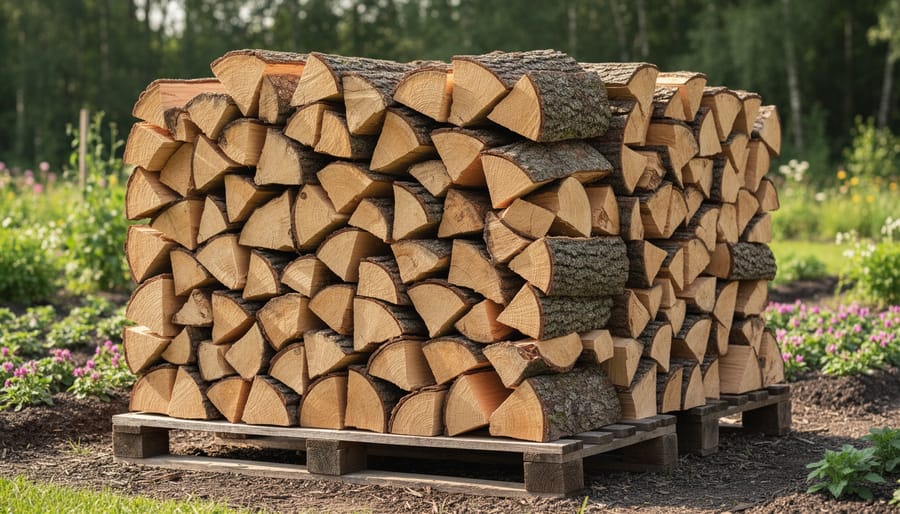
The secret to keeping firewood perfectly dry in your lean-to comes down to smart stacking. Think of each log as needing its own breathing room. Start by creating a stable base with your largest, straightest pieces laid perpendicular to the lean-to’s back wall. This foundation should sit at least four inches off the ground on pallets or treated lumber to prevent ground moisture from wicking up into your wood.
For the layers above, alternate your stacking direction with each row—this crisscross pattern, often called the log cabin method, creates natural air channels throughout your entire stack. Picture a checkerboard effect when viewing from the side. These gaps allow wind to flow through, carrying away moisture and preventing that musty smell or dark mold spots that signal trouble.
Keep your stack about 16 inches away from the back wall of your lean-to. This space lets air circulate behind the pile and prevents condensation from the wall affecting your wood. As you build upward, avoid packing pieces too tightly together. A finger’s width of space between logs is ideal.
The bark side should face up on your top layer to shed rain like natural shingles. For more detailed guidance on proper stacking techniques that ensure season after season of cozy fires, remember that patience in stacking pays off in performance.
Organizing by Wood Type and Season
Smart organization within your lean-to transforms firewood storage from simple stacking into an efficient system that enhances your fireplace experience. The key is separating wood by both species and seasoning stage, creating a convenient rotation that ensures you always have the perfect fuel ready.
Start by dedicating different sections of your lean-to to different wood species. Hardwoods like oak and maple, which burn longer and hotter, deserve premium placement for those cozy winter evenings. Store faster-burning softwoods like pine separately—they’re ideal for quick fires or kindling. Label each section clearly so family members can grab the right wood without guesswork.
Next, create a seasoning progression system. Position your newest, green wood toward the back where airflow will continue drying it. Move partially seasoned wood to the middle sections, and keep your fully dried, ready-to-burn wood at the front for easy access. This front-to-back arrangement naturally encourages proper rotation, preventing the frustrating scenario of reaching for wood only to find it’s still too damp.
Consider adding simple dividers between sections using salvaged lumber or concrete blocks. This eco-friendly approach keeps different wood types separate while maintaining the airflow essential for continued seasoning.
How Proper Storage Transforms Your Fireplace Experience
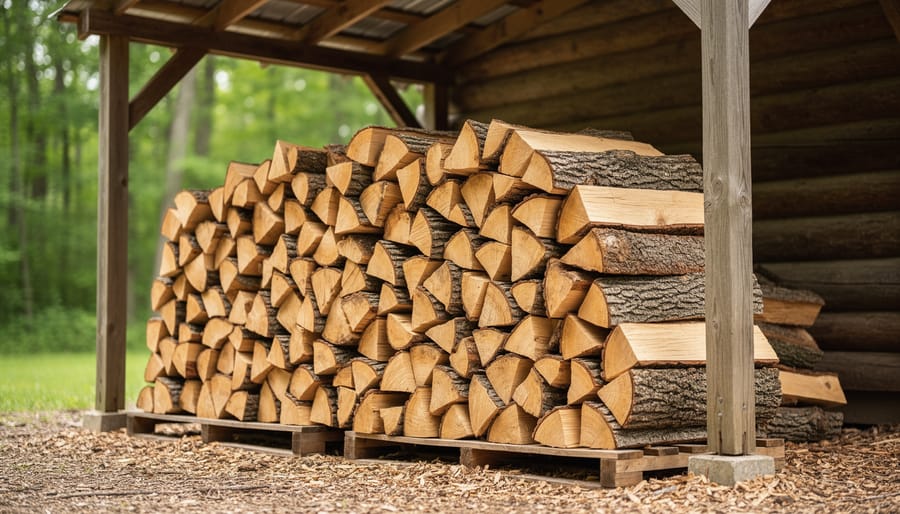
Better Burns Mean Less Work
There’s something truly satisfying about a fire that roars to life quickly and burns steady all evening without constant attention. That’s exactly what you get when you store your firewood in a lean-to. Properly seasoned firewood with moisture content below 20 percent ignites faster, produces significantly more heat, and creates far less creosote buildup in your chimney. Instead of struggling with smoky, sputtering logs that need constant prodding and repositioning, you’ll enjoy clean-burning fires that practically tend themselves.
The difference is remarkable. Wet wood can lose up to 25 percent of its potential heat energy just evaporating excess moisture, meaning you’re burning more logs for less warmth. Meanwhile, well-stored dry wood delivers maximum BTUs per log, warming your home efficiently while reducing your overall wood consumption. You’ll also spend less time cleaning ash and dealing with the unpleasant odors that damp wood produces. This efficient burning approach isn’t just easier on you, it’s better for the environment too, reducing emissions while making your firewood supply last longer throughout the season.
Safety and Environmental Benefits
Proper firewood storage in a lean-to structure does more than just keep your wood dry—it directly impacts the safety and environmental footprint of your home heating experience. When firewood is stored correctly with adequate airflow and protection from moisture, it burns cleaner and more efficiently. Dry, seasoned wood produces significantly less creosote, that sticky, flammable substance that accumulates in chimneys and poses a serious fire hazard. By keeping your wood properly dried in a lean-to, you’re reducing the risk of dangerous chimney fires while maintaining efficient fires that require less fuel.
Beyond safety, well-stored firewood contributes to cleaner air quality. Wet or improperly stored wood releases excessive smoke and particulate matter when burned, affecting both indoor air quality and your neighborhood environment. A lean-to storage system ensures your wood reaches the ideal moisture content of 20% or below, resulting in fires that burn hotter with minimal smoke output. This means you’re getting maximum heat from less wood while being a responsible neighbor. It’s a simple solution that aligns perfectly with sustainable heating practices, letting you enjoy the warmth and ambiance of your fireplace while treading more lightly on the environment.
Building a firewood storage lean-to is more than just a weekend project—it’s an investment in the comfort and efficiency of your home heating experience. When you take the time to properly store your firewood, you’re ensuring that every fire burns cleaner, hotter, and longer. Dry, well-seasoned wood means less smoke, less creosote buildup in your chimney, and more of that cozy warmth and crackling ambiance that makes a fireplace the heart of a home.
The beauty of a lean-to structure is its simplicity and effectiveness. You don’t need advanced carpentry skills or an enormous budget to create a storage solution that will serve you reliably for years to come. By keeping your firewood protected from rain and snow while allowing proper air circulation, you’re embracing a sustainable approach to home heating that respects both your time and the environment.
Now is the perfect moment to take action. Whether you’re planning to build your lean-to this weekend or researching options for your property, you’re making a choice that pays dividends with every fire you light. Picture those cold winter evenings ahead, knowing your firewood is perfectly seasoned and ready to provide instant warmth. You’re not just stacking wood—you’re creating a reliable, eco-friendly heating solution that brings genuine comfort to your home while reducing your environmental footprint. Your fireplace deserves the best fuel possible, and with a proper lean-to, you’re making that happen.