

Expect to invest between $4,500 and $9,000 for a complete oil to gas furnace conversion, though your final cost depends heavily on factors like existing gas line access, furnace size, and local labor rates. This significant investment includes removing your old oil system, installing new gas equipment, running gas lines if needed, and proper disposal of the oil tank—expenses that can feel overwhelming but often pay for themselves through reduced heating bills within 5-10 years.
Calculate your total project cost by adding together the new gas furnace unit ($2,500-$5,000), gas line installation or extension ($500-$2,000), oil tank removal and disposal ($500-$3,000), necessary permits and inspections ($200-$500), and professional labor ($1,000-$2,500). These ranges shift dramatically based on your home’s current infrastructure; homes already equipped with gas service pay substantially less than those requiring new line installation from the street.
Compare your current annual oil heating expenses against projected natural gas costs to determine your break-even timeline. Most homeowners save 30-50% yearly on heating costs after conversion, while simultaneously reducing their carbon footprint and embracing more eco-friendly heating solutions. Natural gas burns cleaner than oil, requires less maintenance, and eliminates concerns about oil deliveries, tank leaks, or fluctuating fuel prices.
Evaluate whether conversion makes financial sense for your situation by considering how long you plan to stay in your home, current oil system age, available financing options, and local utility company rebates that can offset upfront costs by $500-$2,000.
Breaking Down the Real Costs: What Goes Into Your Conversion
New Gas Furnace Equipment Costs
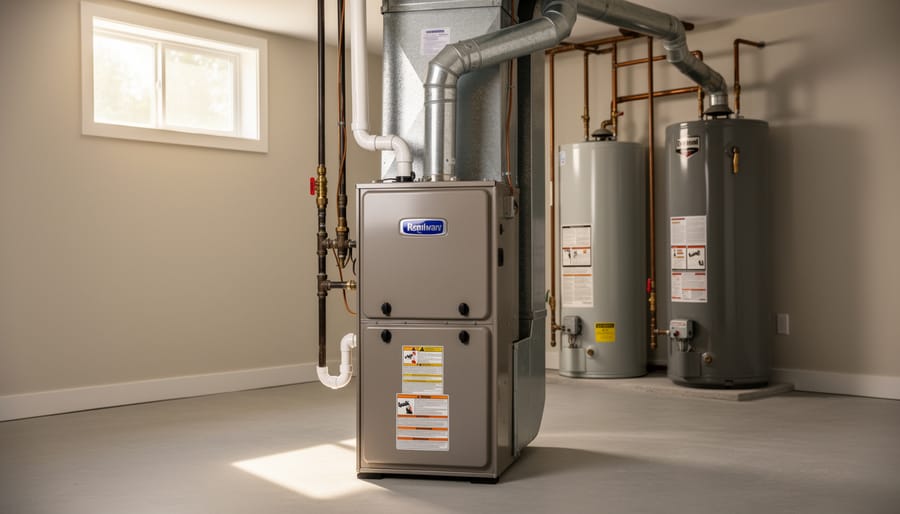
When converting from oil to gas, your new furnace represents one of the most significant expenses in the project. Gas furnaces are typically categorized by their AFUE (Annual Fuel Utilization Efficiency) ratings, which directly impact both the purchase price and your long-term heating costs.
Standard efficiency furnaces with 80% AFUE ratings offer the most budget-friendly entry point, typically ranging from $800 to $2,000 for the unit itself. These models work well in milder climates or as straightforward replacements, though they vent through traditional chimneys and convert less fuel into usable heat.
For those seeking better energy performance and lower utility bills, high-efficiency furnace models with 90-98% AFUE ratings range from $1,500 to $4,500. These eco-friendly heating solutions extract maximum warmth from every fuel dollar and require specialized PVC venting systems, adding to installation complexity but delivering substantial savings over time.
Furnace sizing matters tremendously for comfort and efficiency. Your home typically needs 30-60 BTU per square foot depending on climate and insulation quality. A 1,500-square-foot home usually requires a 60,000-80,000 BTU furnace. Premium brands like Carrier, Lennox, and Trane command higher prices but offer superior warranties and reliability, while quality mid-range manufacturers provide excellent value for most homeowners making this important heating transition.
Professional Installation Labor
Professional installation labor typically accounts for $2,500 to $4,500 of your conversion project, though complex installations can reach $6,000 or more. This investment covers far more than simply swapping equipment—you’re paying for expertise that ensures your home’s safety and comfort.
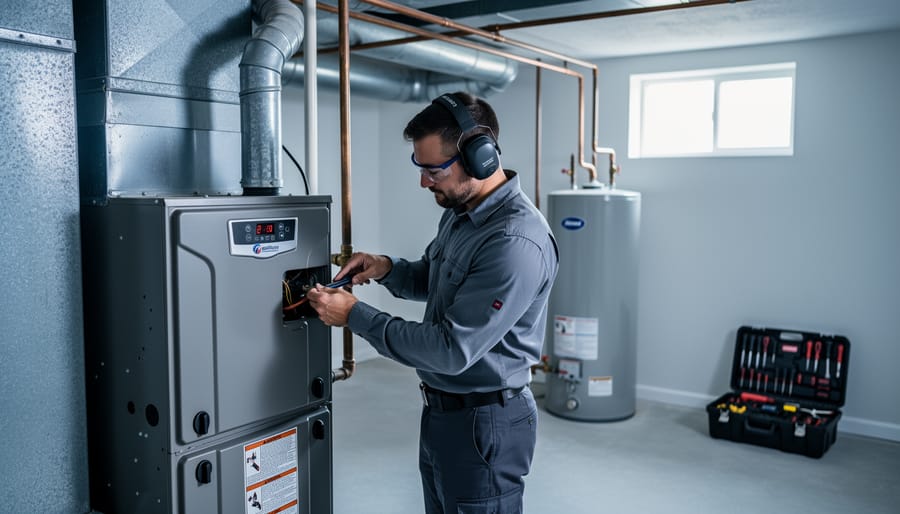
Your installation team handles crucial tasks including removing the old oil furnace and tank, running new gas lines to meet local codes, installing the gas furnace with proper venting, connecting electrical components, and thoroughly testing the system for safe operation. Most conversions take 2-3 days to complete, depending on your home’s existing setup and any modifications needed.
This absolutely isn’t a DIY project, even if you’re handy around the house. Gas line installation requires licensed professionals who understand pressure requirements, leak prevention, and building codes. Improper installation creates serious safety hazards including gas leaks, carbon monoxide risks, and potential fire dangers. Licensed HVAC technicians carry insurance and warranties that protect your investment—if something goes wrong, you’re covered.
Think of professional installation as an investment in peace of mind. These experts ensure your new heating system operates efficiently from day one, maximizing your energy savings and creating a warm, safe environment for your family. The cost reflects not just labor hours, but years of training and certification that keeps your home protected.
Gas Line Installation: The Hidden Variable
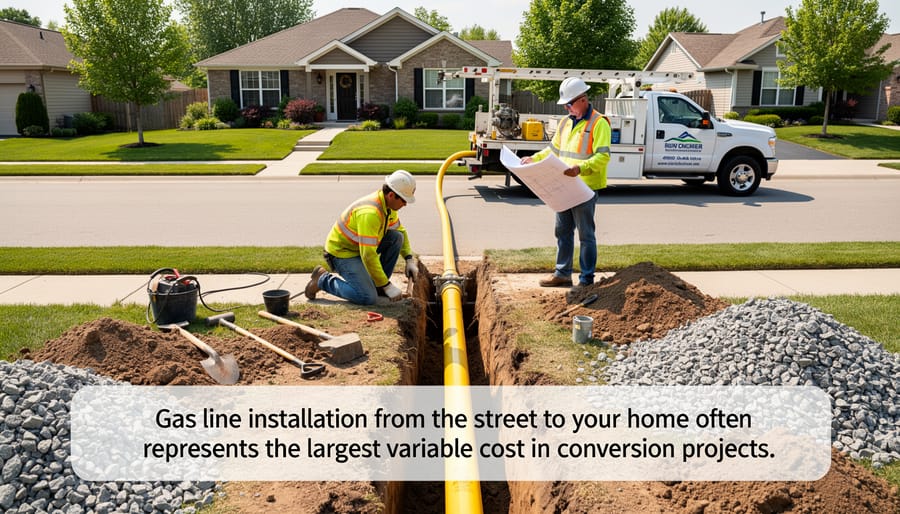
Here’s one of those surprises that catches many homeowners off guard: if your home currently runs on oil heat, you might not have a natural gas line running to your property yet. This hidden variable can significantly impact your overall conversion budget, sometimes adding thousands of dollars you hadn’t anticipated.
The distance from the main gas line to your home plays a starring role in determining costs. If you’re fortunate enough to have gas service in your neighborhood with the main line at your property edge, installation might run between $500 and $2,000. However, if the nearest connection point sits several hundred feet away, you could be looking at $15 to $25 per linear foot for trenching and pipe installation. A 300-foot run could add $4,500 to $7,500 to your conversion cost.
Trenching requirements add another layer of complexity. Your property’s terrain, landscaping, driveways, and existing underground utilities all affect the final price. Rocky soil or concrete obstacles require special equipment, increasing labor costs substantially. Similar to other gas conversion projects, permits are mandatory and typically range from $50 to $500, depending on your municipality’s requirements.
Some utility companies offer programs to offset gas line installation costs, especially when expanding service to new areas. Contact your local gas provider early in your planning process to explore these opportunities and get accurate estimates. This conversation might reveal cost-sharing options or seasonal promotions that make the investment more manageable for your household budget.
The Complete Picture: Your Total Investment Range
Best-Case Scenario: Gas Line Already Exists
If you’re fortunate enough to already have a natural gas line running to your home, you’re looking at the most budget-friendly conversion scenario. In this ideal situation, your total costs typically range from $3,500 to $6,000. Since the gas infrastructure is already in place, you’ll only need to cover the furnace unit itself, professional installation, and necessary ventilation modifications.
The existing gas line eliminates the single biggest expense of conversion, which is bringing natural gas service to your property. Your contractor will simply need to verify that your current gas line has adequate capacity to handle the new furnace’s demand. Most residential lines can accommodate this without issue, though homes with multiple gas appliances might occasionally need a pressure check.
This straightforward scenario makes the payback period much shorter, especially if you’re replacing an aging oil system. With lower fuel costs and minimal upfront investment, many homeowners see this as a smart financial move that also supports cleaner, more eco-friendly heating for their home.
Average-Case Scenario: Moderate Gas Line Installation
For most homeowners, a standard oil to gas furnace conversion falls somewhere in the middle of the cost spectrum. This scenario typically involves running a gas line between 50-100 feet from your existing gas meter or main line to your furnace location. You’re looking at a total investment of $6,000 to $9,000, which includes the mid-range gas furnace unit, professional installation, and moderate gas line extension work.
This represents the sweet spot where you’re getting reliable, efficient heating without excessive complexity. Your home already has gas service for other appliances, the route for the gas line is relatively straightforward through your basement or crawlspace, and you’re choosing a quality furnace with good efficiency ratings. At this level, you’re investing in comfort and long-term energy savings while keeping the project manageable. Most permits and inspections run smoothly, and the installation typically takes two to three days from start to finish, making this the most predictable conversion experience.
Complex Conversion: When Costs Add Up
Not all conversions follow a straightforward path, and sometimes the unique characteristics of your home can significantly impact the final investment. Understanding these complexity factors helps you budget realistically and avoid surprises during your heating transformation.
Distance matters tremendously when it comes to natural gas availability. If your home sits more than 100 feet from the nearest gas main, you’re looking at additional costs ranging from $1,000 to $10,000 or more for trenching and pipe installation. Each foot of distance adds to both materials and labor expenses, turning what might be a $6,000 project into a $15,000 undertaking.
Your existing ductwork might need substantial modifications too. Older oil furnaces often required different airflow configurations than modern gas systems. Expect to add $1,500 to $4,000 for ductwork adjustments that ensure your new system distributes warmth efficiently throughout your living spaces.
Chimney considerations present another layer of complexity. Gas furnaces require different venting than oil systems, often necessitating stainless steel liner installations costing $1,200 to $3,500. This eco-friendly upgrade ensures safe operation while improving efficiency.
Finally, permit complications in areas with strict regulations can add unexpected delays and fees. Some municipalities require extensive inspections, engineering reports, or environmental assessments that push costs higher. Working with experienced contractors who understand local requirements helps navigate these regulatory waters smoothly.
Beyond the Sticker Price: What Else You Need to Budget For
Oil Tank Removal and Disposal
Removing your old oil tank is a crucial step in your heating transition, and costs vary significantly based on tank location and size. Above-ground tank removal typically runs between $400 and $1,000, making it the more straightforward and budget-friendly option. Underground tanks, however, present a different story entirely, with removal costs ranging from $1,500 to $3,000 or more due to excavation requirements and environmental considerations.
Before removal begins, most municipalities require soil testing to check for leaks or contamination. If your underground tank has leaked, remediation costs can escalate quickly, sometimes reaching $10,000 or beyond depending on the extent of environmental damage. The good news? Many states offer assistance programs for homeowners dealing with tank removal and cleanup.
You’ll need proper permits for tank removal, which your contractor typically handles but adds $50 to $200 to your project. Working with licensed professionals who understand local environmental regulations isn’t just smart—it’s essential for protecting your home’s value and your family’s safety. Consider this an investment in your property’s future and a step toward cleaner, more eco-friendly heating.
Permits, Inspections, and Utility Connection Fees
Before your new gas furnace can warm your home, you’ll need to navigate the administrative side of things. Municipal permits typically range from $50 to $500, depending on your location and the scope of work. Most jurisdictions require permits for both the furnace installation and any gas line modifications, ensuring everything meets local building codes and safety standards.
Inspections are part of the package, usually included in your permit fees or billed separately at $100 to $300. These aren’t just bureaucratic hoops—they’re essential safety checks that protect your family and home. Inspectors verify proper installation, adequate ventilation, and compliance with fire codes.
If you’re connecting to natural gas for the first time, your utility company will charge connection fees ranging from $250 to $1,000 or more. This covers the cost of extending service to your property, installing a meter, and activating your account. Some utility companies offer promotional rates for conversions to their cleaner-burning fuel, so it’s worth asking about available incentives when you call to schedule service.
Ductwork and Ventilation Modifications
Switching from oil to gas often requires updating your home’s venting system since gas furnaces exhaust differently than oil units. Gas furnaces typically need PVC venting rather than traditional metal chimneys, which creates additional expenses. If your existing ductwork is properly sized and in good condition, you may avoid modifications there—but older homes sometimes need adjustments to optimize airflow and efficiency with your new system.
Basic venting modifications typically cost between $500 and $2,000, depending on your home’s configuration and whether you’re installing direct-vent or conventional systems. More complex ductwork upgrades can add $1,500 to $5,000 to your project. While these updates increase your upfront investment, they ensure proper ventilation and maximize your new furnace’s efficiency, creating a safer, more comfortable heating solution that reduces long-term operating costs.
Will You Actually Save Money? The Long-Term Math
Comparing Fuel Costs in Your Region
Understanding your actual heating costs requires comparing apples to apples using current local prices. Start by checking your recent oil bills to find your cost per gallon, then contact your utility company for natural gas rates per therm in your area. The basic calculation involves converting these different units to a common measurement—typically cost per BTU of heat delivered.
Here’s a simple approach: oil typically delivers about 140,000 BTUs per gallon (accounting for 85% furnace efficiency), while natural gas provides roughly 100,000 BTUs per therm (at 95% efficiency). If oil costs $3.50 per gallon in your area and gas runs $1.50 per therm, you’re paying about $25 per million BTUs for oil versus $15 for gas—a significant 40% savings on fuel alone.
Regional variations matter tremendously. Homeowners in the Northeast might see dramatic savings due to higher oil prices, while those in areas with limited gas infrastructure may find smaller differences. If you’re also considering alternatives like natural gas and propane, run the same calculations for each fuel type available in your location. Your utility company’s website often provides helpful comparison calculators tailored to local pricing, making it easier to project your actual annual savings before committing to conversion.

Calculating Your Break-Even Point
Understanding when your conversion investment pays for itself helps you make a confident decision about switching from oil to gas heating. The calculation is refreshingly straightforward, though the timeline varies based on your specific situation.
Start by calculating your total conversion cost, including equipment, installation, and any necessary modifications. Next, determine your annual savings by comparing your current oil heating expenses with projected gas costs. Simply divide your total investment by the yearly savings to find your break-even point in years.
For example, if your conversion costs $8,000 and you save $1,200 annually on fuel, you’ll break even in roughly 6.7 years. Most homeowners see payback periods between 5 and 10 years, depending on regional energy prices and heating demands.
Keep in mind that this is just one piece of the puzzle. Beyond pure economics, consider the enhanced comfort, reduced maintenance hassles, and environmental benefits of cleaner-burning natural gas. Your home’s heating system is a lifestyle element that affects daily comfort for decades, making factors like reliability and convenience valuable beyond the numbers alone. If you’re planning to stay in your home beyond the payback period, conversion typically makes excellent financial sense while supporting eco-friendly heating solutions.
The Hidden Benefits Beyond Dollar Signs
Beyond the numbers on your calculator, converting from oil to gas delivers everyday advantages that truly enhance your home life. Natural gas burns remarkably cleaner, eliminating those telltale oil odors and reducing indoor air pollutants that affect your family’s comfort. You’ll discover maintenance becomes refreshingly simple—no more annual tank inspections, fuel deliveries to schedule, or worry about running out during a cold snap.
The convenience factor alone transforms your daily routine. Gas flows continuously through utility lines, meaning no more monitoring gauge levels or coordinating delivery windows. When comparing gas versus electric options, many homeowners appreciate gas’s reliability during power outages and its responsive heating performance.
Your home’s market value typically sees a welcome boost too, as modern gas systems appeal to environmentally-conscious buyers seeking efficient, clean-burning solutions. Speaking of environmental benefits, natural gas produces significantly fewer carbon emissions than oil, helping you reduce your household’s ecological footprint while enjoying consistent, dependable warmth throughout winter months.

Making It More Affordable: Rebates and Financing Options
Federal, State, and Local Incentive Programs
Making the switch from oil to gas becomes even more financially attractive when you tap into available incentive programs. The federal government offers tax credits for high-efficiency gas furnaces through the Energy Efficient Home Improvement Credit, which can provide up to $600 for qualifying ENERGY STAR certified systems with an AFUE rating of 95% or higher. These eco-friendly heating solutions not only reduce your carbon footprint but also put money back in your pocket.
Your state and local utility companies often sweeten the deal further with rebates ranging from $250 to $1,500, especially for ultra-efficient models. Many utilities are actively encouraging homeowners to move away from oil heating as part of clean energy initiatives.
To discover programs in your area, start by visiting the Database of State Incentives for Renewables and Efficiency (DSIRE) website, which provides a comprehensive directory searchable by zip code. Also contact your gas utility company directly, as they frequently offer conversion incentives not widely advertised. Your HVAC contractor can also guide you toward qualifying equipment and help with paperwork. These combined incentives can reduce your conversion costs by 10-20%, making this home comfort upgrade even more accessible.
Utility Company Conversion Programs
Many gas utility companies are eager to expand their customer base and offer attractive conversion programs that can significantly reduce your upfront costs. These programs are worth investigating before you commit to any conversion project, as they can save you hundreds or even thousands of dollars.
Gas utilities frequently provide rebates ranging from $500 to $2,500 for homeowners switching from oil to natural gas heating. Some companies go further by waiving connection fees, which typically cost between $1,000 and $3,000, or offering discounted installation rates through their network of approved contractors.
To find available programs in your area, contact your local gas utility company directly or visit their website. Many utilities also offer free home energy assessments to help you understand potential savings. Some programs include financing options with low or zero-interest rates, making the transition even more affordable for homeowners.
Keep in mind that these incentive programs often have specific requirements, such as installing high-efficiency equipment or completing the conversion within a certain timeframe. The application process may require documentation and contractor certification, but the potential savings make the extra paperwork worthwhile. Acting quickly is important, as funding for these programs can be limited and availability may change seasonally.
Financing Your Conversion Project
Converting to a cleaner, more efficient gas furnace doesn’t have to strain your budget. Several financing options can help spread the cost while you start enjoying immediate energy savings. Home equity loans or lines of credit often offer competitive rates since they’re secured by your property. Many HVAC contractors partner with financing companies that specialize in home improvement projects, sometimes offering promotional periods with low or zero interest if you qualify. Additionally, energy-efficient home improvement loans backed by programs like FHA’s PowerSaver or state-sponsored initiatives may provide favorable terms specifically for eco-friendly heating upgrades. Some utility companies even offer rebates or low-interest financing to encourage customers to switch from oil to natural gas. Compare options carefully, considering interest rates, repayment terms, and whether monthly financing costs align with your projected energy savings to ensure your conversion makes financial sense from day one.
Is This the Right Move for Your Home?
When Conversion Makes Perfect Sense
Conversion becomes a smart investment when several factors align in your favor. If your oil furnace has been faithfully warming your home for 15 to 20 years, it’s approaching the end of its natural lifespan anyway. Why sink money into replacing an aging oil system when you could transition to cleaner, more efficient natural gas?
The game-changer is having a gas line already running to your street or neighborhood. When natural gas infrastructure is nearby, connection costs drop dramatically, making your total investment far more reasonable. Combine this with regional heating oil prices that consistently spike during cold months, and the financial case strengthens considerably.
Long-term homeowners see the greatest benefits. If you’re planning to stay in your home for at least five to ten years, you’ll have time to recoup your upfront investment through lower monthly heating bills and reduced maintenance costs. Natural gas furnaces also appeal to environmentally conscious homeowners seeking eco-friendly heating solutions that produce fewer emissions. When these circumstances come together, conversion transforms from a maybe into a definitely-worth-considering upgrade for your home’s comfort system.
When You Might Want to Think Twice
Converting to natural gas isn’t always the right move for every homeowner. If natural gas lines don’t run near your property, the extension costs can reach tens of thousands of dollars, making the entire project financially impractical. Similarly, if you’re planning to sell your home within the next three to five years, you likely won’t recoup your investment through energy savings alone.
When your oil furnace is relatively new and running efficiently, sticking with what you have often makes more sense than replacing perfectly good equipment. Consider that modern oil furnaces can be quite efficient and reliable heating solutions for your home.
In regions where oil and natural gas prices are comparable, the cost savings simply won’t justify the conversion expense. Additionally, if your home relies on oil for other purposes like water heating or cooking, maintaining a single fuel source can simplify your home’s energy management. Take time to evaluate your specific situation, considering both immediate costs and long-term lifestyle factors, before making this significant investment in your home’s heating comfort.
Alternative Heating Solutions Worth Considering
Before committing to oil-to-gas conversion, explore alternatives that might better suit your home and budget. Heat pumps offer excellent energy efficiency and can both heat and cool your space, making them ideal for moderate climates. A propane conversion might be more practical if natural gas isn’t available in your area. Hybrid systems combining traditional furnaces with electric heat pumps provide flexibility and optimize energy use based on outdoor temperatures. Each option has unique benefits worth evaluating alongside your conversion plans to ensure you choose the most eco-friendly and cost-effective heating solution for your lifestyle.
Converting from oil to gas heating is more than just a mechanical upgrade—it’s an investment in your home’s comfort, efficiency, and environmental footprint. While the costs we’ve explored may seem substantial, remember that every home tells a different story. Your existing setup, local utility rates, available rebates, and long-term goals all shape what makes sense for your situation.
The numbers matter, but they’re only part of the picture. This decision deserves personalized attention from qualified HVAC professionals who can assess your specific circumstances and provide accurate quotes tailored to your home. Take time to gather multiple estimates, ask questions, and explore financing options that align with your budget.
Ultimately, this conversion represents more than cost savings—it’s about creating a warmer, more sustainable living environment for years to come. Trust your research, lean on expert guidance, and make the choice that brings lasting comfort to your home.