
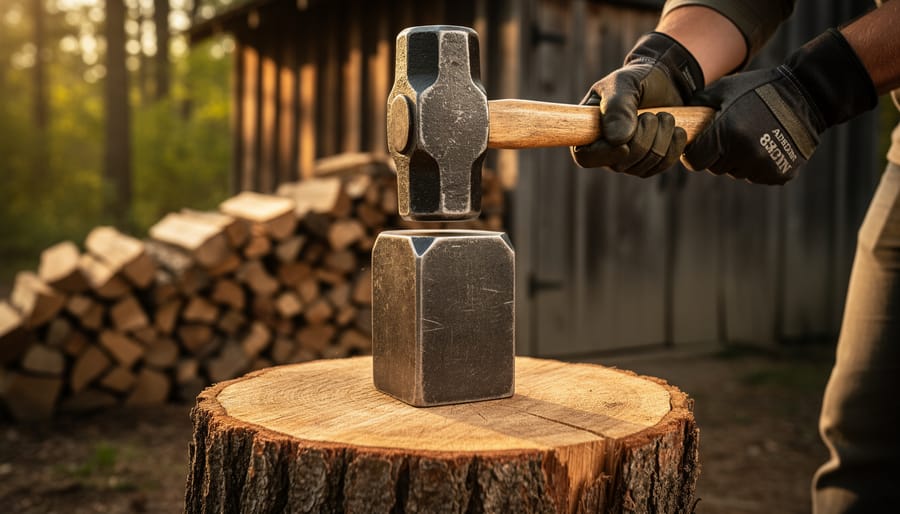


Split firewood four times faster by driving a grenade wedge into logs with a sledgehammer, letting its multi-directional blade design fracture wood along natural grain lines without the repeated swings traditional methods demand. This cone-shaped splitting tool, named for its resemblance to a military grenade, transforms wood preparation from an exhausting afternoon ordeal into a manageable task that protects your back and shoulders while delivering consistent results.
Position the wedge’s pointed tip into existing cracks or the log’s center, strike firmly with an eight-pound sledge, and watch as the radiating blades force wood apart in multiple directions simultaneously. Unlike conventional splitting mauls that require precise aim and significant upper body strength, grenade wedges work with gravity and mechanical advantage, making them accessible for anyone maintaining a wood-burning fireplace or stove.
The tool excels with seasoned hardwoods measuring twelve to twenty-four inches in diameter, those challenging rounds that resist standard axes and leave you frustrated mid-winter when your fire demands fuel. Choose models with reinforced steel construction and replaceable striking surfaces to ensure years of reliable service, particularly if you’re processing multiple cords annually for consistent home heating.
Understanding how grenade wedges compare to hydraulic splitters, traditional mauls, and manual wedges helps you select the most efficient, eco-friendly approach for your specific needs and physical capabilities, ensuring your fireplace remains a sustainable heat source rather than a source of injury or exhaustion.
What Is a Wood Splitting Grenade Wedge?
If you’ve ever spent an afternoon preparing firewood for your fireplace, you know the process can be exhausting and time-consuming. Enter the wood splitting grenade wedge—a remarkably clever tool that’s transforming how homeowners tackle their firewood preparation.
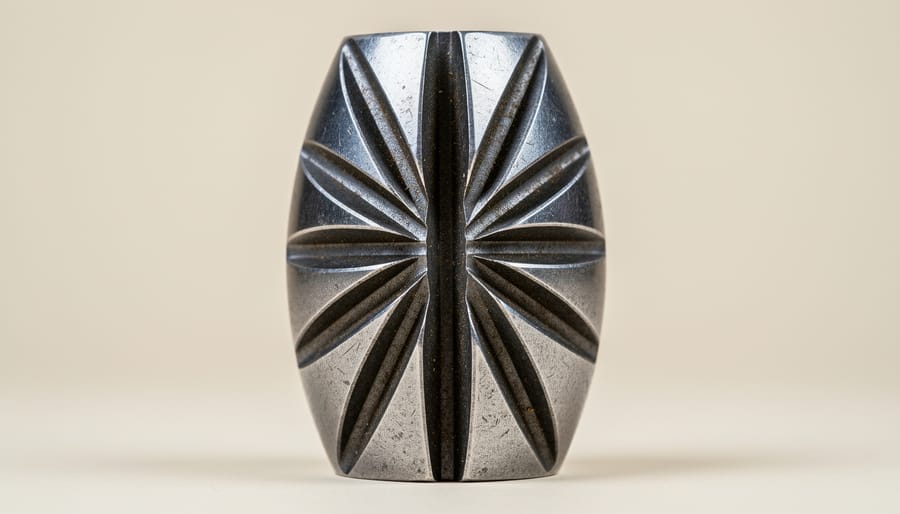
A wood splitting grenade wedge is a multi-pointed splitting tool designed to crack logs open from the inside out. Unlike traditional wedges that feature a single blade edge, this innovative device showcases multiple sharp splitting edges—typically four to six—that radiate outward from a central point, resembling the shape of a hand grenade. This distinctive star-shaped design is what gives the tool both its name and its impressive efficiency.
When you drive a grenade wedge into a log using a sledgehammer or mallet, those multiple edges work simultaneously to create pressure in several directions at once. This multi-directional splitting action is the key difference from conventional splitting wood with wedges. Instead of forcing wood apart along a single plane, the grenade wedge splits your logs into multiple pieces in one strike—often breaking a round into quarters or even smaller sections.
Traditional axes and single-blade wedges certainly have their place, but they require more swings, more effort, and more time to achieve similar results. The grenade wedge’s design distributes force more efficiently, making it particularly valuable for those stubborn, knotty logs that resist conventional splitting methods. It’s an eco-friendly approach too, as the efficient splitting means less energy expenditure and faster preparation of sustainable heating fuel for your home.
For fireplace enthusiasts seeking a smarter way to stock up on firewood, this tool represents a practical evolution in wood preparation technology.
How the Grenade Wedge Actually Works
The Right Way to Position Your Wood
Before you swing that hammer, let’s talk setup. Proper positioning makes all the difference between frustrating effort and satisfying results that’ll keep your fireplace glowing all season long.
Start with a stable splitting surface. A sturdy tree stump or large round of wood works beautifully as your base, ideally 12-16 inches tall. This height protects your back and gives you a comfortable working position. Make sure it’s on level ground and won’t shift when you strike.
Now, examine your wood. Look at the end grain, those circular growth rings visible on the cut surface. Place your wood with these rings facing up, and position your grenade wedge to split with the grain, not across it. Think of it like unzipping a jacket rather than tearing through the fabric. You’ll notice natural cracks or checks radiating from the center, these are your friends. Align your wedge to follow these existing weaknesses.
Keep your wood at a comfortable height, roughly knee-level when standing. This positioning gives you the control and leverage needed for accurate placement while keeping the process safe and efficient. Remember, working smarter means more time enjoying that crackling fire and less time struggling with stubborn logs.
Striking Technique for Maximum Effect
Mastering your striking technique transforms the grenade wedge from a simple tool into an efficient wood-splitting powerhouse. Position yourself with feet shoulder-width apart, gripping the sledgehammer near the end of the handle for maximum momentum. Aim for the center of the wedge’s striking surface, bringing the hammer down in a smooth, controlled arc rather than wild, forceful swings that drain your energy quickly.
The key is consistency over brute force. Medium-strength strikes delivered with good accuracy will outperform harder, poorly aimed blows every time. Let gravity do much of the work as you guide the hammer downward, keeping your eye on the target throughout the swing. This approach saves your back and shoulders while maintaining the steady rhythm that makes wood splitting enjoyable rather than exhausting.
Common mistakes include standing too close to the log, which limits your swing arc, or gripping the handle too tightly, causing unnecessary arm fatigue. Never strike at an angle, as this can damage both the wedge and your sledgehammer while sending dangerous wood chips flying unpredictably. If the wedge isn’t penetrating after three solid hits, reposition it rather than continuing to pound away, preserving both your energy and your equipment for the cozy fires ahead.
Why Fireplace Owners Love This Method
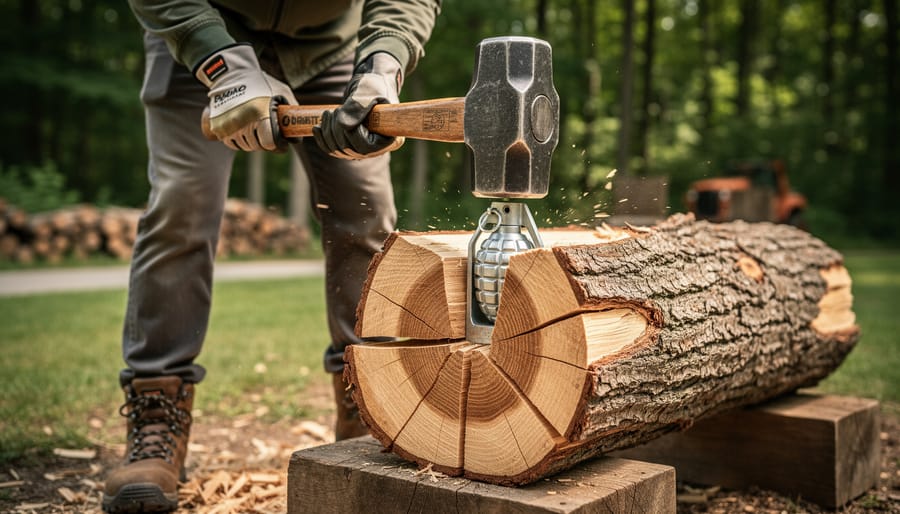
For homeowners who rely on their fireplace or wood stove for cozy evenings or supplemental heating, the wood splitting grenade wedge has become something of a game-changer. The biggest advantage? It transforms what’s traditionally been a physically demanding chore into something far more manageable and even enjoyable.
The tool’s design means you’re working smarter, not harder. Instead of repeatedly swinging a heavy axe overhead, you simply position the wedge and drive it down with controlled strikes. This approach offers significantly reduced physical strain on your back, shoulders, and joints. For those of us who aren’t professional lumberjacks, this matters tremendously. You can prepare a weekend’s worth of firewood without feeling like you’ve run a marathon.
Safety is another compelling reason fireplace owners are making the switch. Traditional axe splitting requires precise aim and considerable space, with the constant risk of glancing blows or missed strikes. The grenade wedge stays firmly planted in the wood, meaning your hands are nowhere near the strike zone. There’s no awkward overhead swinging or worrying about the axe head flying off mid-swing.
Perhaps most importantly, this tool democratizes firewood preparation. You don’t need exceptional upper body strength or years of experience to use it effectively. Older adults, those recovering from injuries, or anyone who previously found wood splitting intimidating can now confidently prepare their own firewood. This independence means you’re not relying on expensive delivery services or pre-split bundles from the gas station.
The efficiency gains also mean more time actually enjoying your fireplace rather than dreading the prep work. Many users report cutting their splitting time in half, which translates to more cozy evenings by the fire and less exhausting afternoon labor. For anyone who values their fireplace as both a practical heating solution and a lifestyle amenity, this tool simply makes the entire experience more sustainable and enjoyable.

Choosing the Right Grenade Wedge for Your Needs
Selecting the perfect grenade wedge starts with understanding your specific firewood needs and the types of logs you typically split. Think of it as matching the right tool to your lifestyle, much like choosing the perfect fireplace for your home’s ambiance and heating requirements.
When it comes to materials, high-carbon steel is your best friend. Look for wedges made from hardened steel grades, often labeled as alloy or tool steel, which resist mushrooming and cracking even after thousands of strikes. These durable options might cost more upfront, but they’re an investment in sustainable firewood preparation that’ll serve you season after season.
Weight matters more than you might think. Lighter wedges around 3-5 pounds work beautifully for smaller logs and softer woods like pine or poplar, making them ideal if you’re preparing kindling or have a modest fireplace. Heavier models weighing 5-8 pounds deliver more splitting force for hardwoods like oak and maple, though they require more effort to lift and position.
The splitting edge configuration is where things get interesting. Four-way designs create four splits from each strike, working wonderfully for medium-sized logs up to 12 inches in diameter. They’re the sweet spot for most homeowners who simply want to keep their hearth burning efficiently. Six-way wedges, however, divide logs into smaller pieces with a single blow, perfect if you’re processing larger rounds or prefer smaller splits that season faster and create less ash.
Consider your typical log diameter too. For rounds under 10 inches, a standard four-way wedge handles everything beautifully. Larger logs exceeding 15 inches benefit from six-way designs or heavier models that can handle the increased resistance without getting stuck halfway through your work.
When to Use a Grenade Wedge vs. Other Splitting Methods
Understanding when to reach for your grenade wedge versus other splitting tools can save you time, energy, and frustration while preparing firewood for those cozy evenings by the fire.
Grenade wedges truly shine when you’re dealing with moderately sized logs that have challenging grain patterns, knots, or twisted fibers. Think of those stubborn rounds that make you swing an axe repeatedly with little progress. The grenade wedge’s multiple splitting points work simultaneously to overcome these obstacles, making it ideal for gnarly hardwoods like elm, oak, or maple that tend to resist simple splitting methods. For homeowners processing a few cords per season, this tool offers an excellent middle ground between manual labor and expensive machinery.
However, when you’re comparing wedges versus mauls, remember that traditional axes and mauls still have their place. For straight-grained softwoods like pine or fir, a good splitting maul is often faster and more efficient. These woods typically split cleanly with one or two strikes, making the grenade wedge’s sophisticated design unnecessary.
If you’re processing large volumes regularly or working with massive rounds over 18 inches in diameter, a hydraulic splitter becomes the more practical choice. While grenade wedges handle most firewood-sized pieces beautifully, they have limitations with oversized logs that require industrial-level force.
For the typical homeowner maintaining a sustainable, eco-friendly heating solution, the grenade wedge offers the sweet spot: it’s more effective than manual tools alone for difficult wood, doesn’t require fuel or electricity like hydraulic splitters, and provides satisfying results without excessive physical strain. It’s about choosing the right tool for your specific firewood preparation needs.
Safety Tips Every Beginner Should Know
While wood splitting grenade wedges are certainly safer than swinging a sharp axe, treating any wood splitting tool with respect is essential for enjoying your fireplace hobby without injury. Think of safety as part of creating that cozy, worry-free atmosphere you’re working toward.
Start with the right protective gear. Safety glasses are non-negotiable since wood chips can fly unpredictably when splitting, even with this gentler method. A sturdy pair of work gloves protects your hands from splinters and rough bark, while steel-toed boots guard your feet if a log happens to roll or a piece falls. These simple investments make your firewood prep sessions comfortable and secure.
Maintaining a safe working distance is equally important. Position yourself so you’re never directly over the wedge when striking it with a mallet. Stand slightly to the side, giving yourself room to move if needed. Work on stable, level ground and use a solid chopping block to keep logs at a comfortable height.
If your wedge becomes stuck, resist the urge to force it. Gently tap around the edges to work it free, or try rotating it slightly. Never use excessive force or strike it from awkward angles, as this can damage both the wedge and create dangerous situations.
Remember, preparing firewood should be a satisfying part of your eco-friendly heating routine, not a stressful chore. Taking these precautions ensures you’ll spend more time enjoying the warmth of your fireplace and less time worrying about accidents. Your safety always comes first in creating that perfect home sanctuary.
Maintaining Your Splitting Wedge for Years of Use
Your wood splitting grenade wedge is built to last, but a little care goes a long way in keeping it working smoothly for years to come. After each splitting session, take a moment to wipe down your wedge with a dry cloth, removing any wood fibers, sap, or moisture. This simple step prevents rust from taking hold, especially if you’re storing it in a damp garage or shed.
Speaking of rust prevention, consider applying a light coat of mineral oil or a rust-preventive spray if you live in a humid climate or won’t be using your wedge for several weeks. Before each use, inspect your wedge for cracks, chips, or mushrooming along the striking surface. These signs indicate metal fatigue that could lead to dangerous fractures during use.
When you notice significant deformation at the striking end or deep cracks forming, it’s time to retire your wedge and invest in a new one. The beauty of this traditional, non-electric tool is its longevity and minimal environmental impact. Unlike gas-powered splitters that require fuel and regular maintenance, your grenade wedge has no moving parts to fail and generates zero emissions. With proper care, one wedge can help you prepare firewood for countless cozy evenings by the fire, making it both an economical and eco-friendly choice for sustainable home heating.
The wood splitting grenade wedge represents a genuine breakthrough in making firewood preparation accessible to everyone. Gone are the days when splitting wood required brute strength, perfect technique, or expensive power equipment. This simple yet ingenious tool levels the playing field, allowing homeowners of all ages and physical abilities to take control of their heating needs and enjoy the incomparable warmth of a wood-burning fireplace.
By embracing this method alongside properly seasoned firewood, you’re not just preparing fuel for your fireplace. You’re participating in a sustainable, self-sufficient approach to home heating that reduces dependence on fossil fuels while reconnecting with the satisfying, hands-on work of caring for your home. The grenade wedge makes this lifestyle choice practical rather than aspirational.
Whether you’re new to wood heating or looking to make your existing routine easier, the grenade wedge deserves consideration. It transforms what was once a daunting chore into a manageable task, bringing the comfort and ambiance of a crackling fire within reach for anyone willing to swing a sledgehammer a few times.