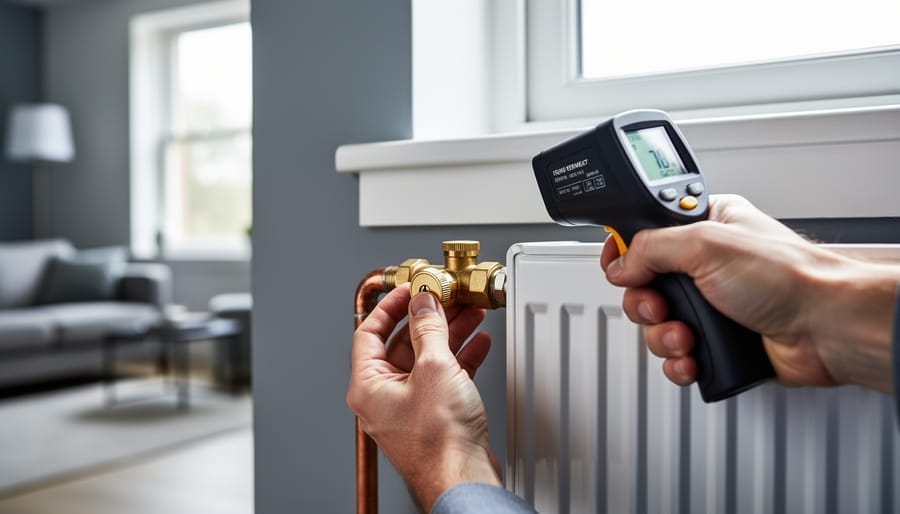


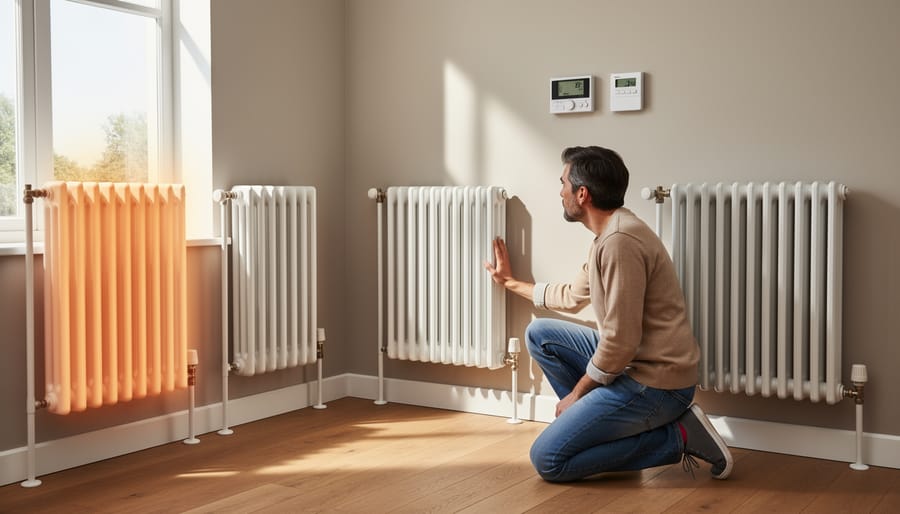
Check each radiator in your home by placing your hand on the top and bottom surfaces—if there’s a noticeable temperature difference or some rooms feel chilly while others overheat, your heating system likely needs balancing. Measure the temperature difference across each radiator’s inlet and outlet pipes using an infrared thermometer or basic pipe thermometer, recording values for every unit in your home. Calculate the flow rate through each radiator using the universal hydronic formula: BTU/hr = GPM × 500 × ΔT, where GPM represents gallons per minute, 500 is the constant for water’s heat capacity, and ΔT is your temperature difference in degrees Fahrenheit. Adjust the lockshield valves on radiators receiving too much flow by partially closing them, forcing more hot water to radiators that were previously starved of heat.
This mathematical relationship isn’t just theoretical—it’s the key to transforming an uncomfortable home with cold spots and wasted energy into an evenly heated sanctuary. When your hydronic heating system operates without proper balancing, it’s like trying to warm your house with some windows open; certain radiators hog all the hot water while others barely get lukewarm. The universal hydronic formula gives you the diagnostic tool to understand exactly what’s happening inside your pipes and the roadmap to fix it.
Understanding this formula empowers you to take control of your home’s comfort without expensive service calls. You’ll discover why that bedroom radiator stays cold, why your energy bills climb despite constant thermostat adjustments, and how to achieve the consistent, enveloping warmth that makes a house truly feel like home. Whether you’re complementing your primary heating with radiant systems or relying entirely on hydronic heat, mastering this simple equation transforms you from frustrated homeowner to confident heating system manager, ensuring every room delivers the cozy comfort you deserve while minimizing energy waste.
Why Your Radiators Heat Unevenly (And Why It Matters)
Have you ever noticed that your bedroom feels like a sauna while your living room stays frustratingly chilly, even though they’re both heated by the same hydronic system? You’re not alone. This is one of the most common uneven heating problems homeowners face, and it’s more than just an inconvenience.
When your hydronic heating system isn’t properly balanced, hot water flows unevenly through your radiators. The radiators closest to your boiler tend to hog all the hot water, leaving the ones farther away lukewarm at best. You might find yourself constantly adjusting thermostats or dealing with radiator heat knob issues trying to find that perfect temperature that never quite arrives.
The impact goes beyond comfort. When your system runs inefficiently, your boiler works overtime trying to heat those cold rooms, burning through fuel and driving up your energy bills. Some homeowners crank up the thermostat to compensate for cold spots, which only makes the already-hot rooms unbearable and wastes even more energy. It’s a frustrating cycle that affects your wallet and your home’s environmental footprint.
This imbalance also puts unnecessary stress on your entire heating system. Your boiler runs longer cycles, your pump works harder, and over time, this extra wear can lead to breakdowns and costly repairs. Meanwhile, the rooms that get too much heat may leave you cracking windows in winter, literally throwing money out into the cold air.
The good news? Understanding the universal hydronic formula gives you the power to fix this problem yourself. By learning how water flow relates to heat output in each radiator, you can restore balance to your system, creating even warmth throughout your home while reducing energy consumption. It’s about bringing harmony back to your heating system and your living space.
Understanding the Universal Hydronic Formula
The Formula Explained in Plain English
At its heart, the universal hydronic formula is refreshingly simple: Q = flow × ΔT × constant. Think of it like a recipe for understanding the heat flowing through your radiators.
Here’s what each piece means in everyday language. Q represents the heat energy being delivered to your room, measured in BTUs (British Thermal Units). If you’re familiar with radiators or fireplaces, you’ve probably seen BTU ratings before—it’s simply a measure of heating power.
The flow is how much hot water moves through your radiator pipes, typically measured in gallons per minute. Imagine your garden hose: turn it up full blast and you get lots of water quickly; turn it down to a trickle and water moves slowly. Your radiator works the same way.
ΔT, or “delta T,” is the temperature difference between the water entering your radiator and the water leaving it. Picture filling a bathtub with hot water. If the water starts at 180 degrees and leaves at 160 degrees, your ΔT is 20 degrees. This temperature drop tells you how much heat the radiator actually released into your room.
Finally, the constant is just a conversion number that makes the math work out correctly based on what units you’re using. For most homeowners using gallons per minute and BTUs, this constant is 500.
Put together, this formula helps you understand exactly how much heat each radiator delivers. When one room feels like the Arctic while another resembles a sauna, this formula becomes your diagnostic tool. By measuring these simple values, you can identify which radiators need adjusting to create that perfectly balanced, cozy warmth throughout your entire home.
What Each Variable Really Means for Your Home
When you first encounter the universal hydronic formula, it might look intimidating, but think of it as your home’s comfort recipe. Each variable tells a specific story about how heat travels through your heating system to warm your living spaces.
The BTU output represents the actual heat energy your radiator delivers into a room. It’s like measuring the warmth you feel on a chilly evening—higher BTUs mean more heating power reaching your family. This number directly impacts whether your living room feels cozy or still has those cold spots near the windows.
Flow rate measures how much hot water moves through your radiator per minute, typically measured in gallons per minute or GPM. Picture water flowing through a garden hose—too little flow and your radiator never gets fully warm, too much and the system becomes noisy and inefficient. Getting this balance right ensures each room receives its fair share of heated water without wasting energy.
The temperature difference between supply and return water reveals how efficiently your radiator extracts heat from the water passing through it. When water enters at 180 degrees and leaves at 160 degrees, that 20-degree drop represents heat transferred into your home. A properly balanced radiator should show a consistent temperature difference, typically between 10 and 20 degrees depending on your system design.
The constant in the formula (usually 500 for water-based systems) accounts for water’s physical properties and unit conversions. You don’t need to memorize why it’s 500, just know it keeps all your measurements playing nicely together.
Understanding these variables helps you diagnose heating problems more effectively and communicate clearly with HVAC professionals, ultimately creating a warmer, more energy-efficient home that supports both comfort and eco-friendly living.
How to Use the Formula for Radiator Balancing
Measuring Your System’s Current State
Before you can balance your heating system, you need to establish a baseline. Think of it like taking your home’s temperature – literally! This step is crucial for understanding how your radiators are currently performing and where adjustments are needed.
The essential tool you’ll need is a reliable infrared thermometer, available at most hardware stores for around twenty to forty dollars. These handheld devices let you measure surface temperatures without touching hot radiators, making the process both safe and straightforward. You’ll also want a notepad to record your findings and create a heat map of your home.
Start by running your heating system at its normal operating temperature for at least an hour. Then, systematically visit each radiator in your home. Point the infrared thermometer at the center of each radiator and record the reading. For accuracy, take measurements at the same height on each unit and avoid aiming at reflective surfaces or valve components.
Safety is paramount during this process. Never touch radiators with bare hands when the system is running, as surface temperatures can exceed 150 degrees Fahrenheit. Keep children and pets away from your work area, and ensure good ventilation if you’re working in smaller spaces.
Pay special attention to radiators that feel noticeably cooler than others or rooms that never seem to reach comfortable temperatures. These temperature differences will reveal exactly where your system needs balancing, setting the stage for applying the universal hydronic formula to achieve even, efficient heating throughout your home.

Calculating the Right Flow for Each Radiator
Now that you understand the universal hydronic formula, let’s put it to work in your home. Think of this process like balancing ingredients in your favorite recipe—getting the right proportions ensures the perfect result.
The formula itself is elegantly simple: GPM = BTU ÷ (500 × ΔT). Here’s what that means in everyday terms. GPM is the gallons per minute flowing through your radiator. BTU represents the heat output your room needs, which varies based on room size, insulation quality, and how cold it gets outside. The ΔT refers to the temperature difference between water entering and leaving the radiator, typically around 20 degrees Fahrenheit in most home systems.
Let’s walk through a practical example. Imagine your living room needs 15,000 BTU to stay cozy during winter evenings by the fireplace. Using our formula with a standard 20-degree temperature difference, you’d calculate: 15,000 ÷ (500 × 20) = 1.5 GPM. That’s the ideal flow rate for that specific radiator.
For a smaller bedroom requiring just 6,000 BTU, the calculation becomes: 6,000 ÷ (500 × 20) = 0.6 GPM. Notice how dramatically different these flow rates are? This explains why some rooms overheat while others stay chilly—they’re not receiving their customized flow requirements.
The beauty of this approach is that it creates a truly balanced, eco-friendly heating system that delivers warmth exactly where you need it, reducing energy waste while maximizing comfort throughout your home.
Making the Adjustments
Now comes the rewarding part where you’ll transform your heating system into a perfectly balanced network. Start at the radiator closest to your boiler, as this one typically receives the most flow and needs the most restriction.
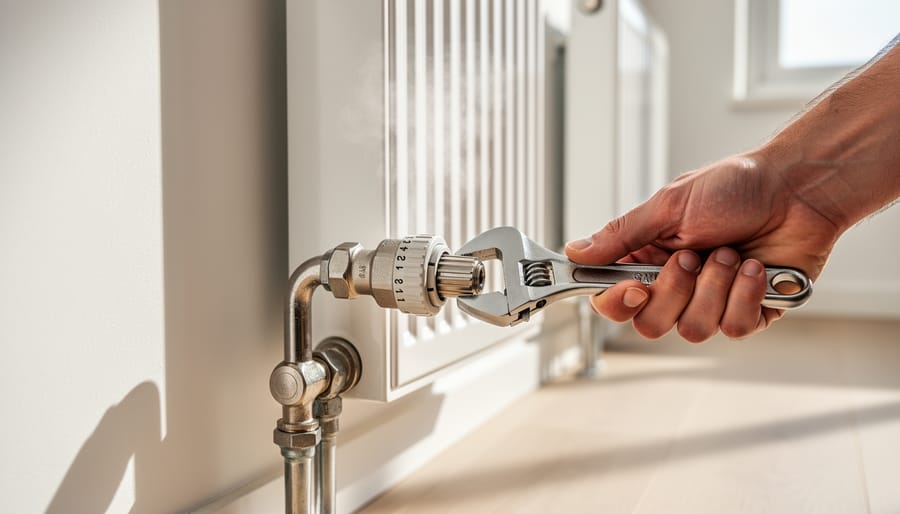
Begin by turning the lockshield valve clockwise to close it partially. Make small quarter-turn adjustments, then wait about 15 minutes for the system to stabilize before checking temperatures. Using your infrared thermometer, measure the temperature difference between the inlet and outlet pipes. You’re aiming for that calculated drop you determined earlier, typically around 20 degrees Fahrenheit for most residential systems.
If the temperature difference is too small, close the valve slightly more. If it’s too large, open it a bit. Think of this process like seasoning a favorite dish – gentle adjustments yield the best results. Mark each valve position with a piece of tape or note it down so you can track your changes.
Move systematically through each radiator, working from closest to farthest from the boiler. The radiators farther away will generally need their lockshield valves more open to ensure adequate flow reaches them. This creates that harmonious balance where every room enjoys consistent warmth.
Test your work by running the system through a complete heating cycle. All radiators should warm up at roughly the same rate and reach similar temperatures. If you notice any stragglers, make minor tweaks until everything feels just right. Remember, patience here pays dividends in comfort and energy savings for years to come.
Thermostatic Valve Tuning for Maximum Efficiency
How TRVs Work With Your Balanced System
Once you’ve balanced your radiators using the universal hydronic formula, you might wonder how thermostatic radiator valves (TRVs) fit into the picture. Here’s the good news: they work beautifully together, each serving a distinct purpose in your home’s heating comfort.
Think of manual balancing as setting the stage for your heating system. It ensures that warm water flows to each radiator in the right proportion, giving every room the potential to heat evenly. The TRV’s job is different. It acts as a smart gatekeeper, automatically adjusting water flow based on the actual temperature in each room. When a room reaches your desired warmth, the TRV reduces flow. When it cools down, the valve opens again.
A common misconception is that TRVs alone can fix an unbalanced system. They can’t. If your system isn’t properly balanced first, some radiators will still hog all the hot water, forcing TRVs in distant rooms to stay wide open while never achieving comfortable temperatures. You’re essentially asking them to compensate for a fundamental distribution problem.
The universal hydronic formula creates the foundation by ensuring adequate flow reaches every radiator. Your TRVs then fine-tune that flow based on real-time needs, accounting for sunlight streaming through windows, body heat from family gatherings, or heat from cooking. Together, they create an efficient, responsive heating system that adapts to your lifestyle while maintaining the cozy warmth your home deserves without wasting energy.
Setting Up Your TRVs for Optimal Performance
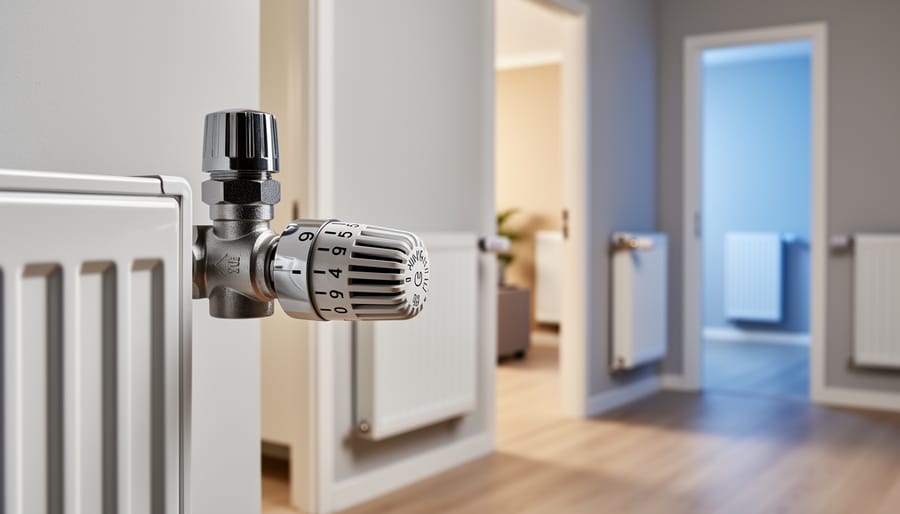
Getting your thermostatic radiator valves properly configured is like finding the perfect temperature for each room in your home. Start by setting your main living areas, where you spend most of your time, to around 20-21°C (68-70°F). Bedrooms typically feel most comfortable at a cooler 16-18°C (61-64°F), which actually promotes better sleep. Bathrooms might need a bit more warmth at 22°C (72°F), especially during morning routines.
Location matters tremendously for TRV performance. Never block your radiator valves with curtains, furniture, or decorative covers. These obstructions trap heat around the sensor, causing it to think the room is warmer than it actually is and shutting off your radiator prematurely. This is one of the most common mistakes homeowners make, and it can completely undermine your hydronic balancing efforts.
Avoid setting all TRVs to maximum, thinking it will heat your home faster. It won’t. TRVs control temperature, not speed. Running them full blast wastes energy and creates uncomfortable temperature swings. Instead, find each room’s sweet spot and trust the system to maintain it efficiently.
For rooms with alternative heat sources like a cozy fireplace, consider installing a lower TRV setting or even closing the valve when the fireplace is in use. This prevents your hydronic system from working against your supplemental heating, creating an eco-friendly approach that maximizes comfort while minimizing energy waste. Remember, patience during initial setup pays dividends in consistent, efficient warmth throughout your home.
Common Mistakes and How to Avoid Them
Even the most straightforward heating adjustments can go sideways when you’re working with your hydronic system. Let’s walk through the most common pitfalls homeowners encounter and how to get your radiators back on track.
The biggest mistake? Adjusting too many radiators at once. When you’re eager to achieve that perfectly balanced warmth throughout your home, it’s tempting to start tweaking every valve in sight. However, this approach makes it impossible to understand which changes created which effects. Instead, work methodically—adjust one radiator, wait at least 24 hours for the system to stabilize, then move to the next. Think of it like seasoning a homemade stew; you add a little, taste, then adjust.
Another frequent error involves confusing thermostatic radiator valves with manual balancing valves. The lockshield valve (usually covered with a cap) is what you’ll adjust for balancing, not the decorative control valve on the opposite end. Using the wrong valve won’t harm your system, but it won’t solve your fixing uneven temperatures problem either.
Many homeowners also overlook air trapped in their radiators. If your system isn’t responding to adjustments, bleed each radiator first. That hissing sound followed by water means you’ve released the air pocket preventing proper circulation. This simple step can make the difference between success and frustration.
When applying the universal formula, precision matters more than you might think. Counting valve turns as “about half” or “roughly two turns” creates inconsistency. Use a marker to note your starting position and count carefully. Keep a simple log of adjustments for each room.
Finally, patience truly is a virtue here. Your hydronic system needs time to respond to changes. Constantly fiddling with valves before the system stabilizes wastes energy and prevents you from achieving that cozy, eco-friendly warmth throughout your home that makes winter evenings by the fire so inviting.
The Eco-Friendly Benefits of a Properly Balanced System
When you invest time in balancing your heating system using the universal hydronic formula, you’re doing more than just creating a comfortable home. You’re making a meaningful choice for the environment and your wallet.
Think about it this way: an unbalanced hydronic system is like driving with one foot on the gas and one on the brake. Your boiler works overtime trying to heat those cold rooms at the far end of the house, burning extra fuel while the rooms near the boiler get uncomfortably hot. This inefficiency translates directly into wasted energy and unnecessary carbon emissions.
A properly balanced system operates at peak efficiency. When water flows evenly through every radiator, your boiler only needs to run as long as necessary to maintain comfortable temperatures throughout your home. Studies show that balanced hydronic systems can reduce fuel consumption by 15 to 25 percent compared to unbalanced systems. That’s a significant reduction in your carbon footprint, especially if you’re heating with fossil fuels.
The financial benefits mirror the environmental ones. Lower fuel consumption means lower heating bills, month after month, year after year. Many homeowners report saving hundreds of dollars annually after properly balancing their radiators. These savings often pay for any tools or professional help needed within the first heating season.
Beyond the numbers, there’s something deeply satisfying about knowing your heating system isn’t wasting precious resources. In an era where every bit of energy conservation matters, optimizing your hydronic system represents a practical, achievable step toward more sustainable living. You’re creating comfort while treading lighter on the planet, which is exactly what modern eco-friendly heating is all about.
When to Call a Professional
While balancing your hydronic heating system can be a rewarding DIY project, there are times when bringing in a professional is the wisest choice for your home’s comfort and safety.
If you have a multi-zone system with more than six or seven radiators, the balancing process becomes significantly more complex. Each adjustment affects the others, and achieving optimal balance requires specialized knowledge and often diagnostic equipment that most homeowners don’t have on hand. Similarly, if you’ve followed the balancing steps carefully but still experience cold spots or uneven heating after multiple attempts, there may be underlying issues like sludge buildup, air lock problems, or pump capacity concerns that need expert diagnosis.
When you encounter radiator valve problems like stuck or damaged valves, leaking connections, or corrosion, it’s time to call a professional. These repairs require proper tools and expertise to prevent water damage and ensure safe operation.
Safety should always be your top priority. If you’re uncomfortable working with your heating system, notice any water leaks, hear unusual noises like banging or whistling, or if your boiler shows error codes you don’t understand, don’t hesitate to reach out for professional help. A qualified heating technician can also provide valuable insights about improving your system’s efficiency and suggest eco-friendly upgrades that reduce energy consumption while maintaining that cozy warmth we all cherish in our homes.
Understanding and applying the universal hydronic formula puts you firmly in control of your home’s heating comfort. While it might seem technical at first glance, you’ve now got the knowledge to make meaningful improvements to how warmth flows through your living spaces. Think of it as fine-tuning an instrument – small adjustments can create harmony throughout your entire home.
The beauty of this approach is that you don’t need to tackle everything at once. Start with one or two radiators that have been troubling you most. Maybe it’s that bedroom that’s always too cold or the living room that forces you to crack open windows in winter. As you gain confidence with balancing your system, you’ll notice the difference not just in comfort, but in how efficiently your heating works overall.
A properly balanced hydronic system isn’t just about immediate comfort, though that’s certainly wonderful. You’re also making a sustainable choice that reduces energy waste and lowers your carbon footprint. When heat distributes evenly, your boiler doesn’t work as hard, and you’re not overheating some rooms while others struggle. This efficiency translates to lower energy bills month after month and a heating system that lasts longer.
Remember, your home’s heating is part of creating that warm, welcoming atmosphere where life happens. Whether you’re gathered around the fireplace on a winter evening or simply enjoying consistent comfort throughout your space, a balanced system supports the lifestyle you want. Take that first step today – your future self will thank you.