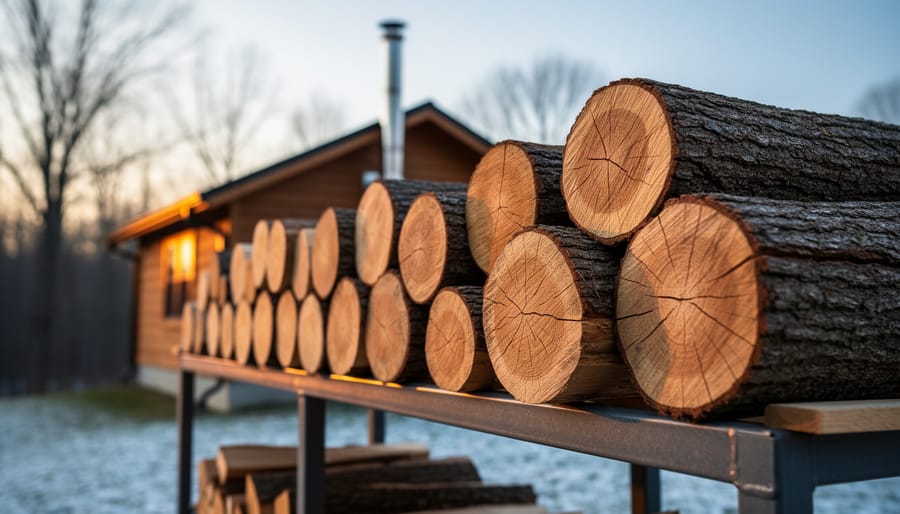


Choose hardwoods with BTU ratings above 24 million per cord to maximize heat output and reduce the number of times you need to reload your firebox throughout winter evenings. Oak, hickory, and black locust consistently rank as top performers, delivering sustained warmth that keeps your living space comfortable for hours while using less wood overall.
Verify your firewood’s moisture content stays below 20 percent using an inexpensive moisture meter before burning, because even high-BTU woods lose up to half their heating potential when improperly seasoned. That premium cord of oak you purchased becomes no better than mediocre pine if it hasn’t dried for at least six to twelve months in a covered, well-ventilated area.
Stack your firewood in a single row with ends exposed to prevailing winds, elevating it at least four inches off the ground to accelerate drying and prevent rot from stealing the heat energy you’re counting on. The BTU chart provides the ceiling of what’s possible, but your preparation methods determine whether you’ll actually achieve those impressive numbers when flames dance across the logs.
Compare local prices against BTU ratings to identify the best value in your region, since paying premium prices for ash or maple makes little financial sense if you can source beech or elm at half the cost with similar heating performance. The highest-BTU wood isn’t always the smartest choice when transportation costs, availability, and regional pricing enter the equation.
Understanding BTU ratings transforms firewood shopping from guesswork into strategy, helping you create a warm, inviting home while stretching your heating budget further. The numbers tell an important story, but only when combined with proper wood selection, seasoning practices, and realistic cost analysis that reflects your specific circumstances and heating goals.
Why BTU Ratings Matter More Than You Think
The Real Cost of Low-BTU Firewood
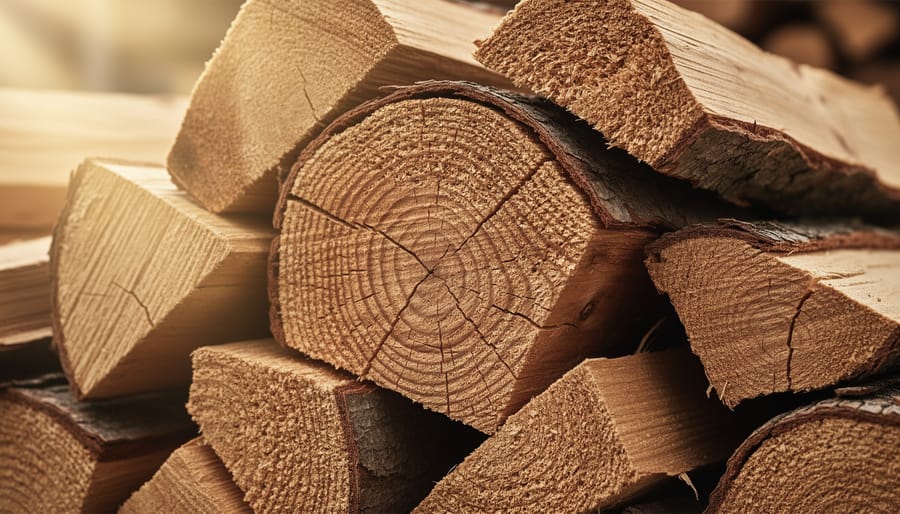
Choosing lower-BTU firewood might seem like a way to save money upfront, but it often costs you more in the long run. Think of it this way: if you’re burning wood that produces 20 million BTUs per cord instead of 30 million BTUs, you’ll need to burn 50% more wood to achieve the same warmth throughout the heating season. That’s an extra half-cord or more you’ll need to purchase, transport, and store.
Beyond the financial impact, there’s the convenience factor to consider. Lower-BTU woods burn faster, meaning you’ll find yourself loading the fireplace or wood stove more frequently—sometimes multiple times throughout the evening or in the middle of the night. For busy homeowners trying to create a cozy, sustainable living environment, this constant tending becomes exhausting quickly.
The environmental angle matters too. Burning more wood means more smoke and particulate matter released into the air, even with a properly maintained fireplace. While wood is a renewable resource and can be an eco-friendly heating solution when used wisely, efficiency should be part of your sustainability equation. Using high-BTU hardwoods means fewer trees harvested for the same heat output.
Your storage space takes a hit as well. Lower-BTU options require dedicating more room in your woodshed or garage, and you’ll spend more time stacking, covering, and managing your firewood supply. When you factor in all these hidden costs—time, effort, storage, and environmental impact—selecting higher-BTU firewood becomes the smarter, more economical choice for creating that warm, inviting atmosphere you’re seeking.
How Moisture Content Affects BTU Performance
Here’s the thing about BTU ratings: those impressive numbers on the chart assume you’re burning wood at the ideal proper moisture content of around 15-20%. Unfortunately, freshly cut wood can contain 50% moisture or more, which dramatically impacts your actual heat output.
Think of it this way: when you burn wet wood, a significant portion of the fire’s energy goes toward evaporating all that water instead of heating your home. You’re essentially boiling moisture out of the logs before they can produce meaningful warmth. A cord of green oak might theoretically deliver 24 million BTUs, but if it’s waterlogged, you could lose up to half that heat just fighting moisture.
This is why proper seasoning matters so much for both performance and your wallet. Well-seasoned firewood burns hotter, cleaner, and more efficiently. You’ll use less wood to achieve the same warmth, meaning those BTU ratings actually translate to real comfort in your living space.
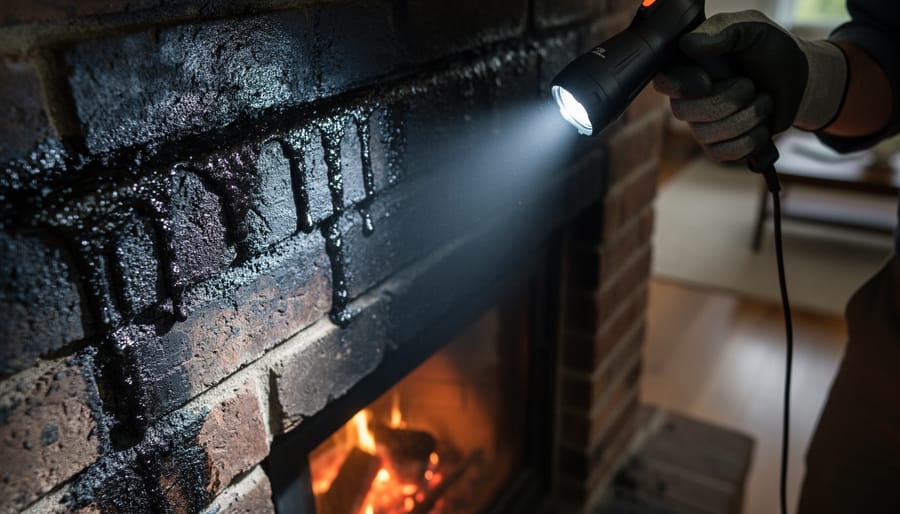
Beyond heat output, wet wood creates more creosote buildup in your chimney, posing safety risks and requiring more frequent cleaning. It also produces more smoke, which isn’t great for air quality or the environment. When you’re investing in quality firewood, ensuring it’s properly dried is just as important as choosing a high-BTU species. The good news? With adequate planning and storage, achieving that perfect moisture level is entirely manageable for any homeowner.
The Complete Firewood BTU Chart: Hardwoods vs Softwoods
High-BTU Champions: The Premium Hardwoods
When you’re serious about maximizing heat output and creating those long-lasting, glowing fires that make winter evenings truly special, premium hardwoods are where you’ll want to invest. These are the heavyweight champions of the firewood world, delivering exceptional BTU ratings that translate directly into warmth and comfort for your home.
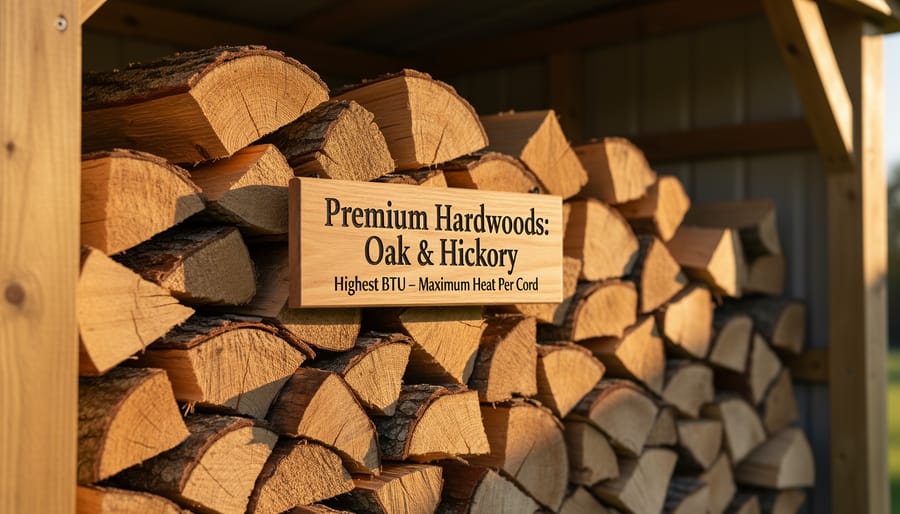
Oak stands as the undisputed king of firewood, with white oak delivering around 29 million BTUs per cord and red oak close behind at 27 million BTUs. What makes oak particularly valuable is its dense composition and slow, steady burn. You’ll get longer-lasting fires with consistent heat output, meaning fewer trips to the woodpile on cold nights. The trade-off? Oak requires a full year or more of seasoning, but the patient homeowner is rewarded with premium performance.
Hickory rivals oak in the BTU department, ranging from 28 to 30 million BTUs per cord depending on the species. This wood burns hot and produces those mesmerizing, long-lasting coals that radiate heat well into the evening. It’s an excellent choice when you need maximum heat output during the coldest months.
Black locust might be the best-kept secret among premium hardwoods, boasting an impressive 29 million BTUs per cord. It’s incredibly dense, burns exceptionally hot, and creates minimal creosote buildup, making it both efficient and safer for your chimney.
Ash rounds out our champions at 24 million BTUs per cord. While slightly lower than its competitors, ash offers a unique advantage: it can be burned when relatively green, though seasoned ash performs far better.
Are these premium hardwoods worth the higher price? Absolutely, if heating efficiency matters to you. They burn longer, produce more heat per log, and ultimately require less wood to keep your home comfortable throughout winter.
Mid-Range Performers: The Best Value Woods
For most homeowners, the sweet spot in firewood selection lies right here in the mid-range category. These woods deliver excellent heat output without the premium price tag or scarcity issues of the hardwood heavyweights, making them the practical choice for everyday burning.
Sugar maple and red maple are standouts in this category, offering BTU ratings between 24 and 25 million per cord. They’re widely available across much of North America, split relatively easily, and create those beautiful dancing flames that turn a chilly evening into a cozy experience. Maple also produces minimal smoke when properly seasoned, keeping your home’s air quality pleasant and your chimney cleaner.
Yellow birch delivers around 21.8 million BTUs per cord and brings its own charm to the fireside. The papery bark makes excellent kindling, and the wood itself burns with a delightful aroma that enhances the ambiance of any room. While birch does need to be burned within a year or two of seasoning to prevent deterioration, it’s perfect for homeowners who plan ahead and maintain a regular burning schedule.
Black cherry, at approximately 20.4 million BTUs per cord, rounds out this category beautifully. It’s known for producing minimal sparking and popping, making it safer for open fireplaces. The subtle, pleasant scent it releases while burning is an added bonus that transforms heating into a sensory experience.
These mid-range performers represent the best value proposition for most families. They’re efficient enough to keep your home warm throughout winter, accessible enough to find reliably, and affordable enough to stock up without breaking the budget.
Softwoods: When Speed Beats BTU
Not every fire needs to be a marathon heat session. Softwoods like pine, fir, and cedar typically deliver 14-18 million BTUs per cord—considerably lower than hardwoods—but they bring their own advantages to your hearth. These woods ignite quickly and burn hot and fast, making them perfect for those crisp autumn evenings when you want ambiance more than all-night heating power.
Think of softwoods as your seasonal allies. They’re excellent for spring and fall fires when you need to take the chill off without overheating your space. Their rapid burn rate also makes them ideal fire-starters, helping you get hardwood logs going without fumbling with newspapers and kindling. Many fireplace enthusiasts keep a small softwood supply specifically for this purpose.
Cedar deserves special mention for its aromatic qualities—that wonderful scent creates an inviting atmosphere that transforms your living space into a cozy retreat. From an eco-friendly perspective, softwoods grow faster than hardwoods, making them a more renewable resource when sourced responsibly.
The key is understanding when speed serves you better than staying power. For quick warmth, pleasant crackles, and that instant fireside ambiance, softwoods deliver exactly what you need without pretending to be something they’re not.
Optimal Firewood Preparation: Turning Good Wood Into Great Heat
The Seasoning Timeline: Patience Pays Off
Here’s the truth about firewood: even the highest BTU woods won’t heat your home efficiently if they’re not properly seasoned. Think of seasoning as the bridge between potential and performance. Those impressive numbers on the BTU chart? They assume your wood has reached the sweet spot of 15-20% moisture content.
Fresh-cut or “green” wood can contain 50% or more moisture, which means you’re essentially burning water. The energy that should be warming your living room gets wasted evaporating moisture instead. That’s why patience truly pays off when it comes to firewood preparation.
Different woods have different timelines for reaching optimal dryness. Softer woods like pine and cedar typically season in 6-12 months when split and stored properly. Hardwoods demand more patience—oak, hickory, and other dense varieties need 12-24 months to reach that ideal moisture range. Split your logs into 6-inch pieces to speed the process, and stack them in a sunny, well-ventilated area with the bark facing up to shed rain.
Testing moisture levels is simpler than you might think. Affordable moisture meters provide instant readings—just insert the probes into a freshly split face of the log, not the ends. No meter? Listen for a sharp, hollow crack when you knock two pieces together, and look for deep radial cracks on the ends. Properly seasoned wood feels noticeably lighter and has darkened end grain.
Remember, seasoning isn’t just about efficiency—it’s an eco-friendly practice that reduces smoke and creosote buildup, keeping your chimney safer and your air cleaner.
Splitting and Sizing for Maximum Efficiency
Even the highest BTU-rated firewood won’t deliver its full potential if it’s not properly split and sized. Think of splitting as unlocking your firewood’s efficiency—smaller pieces expose more surface area, allowing moisture to escape during seasoning and creating more edges for flames to ignite during burning.
For traditional open fireplaces, aim for logs 3-6 inches in diameter and 14-18 inches long. Wood stoves work best with slightly smaller pieces, around 3-4 inches thick, cut to fit your firebox with a few inches of clearance. The general rule? If you can’t comfortably hold a piece in one hand, it’s probably too large for optimal burning.
Splitting matters tremendously for drying time. A whole log might take two years to season properly, while split pieces of the same wood can be ready in six months to a year. The increased airflow between split pieces speeds up moisture evaporation, helping you reach that crucial 20% moisture content where wood burns cleanest and hottest.
For splitting technique, work with the grain and look for natural cracks to guide your maul or axe. Frozen wood splits easier than fresh-cut, and aiming for the edges rather than dead center often yields better results. Remember, consistently sized pieces also make stacking easier and help you estimate your cord measurements more accurately.
Storage Solutions That Preserve BTU Potential
Even the highest-BTU firewood won’t deliver its full heating potential if it’s not stored correctly. Moisture is the enemy of efficiency—wet wood produces less heat, more smoke, and can damage your fireplace or chimney over time.
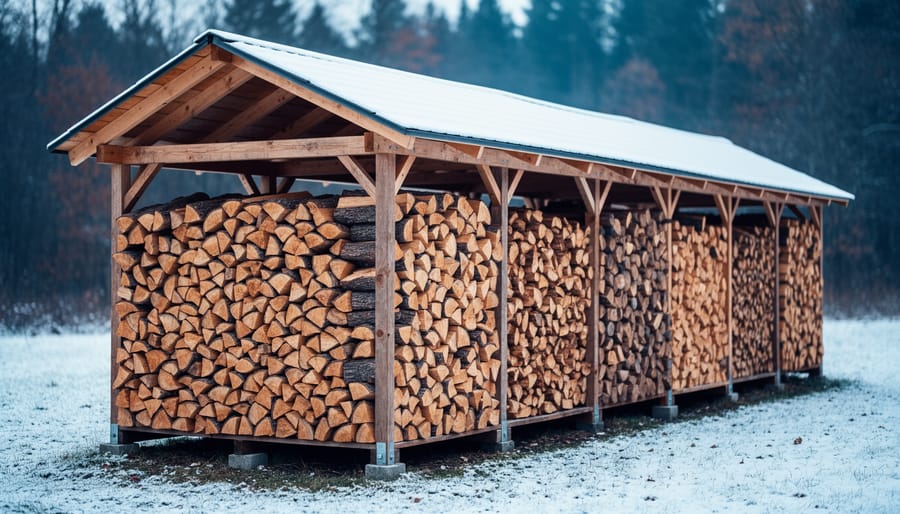
The key to preserving BTU potential starts with location. Store your firewood in a spot with good air circulation, ideally off the ground using pallets or a raised rack. This prevents moisture absorption from the soil and reduces the risk of rot and insect infestations. A covered top is essential to shield your wood from rain and snow, but leave the sides open to allow airflow—wrapping your woodpile too tightly traps moisture instead of releasing it.
Mastering proper stacking techniques makes a significant difference. The traditional crisscross or “log cabin” method promotes maximum airflow between pieces, helping your wood season properly and maintain that crucial low moisture content.
For an eco-friendly approach, consider using reclaimed materials for your storage structure. Old pallets, salvaged lumber, or even a simple pole barn design minimizes environmental impact while protecting your investment in quality firewood. Remember, well-stored wood not only burns better but also means you’ll use less overall, reducing your carbon footprint while keeping your home beautifully warm all season long.
Matching Firewood to Your Fireplace Type
Wood Stoves: Getting the Most from High-BTU Woods
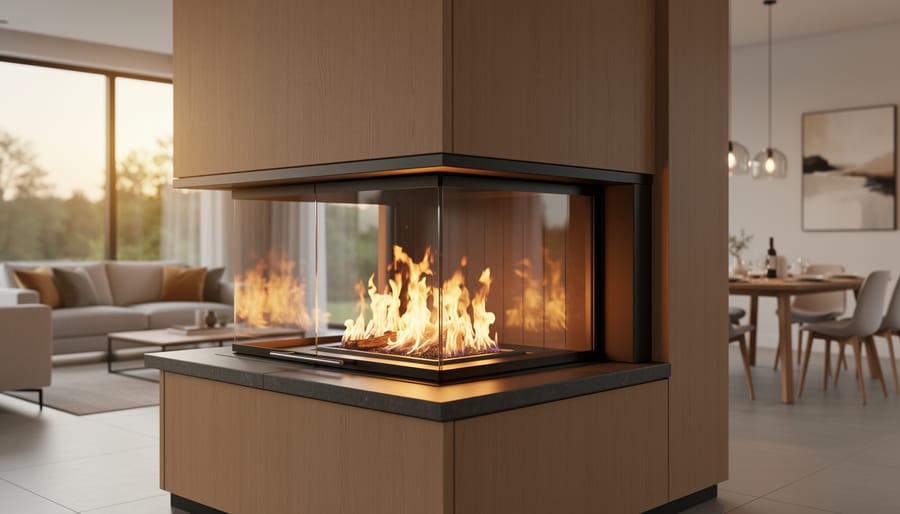
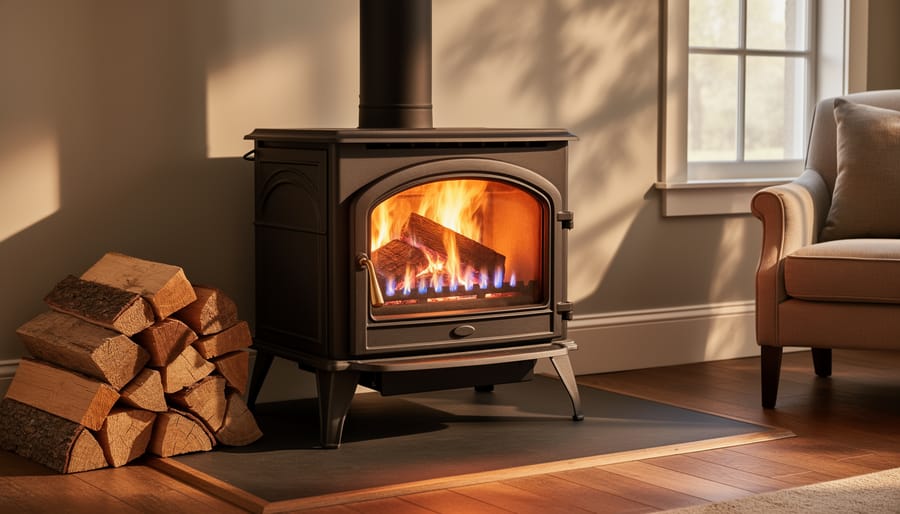
Modern wood stoves are game-changers when it comes to getting every ounce of heat from premium hardwoods like oak, hickory, and maple. Unlike traditional open fireplaces that lose most of their heat up the chimney, today’s EPA-certified wood stoves transform those impressive BTU ratings into actual warmth for your home.
The secret lies in controlled combustion. Wood stoves create an oxygen-regulated environment where high-BTU woods burn at optimal temperatures, releasing their energy slowly and steadily rather than in wasteful bursts. This means that coveted cord of oak rated at 24 million BTUs actually delivers warmth to your living space instead of warming the winter sky.
By maintaining consistent temperatures between 500-700 degrees Fahrenheit, these stoves extract maximum heat while producing minimal creosote buildup. This wood stove efficiency is especially valuable with dense hardwoods, as their long burn times align perfectly with the stove’s ability to sustain heat overnight.
The result? You’ll use less wood, enjoy more consistent warmth, and make those premium hardwood investments truly worthwhile. It’s an eco-friendly approach that honors both your budget and the environment.
Open Fireplaces: When Ambiance Meets Efficiency
Open fireplaces hold a special place in our hearts. There’s something magical about gathering around dancing flames on a cold evening. But here’s the thing: traditional open fireplaces are notoriously inefficient, losing up to 90% of their heat up the chimney. That’s why choosing the right firewood becomes even more important for these beloved focal points.
When selecting wood for your open fireplace, you’ll want to balance BTU output with burn characteristics that create that perfect ambiance. High-BTU hardwoods like oak, hickory, and ash are excellent choices because they burn longer and produce steady, mesmerizing flames rather than quick, flashy burns. These woods typically deliver 24-28 million BTUs per cord, giving you extended enjoyment without constant tending.
Consider fruitwoods like cherry or apple if you’re looking to add another dimension to your fireplace experience. While their BTU ratings fall slightly lower at around 20-24 million per cord, they offer pleasant aromas and beautiful flame colors that enhance the atmosphere.
Avoid softwoods like pine in open fireplaces despite their lower cost. They produce excessive creosote buildup, creating safety hazards, and their rapid burn rate means you’ll spend more time loading logs than enjoying the fire.
The key is finding that sweet spot where efficiency meets experience. Your open fireplace may not be your primary heat source, but with the right wood selection, it can meaningfully contribute to warming your space while creating those cherished moments that make a house feel like home.
Regional Availability: Finding High-BTU Wood Near You
While BTU charts provide excellent benchmarks for comparing firewood species, the reality is that the best firewood for your home depends heavily on what’s available in your region. A homeowner in the Pacific Northwest will have very different options than someone in the Northeast or Deep South, and choosing locally available wood offers significant advantages for both your wallet and the environment.
Regional availability matters for several important reasons. First, locally sourced firewood costs considerably less since you’re not paying for long-distance transportation. Second, it supports sustainable forestry practices in your area and reduces the carbon footprint associated with shipping heavy loads across states. Third, buying local wood helps prevent the spread of invasive pests and tree diseases that can hitchhike in bark from distant regions.
To find the best firewood choices in your area, start by contacting local tree services, firewood suppliers, and lumber yards. Ask what hardwood species are most abundant in your region. In the Northeast, you might find oak, maple, and ash readily available. The Midwest often offers hickory and oak. Western regions typically have access to Douglas fir, oak, and madrone. Southern states might have pecan, oak, and various fruit woods.
Don’t overlook less glamorous but highly efficient options that grow abundantly in your area. A locally available hardwood with a moderate BTU rating that’s properly seasoned will outperform a high-BTU exotic wood that’s expensive or improperly dried. Connect with your local cooperative extension office or forestry service for guidance on which species thrive in your climate and make excellent firewood choices.
The Eco-Friendly Approach to Firewood Selection
Choosing firewood isn’t just about heating efficiency—it’s also about making environmentally responsible decisions that benefit both your home and the planet. When you select locally sourced, properly prepared firewood, you’re actually embracing one of the most sustainable heating solutions available.
Let’s start with an important truth: burning wood is considered carbon-neutral when done responsibly. Trees absorb carbon dioxide as they grow, and that same carbon is released when the wood burns or naturally decomposes in the forest. By harvesting locally and replanting, you’re participating in a renewable cycle that’s been sustaining communities for generations.
The real environmental advantage comes from choosing local firewood over fossil fuels like oil or natural gas. While those resources require extensive extraction, processing, and transportation—all contributing to your carbon footprint—locally harvested firewood travels minimal distances and supports your regional economy. You’re literally turning what might become forest waste into cozy warmth for your home.
Here’s where your BTU chart knowledge becomes an eco-friendly tool: selecting high-BTU woods like oak or hickory means you’ll burn less wood overall to achieve the same heat output. Fewer trees harvested, less transportation needed, and reduced emissions from your chimney. It’s efficiency meeting sustainability in perfect harmony.
The key is ensuring your firewood comes from responsible sources. Look for suppliers who practice selective harvesting rather than clear-cutting, and who replant to maintain forest health. Many areas offer permits for dead or fallen trees, which provides excellent firewood while actually improving forest fire safety and ecosystem vitality.
Proper seasoning also plays an environmental role. Well-seasoned wood burns cleaner with significantly less smoke and creosote, meaning fewer particulates released into the air. This protects both outdoor air quality and your family’s indoor environment.
When you compare the lifecycle impact of heating with properly sourced, well-seasoned firewood to the environmental cost of fossil fuel extraction and refinement, wood burning emerges as a genuinely eco-conscious choice—especially when you’re already committed to creating a warm, sustainable living space.
While a firewood BTU chart provides valuable guidance for choosing efficient heating wood, remember that it’s just your starting point. The numbers on that chart represent potential heat output under ideal conditions. What truly transforms that potential into cozy warmth for your home is how you prepare and manage your firewood supply.
Think of selecting and preparing firewood as part of the art of creating a genuinely inviting home. When you properly season your wood, store it correctly, and maintain a well-organized supply, you’re not just checking boxes on a maintenance list. You’re investing in those peaceful winter evenings by the fire, in the satisfying crackle that fills your living room, and in the sustainable heating solution that reduces your carbon footprint while lowering energy costs.
The most efficient firewood isn’t necessarily the highest BTU hardwood if it arrives green and burns poorly. A moderately rated wood that’s been perfectly seasoned for 18 months will outperform premium wood that’s still holding excess moisture. Your preparation habits matter as much as your wood selection.
As you build your firewood knowledge and develop your storage routine, you’ll discover that maintaining a quality wood supply becomes its own rewarding ritual. You’ll learn to recognize perfectly seasoned wood by sight and sound, understand your home’s heating patterns, and feel confident that you’re making eco-friendly choices. This combination of smart selection and thoughtful preparation is what transforms firewood heating from a simple necessity into an essential element of comfortable, sustainable living.