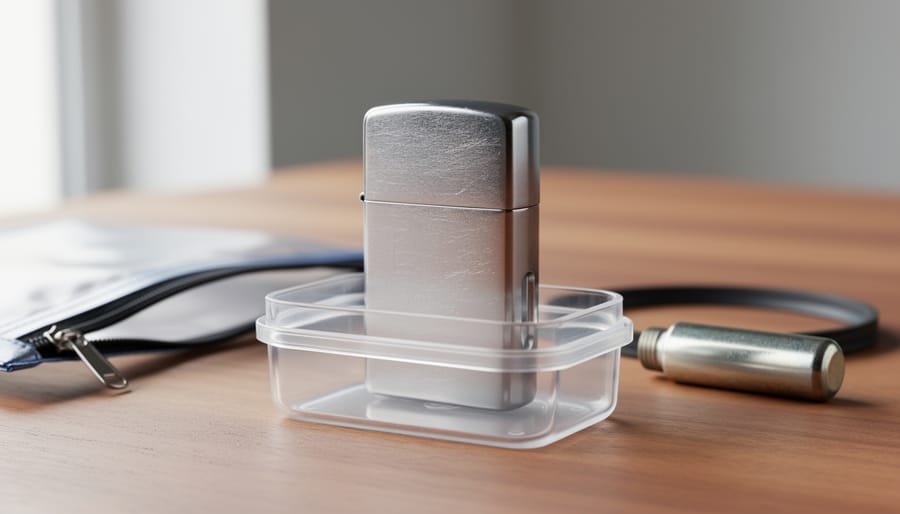


Store your Zippo upright in a sealed plastic bag or small airtight container between uses to dramatically slow fuel loss. The naphtha-based lighter fluid that gives your Zippo its reliable spark evaporates through the cotton wadding and wick even when the lid is closed, often leaving your lighter bone-dry within two weeks of filling.
Replace the standard felt pad underneath the cotton with a denser, less porous material like rubber gasket material or purchase aftermarket fuel retention systems designed specifically to create a better seal. This simple modification can extend fuel life by 30-50 percent without affecting performance.
Apply a thin coating of petroleum jelly or grease around the chimney opening where the wick emerges and along the hinge area where air seeps in. This creates an additional vapor barrier while maintaining the classic flip-open functionality you love about your Zippo.
Consider switching to a butane insert if you only use your lighter occasionally. While purists appreciate the traditional fuel experience, butane inserts fit perfectly into your existing Zippo case and virtually eliminate evaporation between uses, making them ideal for those who want reliability without weekly refilling.
Understanding why your Zippo loses fuel helps you appreciate these solutions. The permeable cotton wadding system that makes Zippos so dependable also allows fuel vapors to escape through microscopic gaps in the case construction. These practical methods address that fundamental design characteristic while preserving the warmth and nostalgia of owning this iconic piece of Americana.
Why Your Zippo Fuel Disappears (Even When You’re Not Using It)
If you’ve ever reached for your trusty Zippo only to find it bone-dry despite not using it in weeks, you’re not alone. This frustrating phenomenon isn’t a defect—it’s actually by design, and understanding why helps you tackle the problem effectively.
Your Zippo uses naphtha-based lighter fluid, which is remarkably volatile. Think of it like this: while other liquids you might store around your home evaporate slowly over time, lighter fluid has an eagerness to transform into vapor that rivals morning coffee steam. The liquid fuel evaporation principles at work here are similar to those affecting other petroleum products, but naphtha takes it to another level.
The classic Zippo design, beloved for its simplicity and reliability, actually facilitates this evaporation. Unlike a sealed container, your lighter needs to allow air exchange so the wick can draw fuel and oxygen can reach the flame. This ingenious mechanism uses a cotton wadding reservoir and exposed wick system that works beautifully for lighting—but also creates a pathway for fuel molecules to escape into the surrounding air.
Temperature plays a starring role in this disappearing act. Just as the warmth from your fireplace helps create a cozy atmosphere by moving air around your home, heat accelerates the volatility of lighter fluid. Keep your Zippo in a warm pocket or near a heat source, and you’re essentially encouraging those fuel molecules to make their escape faster. Even at room temperature, naphtha naturally wants to evaporate—it’s simply that eager to become a gas.
This differs significantly from less volatile fuels you might be familiar with. Kerosene used in some lamps, for instance, evaporates much more slowly. Naphtha’s molecular structure makes it perfect for creating instant flames but terrible for long-term storage in a semi-open container.
The good news? Once you understand these fundamentals, you can work with your Zippo’s design rather than against it. The evaporation isn’t a flaw—it’s a trade-off for having a reliable, wind-resistant flame whenever you need it. And with the right prevention strategies, you can dramatically reduce fuel loss while maintaining that classic Zippo performance.

How Fast Does Zippo Fuel Actually Evaporate?
Understanding when your Zippo will need a refill helps you avoid that frustrating moment when you reach for your lighter to spark up the fireplace and find it bone dry. The evaporation timeline depends heavily on your usage patterns and environment.
For everyday carry users, a freshly filled Zippo typically holds fuel for about one to two weeks before needing a top-up. If you’re lighting your fireplace or wood stove daily during winter months, you’ll likely notice the fuel level dropping toward the lower end of this range. The constant opening and closing, combined with frequent use, accelerates evaporation as the wick remains exposed to air.
Occasional users face different challenges. That Zippo you keep in your hearth toolkit for lighting kindling on weekend evenings? Expect it to lose fuel within two to three weeks, even if you only flick it a few times. The lighter doesn’t need to be used to lose fuel; it simply evaporates through normal exposure.
Environmental factors play a significant role in how temperature affects evaporation. A Zippo stored in a warm pocket near a roaring fire will dry out faster than one kept in a cool mudroom. Higher altitudes also accelerate evaporation due to lower air pressure, something mountain homeowners should keep in mind.
Temperature swings matter too. If you store your Zippo in an unheated garage during winter, then bring it inside to your warm living room, the temperature change can increase evaporation rates temporarily.
The good news? Once you understand these patterns, you can develop a simple refilling routine that ensures your trusty fire-starting companion is always ready when you need it.
Simple Tricks to Keep Your Zippo Fueled Longer
The Rubber Band Method (Quick and Free)
Let’s start with the simplest solution that costs absolutely nothing. A humble rubber band can work wonders in keeping your Zippo fuel where it belongs. This method creates additional pressure around the lighter’s case, tightening the naturally loose fit that allows fuel vapors to escape.
Here’s how to do it: Choose a thick rubber band that’s slightly smaller than the width of your closed Zippo. Wrap it horizontally around the middle of the lighter where the top and bottom meet, positioning it directly over the seam. The band should be snug but not so tight that it prevents you from opening the lighter when needed. For added security, you can wrap it twice, creating a double barrier against evaporation.
This quick fix works particularly well for everyday carry situations when you’re not using your lighter frequently. Think of it as a temporary seal for those times when your Zippo sits in your pocket or drawer for days between uses. It’s perfect for keeping backup lighters fresh or for seasonal storage.
While this won’t completely eliminate evaporation like more permanent solutions, it can extend your fuel life by several days to a week. The rubber band method shines as an immediate, zero-cost option that anyone can implement right now, making it an ideal first step in your fuel preservation journey.

Proper Storage Makes All the Difference
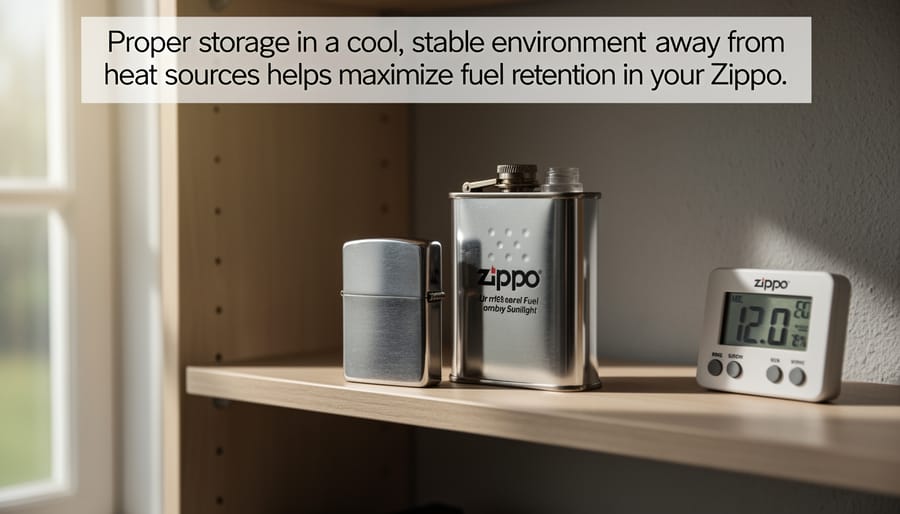
Where you store your Zippo can be just as important as how you maintain it. Think of your lighter as you would fine wine or quality firewood – the environment matters tremendously for preservation.
Temperature-controlled environments are your best friend when it comes to preventing fuel evaporation. A cool, dry location away from direct sunlight works wonders. Avoid windowsills, dashboard storage, or anywhere near heat sources like radiators or, ironically, your fireplace itself. Heat accelerates evaporation exponentially, so that mantel display might look charming, but it’s costing you fuel every day.
The storage position also plays a role in retention. Keep your Zippo upright when possible, as this minimizes the surface area of fuel exposed to air through the wick and helps maintain the cotton packing’s saturation. If you’re storing it long-term, consider placing it in a small, sealed container or zip-lock bag to create an additional barrier against air exposure.
For fireplace enthusiasts who use their Zippo regularly to light fires, creating a dedicated storage spot makes practical sense. Consider a small decorative box or drawer near your fireplace tools – close enough for convenience but far enough from the heat to protect your fuel. This approach combines functionality with the lifestyle element that makes tending your fire a ritual rather than a chore.
Room temperature basements or interior closets often provide ideal conditions. The key is consistency – avoid locations with temperature fluctuations or high humidity, as these conditions can affect both the fuel and the lighter’s mechanisms over time.
The Felt Pad and Cotton Solution
The heart of your Zippo’s fuel retention lies in two humble components: the cotton wadding and felt pad inside the lighter’s case. Think of these elements as the foundation of your home’s insulation – just as proper insulation keeps warmth where it belongs, these internal parts determine how well your lighter holds onto its fuel.
The cotton wadding acts like a sponge, holding the lighter fluid in place while allowing the wick to draw fuel upward as needed. Over time, this cotton can become compressed, degraded, or simply worn out from repeated fillings and use. When the cotton loses its ability to hold fuel effectively, evaporation speeds up significantly. You’ll notice your lighter running dry much faster than when it was new.
The felt pad, positioned at the bottom of the fuel chamber, serves as the final barrier between your fuel and the outside world. A worn or damaged felt pad creates gaps where fuel vapors can escape, much like a drafty door letting your home’s warmth slip away. Replacing this small component can make a dramatic difference in fuel retention.
To maintain these components properly, remove the insert from your Zippo case every few months and inspect the cotton. It should be fluffy and intact, not hardened or discolored. If you notice deterioration, replacing the cotton wadding is straightforward and inexpensive. Similarly, check the felt pad for compression or damage. Fresh cotton and a new felt pad can restore your lighter’s fuel retention to nearly factory-fresh performance, keeping it ready when you need that cozy flame.
Upgrade Options That Actually Work
If you’ve tried all the basic prevention methods and your Zippo still runs dry too quickly, it might be time to explore some upgrade options. Think of these as complementary solutions that preserve the classic experience while addressing modern needs, much like how contemporary fireplace inserts enhance traditional hearths without sacrificing their charm.
The Thunderbird insert has become something of a legend among Zippo enthusiasts. This aftermarket replacement features a tighter-fitting construction that significantly reduces evaporation. You’ll swap out your existing insert while keeping your beloved Zippo case. The investment runs between $12 to $20, and users report fuel lasting two to three times longer. The flame quality remains identical to the original, making this a seamless upgrade that respects tradition while solving a practical problem.
Butane conversion inserts offer a completely different approach. These replacements transform your Zippo into a refillable butane lighter, eliminating evaporation entirely since butane stores under pressure. You’ll spend around $15 to $25 for quality options. The trade-off? You lose that distinctive Zippo smell and the nostalgic lighting experience. However, you gain incredible convenience and reliability. Consider this option if you primarily need dependable ignition for candles, fireplaces, or outdoor activities rather than the full sensory Zippo experience.
Premium replacement cases with enhanced sealing represent another route worth exploring. Some manufacturers now offer cases with improved gasket systems that create better seals around the insert. These typically cost $30 to $50 but maintain the authentic Zippo functionality completely.
The right upgrade depends on your priorities. If preserving the classic experience matters most, stick with Thunderbird inserts. If convenience wins out, butane conversions deliver practical performance. Either way, you’re taking control of evaporation rather than accepting it as inevitable.
Smart Refueling Habits for Occasional Users
If you’re like many homeowners who keep a trusty Zippo on hand for lighting your fireplace during chilly evenings or tucked away for seasonal use, you’ve probably discovered it bone-dry when you finally reach for it. The good news? A little planning goes a long way in keeping your lighter ready when you need it.
For occasional users, the key is understanding your usage pattern. If you only fire up your fireplace from October through March, consider refueling your Zippo at the start of each month rather than filling it once at season’s beginning. This monthly top-off approach means you’re only adding a small amount of fuel that won’t have time to evaporate before you use it. Think of it like keeping just enough firewood by the hearth for the week rather than stacking a whole cord that might attract moisture.
To check your fuel level without wasting any, gently lift the cotton wadding inside the fuel chamber with tweezers. If it feels dry or only slightly damp, it’s time for a refill. A properly fueled Zippo should have wadding that feels noticeably moist but not dripping.
Here’s a practical rule: if you use your Zippo weekly, do a full refill. For monthly use, add just three to four drops to top it off. This prevents the waste of evaporating fuel while ensuring reliability when that first autumn chill arrives and you’re ready to create a warm, inviting atmosphere in your home.
For collectors or those keeping a Zippo for emergency preparedness, store it empty and keep fuel separately. You’ll avoid evaporation entirely and can refuel quickly when needed, making it both an eco-friendly and practical approach to lighter maintenance.
Safety Considerations When Storing Liquid Fuels
Storing Zippo fuel safely at home doesn’t require complicated measures, but a few mindful practices go a long way in protecting your household and the environment. Think of it as creating the same comfort and care you’d give to maintaining any cherished home element.
First, ventilation matters. Store your Zippo and fuel bottles in a well-ventilated area, away from direct heat sources, pilot lights, or anything that generates sparks. A cool, dry cabinet works wonderfully—just not under the kitchen sink where temperatures fluctuate. Understanding liquid fuel safety helps you make informed decisions about placement in your home.
Keep fuel containers tightly sealed and upright to prevent leaks and evaporation. This is where proper fuel bottle storage becomes essential—always use the original containers with secure caps, and never transfer fuel to unmarked bottles.
Family safety is paramount. Store fuel in a location that’s genuinely out of reach of children and pets, not just on a high shelf. A lockable cabinet offers peace of mind, especially in homes with curious little ones.
When it comes to disposal, treat old or excess fuel responsibly. Never pour it down drains or into the yard. Instead, contact your local hazardous waste facility for eco-friendly disposal options. Many communities offer seasonal collection events specifically for household chemicals and fuels, making responsible disposal convenient and accessible for everyone.
Keeping your Zippo lighter fueled and ready doesn’t have to be a constant battle. While it’s true that some evaporation is simply part of owning these iconic lighters—it’s the trade-off for their reliable, windproof design—the strategies we’ve covered can significantly extend the time between refills. From simple solutions like storing your Zippo upside down and using quality fuel, to more involved methods like applying Teflon tape or switching to butane inserts, there’s an approach that fits every lifestyle.
We encourage you to experiment with different combinations of these techniques. Perhaps start with the basics and see how much improvement you notice, then layer on additional methods if needed. Remember, your Zippo is meant to be a dependable companion for those cozy evenings when you’re lighting your fireplace, and a little preventive care goes a long way toward ensuring it’s always ready when you reach for it.
There’s something deeply satisfying about maintaining tools that serve us well, and your Zippo is no exception. With these tips in your arsenal, you’ll spend less time refueling and more time enjoying the warmth and ambiance of your home. Keep that flame ready and your hearth welcoming.