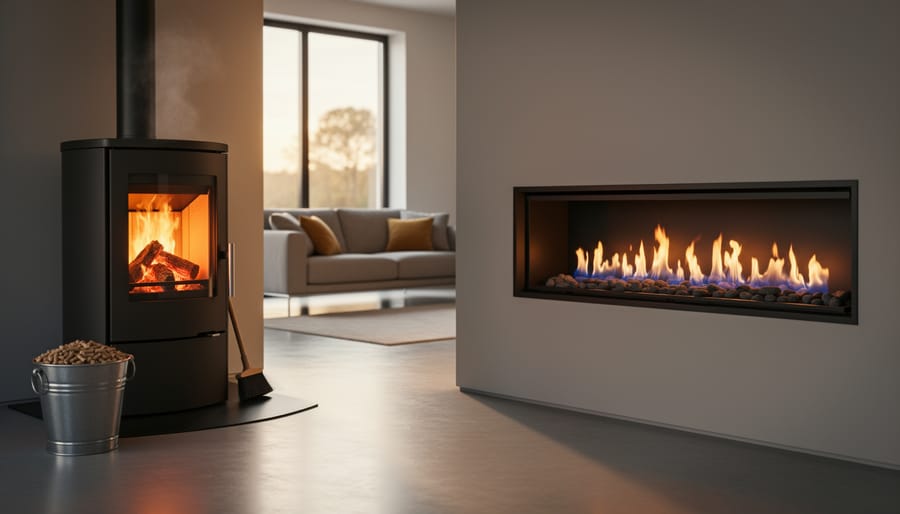


Compare efficiency ratings head-to-head: pellet fireplaces typically achieve 70-90% efficiency while gas fireplaces range from 60-85%, meaning pellets convert more fuel into actual heat for your home. Factor in your local energy costs by calculating annual expenses – multiply your regional electricity rates against pellet prices (usually $200-300 per ton) versus natural gas or propane costs to determine your real-world heating budget.
Evaluate your lifestyle commitment realistically. Pellet systems require hands-on involvement: loading hoppers every 1-3 days, cleaning ash weekly, and scheduling annual professional maintenance. Gas fireplaces operate with simple thermostat control, zero ash cleanup, and minimal upkeep, making them ideal for busy households seeking convenience over cost savings.
Consider pellet quality variations that directly impact performance. Premium hardwood pellets with low ash content (under 1%) and high BTU ratings (8,000+ per pound) burn cleaner and more efficiently than cheaper alternatives. Gas provides consistent, predictable heat output regardless of fuel batch quality.
Assess installation requirements and existing infrastructure. Gas fireplaces need natural gas lines or propane tanks plus proper venting, while pellet stoves require dedicated electrical outlets for augers and fans, along with venting systems that can be simpler than traditional chimneys. Your home’s current setup may favor one system over the other, potentially saving thousands in installation costs.
Examine environmental priorities: pellet fuel comes from renewable, carbon-neutral wood waste, appealing to eco-conscious homeowners, while natural gas burns cleaner than other fossil fuels but remains a non-renewable resource.
Understanding the Basics: How Each System Works
Pellet Fireplace Operation
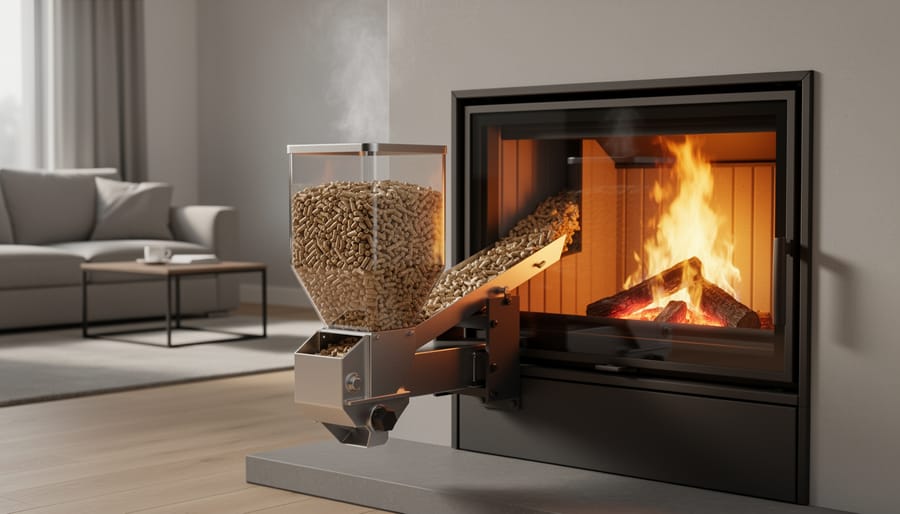
Pellet fireplaces bring modern convenience to the traditional warmth of a wood-burning experience. These innovative heating systems work through an automated process that begins with a hopper, typically holding 35 to 130 pounds of compressed wood pellets. As your fireplace calls for heat, an auger mechanism automatically feeds these pellets from the hopper into the burn pot at a controlled rate.
Once the pellets reach the combustion chamber, an electric igniter sparks them to life, creating a consistent flame that requires minimal intervention from you. The beauty of this system lies in its precision. Built-in sensors monitor temperature and adjust the pellet feed rate accordingly, maintaining your desired comfort level throughout your space.
The heat generated travels through your home via two methods: convection and radiation. A built-in blower circulates warm air throughout the room, while the fireplace itself radiates heat directly. This dual approach creates efficient, even warmth that makes pellet fireplaces an eco-friendly heating solution for modern homes. Keep in mind that proper pellet stove venting ensures optimal performance and safety, allowing combustion gases to exit safely while maintaining peak efficiency in your heating system.
Gas Fireplace Operation
Gas fireplaces bring modern convenience to home heating with a simple flip of a switch or remote control click. These units burn either natural gas or propane to produce instant, adjustable flames that provide both warmth and ambiance without any of the hands-on effort traditional fireplaces require.
The operation is refreshingly straightforward. Gas flows through a valve system to ceramic logs or decorative media, where it ignites to create realistic-looking flames. You’ll enjoy precise temperature control, allowing you to adjust the heat output to match your comfort level perfectly. When you’re done, simply turn it off—no waiting for embers to die down or cleaning up ash afterward.
Gas fireplaces come in two main configurations: vented and ventless. Vented models use a chimney or direct vent system to expel combustion byproducts outdoors, making them ideal for those prioritizing indoor air quality. Ventless units operate without external venting, capturing nearly all the heat they produce for maximum efficiency. While ventless options deliver impressive heating performance, they require adequate room ventilation and aren’t permitted in all regions due to safety regulations.
This instant-on, instant-off convenience makes gas fireplaces particularly appealing for busy homeowners who want cozy warmth without the commitment of tending a fire throughout the evening.
Pellet Types and What They Mean for Your Home
Hardwood vs. Softwood Pellets
When you’re choosing pellets for your fireplace, understanding the difference between hardwood and softwood varieties can help you get the most from your heating investment and create the cozy ambiance you’re after.
Hardwood pellets, made from oak, maple, or cherry, typically produce higher BTU output—around 8,500 BTUs per pound compared to softwood’s 8,000 BTUs. While this difference might seem minimal, it translates to slightly more heat from each bag you burn. Hardwood pellets also generate less ash, usually around 0.5 to 1 percent, meaning you’ll spend less time cleaning and more time enjoying your fire. This lower ash content makes them an excellent choice for homeowners who value convenience alongside performance.
Softwood pellets, derived from pine, fir, or spruce, burn hotter and faster due to their higher resin content. This means they can heat your space quickly, though you might go through pellets a bit faster. They typically produce 1 to 2 percent ash, which is still quite manageable with regular maintenance.
Cost-wise, expect to pay between 5 and 10 dollars per 40-pound bag, with prices varying by region and availability. Softwood pellets sometimes cost slightly less since these materials are more abundant in certain areas. Both types offer eco-friendly heating solutions, utilizing compressed sawdust and wood waste that would otherwise end up in landfills.
Most pellet stoves handle either type beautifully, so your choice often comes down to local availability, personal preference, and how you prioritize convenience versus burn characteristics in your lifestyle.
Premium vs. Standard Grade Pellets
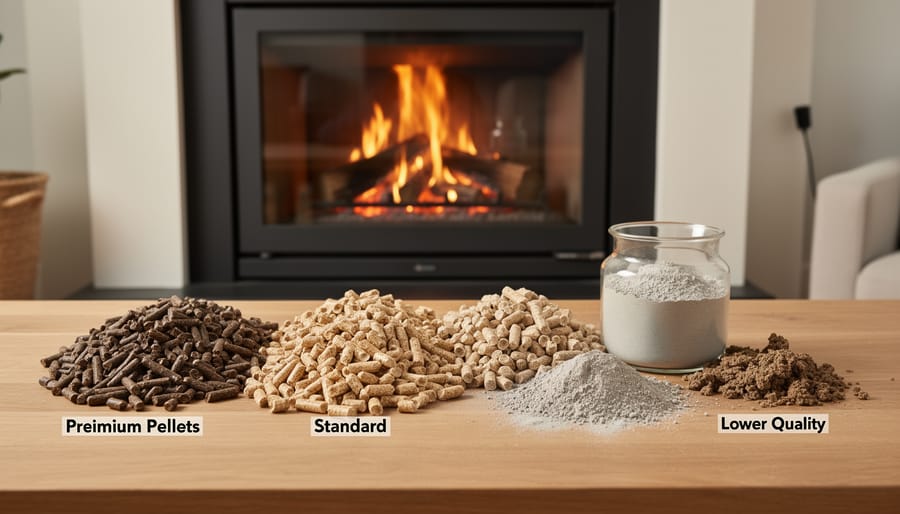
Not all pellets are created equal, and understanding quality grades can significantly impact your fireplace experience. Premium-grade pellets contain less than one percent ash content and are made from pure hardwood or softwood with minimal additives. Standard-grade pellets, while more affordable, may include bark and produce up to three percent ash, meaning more frequent cleaning and slightly reduced heat output.
The Pellet Fuels Institute (PFI) established certification standards that help homeowners identify quality fuel. Look for the PFI seal when shopping, as certified pellets meet strict requirements for ash content, moisture levels, and BTU output. Premium pellets typically generate 8,000 to 8,500 BTUs per pound, while standard varieties produce slightly less.
Quality matters beyond just heat output. Premium pellets burn cleaner, reducing maintenance intervals and extending your fireplace’s lifespan. They also produce less clinker buildup, those stubborn deposits that can interfere with efficient burning. While premium pellets cost roughly fifteen to twenty percent more, the investment often pays off through improved efficiency and reduced cleaning time. Remember that proper pellet storage maintains quality regardless of grade, protecting your investment from moisture and degradation.
Alternative and Specialty Pellets
While standard wood pellets remain the most popular choice, alternative pellet fuels offer exciting possibilities for environmentally conscious homeowners seeking sustainable heating solutions. These specialty options can provide comparable warmth while supporting local agriculture and reducing your carbon footprint.
Grass pellets, made from switchgrass or miscanthus, burn cleaner than traditional wood and often cost less in areas where these crops grow abundantly. Corn pellets present another renewable alternative, producing excellent heat output while utilizing a readily available agricultural product. Many homeowners appreciate that corn pellets create minimal ash and emit a pleasant, subtle aroma when burning.
Blended fuels combine wood pellets with other biomass materials like cherry pits, sunflower hulls, or nutshells, offering a balance between performance and sustainability. These blends often provide efficient combustion while supporting waste reduction in food processing industries.
However, availability varies significantly by region, and not all pellet stoves can accommodate these alternatives without modifications. Some specialty pellets produce different ash levels or require adjusted feed rates for optimal performance. Before investing in alternative fuels, verify your stove’s compatibility and locate reliable local suppliers. While these eco-friendly options might require slightly more attention to sourcing and storage, they represent a meaningful step toward greener home heating that aligns beautifully with an environmentally responsible lifestyle.
Efficiency Ratings Explained: The Numbers That Matter
Pellet Fireplace Efficiency (70-90%)
Pellet fireplaces deliver impressive efficiency ratings between 70-90%, making them one of the most efficient heating options available for your home. This means that up to 90% of the fuel you burn actually converts into usable heat, rather than escaping up the chimney. Compare this to traditional wood-burning fireplaces that typically achieve only 10-30% efficiency, and you’ll see why pellet stoves have become such an attractive eco-friendly heating solution.
What makes pellet fireplaces so efficient? The secret lies in their controlled combustion process. These units automatically feed pellets at precise rates, maintaining optimal burning temperatures while computerized air intake systems ensure complete fuel combustion. This sophisticated yet user-friendly design maximizes heat output while minimizing waste.
However, your actual efficiency depends on several key factors. Premium-grade pellets with low moisture content and minimal ash production will consistently deliver higher efficiency than lower-quality alternatives. Regular maintenance also plays a crucial role—cleaning the burn pot, heat exchanger, and venting system keeps your unit running at peak performance. Even your home’s insulation quality affects overall heating effectiveness.
Realistically, most homeowners can expect their pellet fireplace to maintain 75-85% efficiency with proper care and quality fuel. This translates to substantial heating power for your living spaces while keeping fuel costs manageable. As a lifestyle element that combines modern convenience with environmental responsibility, pellet fireplaces offer genuine value through their exceptional fuel-to-heat conversion, helping you stay cozy while reducing your carbon footprint throughout the heating season.
Gas Fireplace Efficiency (60-85%)
Gas fireplaces offer impressive efficiency ratings ranging from 60% to 85%, making them a solid choice for homeowners seeking reliable supplemental heat. Understanding these numbers helps you make an informed decision about whether gas fits your lifestyle and heating goals.
The efficiency range varies significantly based on your chosen model type. Direct-vent gas fireplaces typically achieve 70-85% efficiency by drawing combustion air from outside and venting exhaust through a sealed system. This design prevents heated indoor air from escaping up the chimney, keeping more warmth where you want it. Ventless or vent-free models can reach up to 99% efficiency since no heat escapes through venting, though they require careful consideration of indoor air quality and aren’t legal in all areas.
Traditional vented gas fireplaces with chimneys sit at the lower end, around 60-70% efficiency, as some heat naturally rises and exits through the vent. While less efficient than their modern counterparts, they still outperform traditional wood-burning fireplaces and provide that authentic fireplace ambiance many homeowners cherish.
Installation quality dramatically impacts real-world performance. Proper sizing for your space, correct venting configuration, and professional setup ensure you achieve the manufacturer’s promised efficiency ratings. A poorly installed system can lose 10-20% efficiency through air leaks or inadequate venting.
From an eco-friendly perspective, gas fireplaces burn cleaner than wood but still rely on fossil fuels. Their efficiency means you’re maximizing heat output while minimizing waste, creating a practical balance between comfort and environmental consciousness.
Understanding BTU Output and Heat Coverage
BTU (British Thermal Unit) ratings tell you how much heat a fireplace produces. Most gas fireplaces range from 20,000 to 40,000 BTUs, while pellet stoves typically deliver 30,000 to 50,000 BTUs. As a rule of thumb, you need roughly 30 BTUs per square foot for adequate heating in well-insulated spaces.
For example, a 1,000-square-foot area requires about 30,000 BTUs. Gas fireplaces excel at zone heating and quick warmth in single rooms, while pellet stoves can effectively heat larger, open-concept spaces. Consider your home’s insulation, ceiling height, and climate when choosing. Pellet stoves often provide more consistent, whole-home heating, making them ideal for primary heat sources. Gas units work beautifully as supplemental heating, reducing your reliance on central systems while creating that cozy ambiance you crave.
Head-to-Head: Cost Analysis Over Time
Upfront Investment and Installation
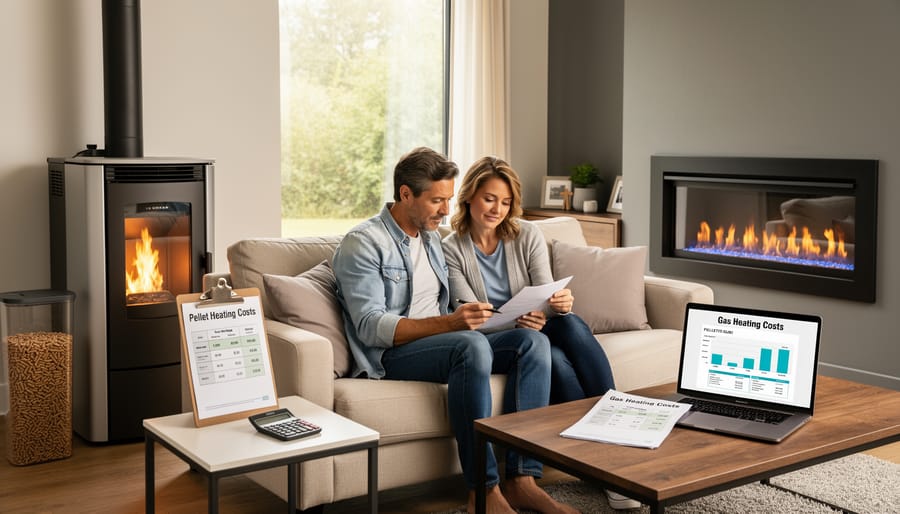
When weighing your initial investment, gas fireplaces typically start around $2,500 to $6,000 for a quality unit, while pellet fireplaces range from $2,000 to $5,000. However, the real story lies in installation costs, where the differences become more apparent.
Gas fireplaces require professional gas line installation if one isn’t already present, which can add $500 to $2,000 to your project. You’ll also need proper venting requirements addressed, though direct-vent gas models offer simpler installation through exterior walls. Total installation typically runs $3,500 to $9,000.
Pellet fireplaces demand electrical connections for their automated feeding systems and fans, plus chimney or venting installation. Professional installation generally costs between $3,000 and $7,500 total. While both systems need adequate venting, pellet stoves offer more flexibility in placement since they don’t require gas line proximity.
Consider your home’s existing infrastructure. If you already have gas lines nearby, gas becomes more economical upfront. Without existing infrastructure, pellet systems often present a lower barrier to entry, making efficient, eco-friendly heating more accessible to budget-conscious homeowners seeking warmth and ambiance.
Monthly Fuel and Operating Costs
Understanding your monthly fuel expenses helps you make a smart choice that will reduce heating costs over time. Pellet prices typically range from $5 to $7 per 40-pound bag, with most homes using 1-3 bags weekly during peak winter months. This translates to roughly $80-$250 monthly, depending on your climate and how often you run your fireplace.
Natural gas costs vary significantly by region, averaging $1.00-$2.50 per therm. A gas fireplace running 8 hours daily might consume 30-40 therms monthly, costing between $30-$100. While gas appears more economical, remember that pellets offer greater heating efficiency per dollar spent.
Regional factors play a major role in your decision. Northern states often see competitive pellet pricing due to forestry abundance, while areas with established natural gas infrastructure enjoy lower gas rates. Seasonal fluctuations matter too—pellet prices stay relatively stable year-round, whereas natural gas can spike during winter demand surges. Consider buying pellets in bulk during summer months for the best savings and consistent availability throughout the heating season.
Maintenance and Long-Term Expenses
When it comes to keeping your fireplace running smoothly, both options have distinct maintenance demands. Pellet fireplaces require more frequent attention—you’ll need to empty ash pans weekly during heavy use and clean the glass, burn pot, and exhaust system regularly. The mechanical components like augers and fans typically need professional servicing annually, with parts potentially requiring replacement every 5-10 years. Expect a lifespan of 15-20 years with proper care.
Gas fireplaces are wonderfully low-maintenance by comparison. An annual professional inspection ensures safe operation, checking for gas leaks and cleaning burners. There’s minimal ash to clean, and with fewer moving parts, they often last 20-25 years. While pellet systems demand more hands-on involvement, they offer that satisfying ritual of tending your fire—a lifestyle element many homeowners cherish as part of creating a cozy, eco-conscious home.
Environmental Impact: Which Burns Cleaner?
Pellet Fireplaces and Sustainability
Pellet fireplaces deserve recognition as one of the more eco-conscious heating solutions available today. These systems burn compressed wood pellets made from sawdust, wood shavings, and other lumber industry byproducts that would otherwise end up in landfills. By transforming waste materials into fuel, pellets represent a genuinely renewable biomass energy source.
The carbon neutrality claim surrounding pellet fuel has merit, though it requires context. Trees absorb carbon dioxide as they grow, and burning wood pellets releases roughly the same amount back into the atmosphere, creating a balanced cycle. However, this calculation becomes less straightforward when you factor in the energy used for harvesting, processing, and transporting pellets to your home.
From a practical sustainability standpoint, pellet fireplaces offer significant environmental advantages over fossil fuel heating systems. They produce minimal ash, burn efficiently when properly maintained, and support responsible forestry practices by creating demand for wood waste products. Premium pellets made from pure hardwood without additives burn cleaner and produce less creosote buildup in your system.
The key to maximizing these environmental benefits lies in sourcing locally produced pellets whenever possible, which reduces transportation emissions, and maintaining your fireplace according to manufacturer specifications to ensure optimal combustion efficiency throughout the heating season.
Gas Fireplaces and Emissions
Gas fireplaces burn natural gas, which is a fossil fuel extracted from the earth. While this might raise environmental concerns, it’s important to understand the full picture. Among fossil fuels, natural gas burns remarkably clean, producing fewer emissions than oil, coal, or wood-based heating systems.
When natural gas combusts, it primarily releases water vapor and carbon dioxide. Modern gas fireplaces achieve nearly complete combustion, minimizing harmful byproducts like carbon monoxide and particulate matter. This efficiency means cleaner indoor air quality for your home and reduced environmental impact compared to traditional wood-burning options.
The emissions profile of gas fireplaces makes them an attractive choice for environmentally conscious homeowners. They produce virtually no ash, soot, or smoke, eliminating the air quality concerns associated with wood burning. Many gas models are also sealed systems with direct venting, meaning combustion gases exit directly outside without entering your living space.
However, it’s worth noting that natural gas is still a non-renewable resource. While gas fireplaces offer cleaner burning than many alternatives, they do contribute to your carbon footprint. The environmental advantage lies in their efficiency and reduced particulate emissions rather than being a completely green solution. For homeowners prioritizing convenience and cleaner indoor air while still maintaining reasonable environmental responsibility, gas fireplaces strike a practical balance.
Lifestyle Factors: Living With Each System
Convenience and Automation
When it comes to your daily routine, gas fireplaces are the clear winners in the convenience department. They offer instant warmth at the flip of a switch or tap of a remote control, and many models integrate seamlessly with smart thermostats for automated climate control. You can adjust the flame height and heat output without leaving your couch, making them ideal for busy households.
Pellet fireplaces require more hands-on attention. You’ll need to fill the hopper with pellets regularly, depending on usage, and this means storing pellets correctly to maintain fuel quality. While modern pellet stoves do feature programmable thermostats and automatic ignition, they still need manual loading and produce ash that requires weekly cleaning during heavy use. Some higher-end models include Wi-Fi connectivity for remote monitoring, but they can’t match gas units for true set-it-and-forget-it operation. The trade-off is that pellet stoves give you that authentic crackling fire ambiance while maintaining eco-friendly efficiency, so the extra effort might feel worthwhile if you value that natural fireplace experience in your home.
Ambiance and Aesthetic Appeal
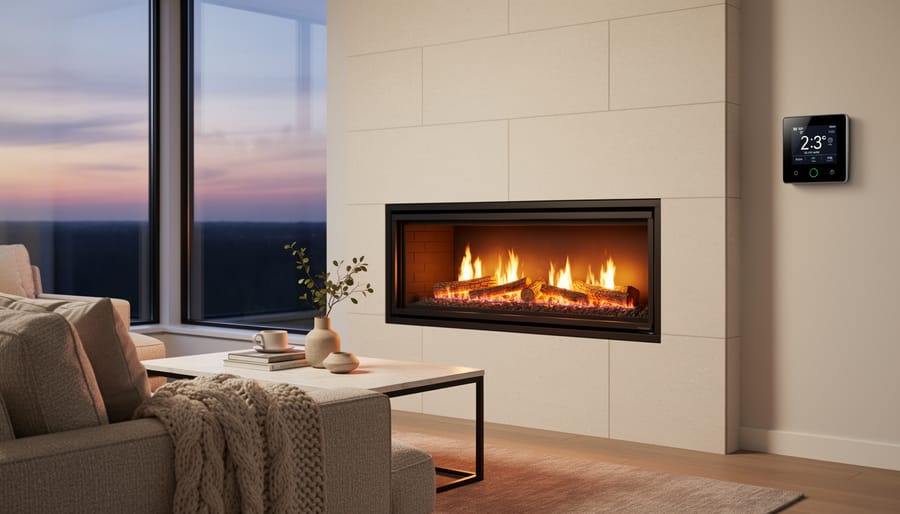
When it comes to creating that cozy, inviting atmosphere in your home, the visual and sensory experience matters just as much as the warmth itself. Gas fireplaces offer beautifully realistic flames that dance and flicker with remarkable consistency, providing a clean, quiet ambiance perfect for conversation and relaxation. There’s no crackling or popping sounds, which some find peaceful, though others miss that traditional fireplace charm.
Pellet fireplaces bring a different aesthetic to the table. The flames tend to be smaller and more concentrated, creating a unique visual appeal that’s distinctly modern. You’ll hear a gentle humming from the auger system and occasional pellet feeding sounds, along with satisfying crackles as the pellets burn. This auditory element adds character that many homeowners love, creating an authentic heating experience. Both options contribute wonderfully to home ambiance, though your preference may depend on whether you’re drawn to the silent elegance of gas or the engaging, dynamic presence of burning pellets.
Power Dependency and Reliability
Here’s an important consideration that might surprise you: pellet stoves require electricity to operate their auger systems, fans, and control panels. During power outages, your pellet fireplace becomes essentially unusable unless you have a backup generator or battery system. This dependency means you could lose your primary heat source exactly when you need it most during winter storms.
Gas fireplaces, particularly direct-vent models with standing pilot lights or battery backup igniters, offer greater independence. Many can continue operating during outages, providing both warmth and peace of mind. If you live in areas prone to winter storms or power disruptions, this reliability factor becomes a crucial lifestyle consideration beyond just comparing efficiency ratings and fuel costs.
Making Your Decision: Which Fireplace Wins for Your Home?
Best Scenarios for Pellet Fireplaces
Pellet fireplaces truly shine in several specific situations that make them the ideal heating choice. If you live in an off-grid or rural location where natural gas lines aren’t available, pellet stoves offer a reliable heating solution without depending on utility infrastructure. You simply need electricity for the auger and fans, making them perfect for remote properties.
For eco-conscious homeowners who prioritize sustainable living, pellet fireplaces align beautifully with green values. They burn renewable biomass fuel and maintain a smaller carbon footprint compared to fossil fuel alternatives, letting you stay warm while honoring your environmental commitments.
These units also excel as primary heating sources for medium to large spaces. Their high-efficiency ratings and programmable thermostats mean you can genuinely reduce reliance on central heating systems, potentially lowering your overall energy bills throughout winter months.
Finally, if you appreciate hands-on involvement with your home’s heating and don’t mind the routine of loading pellets and performing regular maintenance, you’ll find pellet fireplaces rewarding. They offer a wonderful balance between modern efficiency and that satisfying connection to your heating source.
Best Scenarios for Gas Fireplaces
Gas fireplaces shine when convenience tops your priority list. If you love the idea of instant warmth at the touch of a button without storing fuel or cleaning ash, gas is your perfect match. These systems deliver ambiance and heat immediately, making them ideal for busy households where time is precious.
For supplemental heating needs, gas fireplaces excel beautifully. They work wonderfully in finished basements, master suites, or family rooms where you want occasional warmth without heating your entire home. The zone heating capability helps reduce overall energy costs while creating cozy gathering spaces when you need them most.
Low-maintenance lifestyles particularly benefit from gas fireplaces. There’s no hauling bags, no ash disposal, and minimal annual servicing required. Simply schedule your yearly inspection, and you’re set. This hands-off approach appeals to second-home owners, retirees, or anyone who values simplicity in their home heating solutions.
Gas also makes sense if you’re concerned about air quality. These units burn cleanly with proper ventilation, producing minimal indoor pollutants compared to wood-burning options. While they rely on fossil fuels rather than renewable resources like pellets, modern gas fireplaces offer impressive efficiency ratings that minimize environmental impact while maximizing comfort. For those prioritizing convenience and ease of living, gas fireplaces deliver reliable warmth that fits seamlessly into modern lifestyles.
Choosing between a pellet and gas fireplace ultimately comes down to what matters most in your daily life. Both systems offer impressive efficiency ratings, with pellet stoves reaching up to 85% and gas fireplaces hovering around 70-85%, making either choice a smart investment in your home’s comfort and energy use. Remember that premium hardwood pellets deliver better heat output and cleaner burns, while gas provides unmatched convenience with just the flip of a switch.
There’s no wrong answer here. Your perfect fireplace depends on your lifestyle, environmental priorities, and practical considerations like fuel availability and maintenance preferences. If you value renewable fuel sources and don’t mind a bit of hands-on care, pellet stoves offer remarkable sustainability. If convenience and minimal upkeep top your list, gas fireplaces shine.
The beautiful truth is that both options represent a meaningful step toward creating a warmer, more inviting home while being mindful of energy efficiency. Trust your instincts, consider what truly fits your household rhythm, and embrace the cozy, sustainable living space you’re about to create. Your ideal fireplace is waiting to become the heart of your home.