

Standing in the fireplace aisle wondering whether to buy a gas fireplace or a gas fireplace insert isn’t just about picking between two similar products—you’re actually choosing between completely different heating solutions that will impact your home’s comfort, energy bills, and installation costs for decades to come.
A gas fireplace is a self-contained unit installed during new construction or major renovations, built directly into your wall with its own venting system and firebox. A gas fireplace insert, by contrast, transforms your existing wood-burning fireplace into an efficient gas heating source by fitting snugly inside the old firebox, using the existing chimney structure. This fundamental difference shapes everything from your upfront investment to your monthly heating costs.
The confusion deepens when you factor in fuel choices. Both options run on natural gas or propane, but your home’s existing infrastructure, local utility availability, and long-term fuel costs create dramatically different scenarios depending on which unit type you choose. A natural gas fireplace connected to municipal lines offers convenience and lower operating costs, while propane provides flexibility for homes without gas service—but requires tank refills and typically costs more per BTU.
Understanding these core differences transforms your decision from overwhelming to straightforward. Whether you’re renovating a room with no existing fireplace, converting an inefficient wood-burner, or building from scratch, knowing how these systems work helps you match the right solution to your specific home, budget, and lifestyle needs.
Understanding the Basics: What’s the Real Difference?
Built-In Gas Fireplaces Explained
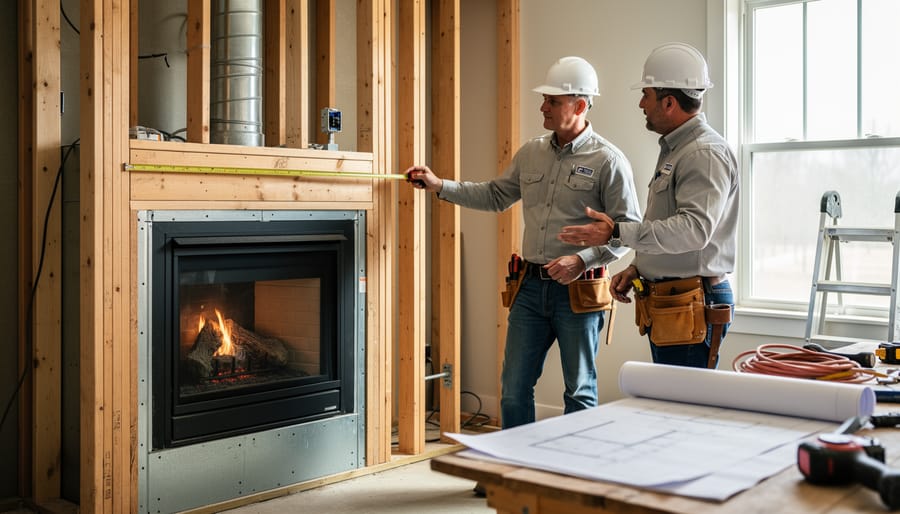
Built-in gas fireplaces, also known as factory-built or zero-clearance units, are standalone heating systems designed to create a focal point in your home where no fireplace previously existed. Think of them as complete packages that arrive ready for installation, including the firebox, venting system, and decorative surround options.
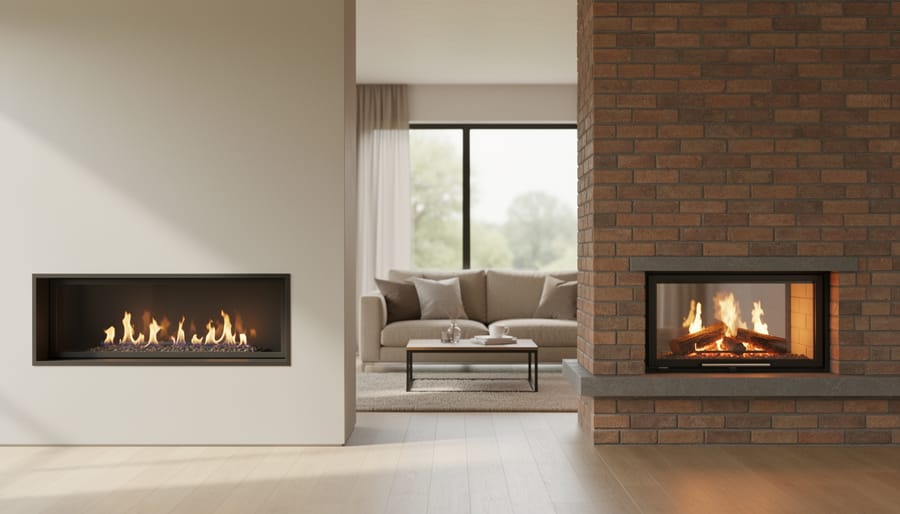
Unlike traditional masonry fireplaces that require extensive construction, built-in gas fireplaces offer flexibility in placement. You can install them virtually anywhere in your home—against an exterior wall, in a corner, or even as a room divider. The “zero-clearance” designation means they’re engineered with insulated fireboxes that can safely sit close to combustible materials like wood framing, making installation considerably simpler and more affordable.
Installation does require professional expertise to ensure proper venting, typically through direct vent or B-vent systems that channel exhaust gases safely outside. You’ll also need access to your chosen fuel source—natural gas lines or propane tanks. The structural consideration is relatively minimal compared to masonry options, but you’ll want to plan for adequate wall space and clearance requirements specific to your model.
These units shine when you’re building new or renovating, offering excellent gas fireplace heating performance while creating that cozy ambiance homeowners crave without the mess of wood-burning alternatives.
Gas Fireplace Inserts: The Retrofit Solution
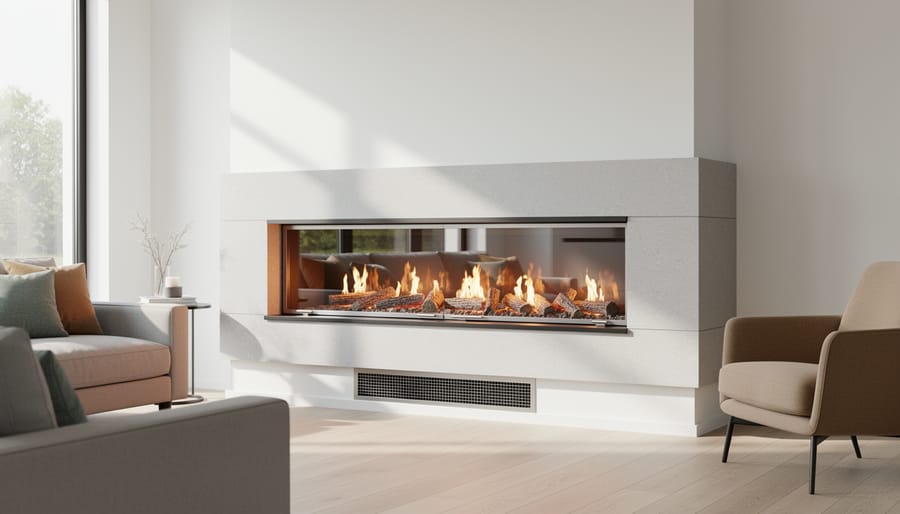
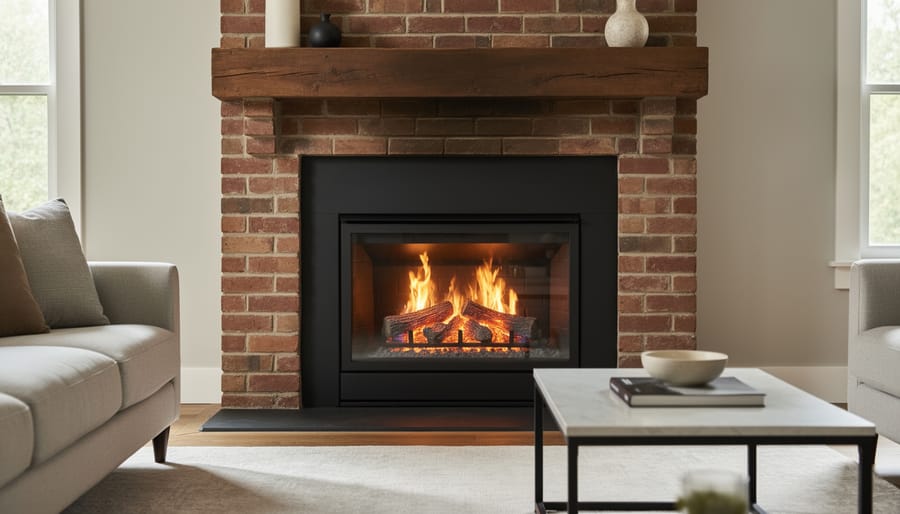
If you have an existing wood-burning or older gas fireplace that’s not performing efficiently, a gas fireplace insert offers a brilliant retrofit solution that transforms your current setup without the expense of a complete renovation. Think of an insert as a self-contained firebox designed to slide directly into your existing fireplace opening, essentially giving your old fireplace a modern, efficient upgrade.
The beauty of inserts lies in their clever design. They feature a sealed combustion system that sits within your current fireplace cavity, using the existing chimney with a new liner for proper venting. This means you’re not demolishing walls or undertaking major construction—you’re working with what you already have. The insert’s front faceplate covers the original fireplace opening, creating a finished, polished look that conceals the older structure behind it.
From a performance standpoint, inserts deliver impressive efficiency gains over traditional open fireplaces, often reaching 70-85% efficiency ratings. They convert drafty, heat-wasting fireplaces into effective heating sources that actually warm your living space rather than sending most of the heat up the chimney. This makes them an excellent eco-friendly heating solution for homeowners looking to reduce energy consumption while maintaining that cozy fireplace ambiance you love.
Inserts are particularly popular in older homes where a beautiful fireplace exists but functions more as a decorative feature than a practical heat source. They’re also ideal for homeowners who want to switch from wood to gas without losing the focal point their fireplace provides in their living space.
Natural Gas vs Propane: How Your Fuel Choice Changes Everything
Natural Gas: When Connection Makes Sense
Natural gas offers distinct advantages for both gas fireplaces and inserts, though the connection requirements are identical for either option. When you’re exploring gas heating options, natural gas stands out as the most cost-effective fuel choice, typically costing 30-50% less than propane over time.
Both units require a permanent gas line installation, which brings upfront costs but eliminates the hassle of refilling tanks. A professional must run the line from your home’s existing natural gas supply to the fireplace location, with installation costs ranging from $500 to $2,000 depending on distance and complexity. This investment pays dividends through consistent, maintenance-free fuel delivery.
The main limitation? Availability. Natural gas only makes sense if your property has access to municipal gas lines. Rural homeowners often lack this option, making propane their only choice. Urban and suburban dwellers usually enjoy easy access, making natural gas the clear winner for long-term value.
From an eco-friendly perspective, natural gas burns cleaner than wood and produces fewer emissions than propane per BTU. It’s a lifestyle choice that combines convenience with environmental consciousness. You’ll never run out mid-winter or need to schedule deliveries.
Consider natural gas when permanence matters to you. If you’re committed to your home long-term and have gas line access, the initial installation expense becomes negligible compared to decades of lower operating costs and effortless operation.
Propane: The Flexible Alternative
If your home isn’t connected to a natural gas line, propane opens up possibilities for enjoying the warmth and ambiance of a gas fireplace or insert without the expense of running new utility lines. This flexible alternative gives rural homeowners and those in areas without gas infrastructure the same heating benefits as their natural gas counterparts.
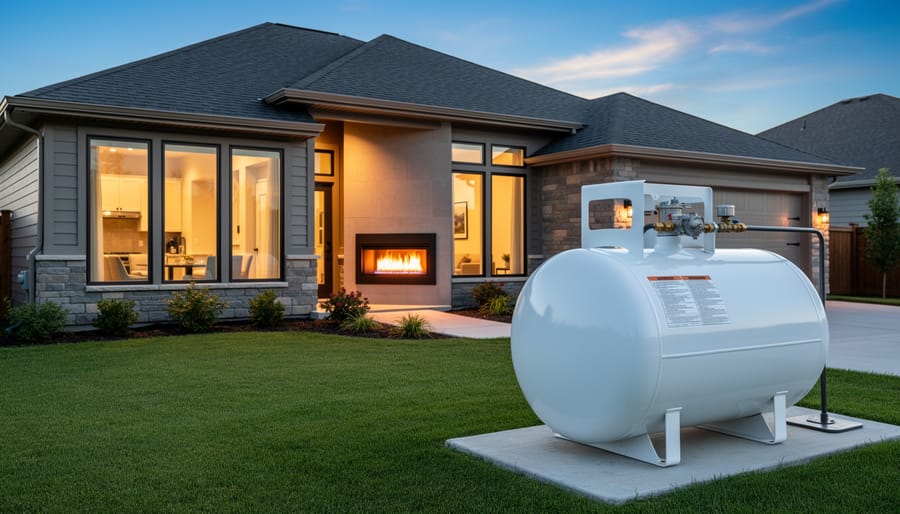
Propane operates at higher pressure than natural gas, delivering about 2,500 BTUs per cubic foot compared to natural gas’s 1,000 BTUs. This means propane burns hotter and more efficiently, which can be particularly advantageous in colder climates or larger spaces. However, you’ll need to factor in storage requirements. Most homeowners install either above-ground or underground propane tanks, typically ranging from 120 to 500 gallons, depending on usage and delivery frequency.
The upfront cost for propane includes both the tank installation and conversion kit for your fireplace or insert, adding several hundred to over a thousand dollars to your initial investment. Operating costs fluctuate more than natural gas since propane prices vary by region and season. You’ll also need to monitor your fuel levels and schedule deliveries, though many suppliers offer automatic refill services for convenience.
Propane becomes the better choice when natural gas simply isn’t available or when extending gas lines would cost more than several years of propane service. It’s also ideal if you’re seeking an eco-friendly heating solution with flexibility, as propane produces fewer emissions than many other fossil fuels and doesn’t spill or pool if leaked. For vacation homes or seasonal properties, propane offers the advantage of availability without maintaining year-round utility connections. The portability factor means you’re not locked into a specific fuel source if circumstances change.
Installation Realities: Time, Cost, and Complexity
Gas Fireplace Installation Considerations
Installing a gas fireplace requires careful planning and professional expertise, as you’re essentially creating a focal point that must balance aesthetics with safety and functionality. Unlike inserts, which work within existing openings, built-in gas fireplaces need their own designated space with proper framing and support structures to handle the unit’s weight and heat output.
The installation process begins with selecting your venting system, which significantly impacts both placement options and costs. Direct vent systems are the most popular choice for modern homes, drawing combustion air from outside and expelling exhaust through a sealed pipe system. This approach keeps indoor air quality pristine while offering flexible installation locations since the unit doesn’t rely on a traditional chimney. B-vent systems, sometimes called natural vent fireplaces, use indoor air for combustion and require vertical venting through the roof, limiting placement flexibility. Ventless models eliminate ductwork entirely, offering maximum flexibility, though they’re restricted or banned in some regions due to indoor air quality concerns.
Your fuel line installation depends on whether you’re connecting to existing natural gas service or installing a propane system. Natural gas connections are typically straightforward if you already have service, while propane requires tank installation and potentially longer line runs. Both scenarios demand licensed professionals who understand local codes and safety requirements.
Structural considerations include ensuring adequate clearance from combustible materials, proper support for the unit’s weight, and appropriate surround materials that can handle sustained heat exposure. These requirements make gas fireplace installation a commitment to your home’s layout and an investment in creating lasting warmth and ambiance.
Insert Installation: Working With What You Have
Think of a gas fireplace insert as a perfectly tailored suit for your existing fireplace opening. If you already have a traditional wood-burning fireplace that’s seen better days, an insert breathes new life into that space without the expense of a complete rebuild.
The installation process is remarkably straightforward compared to building a new gas fireplace from scratch. Your installer will slide the insert unit directly into your existing firebox, securing it in place with mounting brackets. The beauty of this approach is that you’re working with the structure you already have, which typically means lower labor costs and faster installation times.
One crucial requirement you’ll need to address is the chimney liner. Most inserts require a stainless steel flexible liner that runs from the insert up through your existing chimney. This liner safely vents combustion gases while protecting your chimney from heat and corrosion. It’s not optional, it’s essential for both safety and efficiency.
The fuel line connection depends on what’s already available in your home. If you have natural gas service, your installer will run a line from your existing gas supply to the fireplace location. For homes without natural gas access, propane offers a reliable alternative, though you’ll need space for an exterior tank and periodic refills.
Converting a wood-burning fireplace to gas through an insert installation typically takes just one to two days, making it an attractive option for homeowners seeking an eco-friendly heating solution without major renovation disruptions.
The Real Cost Breakdown: Beyond the Price Tag
Upfront Investment Comparison
Understanding the financial commitment upfront helps you plan your fireplace project realistically. Let’s break down what you can expect to invest initially.
A traditional gas fireplace typically ranges from $2,500 to $6,000 for the unit itself, with builder-grade models starting lower and premium options climbing higher. Installation labor adds another $2,500 to $5,000, depending on whether you’re building from scratch or have an existing chase. Gas fireplace inserts are generally more budget-friendly, with units priced between $1,800 and $4,500. Since they’re designed to retrofit your existing masonry fireplace, installation labor runs $500 to $2,000—significantly less than building a new fireplace structure.
Fuel line installation represents another consideration in your total investment. If your home already has natural gas service, connecting a new appliance costs $200 to $800 depending on distance from the main line. Propane requires installing an exterior tank, which typically runs $400 to $2,000 for tank rental or purchase, plus $300 to $1,000 for line installation. Many propane suppliers offer tank installations at reduced rates when you commit to purchasing fuel from them.
The bottom line? Gas fireplace inserts generally offer lower upfront costs, especially if you’re working with an existing masonry opening. Traditional gas fireplaces involve more construction but provide flexibility in placement and design. Both options require similar fuel line investments, though propane users face additional tank expenses regardless of which heating option they choose.
Operating Costs: What You’ll Pay Over Time
Understanding what you’ll actually spend month after month is crucial when choosing between these two heating options. Let’s break down the real costs of keeping your home cozy.
Gas fireplace inserts typically win the efficiency battle, with ratings between 70-85%, meaning more of your fuel dollar goes toward heating your home rather than up the chimney. Traditional gas fireplaces usually operate at 55-70% efficiency. This difference translates directly to your monthly bills. A fuel cost comparison shows that running an insert for three hours daily might cost $30-50 monthly, while a traditional unit could run $45-75 for the same use.
Maintenance expenses also differ noticeably. Inserts generally require professional servicing every 1-2 years, costing around $100-150 per visit. Traditional gas fireplaces need similar attention but may incur additional chimney inspection costs of $75-200 annually since they rely on existing chimney systems.
Over a 15-year lifespan, these differences compound significantly. An efficient insert could save you $2,000-4,000 compared to a traditional fireplace, factoring in both fuel consumption and maintenance. Natural gas users typically enjoy lower operating costs than propane customers, regardless of unit type.
Think of it as an investment in comfort that pays you back. The slightly higher upfront cost of an insert often balances out within 3-5 years through energy savings, making it an eco-friendly heating solution that’s kind to both your wallet and the environment.
Heating Performance: Which One Actually Warms Your Home?
Efficiency Ratings Decoded
When comparing gas fireplaces to inserts, understanding heating efficiency ratings can help you predict your heating bills and environmental impact. The industry standard measurement is AFUE, which stands for Annual Fuel Utilization Efficiency. Think of it as a report card for how well your unit converts fuel into usable heat.
Traditional gas fireplaces typically achieve efficiency ratings between 50-70%, meaning much of your natural gas or propane escapes up the chimney rather than warming your home. It’s like leaving a window open while trying to heat your living room. Gas fireplace inserts, however, shine with efficiency ratings of 70-85% or higher. This dramatic difference comes from their sealed combustion chambers and tight-fitting designs that trap heat inside your space.
What does this mean for your wallet? An insert with 80% efficiency delivers nearly 30% more heat per dollar spent compared to a standard 55% efficient fireplace. Over a heating season, this translates to meaningful savings on your gas bills while reducing your carbon footprint. For homeowners embracing eco-friendly heating solutions, inserts offer the warmth and ambiance you love with significantly less waste and environmental impact.
Real-World Heating Capacity
Understanding how much heat you’ll actually get from your unit is crucial when choosing between a gas fireplace and an insert. Traditional gas fireplaces typically heat between 400-800 square feet effectively, making them ideal for zone heating—warming up the specific room where you spend most of your time. This approach can actually reduce your overall energy bills by letting you lower your central heating thermostat while staying cozy in your living spaces.
Gas fireplace inserts, on the other hand, pack more punch. Because they’re designed to fit snugly into existing fireplace openings with sealed combustion systems, they can heat 1,000-2,000 square feet or more. This makes them better suited for open floor plans or as a primary heat source for significant portions of your home. The improved efficiency translates directly to better heat distribution and lower fuel consumption.
Fuel type matters too. Natural gas provides consistent heat output and requires connection to your local gas line, while propane delivers slightly more BTUs per unit but needs tank refills. Both fuels work efficiently in either option, though propane users should consider storage logistics. From an eco-friendly perspective, both systems burn cleaner than wood-burning alternatives, with inserts achieving the highest efficiency ratings—often 70-85% compared to 55-70% for traditional gas fireplaces. This means more of your fuel investment goes toward actually warming your home rather than disappearing up the chimney.

Making Your Home Decision: Which Option Fits Your Situation?
When a Gas Fireplace Makes More Sense
If you’re building a new home or adding a room, a traditional gas fireplace often makes the most sense. Since you’re starting with a blank slate, you can design the entire space around a built-in unit without worrying about existing structures. This approach gives you complete control over the fireplace’s size, positioning, and how it integrates with your home’s architecture.
Design flexibility is where gas fireplaces truly shine. Want a dramatic floor-to-ceiling statement piece? Or perhaps a sleek, modern linear design that spans an entire wall? A built-in gas fireplace can accommodate these creative visions far better than an insert, which is limited by the existing opening. You can also choose between traditional mantel designs or contemporary frameless installations that blend seamlessly with your décor.
From a lifestyle perspective, if you’re planning to stay in your home long-term and want a fireplace that feels like a permanent, custom feature rather than a retrofit solution, investing in a built-in unit makes financial sense. While the upfront costs are higher, you’re creating a focal point that adds lasting value and character to your living space. It’s an eco-friendly heating solution that becomes an integral part of your home’s identity, not just an afterthought.
When an Insert is Your Best Bet
If you already have a traditional wood-burning or inefficient gas fireplace, an insert is likely your ideal solution. Think of it as giving your existing fireplace a modern makeover without the expense and hassle of a complete renovation. You’ll leverage what’s already there while dramatically improving performance.
The efficiency upgrade alone makes inserts compelling. Older fireplaces can lose up to 70% of their heat through the chimney, but a quality gas insert can achieve efficiency ratings of 70-85%. That means more warmth stays in your living room where you want it, and less money flies up the chimney. For homeowners looking to reduce heating bills while maintaining that cozy fireplace ambiance, this transformation is particularly appealing.
Budget-conscious scenarios also favor inserts. Since you’re working with existing infrastructure, installation costs typically run lower than building a new fireplace from scratch. Your contractor won’t need to create a new venting system or build additional framing, which saves both time and money.
Inserts also shine when you’re committed to eco-friendly heating solutions. By converting an inefficient wood-burner to clean-burning gas, you’ll reduce particulate emissions while maintaining your home’s architectural character. The existing fireplace opening becomes a perfectly-sized frame for your new insert, preserving the focal point of your room.
If your priority is maximizing what you already have while improving efficiency and controlling costs, an insert deserves serious consideration as part of your home’s lifestyle enhancement.
Safety and Maintenance: What You Need to Know
Safety First: Critical Considerations
Whether you choose a gas fireplace or insert, safety should be your top priority. Both options require proper ventilation systems—direct-vent models are the gold standard, as they pull fresh air from outside and expel combustion gases directly outdoors. Vent-free models, while available, require exceptional room ventilation and aren’t legal in all states due to air quality concerns.
Carbon monoxide detectors are non-negotiable with any gas-burning appliance. Install them on every level of your home, especially near sleeping areas. While modern gas units include safety features like oxygen depletion sensors and automatic shut-offs, these safeguards work best alongside your vigilance.
Gas fireplace inserts typically offer enhanced safety since they’re installed within existing chimneys with proper liner systems, creating a sealed combustion chamber. Standalone fireplaces need careful installation to ensure proper clearances from combustible materials. Beyond basic fireplace safety considerations, check connections annually for leaks, regardless of whether you use natural gas or propane.
Propane systems require additional attention since propane is heavier than air and can pool in low areas if leaked. Natural gas dissipates more readily. Both fuel types include odor additives to help detect leaks quickly. Schedule annual professional inspections to maintain safe, efficient operation for years to come.
Keeping It Running Efficiently
Whether you’ve chosen a traditional gas fireplace or an insert, regular maintenance keeps your investment performing safely and efficiently for years to come. The good news? Both options are relatively low-maintenance compared to wood-burning alternatives.
Plan for an annual professional inspection before each heating season. A certified technician will check gas connections, clean the burner and pilot assembly, inspect the venting system, and ensure proper combustion. This typically costs between $100-$200 and prevents costly repairs down the road while keeping your unit running at peak efficiency.
Between professional visits, you can handle simple maintenance yourself. Dust the glass and surrounding surfaces monthly during use, and vacuum the logs or media to prevent buildup that affects flame appearance. Check that vents remain unobstructed, as proper airflow is essential for both safety and eco-friendly operation.
For optimal efficiency, keep your thermostat settings reasonable—even a degree or two lower saves energy without sacrificing comfort. Clean glass doors regularly to maximize radiant heat output, and consider upgrading to a programmable thermostat if your unit supports it. These small habits reduce fuel consumption, lower your carbon footprint, and ensure your fireplace remains a sustainable heating solution that enhances your home’s warmth season after season.
Choosing between a gas fireplace and a gas fireplace insert ultimately comes down to your home’s existing structure, your heating goals, and your budget. Remember, a gas fireplace is a complete unit perfect for new construction or adding warmth to a space that never had a fireplace before, while an insert breathes new life into an existing masonry fireplace by dramatically improving its efficiency.
Your fuel choice—natural gas or propane—adds another layer to this decision. If you have natural gas lines already running to your home, you’ll enjoy lower ongoing costs and seamless operation with either option. Don’t have that luxury? Propane still delivers excellent performance, though you’ll need to factor in tank installation and slightly higher fuel expenses.
Consider both your immediate investment and long-term value. Yes, inserts typically cost less upfront, especially if you’re converting an inefficient wood-burning fireplace. But a new gas fireplace might be worth the extra expense if you’re creating a stunning focal point in your living space or adding a heating solution where none existed.
Think about how you’ll actually use your fireplace. Are you seeking supplemental heat for chilly evenings, or do you want a reliable heating source that can warm your entire living area? Your answer will guide you toward the right choice.
Take time to evaluate your home’s specific needs, consult with qualified professionals, and don’t rush the decision. The perfect fireplace solution exists for your home—one that balances comfort, efficiency, and your vision for cozy living.