

Understand the fundamental difference: a gas fireplace is a complete heating appliance that burns gas to create flames and warmth without needing wood, while a gas starter is simply an ignition device installed in a traditional wood-burning fireplace to light your logs more easily. This distinction matters because choosing between them means deciding between two entirely different fireplace experiences and investments for your home.
Recognize that gas fireplaces operate independently as self-contained units, providing consistent heat and ambiance at the flip of a switch. They eliminate the need for firewood entirely, offering clean-burning convenience with adjustable flame controls and thermostat compatibility. You’ll invest more upfront—typically between $2,500 and $6,000 for installation—but gain an efficient heating source that reduces your carbon footprint while creating year-round ambiance.
Consider gas starters as an enhancement to your existing wood-burning fireplace rather than a replacement. These devices sit beneath your grate, igniting logs within minutes and eliminating the frustration of kindling and newspaper. Installation costs run between $300 and $800, making them an affordable upgrade that preserves the authentic crackling wood-fire experience while removing the most tedious part of the process.
Evaluate your lifestyle priorities honestly. If you value convenience, consistent heating efficiency, and minimal maintenance, a gas fireplace transforms your living space into a warm retreat without the physical demands of wood management. If you cherish the ritual of building fires and the unmistakable aroma of burning wood, a gas starter gives you easier ignition while maintaining that traditional fireplace character you love.
What Is a Gas Fireplace?
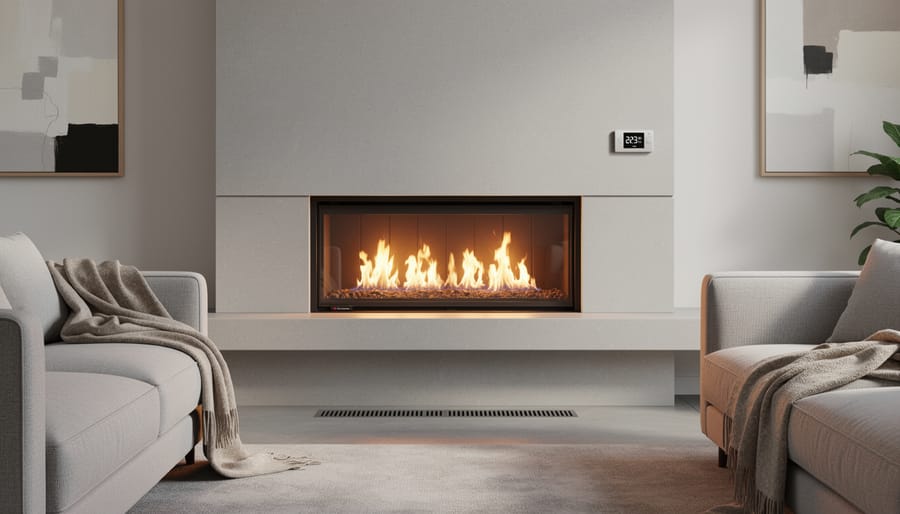
How Gas Fireplaces Operate
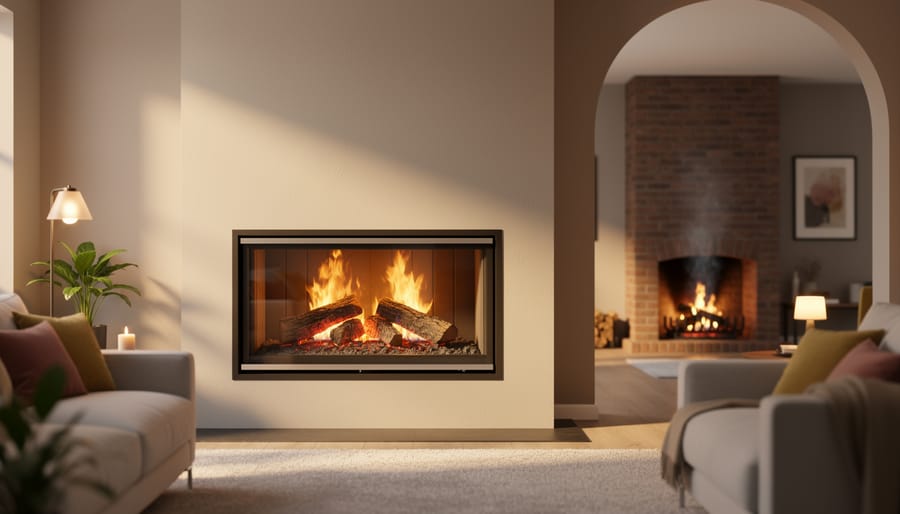
A gas fireplace transforms your living space with the flip of a switch, offering both warmth and ambiance without the fuss of traditional wood burning. At its heart lies a gas burner system that directs flames through specially designed ceramic or refractory logs, creating a remarkably realistic fire appearance.
When you activate your gas fireplace, natural gas or propane flows through a valve to the burner, where it ignites either by a standing pilot light or an electronic ignition system. The flames dance around the decorative logs, which are strategically positioned to maximize both visual appeal and heat distribution. Modern gas fireplaces include safety features like oxygen depletion sensors and automatic shut-off valves, giving you peace of mind while you enjoy the cozy atmosphere.
Heat output varies considerably based on your fireplace type. Vented models channel exhaust outside through a chimney or direct vent system, providing authentic ambiance but moderate heating efficiency. Ventless options retain nearly all generated heat within your room, making them powerful supplemental heat sources that can warm 1,000 to 1,500 square feet. Many homeowners appreciate the eco-friendly aspect of gas fireplaces, as they burn cleaner than wood and produce minimal particulate emissions, making them a responsible choice for both your home and the environment.
Types of Gas Fireplaces
When you’re considering a gas fireplace for your home, understanding the three main types helps you choose the right option for your space and lifestyle. Each type offers distinct advantages depending on your home’s structure and heating needs.
Vented gas fireplaces work similarly to traditional wood-burning models, using your existing chimney to exhaust combustion gases outside. They produce realistic-looking flames and provide excellent ambiance, though some heat escapes through the chimney. This makes them ideal for homes with established chimney systems.
Vent-free gas fireplaces don’t require any external venting, making installation flexible and affordable. They’re incredibly efficient at heating since all warmth stays in your room. However, they do release water vapor and require adequate room ventilation for safety. Many regions have specific regulations governing their use, so check local codes before choosing this option.
Direct-vent gas fireplaces represent a modern middle ground, drawing combustion air from outside while venting exhaust through a dedicated pipe system. They’re highly efficient, safe for tightly sealed homes, and don’t affect indoor air quality. Installation costs more upfront, but they offer superior performance and can be placed virtually anywhere in your home without requiring a traditional chimney.
What Is a Gas Starter (Gas Log Lighter)?
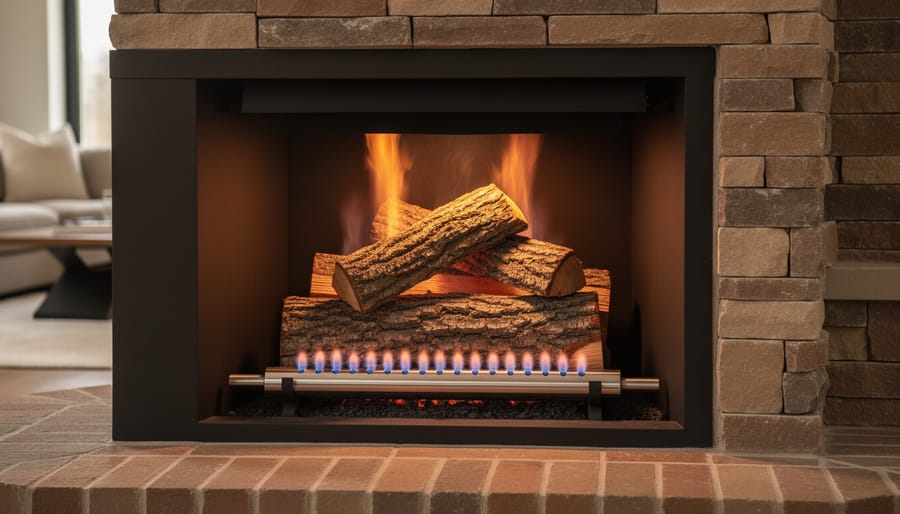
How Gas Starters Work
A gas starter operates with beautifully simple mechanics that make lighting a traditional fire effortless. Picture a metal pipe positioned beneath your firewood grate, connected to your home’s gas line through a valve and control key. When you’re ready for a fire, you arrange wood in the fireplace, open the valve by turning the key, and ignite the gas. The flame springs to life instantly, quickly catching your logs without the need for kindling, newspaper, or matches.
Here’s what makes gas starters different from full gas fireplaces: they’re designed as a starting aid, not a standalone heat source. Once your wood is burning well, typically after 10 to 15 minutes, you simply turn off the gas supply. The wood fire continues naturally from there, providing that authentic crackling ambiance and wood-burning warmth you’re after.
Think of it as a permanent lighter built right into your fireplace. The gas starter doesn’t replace wood; it works alongside it to eliminate the frustration of building fires from scratch. You’ll still need to maintain a wood supply, clean ashes, and tend to your fire as it burns, making this option ideal for those who love traditional wood fires but want convenience at lighting time.
When Gas Starters Make Sense
If you’re someone who truly loves the crackle, aroma, and dancing flames of a real wood fire, a gas starter might be your ideal solution. Gas starters shine in situations where you want the authentic wood-burning experience without the frustration of lighting fires from scratch. They’re particularly appealing for those chilly evenings when you want a roaring fire quickly without fumbling with kindling and matches.
Homeowners who use their fireplaces regularly throughout the winter months appreciate how gas starters eliminate the messy and time-consuming startup process while still delivering that genuine wood fire ambiance. They’re also perfect for those who may have mobility challenges or simply want convenience without sacrificing the traditional fireplace experience.
Gas starters make excellent sense if you already have a wood-burning fireplace and want to enhance its usability. When combined with proper techniques for burning wood safely, they offer the best of both worlds: effortless ignition and the warmth of natural wood heat. This option preserves the lifestyle element of tending a real fire while modernizing the most tedious part of the process.
The Key Differences That Matter to Your Home
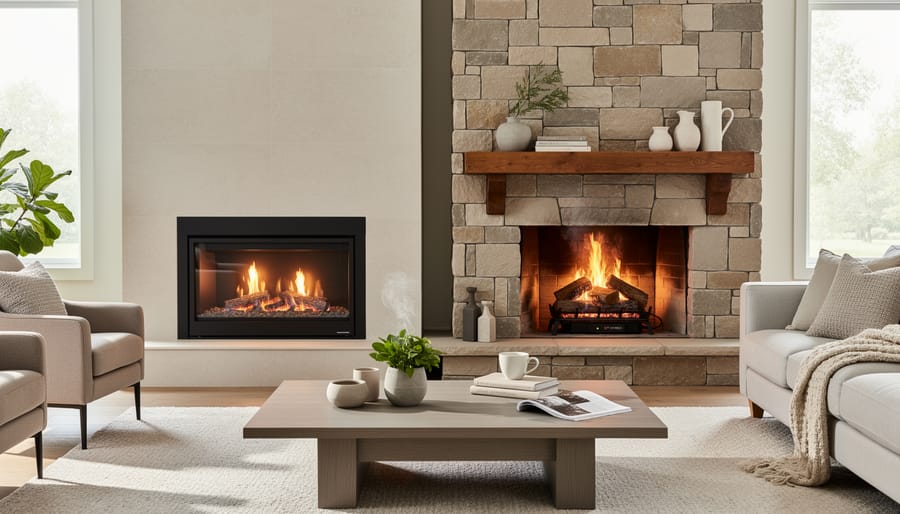
Heating Performance and Efficiency
When it comes to warming your home, the heating performance differs dramatically between these two options. A gas fireplace serves as a dedicated heating appliance, delivering consistent warmth through controlled gas flames. Depending on the model, you can expect heat output ranging from 8,000 to 60,000 BTUs per hour, with many units offering adjustable flame settings to match your comfort needs. Modern gas fireplaces achieve efficiency ratings between 70-99%, meaning most of the fuel converts directly into usable heat for your living space.
In contrast, a gas starter simply ignites wood logs, then shuts off once your fire establishes itself. The actual heat comes entirely from burning wood, not the gas component. While wood fires create wonderful ambiance and radiant warmth, they’re considerably less efficient, typically converting only 20-40% of the wood’s energy into room heat. The rest escapes through your chimney along with the smoke. If consistent, controllable heating is your priority, a gas fireplace wins hands-down. However, if you love the crackling authenticity of wood and view heating as secondary to atmosphere, a gas starter supporting traditional wood fires might better suit your lifestyle.
Cost: Installation and Operation
When comparing installation and ongoing expenses, gas fireplaces and gas starters sit at opposite ends of the investment spectrum. A gas fireplace represents a significant upfront commitment, typically ranging from $2,500 to $5,000 for a basic direct-vent unit, with high-end models exceeding $10,000. Installation adds another $1,000 to $3,000, depending on whether you need gas line extensions or venting work. Natural gas connections generally cost less long-term than propane tanks, which require refills and delivery fees.
Gas starters, by contrast, are refreshingly affordable. Expect to pay $200 to $800 for the unit itself, with installation running $300 to $600 if you’re adding it to an existing wood-burning fireplace. This makes them accessible for homeowners wanting gas convenience without full renovation costs.
Operating expenses tell an interesting story too. Gas fireplaces burning continuously can cost $30 to $60 monthly depending on your region and fuel type. Gas starters use minimal gas since they only ignite wood fires, adding perhaps $5 to $10 monthly to your bill. While neither matches wood fuel costs alone, gas starters offer a middle ground between traditional wood burning and fully automated heating.
Maintenance and Safety Requirements
Gas fireplaces require minimal maintenance compared to traditional wood-burning setups. You’ll need annual professional inspections to check gas connections, pilot lights, and ventilation systems. The glass fronts need occasional cleaning to maintain that clear view of the flames, and batteries in remote controls should be replaced as needed. These systems are largely hands-off, making them ideal for busy homeowners.
Gas starters, however, demand more attention since they’re used with real wood fires. Your chimney needs annual inspection and cleaning to prevent dangerous creosote buildup, just like any wood-burning fireplace. You’ll also need to maintain proper firewood selection and storage practices. The gas starter valve itself requires periodic checking to ensure it’s functioning correctly and shutting off completely when not in use. Both systems benefit from carbon monoxide detectors nearby for added safety and peace of mind.
Natural Gas vs Propane: Which Fuel Works Best?
Availability and Infrastructure
Your fuel source availability plays a significant role in determining which option works best for your home. If your property already has natural gas service, you’re in an excellent position to install either a full gas fireplace or a gas starter without the hassle of propane delivery and storage. Natural gas provides constant, reliable fuel through your existing utility connection, making it wonderfully convenient for regular use.
For homes without natural gas access, propane tanks offer a practical alternative, though they require periodic refilling and outdoor storage space. Propane works efficiently for both gas fireplaces and gas starters, but consider your usage patterns when deciding tank size. A full gas fireplace will consume fuel much faster than a gas starter used occasionally to ignite wood fires.
Rural homeowners often rely on propane by necessity, while suburban and urban properties typically have natural gas infrastructure. If you’re considering installation, check with local utility companies about natural gas line extension costs. Sometimes the upfront investment in connecting to natural gas pays off through lower fuel costs and greater convenience over time. Your existing infrastructure, or willingness to add it, significantly influences which fireplace solution delivers the warmth and ambiance you’re seeking without creating fuel supply headaches.
Cost Comparison and Long-Term Value
When comparing heating fuel costs, natural gas consistently offers the most economical option for full gas fireplaces, typically costing $0.50 to $1.50 per hour of operation. Propane runs slightly higher at $1.00 to $2.50 hourly. A gas starter’s minimal fuel use makes both options negligible—often just pennies per fire.
Seasonal price swings affect propane more dramatically, with winter demand pushing costs up 20-30%. Natural gas prices remain relatively stable year-round. For a cozy evening fire burning three hours, that’s roughly $3-4 with natural gas versus $5-7 with propane for a gas fireplace.
Long-term value depends on your usage. Frequent burners see significant savings with natural gas over 10-15 years, while occasional users won’t notice much difference. Gas starters represent minimal ongoing expense regardless of fuel type, making them budget-friendly for wood fire enthusiasts seeking convenience without continuous gas consumption.
Environmental Considerations
From an environmental standpoint, both gas fireplaces and traditional wood-burning fireplaces with gas starters have distinct impacts worth considering. Gas fireplaces generally burn cleaner than wood, producing fewer particulates and less smoke that can affect indoor and outdoor air quality. They emit carbon dioxide but avoid the harmful creosides and fine particulate matter that wood combustion creates.
Gas starters, while designed to reduce the need for chemical fire starters and lighter fluid, still facilitate wood burning, which remains a less eco-friendly option. However, when paired with sustainably sourced firewood, they can be part of a more responsible approach to traditional fireplace enjoyment.
For the environmentally conscious homeowner, natural gas typically has a smaller carbon footprint than propane, though both are fossil fuels. If sustainability is your priority, exploring alternative fuel options might align better with your values while still achieving that cozy ambiance you’re seeking.
Which Option Is Right for Your Home?
Choose a Gas Fireplace If…
A gas fireplace makes sense when convenience and consistent heating are your top priorities. If you’re building a new home or completing a major renovation, installing a gas fireplace unit provides an all-in-one heating solution that becomes a permanent focal point in your space. Consider this option if you live in regions with strict air quality regulations, since gas fireplaces burn cleaner than wood-burning alternatives and align with eco-friendly heating solutions. They’re ideal for busy households where nobody wants the ongoing commitment of hauling wood, cleaning ashes, or tending fires. Gas fireplaces also shine in homes without existing chimneys, as ventless or direct-vent models offer flexible installation options. If maintaining your home’s warmth during power outages matters, many gas fireplace models operate independently of electricity. Finally, choose a gas fireplace if you value fireplaces as a lifestyle element that delivers instant ambiance at the flip of a switch, perfect for spontaneous cozy evenings without the planning traditional wood fires require.
Choose a Gas Starter If…
You love the authenticity of a traditional wood-burning fireplace and want to keep that experience alive in your home. Gas starters shine when you already have a wood-burning fireplace that you cherish but struggle with the hassle of getting fires started. They’re perfect for busy households where you want a roaring fire without the frustration of kindling and matches. If you’re working with a tighter budget, gas starters offer a wallet-friendly way to enhance your existing fireplace without the expense of a complete conversion. They’re also ideal if you heat with wood regularly and simply want a more convenient ignition method. Consider a gas starter if you value the crackling sounds, dancing flames, and woodsmoke aroma that only real logs provide, but you’d happily skip the tedious startup process. It’s the practical middle ground for traditionalists who appreciate a little modern convenience.
Can You Convert Between Them?
The good news is that converting from a gas starter to a full gas fireplace is technically possible, though it requires significant upgrades. You’ll need to install a complete gas fireplace insert or system, which involves adding burners, glass doors, proper venting, and updated gas lines to handle increased fuel flow. This essentially means replacing your entire firewood-burning setup with a new system.
Converting the other direction—from a gas fireplace to a gas starter—is rarely practical or recommended. Once you’ve invested in a complete gas system, downgrading doesn’t make much financial sense. However, if you’re craving that authentic wood-burning experience, you could potentially decommission your gas fireplace and install a gas starter in a traditional masonry firebox, assuming your existing chimney structure supports wood burning.
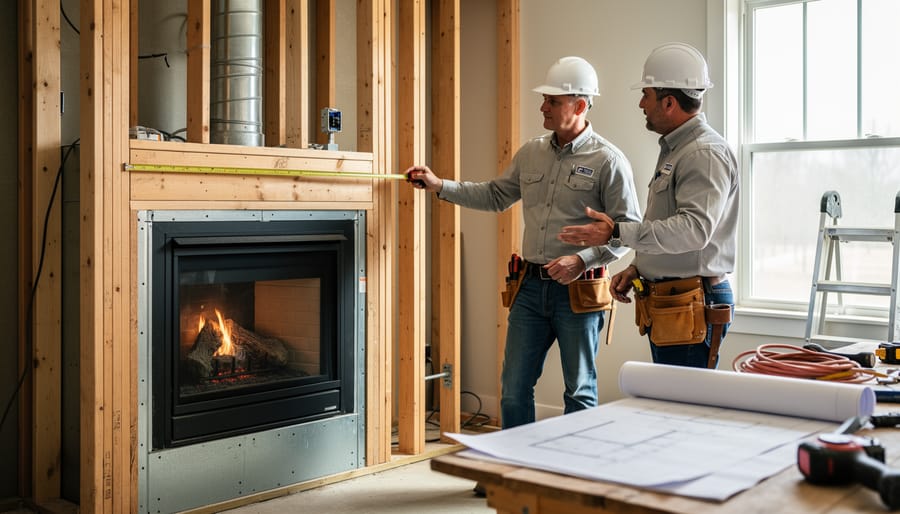
Both conversions require professional assessment and installation to ensure proper venting, gas supply, and safety compliance. Your local building codes may also influence what’s permissible, so consulting with a certified fireplace technician is essential before making any changes to your existing setup.
Understanding the difference between a gas fireplace and a gas starter is essential to creating the warm, inviting home environment you’ve been dreaming of. These aren’t interchangeable options, but rather two distinct solutions designed for different purposes and lifestyles. A gas fireplace offers you the convenience of instant, controlled heat at the flip of a switch, perfect for modern living where ease and efficiency matter. A gas starter, on the other hand, enhances your traditional wood-burning fireplace by making it easier to ignite while preserving that authentic crackling fire experience you love.
Your decision ultimately comes down to what matters most in your daily life. If you prioritize convenience, consistent heat output, and minimal maintenance, a gas fireplace aligns beautifully with those needs. If you cherish the ritual of a wood fire but want to skip the hassle of newspaper and kindling, a gas starter bridges that gap perfectly. Consider your heating requirements, budget, and how much time you want to dedicate to fireplace maintenance. Think about the ambiance you’re trying to create and whether you value authenticity over convenience.
Whatever path you choose, consulting with a certified professional for installation is absolutely essential. They’ll ensure proper venting, gas line connections, and safety measures while helping you navigate local building codes and manufacturer requirements. This investment in professional expertise protects your family and your home while maximizing the performance of your fireplace choice.
With the right knowledge and guidance, you’re well on your way to enjoying cozy evenings by the fire, creating memories in a space that reflects your personal style and comfort priorities.