MYFIRE.PLACE

Safety & Code Compliance

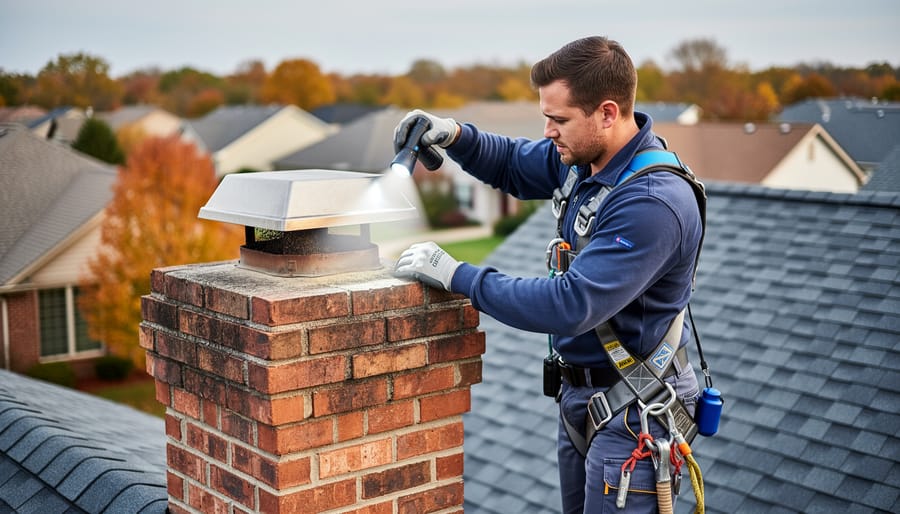
Chimney sweep wearing a safety harness examines a brick chimney on a house roof, lifting the metal cap and shining a flashlight into the flue, with rust streaks and cracked crown visible.
Schedule annual professional inspections before burning season begins, typically in late summer or early fall. A certified chimney sweep will identify creosote buildup, structural damage, and blockages that compromise both safety and efficiency. Check your flue damper monthly during active use to ensure it opens and closes completely. A stuck or warped damper wastes energy ... Read more

Installer’s gloved hands measuring the distance from a modern gas fireplace opening to wooden trim, stone hearth extension visible, softly lit living room blurred in background, emphasizing safe code-compliant clearances.
Verify your fireplace installer pulled the correct permit and requested Z359 compliance, because this Canadian standard (CSA Z359.1) actually relates to fall protection equipment, not fireplace clearances. You’re likely looking for information about NFPA 211 or ULC-S610 standards, which govern actual fireplace installation clearances to combustible materials. Contact your local building department immediately to confirm ... Read more
Licensed home inspector with clipboard and tape measure reviewing clearances on a partially installed gas fireplace, open wall studs and vent pipe visible, contractor assisting, residential living room under renovation with tools and ladder in the background under soft natural light.
Verify your local permit requirements before purchasing any fireplace or beginning installation work—most jurisdictions require permits for new fireplace installations, fuel conversions, and major renovations, with fines ranging from hundreds to thousands of dollars for non-compliance. Contact your municipal building department or visit their website to download permit applications, as requirements vary significantly between counties ... Read more
Homeowner outside a suburban Rochester-area house calling on a cell phone after detecting a gas odor, family exiting behind, exterior gas meter visible on the side of the house at dusk.
Evacuate your home immediately if you smell gas—that distinctive rotten egg odor means danger. Once you’re safely outside, call RG&E’s 24-hour emergency line at 1-800-743-1701 from a neighbor’s phone or cell phone away from the building. Never turn electrical switches on or off, light matches, or use any device that could create a spark when ... Read more
Electrician measuring distance from a modern fireplace opening to a wall outlet with a tape measure, sharp focus on hands and tool, softly lit living room with mantel and closed junction box in the background
Verify your electrical clearances meet code requirements before installing or upgrading any fireplace system—the National Electrical Safety Code (NESC) and National Electrical Code (NEC) establish different standards, and homeowners working with fireplaces need to understand which applies to their project. The NESC governs utility company infrastructure and outdoor power lines, while the NEC controls residential ... Read more
Gloved hand with flashlight examines frayed wires and faint scorch marks inside a gas fireplace control compartment beside a metal junction box, with the hearth softly blurred in the background.
Inspect your fireplace’s electrical connections every six months for frayed wires, scorch marks, or loose outlets that could spark a devastating fire in your home. These visual cues often appear weeks before a serious incident, giving you precious time to act. Check that your gas fireplace’s electrical components meet current National Electrical Code standards, particularly ... Read more
Eye-level wide shot of a modern living room with a glass-front gas fireplace showing blue flames and a small wall vent beside the hearth, soft daylight and warm firelight, with a blurred kitchen and stainless range hood in the background.
Understanding combustion air venting requirements now prevents dangerous carbon monoxide buildup, failed inspections, and costly retrofits later. Every fireplace and fuel-burning appliance in your home needs two things to operate safely: adequate air to fuel the fire and a clear path to remove toxic gases. Without proper ventilation, these appliances can’t burn efficiently and may ... Read more
Modern living room with wood-burning fireplace and wide stone hearth extension; area rug and sofa positioned at a safe distance; warm side light over wood floors and stone surround.
Measure the distance between your fireplace opening and any combustible materials like hardwood floors, area rugs, or furniture—this space, known as safety clearance, determines whether your hearth setup meets fire codes and protects your home from heat damage. For most wood-burning fireplaces, you’ll need a minimum of 16 inches of non-combustible hearth extension in front ... Read more