

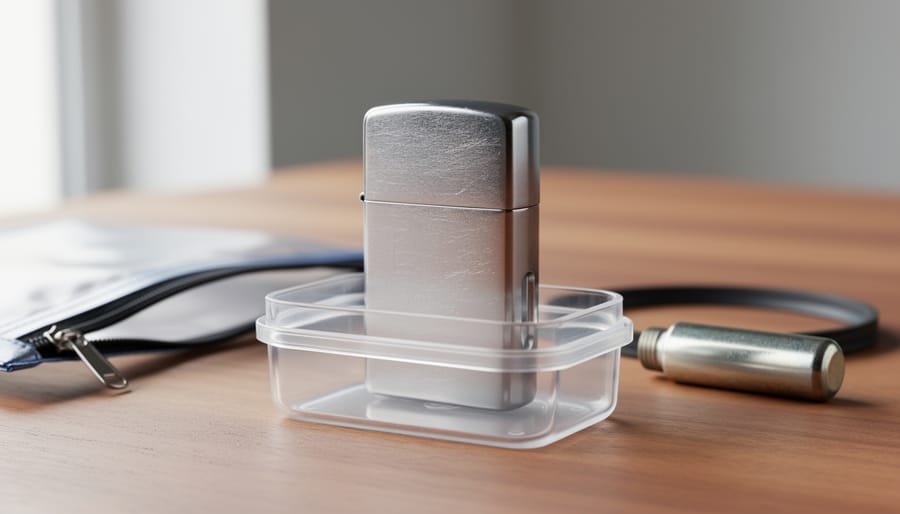
Store your Zippo upright in a sealed plastic bag or small airtight container between uses to dramatically slow fuel loss. The naphtha-based lighter fluid that gives your Zippo its reliable spark evaporates through the cotton wadding and wick even when the lid is closed, often leaving your lighter bone-dry within two weeks of filling. Replace ... Read more
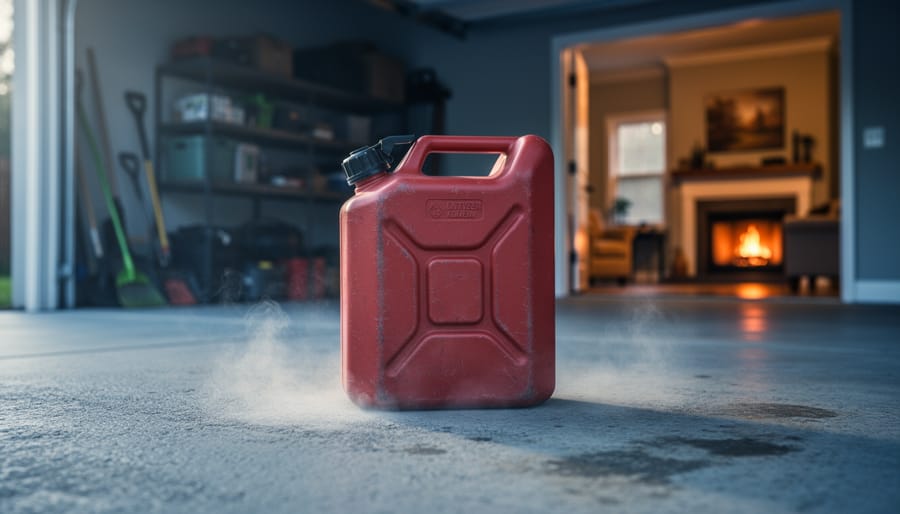
Gasoline evaporates faster than you might expect, turning from liquid to invisible vapor at temperatures as low as 45°F, which means that can sitting in your garage is releasing flammable fumes even on cool days. Understanding this volatile behavior isn’t just chemistry—it’s essential home safety knowledge, especially if you store fuel for lawnmowers, generators, or ... Read more
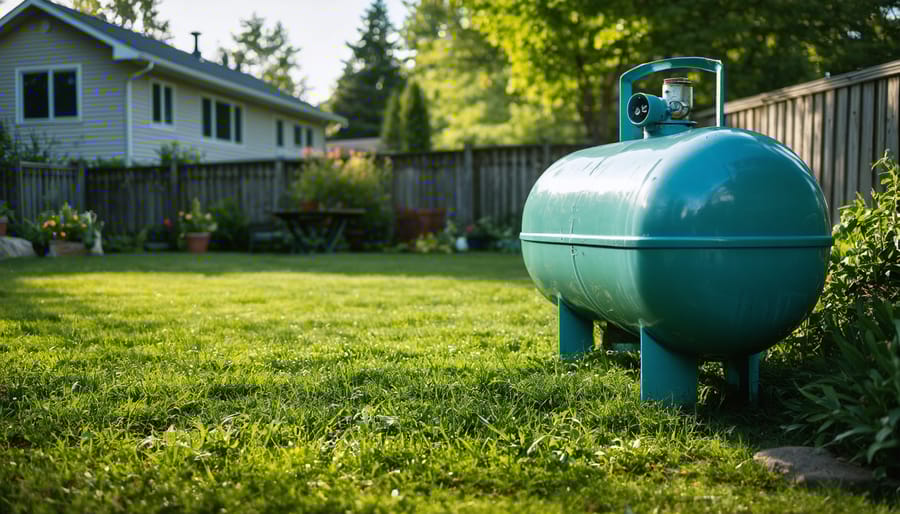
A BLEVE (Boiling Liquid Expanding Vapor Explosion) represents one of the most devastating accidents that can occur in home fuel storage, capable of transforming a peaceful afternoon into a catastrophic event within seconds. When a propane tank or similar pressurized container is exposed to intense heat, the liquid inside rapidly expands, creating an overwhelming pressure ... Read more
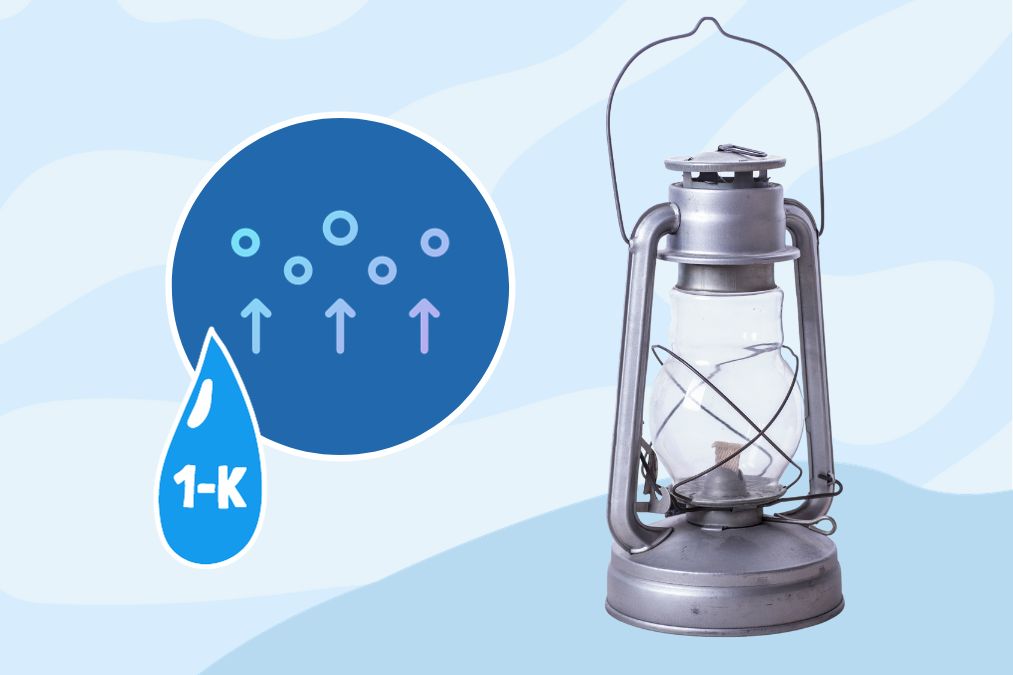
Welcome to a magical journey where we delve into the mysterious world of liquid kerosene and explore the intriguing question, “Does kerosene evaporate?” Picture a tiny droplet of kerosene, as small as the period at the end of this sentence. Now, imagine it vanishing into thin air. This isn’t magic—it’s droplet evaporation. Droplet evaporation is ... Read more



