
MYFIRE.PLACE
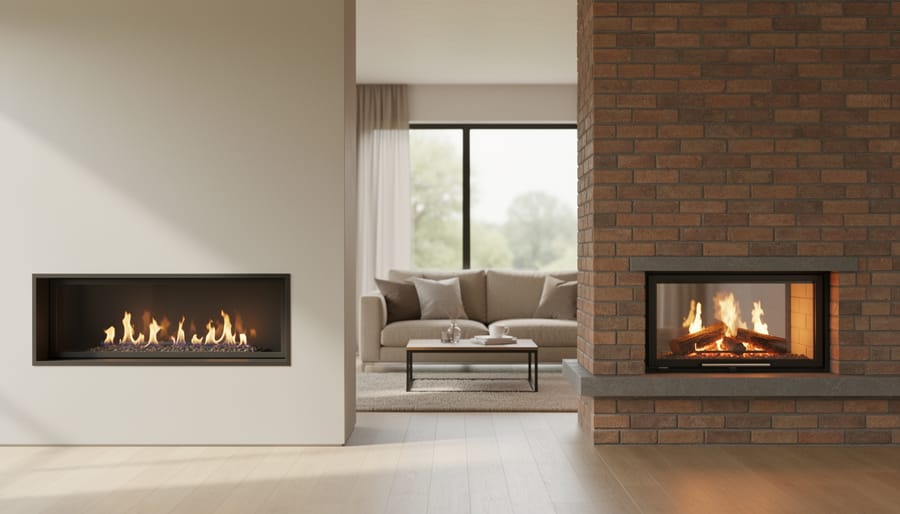
Eye-level wide shot of a living room with two fireplaces: a modern built-in linear gas fireplace on the left and a brick fireplace fitted with a glass-front gas insert on the right, softly lit by daylight and fire glow with neutral furnishings in the background.
Standing in the fireplace aisle wondering whether to buy a gas fireplace or a gas fireplace insert isn’t just about picking between two similar products—you’re actually choosing between completely different heating solutions that will impact your home’s comfort, energy bills, and installation costs for decades to come. A gas fireplace is a self-contained unit installed ... Read more
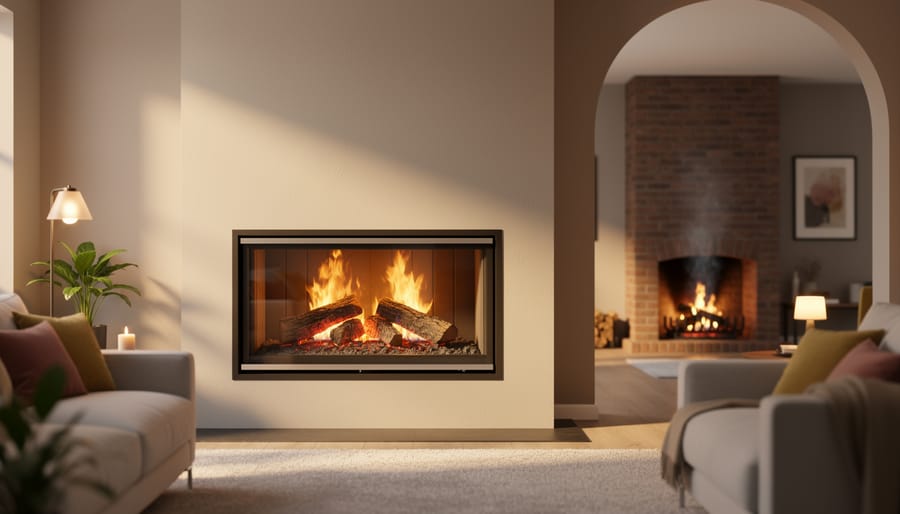
Modern glass-front gas fireplace in sharp focus, with a softly blurred traditional brick fireplace in the background where logs are catching from a small gas starter flame under the grate.
Understand the fundamental difference: a gas fireplace is a complete heating appliance that burns gas to create flames and warmth without needing wood, while a gas starter is simply an ignition device installed in a traditional wood-burning fireplace to light your logs more easily. This distinction matters because choosing between them means deciding between two ... Read more
Modern living room with a glowing pellet stove and neatly stacked plain pellet bags; a large cordwood pile is visible through a window in the softly blurred background under warm evening light.
Compare pellet brands by checking their BTU ratings—premium hardwood pellets typically deliver 8,200 to 8,500 BTUs per pound, giving you more heat for your money. Look for the Pellet Fuels Institute (PFI) certification stamp on the bag, which guarantees low ash content (under 1% for premium grade) and consistent moisture levels that prevent your stove ... Read more

Wood-burning fireplace with two contrasting wood piles: foreground recycled scrap wood with painted boards, green-tinted treated pieces, and pallet slats with nails, beside a tidy stack of clean split hardwood; stone hearth and living room blurred in background.
The crackle of a wood fire brings undeniable comfort, but not all fuel sources are created equal when it comes to environmental impact. Burning recycled or reclaimed wood might seem like the ultimate eco-friendly solution—giving old materials new purpose while heating your home. However, this seemingly green choice hides serious risks that could compromise both ... Read more
"Outdoor heater displayed with firewood, a propane tank, and a natural gas line, in a cozy patio garden setting."
Choosing the right heating fuel transforms your outdoor living space while keeping your family warm and your energy costs manageable. From traditional firewood to modern propane systems, each fuel type offers unique advantages for home heating. Following proper outdoor heating safety precautions ensures optimal performance while protecting your investment. Whether you’re looking to heat a ... Read more
"Organized rows of young hybrid poplar and willow trees growing in a backyard wood lot, symbolizing sustainable firewood production."
Transform your backyard into a sustainable fuel source by cultivating fast-growing trees like hybrid poplar and willow, which can produce harvestable firewood within 5-7 years. Moving beyond traditional fireplace fuels, organic alternatives offer both environmental benefits and long-term cost savings. Dried corn cobs, compressed biomass pellets, and sustainably harvested bamboo provide efficient, clean-burning options that ... Read more
A modern living room with a fireplace featuring a bright green algae biofuel flame, highlighting the eco-friendly and sustainable warmth it provides.
Transform your home’s heating system with the power of algae-based biofuel, a breakthrough in renewable heating solutions that’s revolutionizing how we think about sustainable warmth. This microscopic powerhouse produces up to 60 times more oil per acre than traditional biofuel crops while actively absorbing CO2 from our atmosphere. Unlike conventional heating fuels, algae biofuel burns ... Read more