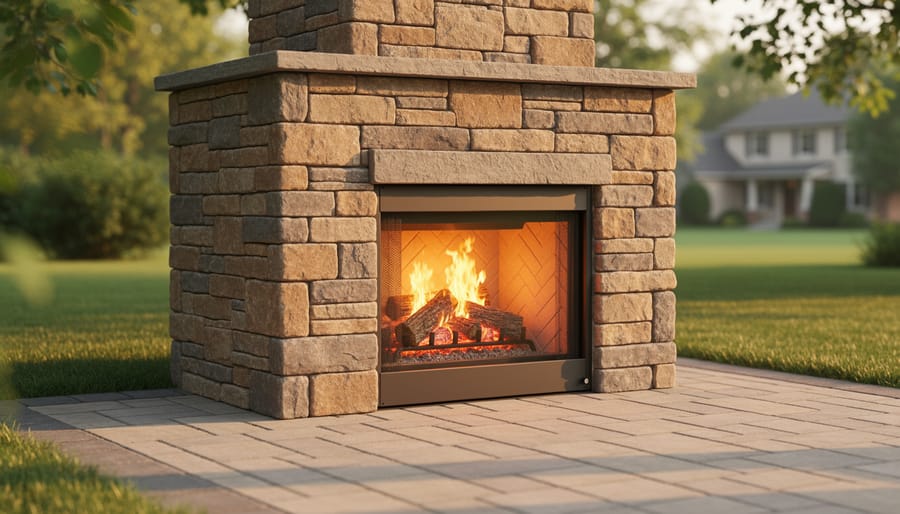


Build your outdoor stone fireplace by selecting a level, non-combustible foundation at least 10 feet from structures and overhanging branches. Choose locally sourced fieldstone or fire-rated masonry that can withstand temperatures exceeding 2000°F while complementing your landscape design. Create detailed plans that include proper chimney height—at least 3 feet above the roofline if near buildings—and adequate ventilation to prevent dangerous smoke backup.
Gather essential materials including refractory cement for the firebox interior, standard mortar for exterior stonework, a steel firebox insert for enhanced durability, and a concrete base extending 6 inches beyond your fireplace footprint on all sides. Check local building codes immediately, as most municipalities require permits for permanent outdoor structures with heights over 3 feet or those producing open flames.
Construct a reinforced concrete foundation 4-6 inches thick, allowing it to cure for at least 48 hours before beginning stonework. Build the firebox first using firebricks and refractory mortar, ensuring the opening faces prevailing winds to optimize draft. Layer stones from bottom to top, maintaining consistent mortar joints and incorporating metal rebar or wire mesh every few courses for structural integrity.
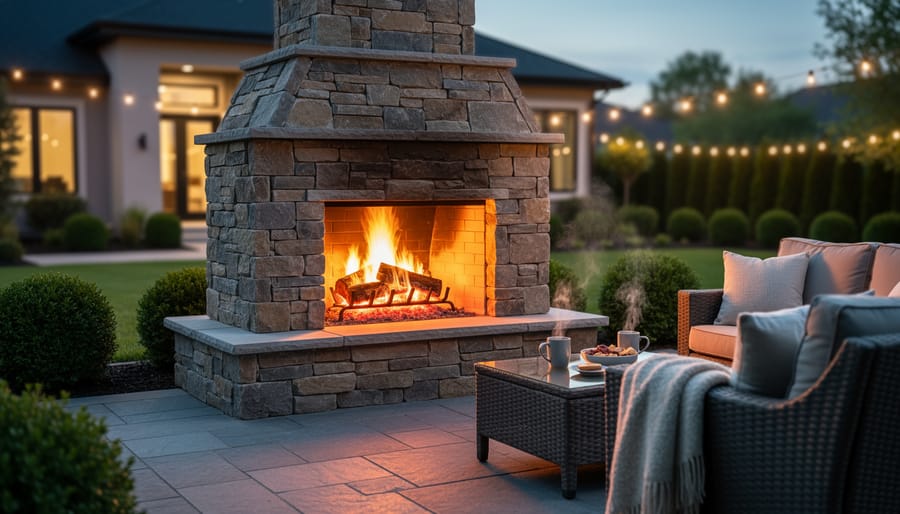
An outdoor stone fireplace transforms your backyard into a year-round gathering space, offering both practical warmth and timeless aesthetic appeal. Unlike portable outdoor fire stove solutions, a permanent stone structure becomes a focal point that enhances property value while providing eco-friendly heating through efficient wood combustion. This comprehensive guide walks you through creating a safe, beautiful fireplace that delivers decades of memorable evenings under the stars.
Why Stone is the Smart Choice for Your Outdoor Fireplace
When considering backyard fire options, stone stands out as the premier choice for outdoor fireplaces, and for good reason. This natural material brings together form and function in ways that synthetic alternatives simply can’t match.
Stone’s durability is legendary. While metal fire pits may rust and deteriorate within a few seasons, and manufactured materials can crack or fade under constant exposure to the elements, a well-built stone fireplace can last for generations. Stone naturally withstands freeze-thaw cycles, intense heat, driving rain, and scorching sun without losing its structural integrity or visual appeal. Think of it as an investment that pays dividends year after year.
The heat retention properties of stone create a uniquely cozy experience. Unlike metal structures that cool down minutes after the fire dies, stone absorbs and radiates warmth long after the flames have faded. This means extended comfort for you and your guests, making those outdoor gatherings last just a bit longer on cool evenings. It’s also an eco-friendly heating solution, as the stored heat requires less fuel consumption to maintain a comfortable temperature.
From a design perspective, stone offers unmatched versatility. Whether you prefer the rustic charm of fieldstone, the clean lines of cut limestone, or the dramatic character of stacked slate, there’s a stone option to complement any architectural style. Each fireplace becomes a unique focal point, with natural variations in color and texture ensuring your outdoor space has true character.
Let’s talk value. A stone outdoor fireplace significantly enhances your property’s appeal and market value. Real estate professionals consistently note that quality outdoor living features, especially stone fireplaces, attract buyers and justify higher asking prices. You’re not just building a fire feature; you’re creating a lifestyle element that transforms your backyard into an inviting retreat while making a smart financial decision for your home’s future.
Planning Your Stone Fireplace: What You Need to Know First
Choosing the Perfect Location
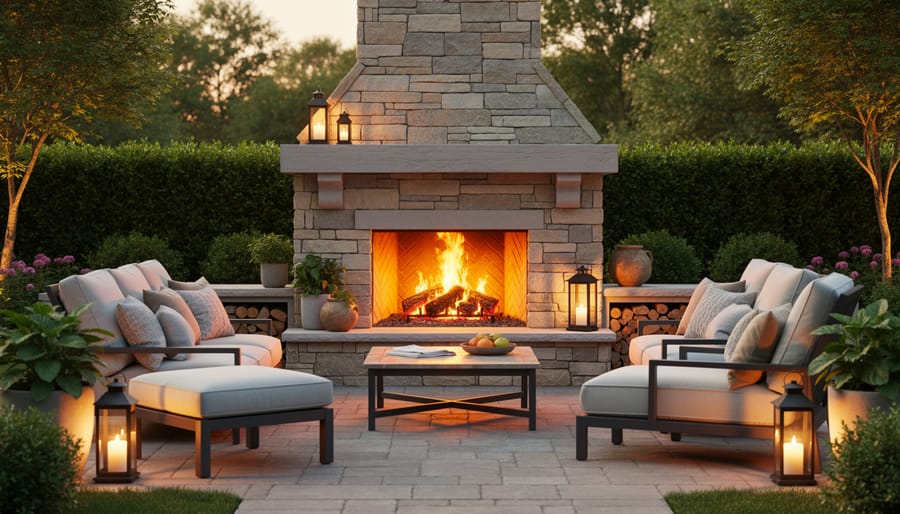
Finding the right spot for your outdoor stone fireplace transforms it from a simple structure into a true lifestyle centerpiece. Start by observing how wind typically moves through your yard—you’ll want to position your fireplace where smoke naturally drifts away from seating areas and your home. Speaking of your house, maintain at least 10 to 15 feet of clearance to prevent heat damage and meet most building codes.
Think about the flow of your outdoor space. Your fireplace should anchor a cozy gathering area, so consider how seating will wrap around it and whether guests can easily move between the fire and other yard features. Check for overhanging branches that could pose fire hazards and ensure the location allows for proper ventilation.
Don’t forget practical considerations like proximity to firewood storage and accessibility during construction—you’ll be moving heavy stones and materials. Also evaluate sight lines from inside your home; a well-placed fireplace becomes a beautiful focal point visible through windows, extending that warm ambiance even when you’re indoors. Finally, verify that your chosen spot has stable, level ground or can be reasonably leveled, as a solid foundation is essential for long-term safety and structural integrity.
Understanding Local Codes and Permits
Before breaking ground on your outdoor stone fireplace, understanding local building codes and permits is essential. While it might seem tempting to skip this step, proper permits protect you legally and ensure your fireplace is safe for years of enjoyment.
Most municipalities require permits for outdoor fireplace construction because these structures involve fire, which poses potential risks to your property and neighbors. Building codes typically regulate setback distances from property lines, house structures, and overhead vegetation. They also specify requirements for foundation depth, chimney height, and spark arrestor installation.
Start by contacting your local building department or visiting their website to understand specific requirements in your area. Many jurisdictions have different rules for permanent stone fireplaces versus portable fire pits, so clarify what applies to your project. You’ll likely need to submit construction plans showing dimensions, materials, and placement on your property.
The approval process usually takes two to six weeks, depending on your location. Budget around $50 to $300 for permit fees. Some areas also require inspections during construction and before final use.
Remember, homeowners associations may have additional restrictions beyond municipal codes. Check those rules early to avoid costly redesigns. Taking time to navigate the permit process properly means creating a beautiful, safe outdoor gathering space that adds value to your home while staying compliant with all regulations.
Setting a Realistic Budget
Building an outdoor stone fireplace typically costs between $1,500 and $5,000 for a DIY project, depending on size and materials. Natural stone runs $15-30 per square foot, while manufactured stone veneers offer a budget-friendly alternative at $6-12 per square foot. You’ll need mortar, rebar, concrete for the foundation, and a firebox insert, totaling roughly $300-600. Basic tools like trowels, levels, and mixing equipment add another $200 if you’re starting from scratch.
Hiring a professional increases costs to $3,000-10,000 but ensures proper construction and code compliance. To save money, consider sourcing local stone directly from quarries, borrowing specialized tools from neighbors, or tackling the foundation yourself while hiring a mason for the stonework. Remember, investing in quality materials upfront prevents costly repairs and creates a beautiful, eco-friendly gathering space that enhances your outdoor living area for years to come.
Selecting Your Stone and Materials
Best Stone Types for Outdoor Fireplaces
Selecting the right stone for your outdoor fireplace significantly impacts both its longevity and visual appeal. Let’s explore the most popular options to help you make an informed choice for your backyard retreat.
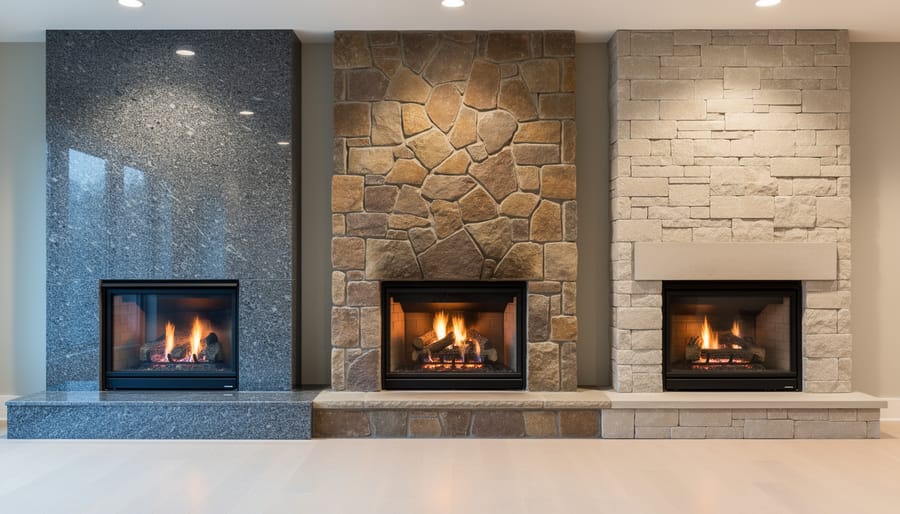
Natural limestone offers a classic, elegant appearance with warm earth tones ranging from cream to gray. It’s relatively soft, making it easier to cut and shape during construction, though this also means it requires sealing to protect against moisture and weathering. Limestone creates a timeless look that complements both traditional and contemporary outdoor spaces.
Granite stands as one of the most durable options available. This dense, heat-resistant stone comes in stunning variety, from speckled grays to rich blacks and even warm pinks. While granite’s hardness makes it more challenging to work with, it withstands extreme temperatures beautifully and requires minimal maintenance over the years.
Sandstone brings rustic charm with its layered texture and earthy red, tan, and brown hues. It’s moderately porous, so proper sealing is essential, but its natural slip-resistance makes it practical for both the fireplace structure and surrounding patio areas.
Fieldstone creates an organic, collected-from-nature aesthetic that blends seamlessly into garden settings. These irregular stones require skilled masonry to fit together properly, but the result is a one-of-a-kind focal point.
For budget-conscious builders, manufactured stone veneer provides an eco-friendly alternative. These lightweight pieces mimic natural stone’s appearance while being easier to install and often more affordable. Modern manufacturing techniques create remarkably realistic textures and colors, making veneer an excellent choice for DIY enthusiasts seeking professional-looking results without the weight or expense of solid stone.
Essential Materials Beyond the Stone
While beautiful stone forms the visible structure of your outdoor fireplace, the hidden materials are what make it safe and functional. At the heart of your fireplace, you’ll need firebrick to line the firebox. Unlike regular brick, firebrick withstands extreme temperatures without cracking, protecting your stonework from heat damage and creating a safer, longer-lasting fire chamber.
Choosing the right mortar is equally important. High-temperature refractory mortar joins your firebricks together, while standard Type N or Type S mortar works well for the exterior stonework. Each serves its purpose in creating a durable structure that stands up to weather and flames alike.
Don’t overlook the metal components that bring functionality to your fireplace. A damper controls airflow and keeps rain out when the fireplace isn’t in use, while a chimney cap prevents debris and animals from entering. If you’re planning a cooking area, consider a grill grate that turns your fireplace into an eco-friendly outdoor kitchen.
Finally, your foundation materials matter tremendously. Concrete footings provide the stable base every fireplace needs, while gravel and reinforcing mesh ensure proper drainage and structural integrity. These unseen elements are your fireplace’s backbone, ensuring years of safe, enjoyable fires under the stars.
The Building Process: Step-by-Step
Laying a Solid Foundation
Your outdoor stone fireplace needs a rock-solid foundation to safely support several thousand pounds of stone and mortar. Think of this as the most crucial step in creating a lasting outdoor gathering space for years of memorable evenings.
Start by excavating at least 12 inches deep, extending 6 inches beyond your fireplace footprint on all sides. Remove all organic material, roots, and loose soil. The hole should reach undisturbed earth or compacted subsoil.
Next, add a 4-inch layer of compacted gravel for drainage and stability. This prevents water from pooling beneath your foundation, which could cause cracking during freeze-thaw cycles.
Build wooden forms around the perimeter using 2×8 boards, ensuring they’re perfectly level. A foundation that’s off even slightly will create headaches during construction. Place a grid of rebar inside the forms, positioning it about 2 inches from the bottom using small stone supports. This reinforcement is essential for preventing cracks.
Pour concrete mixed to 3,000 PSI or higher, filling the forms completely. Use a screed board to level the surface, then finish with a trowel for smoothness. Allow the concrete to cure for at least seven days before beginning stonework. This patience ensures your foundation reaches full strength, creating a stable base for your beautiful outdoor fireplace.
Building the Firebox
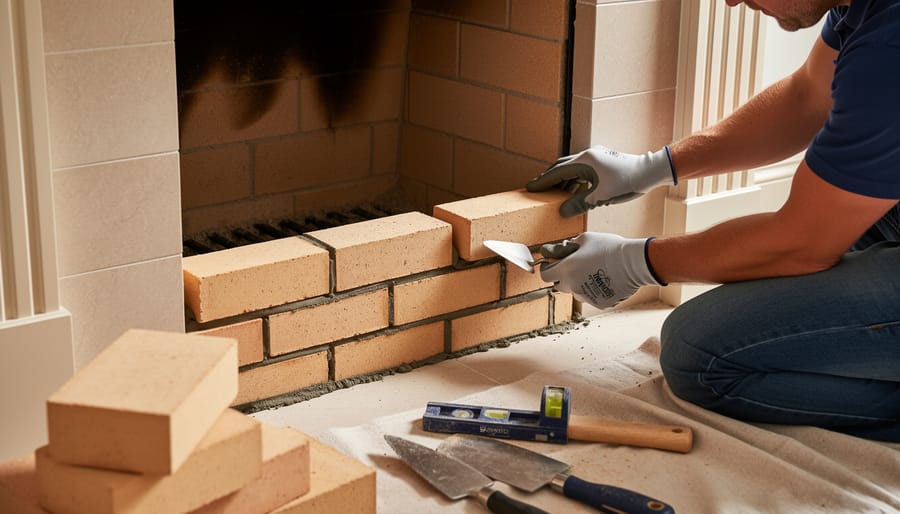
The firebox is the heart of your outdoor fireplace, and building it correctly ensures both safety and optimal performance. Start by lining the interior with firebrick, which withstands extreme temperatures far better than regular masonry. These specialized bricks create a protective barrier that extends the life of your fireplace structure while reflecting heat outward into your living space.
For proper dimensions, aim for a firebox that’s 28-36 inches wide, 24-28 inches deep, and about 32 inches tall. These proportions create an efficient burn chamber that produces maximum heat while minimizing smoke. The back wall should angle forward slightly starting about 16 inches up, which helps direct smoke upward and radiates warmth toward your seating area.
Use refractory mortar between firebricks, as standard mortar will crack under high heat. Apply thin, consistent joints for the best results. Remember, you’re creating a safe, efficient burning environment that will serve your family for years to come.
The smoke chamber sits directly above the firebox and acts as a transition zone. Build it with a gradual inward slope on all sides, creating a pyramid shape that funnels smoke into the flue. This design prevents downdrafts and ensures proper ventilation. Keep the smoke chamber’s interior smooth by pargeting with refractory cement, which helps smoke flow efficiently upward.
Installing a steel damper at the throat, where the firebox meets the smoke chamber, gives you control over airflow and helps prevent heat loss when the fireplace isn’t in use.
Stacking and Mortaring Your Stone
Now comes the rewarding part where your outdoor fireplace truly takes shape. Start by dry-fitting your stones before any mortar touches them. This test run lets you select the best-fitting pieces and create an attractive pattern that balances different sizes and shapes naturally.
For mortar mixing, combine three parts sand to one part Portland cement, adding water gradually until you achieve a consistency similar to peanut butter. The mixture should hold its shape when squeezed but remain workable. Mix only what you can use within 90 minutes to prevent hardening.
Begin laying stones from the bottom up, applying a generous layer of mortar to both the foundation and the stone’s bottom surface. Press each stone firmly, wiggling slightly to remove air pockets. Use a level frequently to ensure your walls remain plumb and true. Leave roughly one-inch gaps between stones for mortar joints.
As you build upward, alternate your stone placement to stagger vertical joints, much like bricklaying. This creates structural integrity and prevents weak points. For corners and around the firebox opening, select your flattest, most stable stones.
After laying several courses, use a pointing trowel to fill gaps between stones, pressing mortar deep into joints. Tool the joints smooth or create a slightly recessed finish for visual appeal. Wipe excess mortar from stone faces immediately with a damp sponge.
Allow each section to cure for 24 hours before building higher. This patient approach ensures your beautiful outdoor gathering space will stand strong for countless cozy evenings ahead.
Adding the Chimney and Finishing Touches
The chimney is where function meets craftsmanship, transforming your fireplace into a safely operating outdoor feature. Build your chimney with the same stone or complementary materials, ensuring it extends at least three feet above the roofline of any nearby structures to promote proper draft and prevent smoke issues. Each stone should overlap the joints below, creating a stable, weatherproof column that directs smoke away from your gathering space.
Installing a quality chimney cap is essential for protecting your investment. This simple addition prevents rain, debris, and curious wildlife from entering while allowing smoke to escape freely. Choose a cap with mesh screening and corrosion-resistant materials that can withstand your local climate.
For finishing touches, consider pointing the mortar joints with a specialized tool for a clean, professional appearance. Seal the exterior stone with a breathable masonry sealer to protect against moisture while maintaining the natural beauty of your materials. Add ambient lighting around the fireplace to enhance evening gatherings and showcase your handiwork. These thoughtful details transform a functional structure into an inviting centerpiece that brings warmth and character to your outdoor living space for years to come.
Safety Features You Can’t Skip
Building an outdoor stone fireplace is an exciting project, but safety must be your top priority from design to daily use. Getting these critical elements right protects your family, your property, and ensures years of worry-free enjoyment.
Start with proper clearances. Your fireplace needs adequate distance from your home’s exterior walls, deck railings, overhanging tree branches, and any combustible materials. Most building codes require at least 10 feet from structures, though 15 to 20 feet is ideal for peace of mind. Consider wind patterns too, as prevailing winds can carry sparks toward vulnerable areas.
A spark arrestor is non-negotiable for any outdoor fireplace. This mesh screen cap sits atop your chimney, preventing hot embers from escaping and potentially igniting nearby vegetation or roofing materials. Choose stainless steel or copper mesh with openings no larger than half an inch for optimal protection.
Foundation stability cannot be compromised. Your fireplace needs a reinforced concrete footing that extends below the frost line, preventing settling or cracking that could create dangerous gaps or structural failure. Remember, stone is heavy, and your base must support potentially thousands of pounds without shifting.
Keep a fire extinguisher rated for wood fires within easy reach, and never leave your fireplace unattended while burning. Establish clear fire safety practices with your family, including where children can safely play and maintaining a spark-free zone around the fire.
Regular inspections matter too. Check your mortar joints annually for cracks, ensure your chimney remains clear of debris and animal nests, and remove ash buildup that can restrict airflow. These simple maintenance steps keep your outdoor fireplace both safe and efficient for seasons to come.
Maintaining Your Stone Fireplace for Years of Enjoyment
Your beautiful outdoor stone fireplace represents a significant investment in your home’s outdoor living space, and with proper care, it’ll be the heart of countless gatherings for decades to come. Think of maintenance as a small commitment that pays enormous dividends in safety, performance, and longevity.
Start with regular cleaning after each burning season. Remove all ash and debris from the firebox, as these materials can retain moisture and accelerate deterioration. Use a stiff brush to sweep the hearth and interior surfaces, and consider a gentle wash with water and mild detergent for the exterior stonework. This simple routine prevents buildup that can stain your beautiful stone or trap moisture against mortar joints.
Speaking of mortar, inspect those joints at least twice yearly, ideally in spring and fall. Look for any cracks, crumbling, or gaps where water might penetrate. Catching these issues early means a simple repair rather than extensive restoration. If you notice problems, repoint affected areas promptly to maintain structural integrity and prevent freeze-thaw damage during colder months.
Weatherproofing is your fireplace’s best defense against the elements. Apply a breathable masonry sealer every two to three years to protect against moisture while allowing the stone to release trapped water vapor. This eco-friendly approach to preservation protects your investment without harmful chemicals.
Seasonal preparation matters too. Before winter arrives, ensure your chimney cap is secure and install a fireplace cover if you won’t be using it during harsh weather. In spring, remove the cover and inspect for any winter damage before your first fire.
Finally, schedule a professional chimney inspection every few years. This expert eye can spot issues you might miss and ensure your outdoor gathering spot remains safe and inviting for years of memorable evenings under the stars.
Eco-Friendly Considerations for Your Outdoor Fire Feature
Building an outdoor stone fireplace doesn’t mean compromising your environmental values. In fact, with thoughtful planning, you can create a stunning focal point that treads lightly on the earth while warming your gatherings for years to come.
Start by sourcing your stone locally whenever possible. Local materials dramatically reduce transportation emissions and often blend more naturally with your landscape. Many quarries offer reclaimed stone from old structures, giving historic materials new life while avoiding the environmental cost of fresh quarrying.
When it comes to burning practices, efficiency matters. Seasoned hardwoods burn cleaner and hotter than green wood, producing less smoke and creosote while requiring fewer logs. Store your firewood properly for at least six months before use, and consider outdoor wood heating techniques that maximize heat output while minimizing waste.
Beyond traditional wood-burning, explore alternative fuel options like natural gas or propane inserts. These cleaner-burning fuels eliminate wood smoke entirely and offer convenient on-demand heat. Some homeowners incorporate both, using gas for quick weeknight fires and wood for special occasions.
Design your fireplace with proper airflow to ensure complete combustion, which reduces particulate emissions. Position it thoughtfully to minimize smoke drift toward neighbors, and always follow local air quality regulations. Remember, a well-built stone fireplace that burns efficiently becomes a cherished gathering place that respects both your lifestyle and the environment.
Building an outdoor stone fireplace is absolutely within your reach. While this project requires careful planning, patience, and attention to detail, countless homeowners have successfully transformed their backyards into warm, inviting gathering spaces. You don’t need to be a master mason to create something beautiful and functional that will serve your family for generations.
As you begin planning your project, remember that this addition represents more than just another outdoor feature. It’s an investment in your lifestyle, creating a natural gathering point where memories are made over crackling fires under the stars. Whether you’re roasting marshmallows with the kids, hosting friends on cool autumn evenings, or simply enjoying a quiet moment with morning coffee, your stone fireplace becomes the heart of your outdoor living space.
Take your time during the planning phase, prioritize safety at every step, and don’t hesitate to consult professionals when needed. The sense of accomplishment you’ll feel when lighting that first fire in your handcrafted stone fireplace makes every hour of effort worthwhile. Your outdoor oasis awaits.