

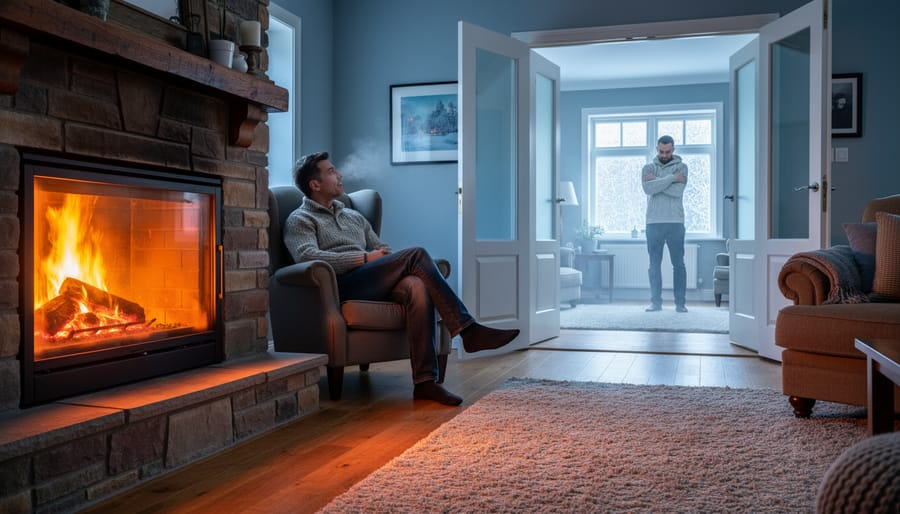
Picture this: your fireplace is roaring beautifully, yet the bedrooms down the hall feel like an icebox. You’re not imagining things, and your heating system isn’t broken. The culprit is likely inadequate return air pathways, the invisible highways that allow warm air to circulate throughout your entire home.
When heated air rises from your fireplace or heating system, it needs somewhere to go. Without proper pathways for air to return and recirculate, that warmth gets trapped in one area while cold pockets form elsewhere. Think of your home as a breathing organism: it needs both fresh air coming in and a way for existing air to flow back, creating a continuous loop that distributes heat evenly.
Most homes weren’t designed with open-plan living and powerful heat sources like modern fireplaces in mind. Closed doors, long hallways, and inadequate vents create barriers that prevent warm air from reaching every corner of your space. The frustrating result? You’re cranking up the heat source, wasting energy, and still shivering in half your home.
Understanding return air pathways isn’t just about comfort. It’s about transforming your fireplace from a single-room luxury into an efficient, eco-friendly heating solution that works for your entire living space. The good news? Most return air pathway issues have straightforward solutions that don’t require tearing down walls or extensive renovations.
What Are Return Air Pathways (And Why Your Home Needs Them)
The Air Highway in Your Home
Think of your home’s heating system as a circular highway where warm air is constantly traveling. When your fireplace crackles to life or your HVAC system kicks on, it sends heated air flowing through your living spaces—this is called supply air. Just like cars on a highway need exits and entrances to keep traffic moving, this warm air needs a clear path to return back to its source for reheating and recirculation. That’s where return air pathways come in.
Here’s how it works: your heating system pushes conditioned air into rooms through vents or radiates warmth from your fireplace. As this air warms the space, it needs somewhere to go. Without proper return pathways, warm air becomes trapped in certain rooms while others stay frustratingly cold. The air pressure builds up, creating an imbalance that prevents fresh warm air from entering.
Return air pathways—whether through dedicated vents, transfer grills, or even the gap under a door—allow air to flow back toward your heating source. This creates a balanced circulation loop that distributes warmth evenly throughout your home. When these pathways are blocked or missing, you’re essentially creating a traffic jam in your home’s air highway, leaving some rooms toasty while others remain uncomfortably chilly.
What Happens When Air Gets Trapped
When return air pathways become blocked or insufficient, your home’s heating system—including that beautiful fireplace you’ve invested in—can’t work the way it should. Think of it like trying to breathe through a straw: the air simply can’t flow freely enough to do its job properly.
The most noticeable consequence is pressure imbalance throughout your home. Warm air from your fireplace or heating system gets trapped in certain rooms while other areas remain frustratingly cold. You might notice doors that slam shut on their own or feel drafts around windows and baseboards as your home tries to equalize the pressure differences. These aren’t just minor annoyances—they’re signs that your heating system is working against itself.
Cold spots develop in rooms farthest from your heat source because warm air can’t circulate back and redistribute evenly. Your fireplace might be keeping your living room toasty while bedrooms down the hall stay chilly, leaving you cranking up the thermostat and wasting energy. This inefficiency translates directly into higher energy bills as your heating system runs longer cycles trying to compensate for poor circulation. Professional duct balancing can help resolve these issues, but understanding return air pathways is the crucial first step toward creating the comfortable, evenly-heated home you deserve.
Pressure Balancing: The Secret to Even Heating
Understanding Positive and Negative Pressure
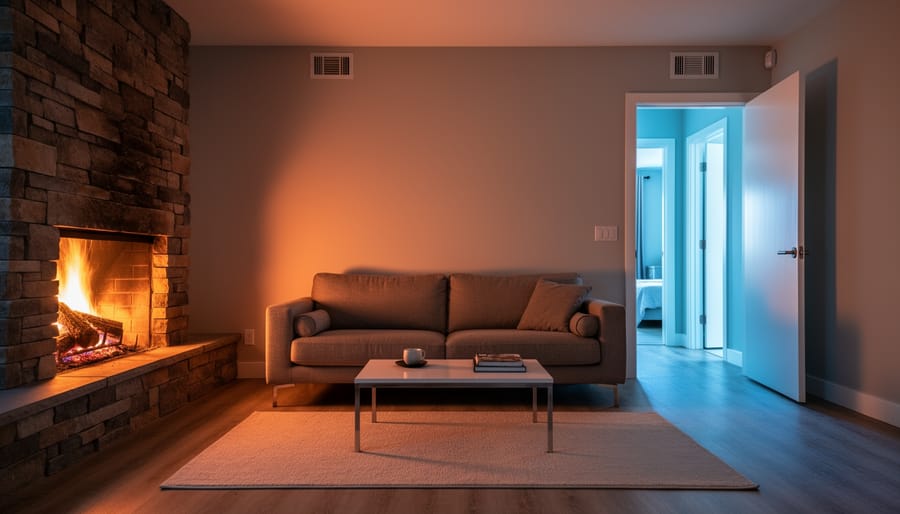
Think of your home’s heating system like breathing – it needs air to flow in and out smoothly. When you close a bedroom door while your fireplace or furnace warms the main living space, you’re creating invisible pressure zones that work against comfortable heating.
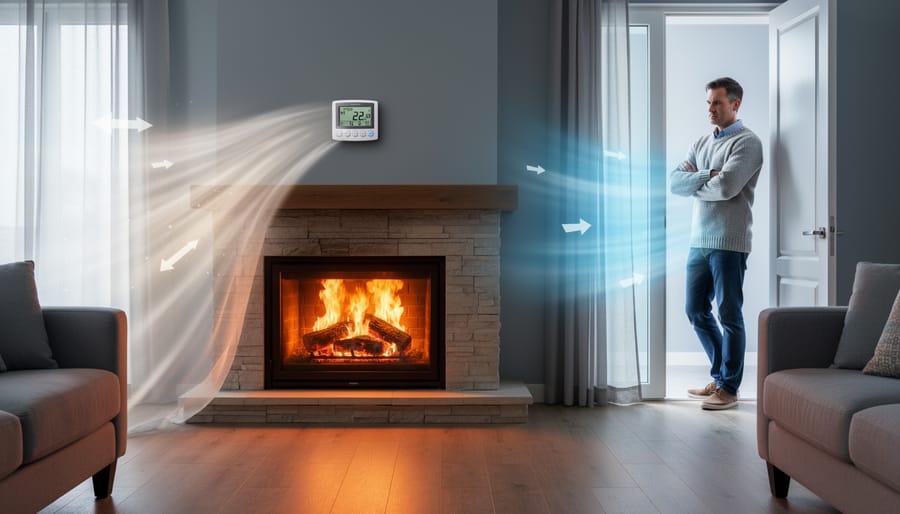
Here’s what happens: warm air from your heating source pushes into closed-off rooms through small gaps, creating positive pressure. This pressurized air has nowhere to escape, so it fights against any new warm air trying to enter. Meanwhile, the main living area develops negative pressure as heated air is pushed out, desperately trying to pull air back from somewhere – often through drafty windows or exterior walls.
This pressure imbalance is why you’ll notice that room with the closed door stays cold despite your fireplace working overtime. The warm air simply can’t circulate properly. It’s like trying to fill a balloon that’s already full – the air has to go somewhere, but with blocked pathways, it just stagnates.
The result? Your beautifully crackling fireplace heats one room while the rest of your home stays chilly, wasting energy and leaving family members uncomfortable. Understanding these pressure differences is the first step toward creating a more evenly heated, eco-friendly home where warmth flows naturally to every corner.
How Fireplaces Affect Home Pressure
Your fireplace creates a cozy ambiance, but it’s also working behind the scenes in ways that can affect your home’s comfort. Every time you light a fire, your fireplace becomes an air-consuming appliance that needs a steady supply of oxygen to keep those flames burning bright. A typical wood-burning fireplace can consume between 200 to 600 cubic feet of air per minute, and that air has to come from somewhere.
When your fireplace draws air for combustion, it creates negative pressure throughout your home. Think of your house as a sealed container—when air rushes up the chimney, replacement air must enter from somewhere else. This often means cold air sneaking in through gaps around windows, doors, and other openings you might not even know exist. This infiltration of cold air can make rooms far from your fireplace feel chillier, even while you’re enjoying warmth near the hearth.
This pressure imbalance directly impacts your heating system’s effectiveness. Your furnace works to distribute warm air evenly through supply ducts, but without proper fireplace air circulation and return air pathways, that negative pressure fights against efficient heat distribution. The result? Some rooms stay toasty while others remain uncomfortably cold, forcing your heating system to work overtime and increasing energy costs unnecessarily.
Common Signs Your Home Has Poor Return Air Pathways
Temperature Differences Between Rooms
Have you noticed some rooms in your home feel like a cozy haven while others remain stubbornly chilly, even when your fireplace is blazing? These uneven temperatures are telltale signs that your return air pathways aren’t functioning properly. When warm air from your fireplace or heating system can’t circulate effectively throughout your home, it gets trapped in certain areas while cooler air stagnates elsewhere. Think of it like a traffic jam in your home’s air circulation system. Without clear pathways for air to return to your heating source and recirculate, you’re essentially wasting the beautiful warmth your fireplace creates. Temperature differences of more than a few degrees between rooms signal that it’s time to examine how air moves through your space and identify blockages preventing proper circulation.
Doors That Won’t Stay Open or Closed
Have you ever noticed interior doors mysteriously swinging open or slamming shut on their own? This frustrating phenomenon often points to pressure imbalances in your home’s air circulation. When your heating system, including your cozy fireplace, creates uneven air pressure between rooms, doors become unwilling participants in an invisible push-and-pull game.
Here’s what’s happening: as warm air rises and flows through your home, it creates zones of high and low pressure. Without proper return air pathways, these pressure differences can become surprisingly strong. A door that won’t stay latched might indicate positive pressure pushing from behind, while one that swings shut could mean the room is under negative pressure, essentially being starved of air. This is especially common in bedrooms and spaces far from your main heating source. Beyond the annoyance factor, these pressure issues signal that your heating system is working harder than necessary, potentially driving up energy costs while leaving some rooms uncomfortably cold.
Whistling Sounds and Air Leaks
Your home often speaks to you through subtle sounds, and whistling or hissing noises are telltale signs of air pressure issues. When your fireplace or heating system creates uneven pressure throughout your house, air desperately seeks the path of least resistance, forcing itself through tiny gaps around doors, windows, electrical outlets, and baseboards. These whistling sounds are particularly noticeable when your fireplace is running at full capacity, as the pressure differences become more pronounced. Listen carefully near closed doors in colder rooms—that high-pitched whistle isn’t just annoying, it’s your home telling you that warm air is escaping while cold air infiltrates elsewhere. You might also notice these sounds intensifying on windy days, when outdoor pressure compounds your indoor air movement problems. Pay attention to these auditory clues during quiet evenings when your fireplace is blazing; they’re valuable diagnostic tools pointing you toward problem areas that need sealing or better return air pathways to restore balanced airflow and comfort throughout your home.
Simple Solutions to Improve Return Air Pathways
Install Transfer Grilles or Jump Ducts
Transfer grilles and jump ducts are simple yet effective solutions for creating return air pathways that help distribute warmth from your fireplace throughout your home. Think of them as intentional openings that allow air to flow back toward your heating source, completing the circulation loop that keeps every room comfortable.
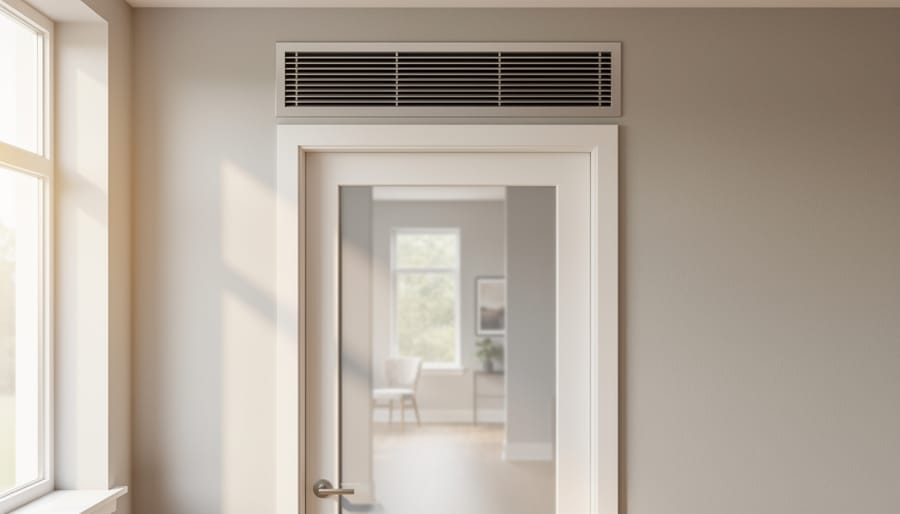
Transfer grilles are decorative vents installed in walls or doors between rooms. They come in various attractive styles that complement your home’s décor while allowing air to pass through. You’ll typically install these between a warm room (like your living room with the fireplace) and an adjacent cooler room. They work passively, requiring no electricity, making them an eco-friendly choice for improving heat distribution.
Jump ducts offer a more discreet alternative. These are short sections of ductwork that run through your attic or crawl space, connecting rooms above the ceiling line. They’re particularly useful when you want the airflow benefits without visible grilles on your walls.
For best results, install transfer grilles near the floor in cooler rooms to draw warm air in from above, or near the ceiling to allow trapped warm air to escape back toward your central heating area. This natural convection process helps balance temperatures while reducing your reliance on forced heating systems, ultimately creating a more sustainable and comfortable home environment.
Undercut Interior Doors
One of the simplest and most effective ways to improve air circulation throughout your home is by undercutting your interior doors. This straightforward modification creates a pathway for warm air to flow from heated spaces, like the room with your fireplace, into cooler areas of your home.
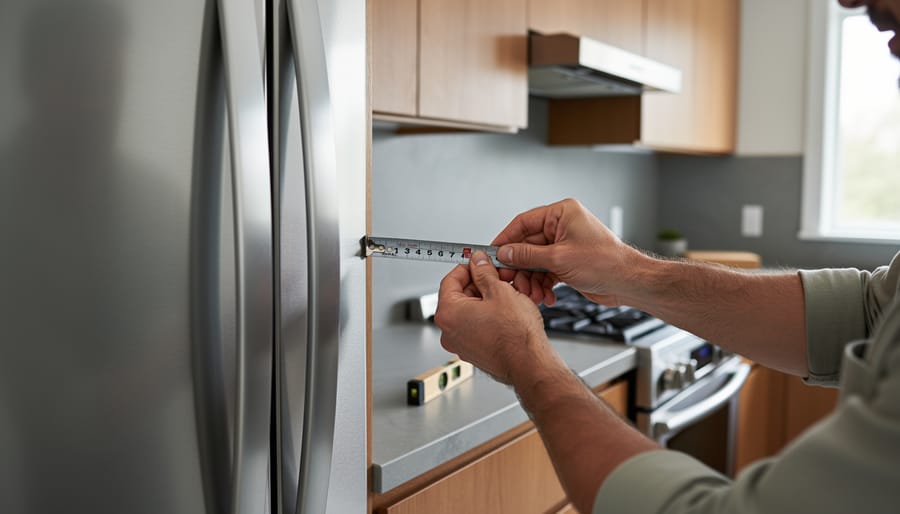
The concept is beautifully simple: by trimming the bottom of interior doors, you allow air to move freely underneath them, creating natural circulation that helps distribute warmth more evenly. For optimal results, aim for a gap of about one inch between the bottom of the door and your finished flooring. This measurement provides sufficient space for airflow without compromising privacy or looking awkward.
If you’re handy with basic tools, you can tackle this project yourself using a circular saw or hand saw. However, if you’re not comfortable removing doors from their hinges or making precise cuts, a carpenter can complete this modification quickly and affordably. This eco-friendly solution requires no electricity and works continuously to improve your home’s comfort level, making it an excellent complement to your existing heating system.
Keep Interior Doors Open When Possible
Sometimes the simplest solutions are the most effective. During heating periods, keeping bedroom and interior room doors open creates a natural pathway for warm air to circulate throughout your home. When doors are closed, heated air from your fireplace or heating system becomes trapped in certain areas while other rooms grow increasingly cold.
This straightforward approach works especially well when combined with other circulation methods like air circulator fans. The open doorways allow air to flow freely between rooms, helping to balance temperatures naturally without any equipment installation.
Of course, we understand this isn’t always practical for privacy, noise control, or when you have pets and children. Consider leaving doors open during the day when rooms aren’t in use, or try leaving them slightly ajar rather than fully closed. Even a few inches of opening can significantly improve air movement and help distribute that cozy fireplace warmth more evenly throughout your living space.
Add Return Air Vents in Strategic Locations
For homes with forced air systems, strategically placed return air vents create a balanced circulation loop that works beautifully with your fireplace. The key is understanding where warm air naturally accumulates and needs redirection.
Install return air vents in rooms furthest from your existing returns, particularly upper floors where fireplace heat tends to rise and stagnate. Hallways make excellent locations since they act as natural air highways throughout your home. Place vents near ceilings in warmer rooms and near floors in cooler spaces to encourage natural convection patterns.
Each return vent should be unobstructed by furniture or drapes, similar to how you’d keep areas clear during ceiling fan maintenance. Consider adding jump ducts through attic spaces to connect isolated rooms with your main return pathway, creating an efficient, eco-friendly heating cycle that reduces your system’s workload.
For best results, balance your new returns with existing supply vents to maintain proper air pressure throughout your home. This thoughtful approach ensures your fireplace warmth reaches every corner while supporting your overall heating efficiency.
Fireplace-Specific Considerations for Better Air Flow
Wood-Burning Fireplaces and Air Consumption
There’s something wonderfully cozy about a crackling wood fire, but here’s a surprising fact: your traditional wood-burning fireplace can consume between 200 to 600 cubic feet of air per minute when it’s roaring. That’s a massive amount of air being pulled from your living space and sent straight up the chimney, which means your heating system needs to work overtime to replace it.
This air consumption creates a unique challenge for return air pathways. As your fireplace draws warm air from the room and exhausts it outdoors, your home’s heating system struggles to maintain comfortable temperatures. The result? Those frustrating cold spots in rooms far from the fireplace, even while you’re burning through firewood.
To maintain balanced airflow, consider opening a nearby window slightly when using your fireplace to provide makeup air. This prevents your home from becoming negatively pressurized, which can actually pull cold air through every crack and gap in your walls. If you’re a frequent fireplace user, installing a dedicated outdoor air intake for your fireplace offers a more eco-friendly heating solution, drawing combustion air directly from outside rather than stealing your already-heated indoor air. This simple upgrade helps your return air pathways function properly while letting you enjoy that authentic fireplace experience guilt-free.
Gas and Bioethanol Fireplaces
If you’re considering a gas or bioethanol fireplace as an eco-friendly heating solution, you’ll be pleased to know they typically play much nicer with your home’s air pressure than traditional wood-burning fireplaces. Here’s why this matters for keeping your whole home comfortable.
Gas and bioethanol fireplaces don’t require traditional chimneys, which means they’re not constantly pulling heated air out of your living space. Many gas models are designed as sealed units that draw combustion air directly from outside, completely bypassing your home’s interior air. This means they won’t create negative pressure that fights against your heating system’s ability to circulate warm air effectively.
However, direct-vent gas fireplaces and ventless models still need consideration in your home’s overall air circulation strategy. While they won’t steal your warm air through a chimney, they still generate heat in one location. You’ll want to ensure your return air pathways can help distribute this warmth throughout your home rather than letting it pool near the fireplace.
Bioethanol fireplaces, being completely ventless, add warmth without any air pressure complications. They’re essentially space heaters with ambiance. Just remember that proper air circulation remains important to move that cozy warmth where you need it most.
When to Call a Professional
While many return air pathway improvements are DIY-friendly, certain situations call for professional expertise to ensure your home’s comfort and safety.
If you’re experiencing persistent heating problems despite attempting basic fixes, it’s time to consult an HVAC professional. They can perform detailed airflow assessments, measure pressure imbalances between rooms, and identify hidden ductwork issues that aren’t visible to homeowners. HVAC specialists have specialized equipment like manometers and thermal imaging cameras that reveal exactly where your system is losing efficiency.
When your fireplace is involved in heating distribution, particularly if you’re considering adding fireplace doors, fans, or heat-powered circulation systems, a fireplace specialist should evaluate your setup. They’ll ensure any modifications maintain proper draft and don’t compromise safety. This becomes especially important if you’re exploring eco-friendly heating solutions that combine your fireplace with modern HVAC systems.
Call a professional immediately if you notice concerning signs like backdrafting from your fireplace, unusual pressure differences when doors close, or rooms that remain dramatically colder despite running your heating system constantly. These symptoms might indicate serious airflow problems or even carbon monoxide risks.
Building code compliance is another crucial reason to seek expert help. Professionals understand local regulations regarding fire-rated barriers, proper ventilation requirements, and safe installation practices. They’ll ensure any modifications to your return air pathways meet safety standards while improving your home’s comfort. Remember, investing in professional assessment now prevents costly mistakes and creates a more efficient, cozier living environment for years to come.
Return air pathways aren’t just a technical detail—they’re the key to transforming your fireplace from a single-room heat source into a whole-home comfort solution. When these pathways work properly, you’ll notice the difference immediately: rooms that were once chilly become warm and inviting, your heating system runs more efficiently, and you’ll likely see a welcome reduction in your energy bills. It’s one of those home improvements that pays dividends in both comfort and cost savings.
The beauty of return air pathways is that many solutions are surprisingly accessible. Whether you’re cutting a simple transfer grille into a wall, leaving doors open strategically, or installing a ducted fan system, you’re taking control of your home’s heating efficiency. You don’t need to accept cold bedrooms and overheated living rooms as the price of enjoying your fireplace.
Take a moment this weekend to assess your home’s air circulation. Notice which rooms stay cold, identify closed-off spaces, and consider which solutions fit your budget and skill level. Remember, even small improvements can make a remarkable difference in how heat moves through your home. Creating a warmer, more comfortable living space is within your reach—and your family will thank you for it every time they step into a perfectly cozy room.