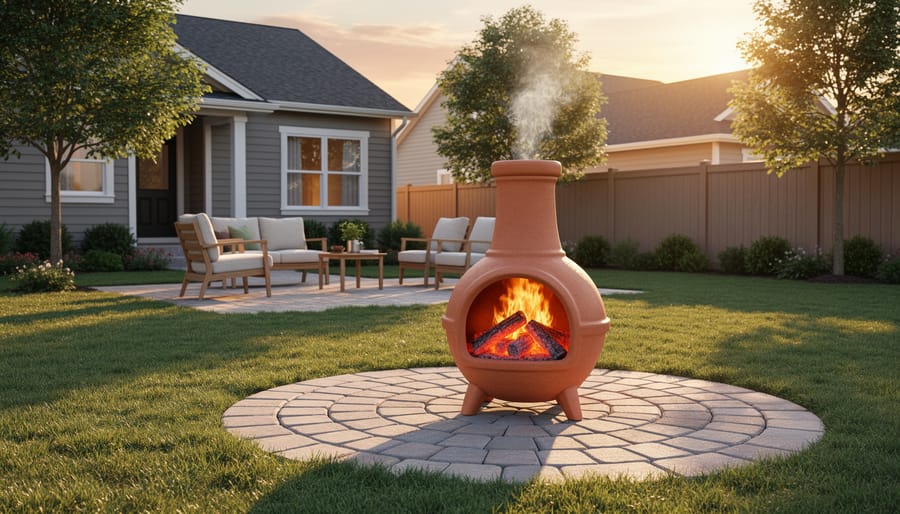


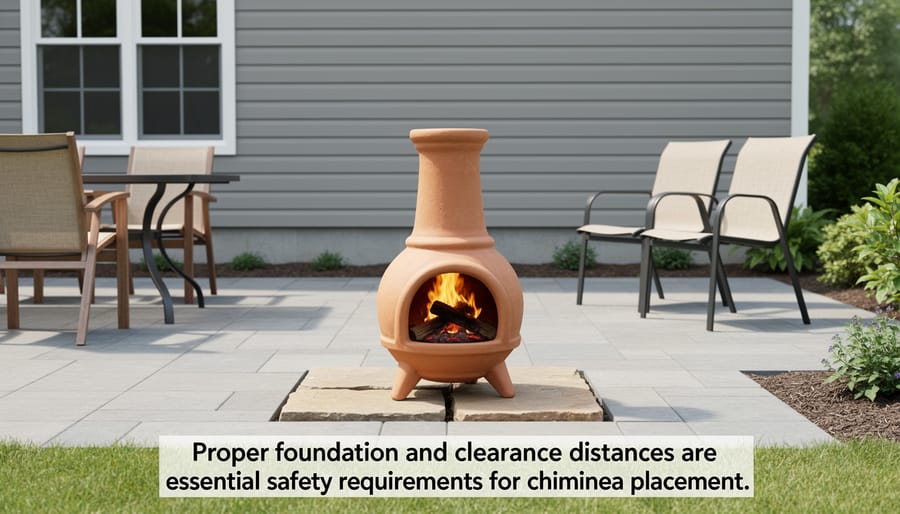
Position your chiminea at least 10 feet from your home’s exterior walls, overhanging branches, and any combustible materials to prevent fire hazards and heat damage. Choose a level, stable surface like a concrete patio, stone pavers, or dedicated fire-resistant pad that can support the weight while protecting your deck or grass from intense heat and falling embers.
Consider the prevailing wind direction in your yard before placement—situating your chiminea where smoke naturally drifts away from seating areas and neighboring properties creates a more enjoyable experience for everyone. Place it within 15-20 feet of your main gathering space to maximize warmth and ambiance without overwhelming guests with heat or requiring them to shout across the flames.
Create a dedicated zone around your chiminea by establishing a three-foot clearance circle free of furniture, plants, and decorative elements. This safety buffer allows safe operation while giving you room to tend the fire and add wood without navigating obstacles. Think of your chiminea as the centerpiece of an outdoor room rather than an afterthought tucked in a corner—intentional placement transforms it from a simple heat source into a lifestyle element that naturally draws people together.
The beauty of chimineas lies in their compact footprint and efficient design, making them ideal for smaller yards where traditional fire pits won’t fit. Their enclosed structure offers better smoke control and fuel efficiency than open fires, aligning with eco-friendly heating solutions while delivering that irresistible crackle and glow that makes outdoor gatherings memorable.
What Makes Chimineas Different from Other Outdoor Fireplaces
Chimineas bring a distinctive charm to outdoor spaces that sets them apart from traditional fire pits and open fireplaces. Their unique enclosed design, featuring a bulbous body and chimney-like stack, isn’t just aesthetically pleasing—it fundamentally changes how they function and where they belong in your backyard.
Unlike wide-open fire pits that radiate heat in all directions, chimineas concentrate warmth in a focused area directly in front of their opening. This directional heat distribution makes them perfect for creating cozy conversation nooks on your patio or deck. The enclosed chamber also means you’ll use less wood while keeping guests comfortably warm, making chimineas an eco-friendly heating solution for smaller gatherings.
The design traces back centuries to Mexican and Spanish traditions, where these clay vessels served both practical and cultural purposes. This heritage influences modern placement decisions—chimineas work beautifully as standalone focal points that honor their historical roots while blending seamlessly into contemporary outdoor living spaces.
One of the biggest placement advantages comes from the chimney stack itself. While fire pits send smoke swirling unpredictably based on wind direction, chimineas direct smoke upward and away from your seating area. This makes them ideal for placement closer to outdoor dining spaces or seating arrangements, though you’ll still want adequate clearance from overhead structures like pergolas or tree branches.
The enclosed nature also provides better spark containment than open fireplaces, adding a layer of safety that influences placement flexibility. However, this doesn’t mean you can ignore clearance requirements—chimineas still produce significant heat and require proper spacing from combustible materials.
When considering placement, remember that chimineas create intimate gathering spaces rather than large-group entertainment zones. Position yours where the focused warmth enhances the atmosphere without overwhelming your entire outdoor area. This lifestyle element transforms ordinary evenings into memorable experiences, combining the mesmerizing dance of flames with practical, efficient warmth that brings people together naturally.
The Safety-First Approach to Chiminea Placement
Minimum Clearance Requirements You Can’t Ignore
Safety isn’t just about following rules—it’s about protecting your home, your loved ones, and the outdoor space you’ve worked hard to create. When it comes to chiminea placement, these clearance requirements are non-negotiable.
Start with your house itself. Position your chiminea at least 10 feet away from any exterior walls, windows, or doors. This distance prevents heat damage to siding, keeps smoke from drifting inside, and protects against stray embers. If your home has vinyl siding or other heat-sensitive materials, consider increasing this distance to 15 feet.
Wooden fences, pergolas, and other combustible structures need similar respect—maintain that same 10 to 15-foot buffer. Remember, even though chimineas direct most flames upward through their chimney, they still radiate considerable heat from their sides.
Overhead clearance matters tremendously. You’ll need at least 10 feet of vertical space between your chiminea’s opening and any overhead structure, including tree branches, patio covers, or awnings. Low-hanging branches don’t just pose a fire risk—they can also drop leaves and debris directly into your fire.
Trees deserve special attention. Keep your chiminea at least 10 feet from any tree trunk, and watch for overhanging branches that might not be directly above but could still catch sparks carried by the wind.
For eco-friendly heating that’s also safe, think of these measurements as creating a protective bubble around your chiminea—a space where you can enjoy the warmth and ambiance without worry.
Foundation and Surface Considerations
Before you welcome the warm glow of a chiminea into your outdoor living space, let’s talk about what goes underneath it. Think of the foundation as your chiminea’s best friend—it protects both your outdoor surfaces and your investment while keeping everyone safe.
Chimineas get hot, really hot, and they need proper protection beneath them. Concrete, brick, stone, and paver patios make excellent foundations because they’re naturally heat-resistant and won’t catch fire or melt. If you’re blessed with a dedicated fire pit area, you’re already ahead of the game. For grass or dirt surfaces, you’ll want to create a stable base using paving stones or fire bricks to prevent uneven settling and provide that crucial heat barrier.
Now, here’s where things get interesting for deck owners. Wood and composite decking require special attention since they’re combustible materials. When using chimineas on wood decks, you absolutely must place a heat-resistant pad underneath—think heavy-duty options like welded steel deck protectors or volcanic rock mats that can handle intense heat. These protective barriers should extend at least 12 inches beyond the chiminea’s base on all sides to catch any stray embers or ash.
For balconies and smaller spaces, lightweight fire-resistant mats designed specifically for elevated outdoor areas work wonderfully. Remember, the right foundation isn’t just about safety—it’s about creating a worry-free environment where you can fully enjoy those cozy evening fires with family and friends.
Choosing the Perfect Location for Your Chiminea
Understanding Wind Patterns and Smoke Direction
Before you settle on the perfect spot for your chiminea, take a moment to become a weather detective in your own backyard. Understanding how wind naturally flows through your outdoor space is essential for creating a comfortable gathering area that won’t leave you and your guests dodging smoke all evening.
Start by observing wind patterns at different times of day, especially during the hours you’ll most likely use your chiminea. Evening breezes often differ from afternoon winds, so notice which direction smoke would typically travel. A simple trick is to watch how tree branches sway or flags flutter during your usual entertaining hours.
Position your chiminea so the prevailing wind carries smoke away from your main seating area and toward open space rather than your neighbor’s yard or windows. If your typical winds shift throughout the evening, choose a location that accommodates the most common pattern while allowing flexibility to adjust your furniture arrangement when needed.
Consider natural windbreaks like hedges, fences, or your home’s exterior walls, but remember to maintain proper clearance distances for safety. These barriers can help direct smoke upward and away while creating a cozy, protected atmosphere. This thoughtful placement ensures your chiminea becomes a beloved centerpiece that enhances your outdoor lifestyle without becoming a smoky nuisance.
Creating the Perfect Gathering Space
The secret to creating an inviting gathering space around your chiminea lies in thoughtful positioning. Place your chiminea approximately 8 to 10 feet from primary seating areas. This distance allows guests to enjoy the warmth without feeling uncomfortably hot or worrying about sparks.
Consider arranging seating in a semi-circle or horseshoe pattern around your chiminea rather than a complete circle. This layout maximizes heat distribution while maintaining clear pathways for movement and fuel access. Position heavier chairs and benches on the side that receives prevailing winds, as these spots will feel cooler and benefit from the extra warmth.
For optimal comfort during cooler evenings, create distinct zones within your outdoor space. Place your chiminea as the focal point with intimate seating nearby for those seeking maximum warmth, and position additional seating further away for guests who prefer ambient heat. This tiered approach ensures everyone can enjoy the cozy atmosphere at their preferred comfort level.
Remember that chimineas radiate heat primarily from their front opening, so angle your main seating to face this direction. As an eco-friendly heating solution that brings people together naturally, your chiminea deserves thoughtful placement that enhances both safety and social connection in your outdoor living space.
Accessibility and Practical Considerations
When planning your chiminea placement, think beyond just the view—consider how you’ll actually use and maintain this charming addition to your outdoor living space. Position your chiminea within comfortable walking distance of your wood storage, ideally no more than 10-15 feet away. You’ll appreciate this thoughtful planning on chilly evenings when you need to grab another log without missing out on fireside conversation.
Create clear, well-lit pathways around your chiminea, keeping at least three feet of clearance on all sides. This buffer zone serves dual purposes: safety and accessibility. You’ll want easy access for cleaning out ash, which should be done regularly to maintain proper airflow and prevent buildup. Consider placing pavers or gravel around the base—these materials won’t catch sparks and make cleanup simpler.
Store a small brush, ash bucket, and fireplace gloves nearby in a weatherproof container. This practical setup transforms routine maintenance from a chore into a simple ritual. Remember, a well-maintained chiminea is not only safer but burns more efficiently, reducing wood consumption and embracing eco-friendly practices. Think of accessibility as part of the overall experience—when everything you need is within reach, tending your fire becomes part of the evening’s enjoyment rather than an interruption.
Design Integration: Making Your Chiminea a Focal Point
Matching Chiminea Styles to Your Outdoor Aesthetic
Choosing the right chiminea style transforms your outdoor space into a cohesive, inviting retreat. The decision between clay and cast iron goes beyond aesthetics—it shapes your entire backyard experience.
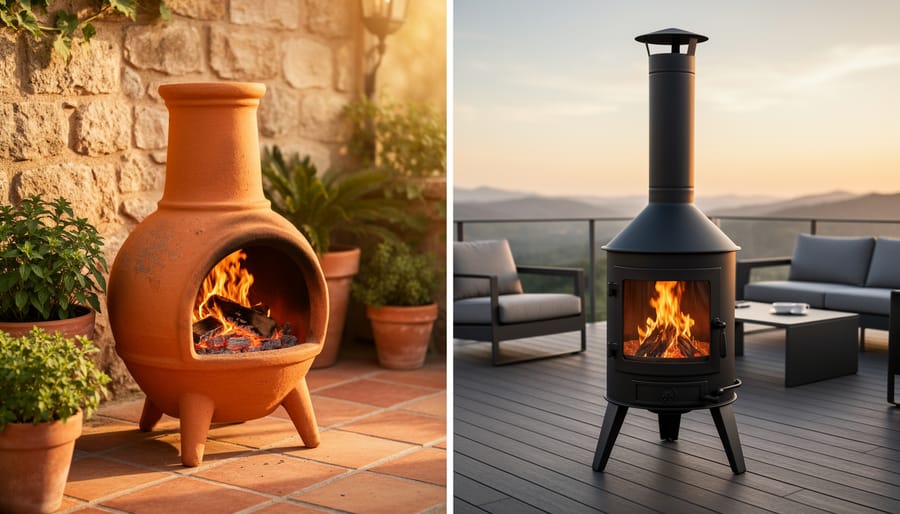
Clay chimineas bring authentic Southwestern charm with their terracotta warmth and handcrafted appeal. They’re lighter, making repositioning easier, and radiate gentle heat perfect for intimate gatherings. However, they require more care and protection from harsh weather. Cast iron chimineas offer durability and heat retention that clay can’t match, standing strong through seasons with minimal maintenance. Their sleek, often darker finishes complement contemporary outdoor furniture beautifully.
Traditional designs feature the classic bulbous body and narrow chimney—ideal if your patio already embraces rustic, Mediterranean, or Spanish-inspired elements. Modern chimineas sport streamlined silhouettes, geometric shapes, and sometimes unconventional materials that harmonize with minimalist or contemporary settings.
Consider your existing decor as your guide. A clay chiminea with decorative glazing enhances colorful cushions and natural wood furniture. Cast iron models with clean lines pair wonderfully with metal patio sets and stone features. Think about your outdoor space as an extension of your indoor lifestyle—the chiminea should feel like it naturally belongs.
Remember, the best choice balances visual appeal with practical needs. Your chiminea becomes more than a heat source; it’s a gathering point that reflects your personal style while creating memorable moments under the stars.
Surrounding Your Chiminea with Purpose
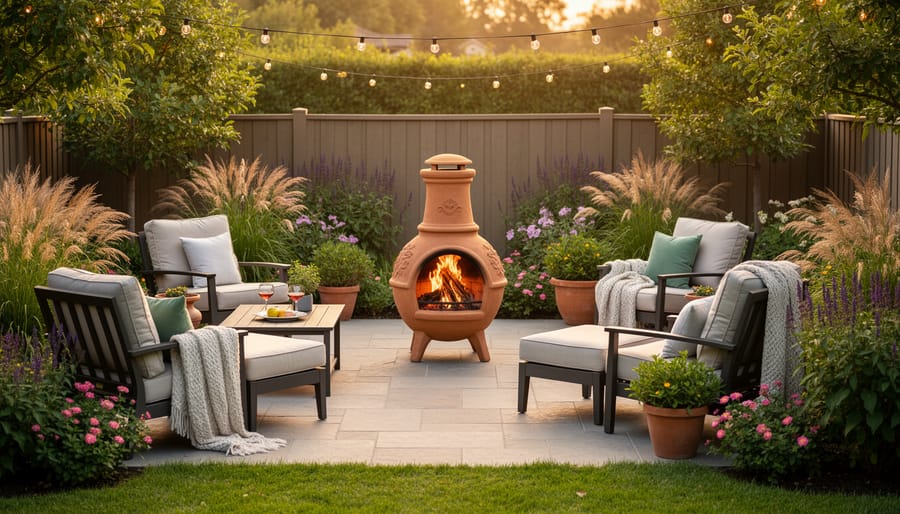
Your chiminea deserves more than just being plunked down on the patio—it should anchor a thoughtfully designed outdoor living space that draws people together. Think of it as the heart of your outdoor room, with everything radiating outward from that warmth.
Start by creating a defined zone around your chiminea with a stone or paver circle extending about six to eight feet in diameter. This not only provides a stable, non-combustible base but visually signals where your gathering space begins. Gravel or decomposed granite works beautifully too, offering excellent drainage while defining the area.
Consider arranging seating in a gentle arc rather than a full circle—this keeps conversation flowing while maintaining safe distances from the fire. Built-in stone benches or movable outdoor furniture can adapt to your needs, whether it’s an intimate evening for two or a larger gathering.
Frame your chiminea space with planted borders using low-maintenance, fire-resistant plants like succulents, lavender, or ornamental grasses. These create a natural boundary while adding year-round beauty. Keep plantings at least three feet away from the chiminea itself.
For a truly cohesive outdoor room, add thoughtful touches like pathway lighting leading to your fire feature, a small side table for drinks, and perhaps an outdoor rug in the seating area. These elements transform a simple patio corner into an inviting destination that beckons you outdoors, extending your living space while embracing eco-friendly outdoor heating.
Common Placement Mistakes That Ruin the Experience
Even the most beautiful chiminea won’t deliver the cozy outdoor experience you’re dreaming of if it’s placed incorrectly. Let’s walk through the most common mistakes homeowners make, so you can avoid them from the start.
The biggest culprit? Placing your chiminea too close to your home or other structures. One homeowner learned this the hard way when smoke damage stained their newly painted siding because their chiminea sat just five feet from the house. The radiant heat can also warp vinyl siding or damage wooden deck railings. Always maintain at least ten feet of clearance from any structure, and remember that heat rises—overhanging eaves or second-story windows need consideration too.
Wind patterns present another challenge that catches people off guard. Your backyard’s prevailing winds can turn your peaceful fire feature into a smoke machine that drives everyone indoors. Before permanently placing your chiminea, observe how wind moves through your space during different times of day. That perfect corner might channel smoke directly toward your patio seating or neighbor’s windows. Creating a windbreak with strategically placed plants or decorative screens can solve this issue while adding to your outdoor aesthetic.
Surface selection matters more than most realize. Setting a chiminea directly on grass, wooden decking, or composite materials invites disaster. The intense heat radiating from the base will scorch grass, creating ugly dead patches, or potentially ignite combustible decking. One enthusiast shared how embers escaping through their chiminea’s mouth created burn marks across their stamped concrete patio. The solution is simple: invest in a proper fire-resistant base using pavers, natural stone, or a dedicated fire pad that extends at least two feet beyond the chiminea’s footprint.
These placement mistakes are entirely preventable with thoughtful planning. By respecting clearances, understanding your yard’s unique conditions, and providing proper foundational support, you’ll create a safe, functional outdoor retreat that brings warmth to countless gatherings.
Eco-Friendly Considerations for Chiminea Use
Enjoying your chiminea doesn’t mean compromising on environmental responsibility. With a few thoughtful choices, you can create a cozy outdoor atmosphere while minimizing your ecological footprint.
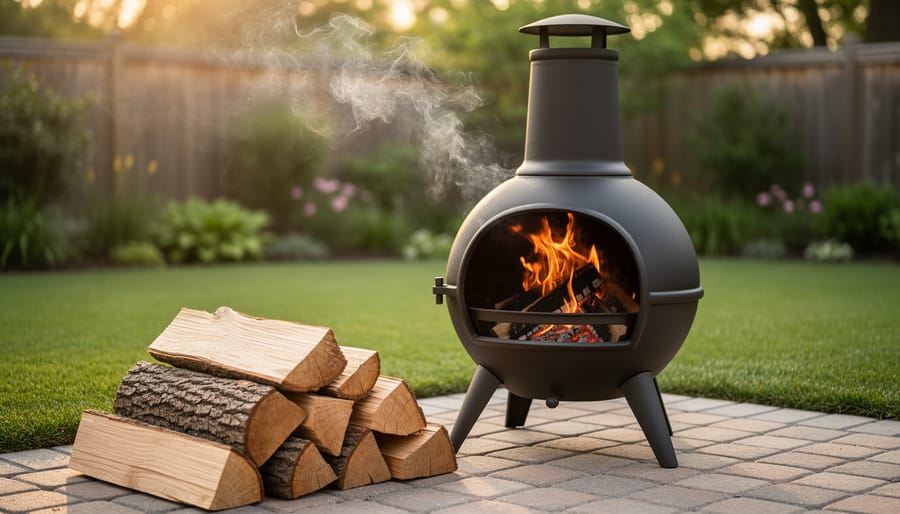
The foundation of eco-friendly chiminea use starts with sustainable fuel choices. Opt for locally sourced, sustainably harvested hardwoods like oak, maple, or ash. These woods burn hotter and longer than softwoods, meaning you’ll use less fuel overall. Avoid treated lumber, painted wood, or construction scraps, which release harmful chemicals when burned.
Properly seasoned wood is your secret weapon for reducing smoke emissions. Wood should be dried for at least six months to a year, reaching a moisture content below 20%. Well-seasoned wood burns more efficiently, produces less smoke, and generates significantly fewer particulates that affect air quality. You’ll know your wood is ready when it feels light, shows cracks in the ends, and makes a hollow sound when knocked together.
Strategic placement plays a crucial role in being a good neighbor and protecting local air quality. Position your chiminea downwind from neighboring homes when possible, and maintain adequate distance from windows and outdoor living areas. Consider prevailing wind patterns in your yard throughout different seasons. Evening breezes often shift direction, so what works in summer might need adjustment in fall.
Remember, the cleanest fire is a small, hot fire built with quality fuel. This approach not only reduces environmental impact but also enhances your outdoor experience with minimal smoke and maximum warmth.
Seasonal Adjustments and Long-Term Planning
Your chiminea can become a year-round focal point with thoughtful planning that adapts to seasonal changes and your lifestyle needs. Understanding how weather patterns affect your outdoor space helps you maximize enjoyment while protecting your investment.
Consider your climate when deciding between permanent and portable placement. If you experience mild winters, you might keep your chiminea accessible year-round, simply repositioning it closer to covered areas during rainy months. For those facing harsh winter conditions, portability offers flexibility to move your chiminea to sheltered spots or prepare it for storage when temperatures drop.
Permanent placement works beautifully for homeowners who’ve created dedicated outdoor living zones. Built-in surrounds, level stone pads, and integrated seating suggest a commitment to outdoor entertaining throughout comfortable seasons. This approach suits families who embrace their backyard as an extension of their living space and want a reliable gathering spot.
Portable setups appeal to renters, those with evolving outdoor designs, or anyone who enjoys seasonal variety. Lightweight cast aluminum chimineas move easily, letting you follow the sun in spring or find shade in summer. Clay models, while heavier, can still relocate with proper help and handling.
When cold weather arrives, explore winterization and storage options that protect your chiminea from freeze-thaw cycles and moisture damage. A breathable cover, elevated storage, or indoor sheltering extends its lifespan significantly. Planning these seasonal transitions now ensures your chiminea remains a cherished outdoor feature for years to come.
Finding the perfect spot for your chiminea transforms your outdoor space into something truly special—a warm, inviting gathering place where memories are made. But as we’ve explored, that magic only happens when you’ve thoughtfully considered the essential elements of safety, functionality, and design.
Now’s the perfect time to take a fresh look at your outdoor space. If you already have a chiminea, walk around it with new eyes. Is it far enough from structures and overhanging branches? Does smoke drift away from seating areas? If you’re planning a new installation, take measurements, observe wind patterns, and envision how your family and friends will naturally gather around the warmth.
Remember, the chiminea that’s been calling to you represents more than just an eco-friendly heating solution—it’s a lifestyle element that brings people together. By balancing safety requirements with thoughtful placement, you’re creating an outdoor sanctuary that’s both responsible and inviting. Your dream of cozy evenings under the stars, the crackle of burning wood, and conversations that linger long into the night is absolutely achievable. With careful planning and attention to the guidelines we’ve covered, you’re ready to make it happen.