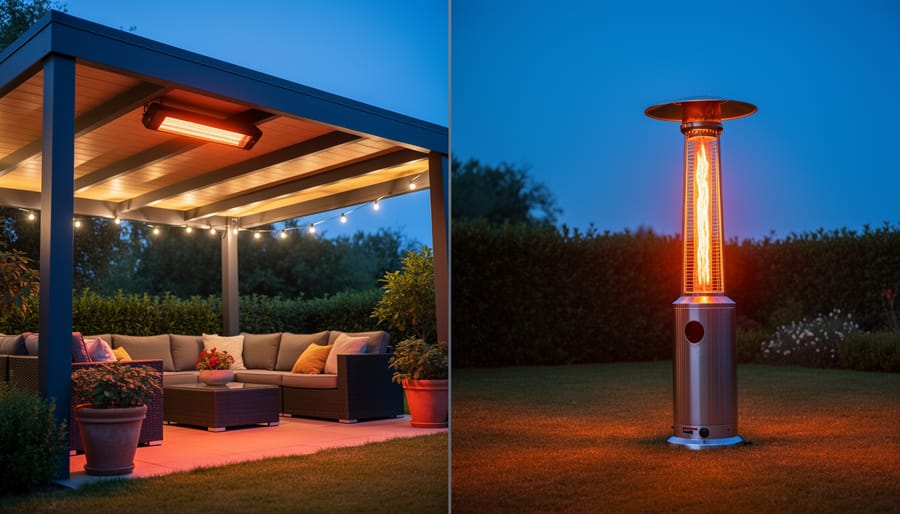


Choose your patio heater based on your space’s power access and ventilation requirements. Electric models plug into standard outlets and work perfectly for covered patios, screened porches, and smaller outdoor entertaining spaces where convenience matters most. Propane heaters deliver superior heat output—typically 40,000 BTUs compared to electric’s 5,000 BTUs—making them ideal for open yards and larger gatherings where you need serious warmth fast.
Consider your total ownership costs beyond the initial price tag. Electric heaters cost less upfront, usually $100-$300, with operating expenses around $0.15 per hour. Propane units require a $200-$500 investment plus ongoing fuel costs of $3-$5 per tank, but they heat larger areas more efficiently, potentially lowering your cost per square foot in spacious settings.
Evaluate installation simplicity against your heating timeline. Electric heaters deliver instant warmth the moment you plug them in—no assembly, no fuel tanks, no safety clearances to measure. Propane models require tank connections and proper ventilation planning, but reward you with portability and independence from electrical outlets.
Factor in environmental impact alongside performance needs. Electric heaters produce zero on-site emissions and pair beautifully with solar power systems for truly eco-friendly heating. Propane burns cleaner than wood but still releases carbon dioxide, though newer models feature efficient combustion technology that minimizes waste.
The right choice depends on whether you prioritize effortless operation and environmental responsibility or maximum heat output and freedom from power constraints. Both technologies have evolved to deliver reliable warmth that extends your outdoor season comfortably.
Understanding How Each Type Works
Electric Patio Heaters: Clean and Convenient
Electric patio heaters bring modern convenience to outdoor comfort, operating on the simple principle of converting electricity into warmth. Most use infrared or radiant heating technology, which works similarly to the sun’s rays—directly warming people and objects rather than heating the surrounding air. This means you’ll feel cozy even on breezy evenings when traditional heaters would struggle.
These units typically plug into standard 120-volt household outlets, though larger commercial models may require 240-volt circuits. Power consumption generally ranges from 1,500 to 3,000 watts, translating to approximately 5,000 to 10,000 BTUs of heating output. While this might seem modest compared to propane heaters that can reach 40,000 BTUs or more, electric models deliver highly focused heat exactly where you need it.
Installation couldn’t be simpler—just mount or position your heater and plug it in. There’s no fuel storage, no tank refills, and no ongoing maintenance beyond occasional cleaning. The infrared technology heats instantly when switched on and cools quickly when turned off, giving you precise control over your outdoor environment. For homeowners seeking a clean, eco-friendly heating solution that integrates seamlessly with their outdoor living space, electric heaters offer hassle-free warmth with zero emissions at the point of use.
Propane Patio Heaters: Portable Powerhouses
Propane patio heaters bring impressive heating power to your outdoor spaces through a straightforward combustion process. When you turn on the valve, propane gas flows from the tank through a regulator, mixing with oxygen before igniting at the burner. This creates a steady, radiant flame that warms the air around it, much like your indoor fireplace extends comfort throughout a room.
The real strength of propane heaters lies in their BTU output, typically ranging from 30,000 to 48,000 BTUs. This substantial heat production can warm areas up to 18 feet in diameter, making them ideal for larger patios or chilly evenings when you need serious warmth. Think of it as bringing campfire-level coziness to your backyard gathering.
Most propane patio heaters use standard 20-pound tanks, the same size as your backyard grill. These tanks are readily available at hardware stores and gas stations, offering convenience and portability. A full tank typically provides 8 to 10 hours of continuous heat, perfect for multiple entertaining sessions before refilling. Understanding the propane advantages and disadvantages helps you decide if this powerful heating option fits your outdoor lifestyle and environmental priorities.
Heat Output and Coverage: The Real Performance Story
BTU Ratings and What They Mean for Your Space
Understanding BTU ratings helps you choose the right heating solution for your outdoor space. BTU, or British Thermal Unit, measures the heat output a heater can produce—essentially, the bigger the number, the more heating power you get.
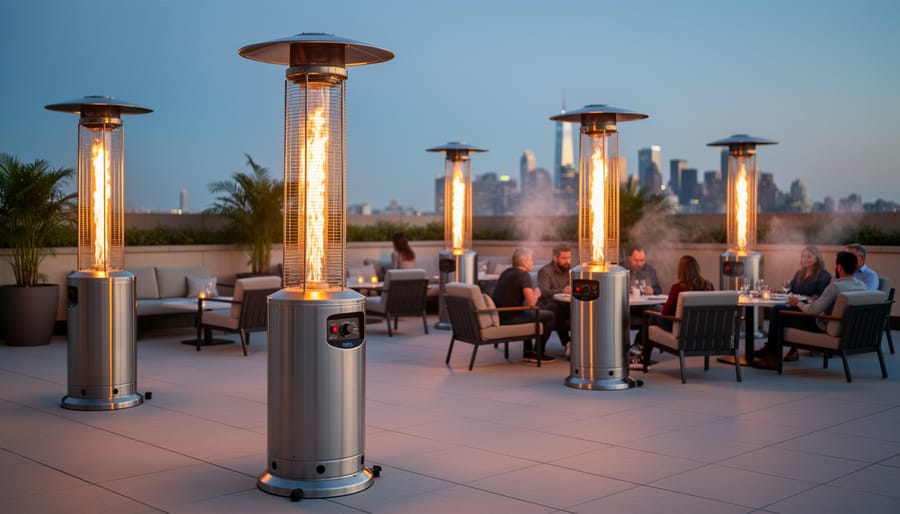
Propane patio heaters typically pack a serious punch, with most models ranging from 40,000 to 48,000 BTUs. This substantial output means they can effectively warm areas of 200 to 300 square feet, making them ideal for larger patios, decks, or commercial outdoor dining spaces. You’ll feel the warmth radiating several feet from the unit, creating cozy gathering spots even on chilly evenings.
Electric patio heaters operate differently, typically producing 5,000 to 10,000 BTUs. While these numbers might seem modest in comparison, electric heaters deliver targeted infrared heat that warms people and objects directly rather than heating the surrounding air. This means a 5,000 BTU electric heater can comfortably warm a 100 to 150 square foot area when positioned strategically.
Think of it this way: propane is like a campfire that warms everyone gathered around, while electric heat is more like standing in a sunny spot on a cool day. For intimate seating areas, balconies, or covered patios, electric heaters provide sufficient warmth with lower BTU ratings. Larger, open spaces benefit from propane’s higher output, especially in windy conditions where electric heat can dissipate quickly.
Consider your specific space dimensions and typical weather conditions when evaluating which BTU range suits your outdoor heating needs best.
Wind, Weather, and Heat Retention Reality
Let’s be honest about Mother Nature—she doesn’t always cooperate with our outdoor entertaining plans. Understanding how electric and propane heaters handle the elements can save you from disappointing evenings and wasted money.
Wind is the game-changer here. Propane heaters produce radiant heat that warms objects and people directly, making them surprisingly effective even when breezes blow. However, strong gusts can extinguish pilot lights and reduce efficiency by carrying heat away. Electric infrared heaters also use radiant technology, so they maintain effectiveness in moderate wind, though fan-forced electric models struggle significantly as wind simply disperses their warm air before it reaches you.
Temperature extremes matter too. Propane heaters excel in genuinely cold conditions, delivering powerful BTUs regardless of the mercury’s drop. Electric heaters become less efficient as temperatures plummet, and their heating radius shrinks when working harder against the cold.
Your space configuration makes the biggest difference. Covered patios, screened porches, and semi-enclosed areas create natural wind blocks where both heater types perform admirably. Electric models particularly shine here since you can mount them strategically for optimal coverage. Open decks and exposed spaces demand propane’s superior heat output—you’ll need that extra power to combat heat loss.
For eco-conscious homeowners, consider that covered spaces allow you to use lower-output electric heaters effectively, reducing energy consumption while still creating that cozy ambiance. If your outdoor space offers some protection from the elements, you’re working with nature rather than against it, and either option becomes more efficient and economical.
Installation and Placement Requirements
Electric Heater Placement: Power Access is Everything
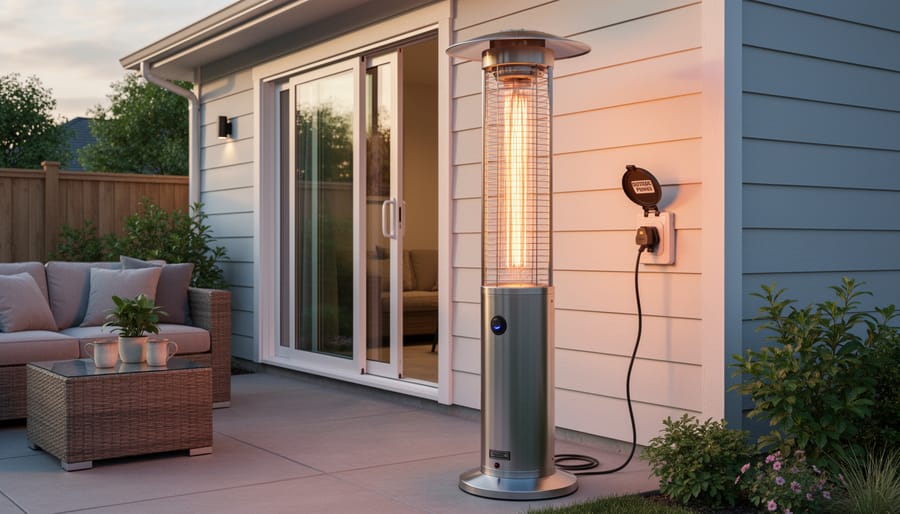
When it comes to electric patio heaters, location isn’t just about comfort—it’s about practical power access. Unlike their propane cousins that can roam freely, electric heaters need a reliable connection to your home’s electrical system, which shapes where and how you can use them.
Start by evaluating your outdoor electrical outlets. Most electric patio heaters require a standard 120-volt outlet, though some powerful models need 240-volt connections. Check that your outlets are GFCI-protected for outdoor safety—this is essential for any heating appliance exposed to the elements. If your patio lacks conveniently placed outlets, you’ll need to plan accordingly or consider having an electrician install one.
Extension cords can work in a pinch, but choose wisely. Use only heavy-duty, outdoor-rated cords with adequate amperage capacity for your heater’s wattage. A cord that’s too light creates fire hazards and reduces heating efficiency. As a rule, shorter cords work better—aim for 25 feet or less to maintain proper power delivery.
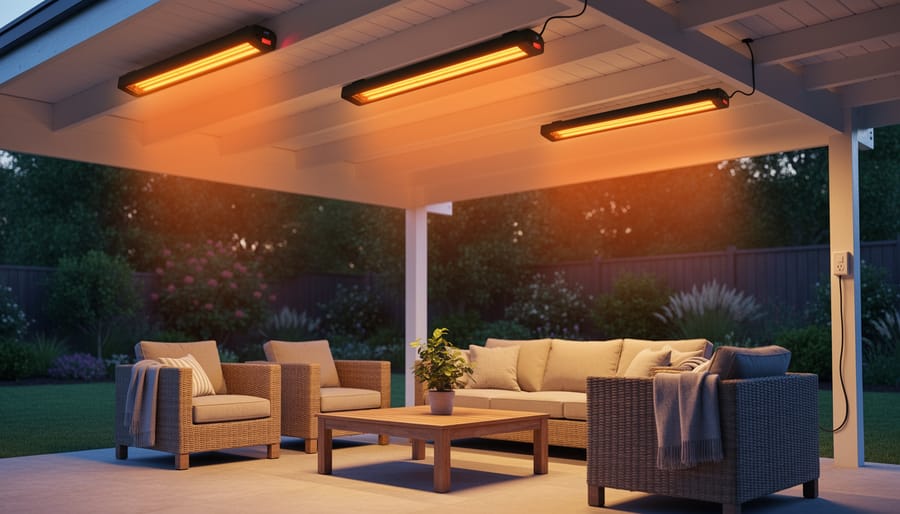
Electric heaters offer versatile mounting options that propane models can’t match. Wall-mounted units save floor space and direct heat exactly where you want it. Ceiling-mounted heaters provide overhead warmth that mimics natural sunlight, ideal for covered patios. Freestanding models offer flexibility but require stable surfaces and careful cord management.
For maximum heat distribution, position your heater 8-10 feet from seating areas, angled slightly downward. Corner placements work beautifully for wrapping warmth around conversation zones. Remember, electric heaters create focused heat rather than ambient warmth, so strategic positioning makes all the difference in creating that cozy outdoor retreat you’re after.
Propane Heater Placement: Safety Clearances Matter
When you’re setting up a propane patio heater, proper placement isn’t just about convenience—it’s essential for safe operation and effective heating. Unlike electric heaters that simply plug in, propane units require careful attention to ventilation and clearances.
First, let’s talk about breathing room. Propane heaters need adequate ventilation since they consume oxygen and produce carbon monoxide during combustion. While outdoor settings naturally provide ventilation, never use a propane heater in enclosed spaces like screened porches without proper airflow. Position your heater in open areas where air can circulate freely.
Clearance requirements matter significantly. Most manufacturers specify maintaining at least 24 to 36 inches from walls, ceilings, and overhangs. This prevents heat damage to structures and reduces fire risk. If you’re using a heater under a covered patio, ensure the ceiling height accommodates these clearances—typically 8 feet minimum for standing models.
Fuel tank storage deserves special attention. While some heaters feature integrated tank compartments, others use external cylinders that need secure positioning. The tank should sit on stable, level ground away from foot traffic. Many homeowners appreciate hiding propane tanks for aesthetic reasons while maintaining safety access.
For optimal heat coverage, position your heater centrally within your gathering area. Freestanding models work best when placed where their radiant heat reaches seating zones evenly. Remember, propane heaters radiate heat outward and upward, so positioning them too close to walls wastes warmth and creates hazards. Strategic placement maximizes both safety and comfort for your outdoor living space.
Cost Analysis: Initial Investment and Long-Term Operation
Purchase Price and Setup Costs
When budgeting for your outdoor heating solution, you’ll find electric and propane heaters span similar price ranges, though the initial investment tells only part of the story.
Quality electric patio heaters typically range from $150 to $600, with premium wall-mounted or ceiling-mounted units reaching $800. The advantage here is simplicity—plug it in and you’re done. However, if you don’t have an outdoor electrical outlet where you need it, expect to pay $200 to $500 for a licensed electrician to install one properly. This is a one-time expense that adds lasting value to your outdoor space.
Propane heaters also start around $150 for basic models, with standing tower units running $300 to $700. Your initial setup requires purchasing a propane tank (typically $50 to $80 for a 20-pound tank), plus the first fill costs about $20 to $30. Many homeowners appreciate having a backup tank on hand, effectively doubling this initial expense.
The bottom line? Electric heaters have higher upfront installation costs if electrical work is needed, but propane requires ongoing tank purchases and refills. Consider what’s already available in your outdoor space—an existing outlet makes electric the more economical choice, while propane offers installation flexibility without any electrical work required.
Operating Costs: The Monthly Reality
Let’s break down what you’ll actually spend to keep your outdoor space cozy throughout the season. Understanding these real-world numbers helps you make a smart choice that fits your budget.
For electric patio heaters, the calculation is straightforward. A typical 1,500-watt electric heater running for one hour consumes 1.5 kilowatt-hours of electricity. With the national average electricity rate around $0.14 per kWh, you’re looking at roughly $0.21 per hour of operation. That means a pleasant three-hour evening gathering costs about $0.63 in electricity. Over a month of regular use—say 60 hours total—you’d spend approximately $12.60.
Propane operating costs tell a different story. A standard propane patio heater burns through about one pound of propane per hour on high heat. A typical 20-pound propane tank costs between $15 and $25 to refill, giving you roughly 20 hours of heating. That translates to $0.75 to $1.25 per hour of operation. Using the same 60-hour monthly scenario, you’d need three tank refills, costing between $45 and $75 monthly.
The difference becomes even more significant if you heat regularly during cooler months. Electric heaters consistently deliver lower operating costs, while propane offers portability at a premium price. Your actual costs will vary based on local utility rates, propane suppliers, and how often you adjust heat settings—but these examples provide realistic expectations for budgeting your outdoor comfort.
Environmental Impact and Eco-Friendly Considerations
Electric Heaters and Your Carbon Footprint
Electric patio heaters offer a compelling environmental advantage: zero emissions at the point of use. Unlike propane heaters that release carbon dioxide and other combustion byproducts directly into your outdoor space, electric models produce no smoke, fumes, or pollutants where you’re relaxing with family and friends.
However, your electric heater’s true carbon footprint depends on how your local power grid generates electricity. If your utility relies heavily on coal or natural gas, the environmental benefits diminish. The good news? Many regions are transitioning to cleaner energy sources, and this trend continues to improve electric heating’s environmental profile.
Here’s where electric heaters truly shine as an eco-friendly heating solution: they’re perfectly compatible with renewable energy. If you have solar panels or subscribe to a green energy program, your patio heater can run on genuinely clean power. This creates a guilt-free outdoor heating experience that aligns with sustainable living values. As our energy infrastructure becomes greener, your electric heater automatically becomes more environmentally friendly without any changes on your part—a future-proof choice that propane simply can’t match.
Propane: The Fossil Fuel Reality
Let’s be straightforward: propane is a fossil fuel, and burning it does release carbon dioxide into the atmosphere. When your propane patio heater runs, it produces CO2, water vapor, and small amounts of nitrogen oxides—that’s simply the nature of combustion.
That said, propane deserves credit for being one of the cleaner-burning fossil fuels available. Compared to wood-burning fire pits or coal, propane produces significantly fewer particulates and pollutants. It burns efficiently with minimal smoke or soot, making it a relatively responsible choice among combustion-based heating options.
The environmental equation changes based on your local electricity grid. If your electricity comes primarily from coal or natural gas plants, an electric heater might not offer much environmental advantage. However, if your grid uses renewable sources like wind or solar, electric heating becomes the greener option by a considerable margin.
For homeowners seeking eco-friendly outdoor warmth, the honest answer is this: propane isn’t guilt-free, but it represents a practical middle ground—cleaner than many alternatives while delivering reliable heat exactly where you need it.
Safety Features and Maintenance Needs
Electric Heater Safety: Simple but Not Risk-Free
Electric patio heaters offer a refreshingly straightforward safety profile, though they’re certainly not without considerations. Think of them as the low-maintenance friend who still needs your attention occasionally.
The most critical safety requirement is proper electrical setup. Your electric heater should always plug into a GFCI-protected outlet, which cuts power instantly if moisture creates electrical issues. This protection is especially important for patio areas where morning dew, rain splatter, or accidental hose spray can happen. While most outdoor-rated electric heaters handle light moisture exposure well, they’re not meant for direct water contact. Always check the IP rating and bring portable units inside during heavy rain or snow.
Modern electric heaters typically include automatic tip-over protection that shuts off the unit if it’s knocked over by wind, pets, or an enthusiastic gathering. This feature provides peace of mind that propane simply can’t match with its open flame concerns.
From a maintenance perspective, electric heaters are wonderfully simple. There’s no fuel to refill, no tanks to inspect, and no combustion components to clean. An occasional wipe-down and checking the cord for damage represents the full extent of your upkeep duties. This makes them ideal for homeowners who want effective outdoor warmth without adding another task to their weekend to-do list.
Propane Heater Safety: More Vigilance Required
Propane heaters require more careful attention to safety compared to their electric counterparts. The most significant concern is carbon monoxide exposure, an invisible, odorless gas that can be deadly in enclosed or poorly ventilated spaces. While propane heaters are designed for outdoor use, even covered patios need adequate airflow to prevent CO buildup.
Proper ventilation is non-negotiable. Never use a propane heater in a completely enclosed space, and ensure your outdoor area has sufficient air circulation on all sides. Modern propane heaters include oxygen depletion sensors that automatically shut off the unit when oxygen levels drop too low, but this shouldn’t replace your vigilance.
Leak detection is another critical consideration. Before each use, check all connections with soapy water—bubbles indicate escaping gas. That distinctive rotten egg smell added to propane serves as your warning system, so never ignore it.
Schedule annual professional inspections to examine hoses, regulators, and burner components for wear and tear. Tank handling requires care too: always transport cylinders upright, store them outdoors in shaded areas, and check expiration dates stamped on the collar. Keep a fire extinguisher nearby and familiarize yourself with emergency shutoff procedures. While these safety measures might seem demanding, they become routine with practice and ensure your outdoor heating remains both effective and safe.
Which Heater Type Fits Your Situation Best
Choose Electric When…
Electric patio heaters shine in specific scenarios where their unique advantages truly come to life. If you have a covered patio, deck, or screened-in porch, electric models are often your best bet. The ceiling or overhead structure provides a perfect mounting point while keeping the heating element protected from the elements. These cozy outdoor rooms benefit from the clean, odorless warmth that won’t leave lingering propane smells in semi-enclosed spaces.
Apartment dwellers and renters will appreciate that electric heaters typically comply with strict landlord policies and HOA regulations. Many buildings prohibit propane tanks for safety reasons, making electric your only viable option for extending your outdoor season.
For eco-conscious homeowners looking to reduce their carbon footprint, electric heaters align beautifully with sustainable living goals. When powered by renewable energy sources or solar panels, they become virtually emission-free, contributing to cleaner air quality in your neighborhood.
If you value simplicity and minimal upkeep, electric heaters deliver peace of mind. There’s no fuel to monitor, no tanks to refill or exchange, and no winterization worries. Just plug in, adjust your settings, and enjoy instant warmth whenever the mood strikes. They’re perfect for those who want outdoor comfort without the ongoing maintenance commitment.
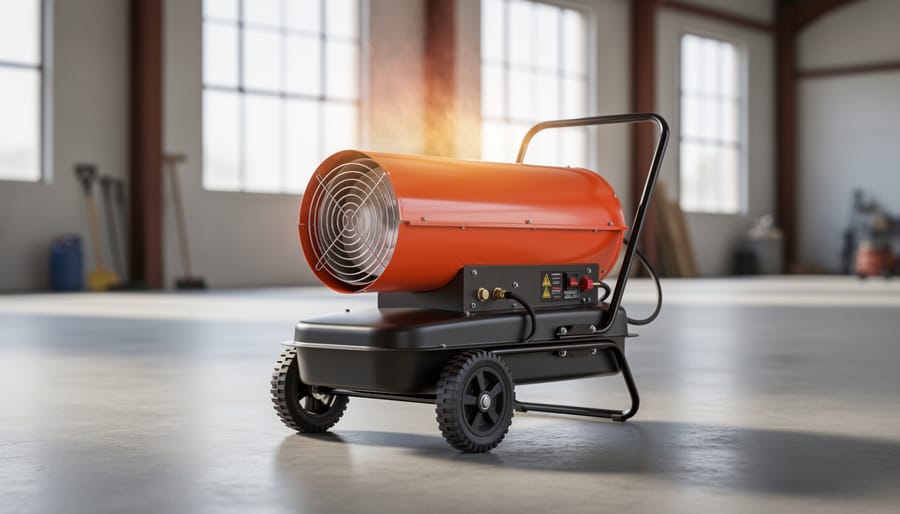
Choose Propane When…
Propane patio heaters truly shine when you need serious heating power in challenging outdoor environments. If you’re working with a sprawling backyard, open patio, or large entertaining area, propane delivers the intense heat that can actually make a difference in those wide-open spaces where electric heaters might struggle to reach.
Consider propane your go-to choice when electrical outlets are scarce or inconveniently located. Maybe your ideal seating area sits far from the house, or you love rearranging your outdoor setup for different occasions. Propane’s portability means you can move your heat source wherever the party goes, without wrestling with extension cords or worrying about electrical capacity.
Off-grid locations and remote outdoor spaces particularly benefit from propane’s independence. Whether you’re heating a detached gazebo, poolside cabana, or lakeside deck, propane works anywhere without infrastructure requirements.
Propane also excels when maximum warmth matters most. Those truly cold evenings when you want that cozy, enveloping heat? Propane’s BTU output typically surpasses electric models significantly. If you’re exploring other outdoor heating options for your lifestyle, propane’s raw heating capability often makes it the practical choice for creating genuine comfort in chilly conditions.
Here’s the truth: there’s no universal winner in the electric versus propane debate. The best patio heater for your neighbor might be completely wrong for your outdoor space, and that’s perfectly okay. What matters is finding the option that aligns with your lifestyle and priorities.
Think about what matters most to you. If you’re budget-conscious upfront but have easy electrical access, an electric heater offers simplicity and lower initial costs. If you need powerful heat for large gatherings in cold weather, propane delivers that restaurant-patio warmth we all love. Value convenience and instant control? Electric wins. Want portability and independence from outlets? Propane is your friend.
We encourage you to identify your top three priorities from what we’ve covered: upfront cost versus operating expenses, heat output requirements, convenience factors, and environmental considerations. Write them down if it helps. Once you’re clear on these non-negotiables, your decision becomes much easier.
Remember, both options have successfully extended outdoor living seasons for millions of homeowners. Whether you choose the eco-friendly simplicity of electric heating or the robust warmth of propane, you’re making a solid investment in more time outdoors with family and friends. Properly selected for your space and correctly placed for safety and efficiency, either heater will transform your patio from a three-season afterthought into a cozy retreat you’ll use well into the cooler months. Trust your priorities, make your choice confidently, and start enjoying those crisp evenings outside.