

Verify your existing chimney liner is properly sized for your specific insert—most building codes require a stainless steel liner that matches the manufacturer’s specifications, typically ranging from 4 to 8 inches in diameter depending on your unit’s BTU output. This isn’t just a technicality; an incorrectly sized liner can cause dangerous carbon monoxide buildup or reduce your insert’s efficiency by up to 30%.
Determine whether your fireplace insert requires direct venting, natural draft venting, or can operate with a standard chimney system. Gas inserts often use direct venting that pulls fresh air from outside while expelling combustion gases through a sealed system, while wood-burning inserts need robust chimney liners that can handle higher temperatures reaching 1,000 degrees Fahrenheit. When exploring modern insert options, you’ll find electric models eliminate venting concerns entirely, making them attractive for homes with damaged or absent chimneys.
Schedule a professional inspection before installation to assess your chimney’s structural integrity and creosote buildup. Even if your chimney appears sound, hidden cracks or deteriorating mortar can compromise venting safety, and most jurisdictions require a certified inspection as part of the permit process.
Understanding these venting fundamentals protects your investment while ensuring your family’s safety. Proper venting also maximizes your insert’s heating efficiency, reduces environmental impact through complete combustion, and keeps you compliant with local building codes that have become increasingly stringent as eco-friendly heating solutions gain popularity. The right venting setup transforms your fireplace from a decorative feature into a reliable, efficient heat source.
What Makes Fireplace Insert Venting Different from Traditional Fireplaces
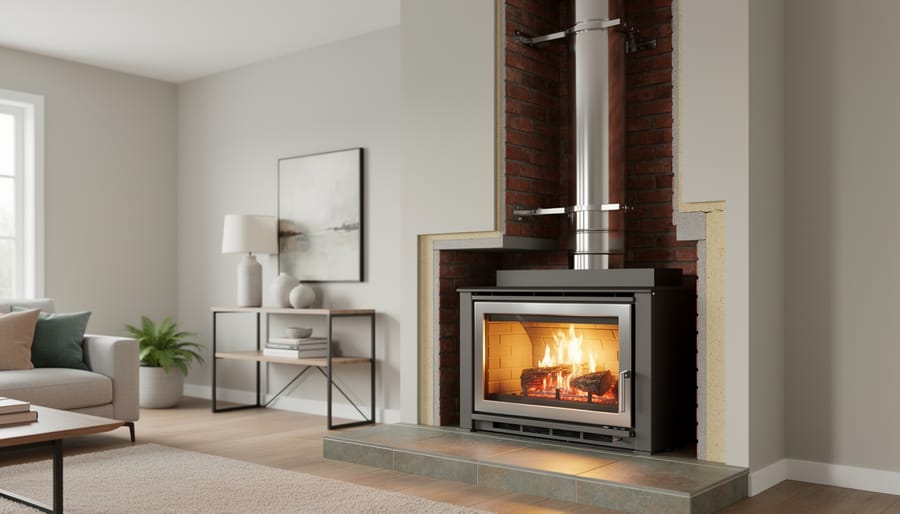
The Science Behind Insert Ventilation
Understanding how fireplace inserts work their ventilation magic helps you make smarter decisions about installation and maintenance. Unlike traditional open fireplaces that lose most of their heat up the chimney, inserts create a controlled combustion environment that changes everything about airflow.
Think of your insert as a sealed heating system that sits inside your existing fireplace. When you light a fire, the insert draws air from your room through carefully designed intake vents, burns it efficiently in an enclosed firebox, and then exhausts the byproducts through a dedicated venting system. This controlled process means inserts burn fuel much more completely than open fireplaces, producing hotter exhaust gases but in smaller volumes.
Here’s where it gets interesting for your venting setup. Because inserts achieve higher combustion temperatures, the exhaust gases are hotter and more concentrated. This concentrated heat actually helps improve draft, pulling smoke and gases upward more efficiently. However, these higher temperatures also mean you need proper protection for your existing chimney, which is why liner systems are essential.
Different fuel types produce distinct exhaust patterns too. Wood-burning inserts generate more particulates and creosote, requiring robust venting that can handle cleaning. Gas inserts produce cleaner exhaust but may include more moisture, affecting condensation in your venting system. Pellet stoves create fine ash that demands specific venting considerations.
This science-based approach to venting isn’t just about following rules. It’s about creating an eco-friendly heating solution that keeps your home safe while maximizing the warmth and ambiance you’re seeking from your fireplace investment.
Safety Concerns You Can’t Ignore
When it comes to fireplace insert venting, proper installation and maintenance aren’t just about efficiency—they’re literally a matter of life and death. Let’s talk about the safety concerns that should be at the top of your priority list.
Carbon monoxide poisoning is perhaps the most serious threat associated with improper venting. This odorless, colorless gas is produced whenever you burn wood, gas, or pellets. When your venting system has cracks, gaps, or blockages, carbon monoxide can seep into your living space instead of being safely directed outside. The symptoms can be subtle at first—headaches, dizziness, nausea—but prolonged exposure can be fatal. This is why every home with a fireplace insert needs working carbon monoxide detectors on every level, and why annual inspections are essential, not optional.
Creosote buildup presents another significant hazard, particularly for wood-burning inserts. This black, tar-like substance accumulates inside your chimney liner over time, and it’s highly flammable. When creosote ignites, it can cause a dangerous chimney fire that reaches temperatures exceeding 2,000 degrees Fahrenheit—hot enough to crack your chimney liner or even spread to your home’s structure. Regular cleaning and using properly seasoned wood can minimize creosote formation, but only proper venting and maintenance can truly keep you safe.
Improper clearances around venting components pose fire risks too. If your vent pipe passes too close to combustible materials like wood framing or insulation without proper shielding, you’re creating a potential fire hazard. Professional installation ensures these clearances meet building codes, protecting your home and your family while letting you enjoy the warmth and ambiance you deserve.
Understanding Chimney Liner Requirements for Your Insert
Sizing Your Chimney Liner Correctly
Getting the right chimney liner size isn’t just about finding something that fits—it’s about creating a venting system that works efficiently and safely with your fireplace insert. Think of it as matching puzzle pieces: when everything aligns correctly, your fireplace performs beautifully, provides consistent warmth, and operates as the eco-friendly heating solution it’s designed to be.
The diameter of your liner directly affects how well combustion gases exit your home. Most residential inserts require either a 6-inch or 8-inch liner, though some larger units need different sizes. Your insert’s manual will specify the exact requirements—this isn’t an area where guessing works in your favor.
To measure your existing chimney, you’ll need to determine both the interior dimensions and the height from the insert connection point to the chimney top. For round flues, measure the inside diameter at several points, as older chimneys sometimes have irregular shapes. Square or rectangular chimneys require measuring both dimensions to calculate the equivalent round size needed for your liner.
Why does this precision matter? An oversized liner allows gases to cool too quickly, leading to creosote buildup and poor draft. An undersized liner creates back-pressure, potentially forcing smoke and dangerous gases back into your living space. Neither scenario supports the efficient, clean-burning performance that makes fireplace inserts such appealing lifestyle elements for your home.
Professional installers often use specialized tools to inspect and measure chimneys accurately, accounting for offsets, bends, or obstructions you might not see from ground level. While measuring seems straightforward, investing in professional assessment ensures your new venting system supports years of cozy, worry-free fires while maximizing your insert’s heating efficiency and environmental benefits.
Material Choices: Stainless Steel vs. Aluminum Liners
Choosing the right liner material is crucial for both safety and long-term performance of your fireplace insert. The two most common options are stainless steel and aluminum, each with distinct advantages depending on your heating setup.
Stainless steel liners are the gold standard for wood-burning and pellet inserts. They’re incredibly durable, resistant to corrosion, and can withstand the high temperatures and acidic creosote that wood combustion produces. While they represent a higher upfront investment (typically 30-50% more than aluminum), their longevity makes them worth every penny. Quality stainless steel liners can last 15-20 years or more with proper maintenance, making them an eco-friendly choice that reduces replacement waste over time.
Aluminum liners, on the other hand, shine when paired with medium-efficiency gas inserts. They’re lighter, more affordable, and perfectly adequate for the lower temperatures gas produces. However, they’re not suitable for wood or pellet stoves, as the higher heat and corrosive byproducts will deteriorate aluminum quickly.
For high-efficiency gas inserts, stainless steel becomes necessary again. These modern, eco-friendly systems extract so much heat that condensation forms inside the liner, creating acidic moisture that aluminum simply can’t handle long-term.
Think of liner selection as investing in your home’s comfort infrastructure. The right material protects your chimney, ensures efficient venting, and keeps your family safe while maximizing your insert’s performance for years to come.
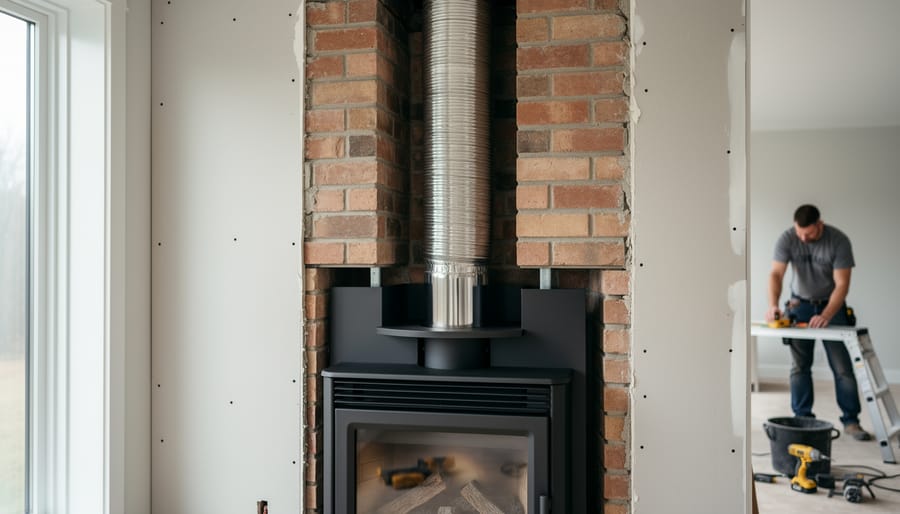
Direct Vent vs. Natural Vent Systems: Which Does Your Insert Need?
When Direct Venting Makes the Most Sense
Direct vent systems represent one of the most versatile and efficient venting solutions for fireplace inserts, especially if you’re working with a home that wasn’t originally designed with a fireplace in mind. Unlike traditional venting that relies on your existing chimney, direct venting creates its own pathway to the outside world, drawing fresh air in and expelling combustion gases through a sealed, two-chamber pipe system.
What makes direct venting so appealing? For starters, it’s incredibly efficient. Because the system is sealed, you’re not losing precious heated air up the chimney, and you’re not creating drafts by pulling warm air from inside your home for combustion. This closed-loop design can help lower your heating bills while keeping your living space cozy and comfortable.
Direct venting shines brightest in several scenarios. If your home doesn’t have an existing chimney, this system eliminates the need for expensive masonry work. You can install a direct vent insert virtually anywhere with an exterior wall, opening up possibilities for adding warmth and ambiance to bedrooms, home offices, or finished basements. It’s also an excellent choice for modern, tightly-sealed homes where traditional venting might struggle with proper draft.
For those considering electric fireplace inserts, it’s worth noting that while electric options don’t require venting at all, gas direct vent systems offer real flames and can function during power outages, making them a practical eco-friendly heating solution that combines efficiency with authentic fireplace charm.
Natural Venting Through Your Existing Chimney
If you’re fortunate enough to have an existing masonry chimney, you already have the foundation for what’s known as natural venting. This traditional method has been the go-to solution for centuries, using the simple principle that hot air rises. When your fireplace insert burns fuel, the heated gases naturally travel upward through your chimney and safely exit your home.
However, before you assume your existing chimney is ready to handle a new insert, there’s an important catch. Most modern fireplace inserts require what’s called a chimney liner to function safely and efficiently. Your original chimney was likely built for an open fireplace, which operates quite differently from today’s high-efficiency inserts. The good news is that adding a liner is typically a straightforward modification that dramatically improves performance.
A chimney liner serves several crucial purposes. It protects your chimney structure from the corrosive byproducts of combustion, ensures proper draft for efficient burning, and most importantly, prevents dangerous gases from seeping into your living space. Most building codes now require liners when installing inserts, making this an essential rather than optional upgrade.
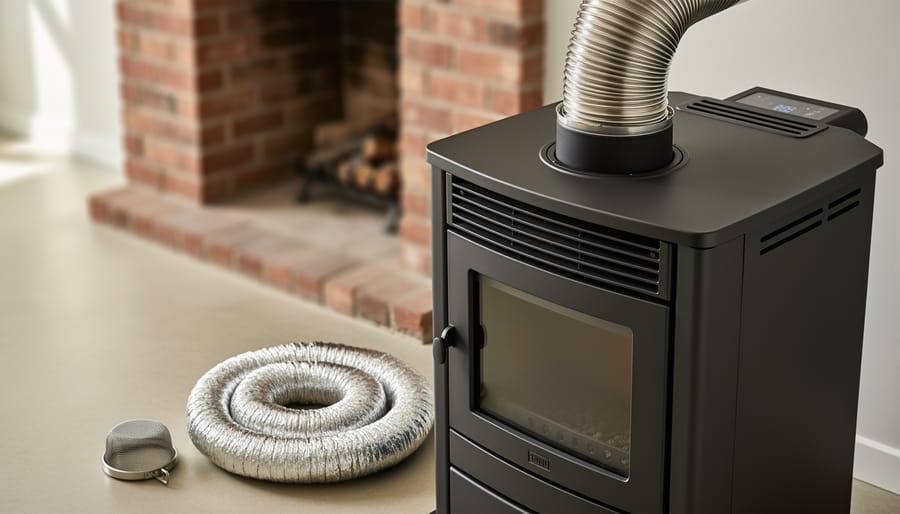
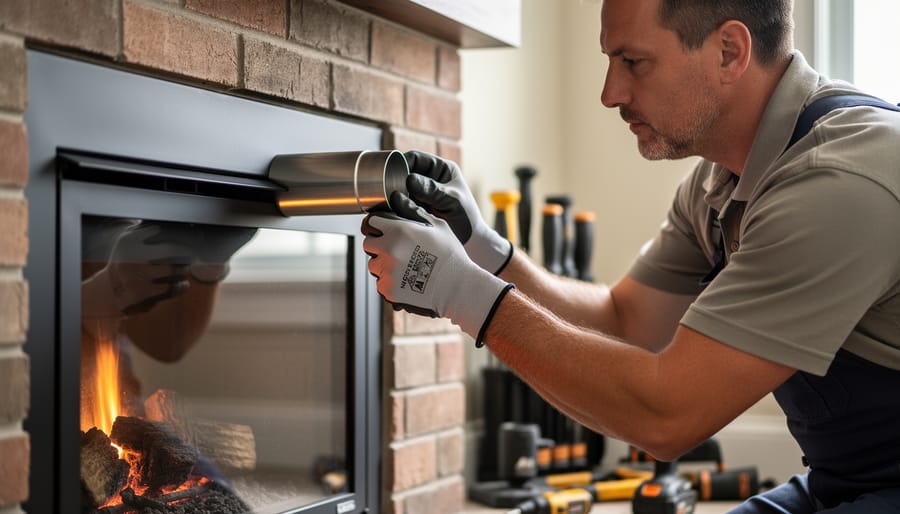
The installation process usually involves threading a stainless steel flexible liner down through your existing chimney, then connecting it directly to your insert. This creates a dedicated, sealed pathway for exhaust gases. While some experienced DIYers tackle this project, working with a certified professional ensures proper sizing, secure connections, and compliance with local codes. This investment in your chimney infrastructure not only maximizes your insert’s efficiency but also transforms your fireplace into a safer, eco-friendly heating solution that can serve your home for decades.
Installation Requirements That Keep You Safe and Legal
Local Code Compliance and Permits
Before you finalize your fireplace insert purchase and dive into the insert installation process, understanding local permits isn’t just about following rules—it’s about protecting your home and family. Most municipalities require permits for fireplace insert installations because improper venting can lead to carbon monoxide buildup or fire hazards.
When inspectors visit, they’re primarily checking that your venting system meets safety standards. They’ll verify proper chimney liner installation, adequate clearances from combustible materials, and correct connection points. Don’t let this intimidate you—think of inspectors as partners in creating a safe, efficient heating solution for your home.
Start by contacting your local building department early in your planning process. They’ll outline specific requirements for your area, which might include chimney liner specifications or minimum distances from roofing materials. Many departments provide helpful checklists that demystify the process.
Working with certified professionals familiar with local codes simplifies compliance considerably. They know exactly what inspectors expect and can handle the paperwork while you focus on enjoying your new eco-friendly heating solution. Remember, proper permitting also protects your home’s resale value and ensures your insurance coverage remains valid.
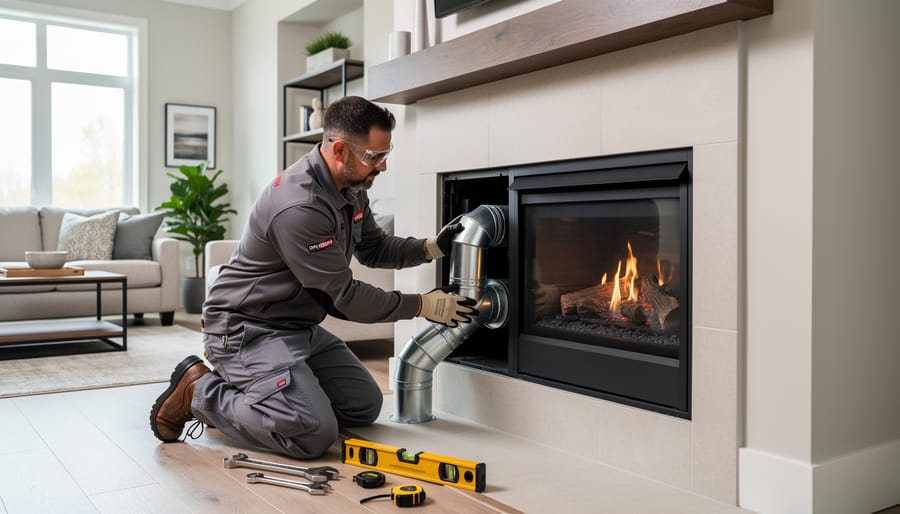
When DIY Becomes Dangerous
Let’s be honest: venting isn’t a weekend warrior project for most homeowners. While you might successfully tackle painting your living room or installing new light fixtures, fireplace insert venting sits firmly in professional territory for good reason.
The stakes are simply too high. Improperly installed venting can lead to carbon monoxide poisoning, house fires, or chimney damage that costs thousands to repair. Professional installers understand the nuances of draft requirements, liner sizing, clearances to combustibles, and local building codes that aren’t always intuitive from YouTube tutorials.
That said, you can handle the research phase yourself. Understanding your chimney dimensions, choosing your insert model, and even removing a gas insert (with proper precautions) are reasonable DIY steps. You might also manage the finishing touches like installing trim or hearth materials after the professional installation is complete.
The professional installation investment protects both your family’s safety and your home’s value. Most reputable installers also handle permitting and inspections, ensuring your beautiful new insert meets all safety standards while providing efficient, eco-friendly warmth for years to come.
Maintaining Your Venting System for Long-Term Performance
Annual Inspection Checklist
Making yearly inspections part of your home care routine helps keep your fireplace insert running safely and efficiently. Start by examining the visible portions of your venting system for any signs of rust, corrosion, or physical damage. Look carefully at the joints and seams where sections connect—these should be tight and secure without gaps.
Check around the chimney cap for bird nests, leaves, or other debris that might restrict airflow. Inside your home, inspect the connection point where your insert meets the venting system, watching for any soot buildup or dark staining on nearby walls, which can indicate improper drafting or leaks.
Run your hand near (but not touching) the venting connections while the insert is operating to feel for escaping heat or air movement that shouldn’t be there. Listen for unusual sounds like rattling or whistling that might suggest loose components.
Pay attention to how your insert performs. Excessive smoke entering your room, difficulty starting fires, or a persistent smoky smell are all red flags requiring professional attention. Glass that blackens quickly between cleanings often signals incomplete combustion related to venting issues.
Schedule a professional chimney sweep inspection annually, ideally before heating season begins. They have specialized cameras and tools to examine areas you cannot safely access, ensuring your eco-friendly heating solution remains both effective and safe.
Cleaning Your Chimney Liner Without the Mess
Keeping your chimney liner clean ensures your fireplace insert runs efficiently and safely while creating that cozy ambiance you love. The good news? With the right approach, maintenance doesn’t have to turn into a sooty ordeal.
For gas fireplace inserts, you’re in luck. Annual inspections by a professional are typically sufficient, as these systems produce minimal buildup. Wood-burning inserts, however, demand more attention. Plan to inspect your liner after every cord of wood burned, with professional cleaning at least once annually, ideally before heating season begins.
Here’s a simple maintenance routine: Start by letting your system cool completely, then visually inspect the liner with a flashlight for creosote buildup or damage. For light maintenance between professional visits, consider eco-friendly chimney cleaning logs made from recycled materials. These environmentally conscious options help reduce minor creosote deposits while you enjoy your fire.
Pellet stove inserts fall somewhere in the middle, requiring cleaning every few months depending on usage. Always use drop cloths and seal off your living space before any DIY cleaning to contain dust and debris.
Remember, professional chimney sweeps have specialized tools and expertise to thoroughly clean your liner without damaging it. Think of regular maintenance as an investment in your home’s warmth, safety, and the environment.
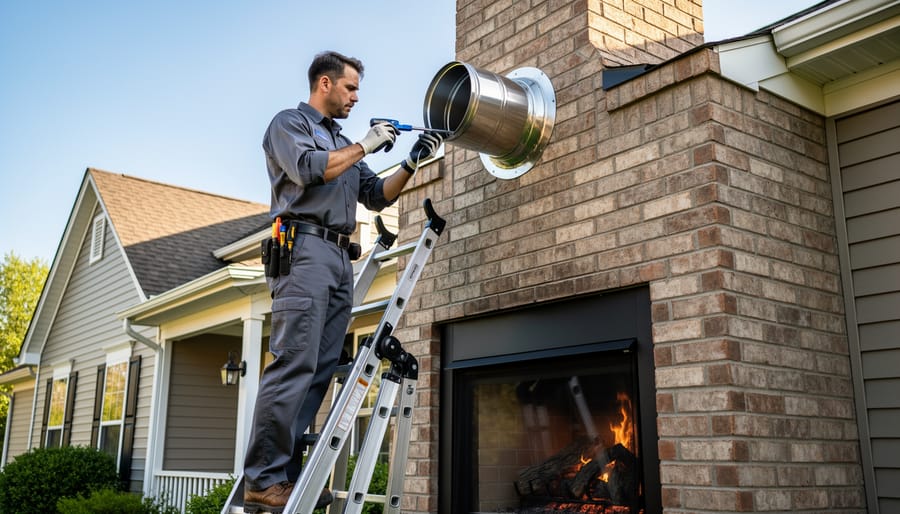
Cost Considerations and What You’re Really Paying For
Understanding what you’re investing in helps you make smart decisions about your fireplace insert venting system. Typically, you’re looking at costs ranging from $1,500 to $4,500 for a complete venting setup, including professional installation. This might seem like a significant investment, but remember that you’re paying for much more than just metal tubing.
The price tag reflects several crucial factors. Your chimney’s height and condition play the biggest role—a straight, 15-foot chimney costs considerably less to line than a 30-foot chimney with bends and offsets. The type of liner matters too. Flexible stainless steel liners are generally more affordable than rigid systems, while insulated liners cost more upfront but deliver better performance and energy efficiency. Think of insulation as an investment in your home’s comfort and your heating bills.
Material quality shouldn’t be negotiable when it comes to safety. A premium-grade stainless steel liner might cost 20 to 30 percent more than basic options, but it provides superior durability and corrosion resistance—especially important if you’re burning wood. This is where your venting system becomes part of your eco-friendly heating solution, ensuring efficient combustion and minimal heat loss.
Labor typically accounts for 40 to 60 percent of total costs, and for good reason. Professional installers bring expertise, proper tools, and most importantly, they ensure code compliance and safety. They’re also equipped to handle unexpected challenges like damaged chimneys or difficult access points.
Budget wisely by getting multiple quotes from certified installers, but avoid choosing solely based on the lowest price. Quality installation protects your family and your investment, making it worth every penny.
Understanding your fireplace insert venting requirements isn’t just about following code—it’s about creating a safer, more efficient home where you and your loved ones can truly relax. Proper venting is an investment that pays dividends in peace of mind, lower energy bills, and the warm, inviting atmosphere you’ve been dreaming about. When you grasp the fundamentals of venting systems, you’re empowered to make confident decisions that align with both your lifestyle goals and your commitment to sustainable living.
Think of venting knowledge as your roadmap to transforming your space into the cozy retreat it deserves to be. Whether you’re working with a professional installer or tackling a DIY project, understanding what’s required protects your investment and ensures your fireplace operates at peak performance for years to come. The path to efficient, eco-friendly heating starts with the right foundation, and that foundation is proper ventilation. Take what you’ve learned here and move forward with confidence—your ideal fireside experience is well within reach, backed by safety and sustainability every step of the way.