

Handmade clay cooking pots transform everyday meals into nourishing experiences while connecting your kitchen to centuries of artisan tradition. These porous earthenware vessels require intentional care from the moment they arrive at your doorstep. Season new pots by submerging them in water for 24 hours, then rubbing the unglazed exterior with garlic or onion before their first use—this ancient technique seals the clay and prevents cracking. Always bring clay pots to temperature gradually on low heat, never placing them directly on high flames or in preheated ovens, as thermal shock will fracture even the finest craftsmanship.
The natural clay breathes during cooking, creating tender, moisture-rich dishes impossible to replicate in metal cookware. This same porosity demands specific cleaning methods: use only warm water and gentle scrubbing, avoiding soap that penetrates the clay and flavors future meals. After washing, air-dry pots completely before storage to prevent mildew in the microscopic pores.
Understanding your clay pot’s needs protects both your investment and the livelihood of skilled artisans keeping traditional techniques alive. Like tending a hearth fire that warms your entire home, maintaining these handcrafted vessels becomes a mindful practice—one that honors sustainable living while filling your kitchen with the earthy aromas of slow-cooked comfort. With proper attention, your clay pot becomes a cherished heirloom, seasoning with each use and deepening its cooking performance across generations.
The Art Behind Your Handmade Clay Pot
What Sets Handmade Apart from Mass-Produced
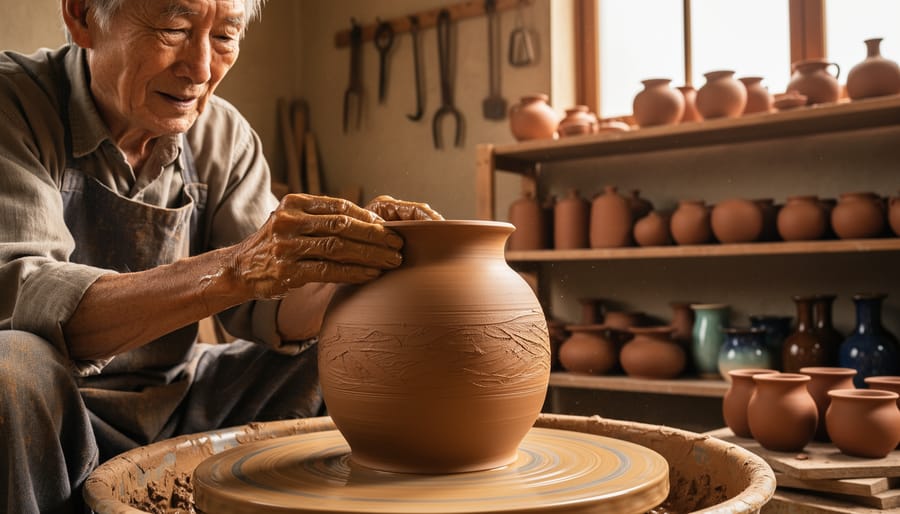
When you hold a handmade clay cooking pot, you’re experiencing something truly special compared to factory-made ceramic cookware options. Artisan potters shape each piece individually, often on a traditional wheel, creating subtle variations that give your pot its unique character. The clay itself typically contains natural minerals without synthetic additives, making these pieces wonderfully eco-friendly additions to your kitchen.
The firing process makes a significant difference too. Traditional kilns fire at slightly lower, more variable temperatures than industrial equipment, which creates a more porous structure. This porosity is actually beneficial for cooking, as it allows moisture to move through the clay walls, creating tender, flavorful dishes. However, this same quality means your handmade pot needs gentler care than mass-produced versions.
Think of it like caring for a cast-iron skillet versus a nonstick pan. Your handmade clay pot develops character over time through proper seasoning and use. It may require a bit more attention, especially during the first few uses, but this investment pays off in superior cooking performance and a piece that truly becomes part of your home’s story, much like a well-maintained fireplace becomes the heart of a living space.
The Natural Materials That Make Clay Special
Clay’s beauty lies in its simplicity. Formed from earth and water, these handmade cooking pots embody sustainable living at its finest. Unlike modern cookware with synthetic coatings, pure clay is completely natural and free from chemicals, making it a wonderfully eco-friendly choice for your kitchen.
What makes clay truly remarkable is its porous nature. Those tiny air pockets throughout the material allow your pot to breathe during cooking, creating gentle, even heat distribution that modern pans simply can’t replicate. This porosity means your clay pot actually absorbs subtle flavors over time, seasoning itself naturally with each meal you prepare. Think of it as building character and depth into your cookware, much like the patina that develops on a well-loved cast iron skillet.
This same porous quality does require some thoughtful care, though. Clay naturally absorbs moisture, which is why you’ll often soak your pot before cooking. This prevents it from drawing moisture from your food and helps maintain that signature tender, juicy texture clay cooking delivers. The trade-off for this remarkable cooking performance is gentle handling and proper drying between uses to prevent any unwanted odors or mold. It’s a small investment of care for cookware that connects you to centuries of wholesome, earth-friendly cooking traditions.
Preparing Your Clay Pot for Its First Use
The Overnight Soak Method
Before your handmade clay cooking pot ever touches heat, it needs a proper introduction to water. Think of this overnight soak as a gentle awakening for the clay, preparing it to handle the temperature changes that come with cooking.
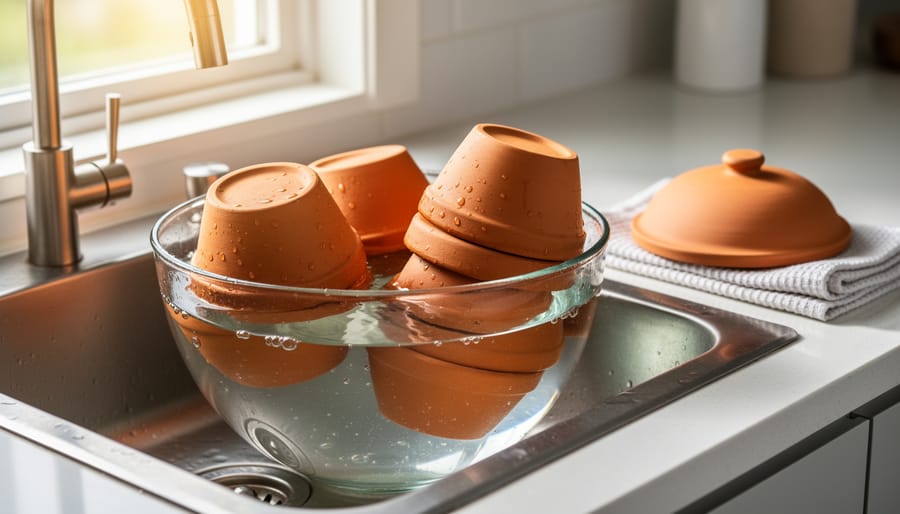
Start by placing your new clay pot in a clean sink or large basin. Fill it completely with cool, clean water until it reaches the brim. Then, submerge the entire pot, including the lid, ensuring water covers every surface. You’ll likely notice tiny bubbles rising from the clay as it drinks in the moisture. This is exactly what you want to see.
Let your pot rest undisturbed for at least 8 to 12 hours, though a full 24 hours is even better for thicker pieces. During this time, the clay’s porous structure absorbs water deep into its walls, creating essential moisture that prevents cracking when you introduce heat. This natural process is part of what makes clay cookware so special for eco-friendly cooking traditions.
After soaking, you’ll notice the pot feels noticeably heavier and the clay has darkened in color. This transformation signals your pot is ready for the next step in its seasoning journey, bringing you closer to experiencing the authentic flavors that only clay cooking can deliver.
Your First Firing: Building Heat Gradually
Think of your handmade clay pot like a cherished friendship that needs a gentle introduction. The first firing is crucial because clay is surprisingly sensitive to sudden temperature changes, and rushing this process can lead to heartbreaking cracks or worse.
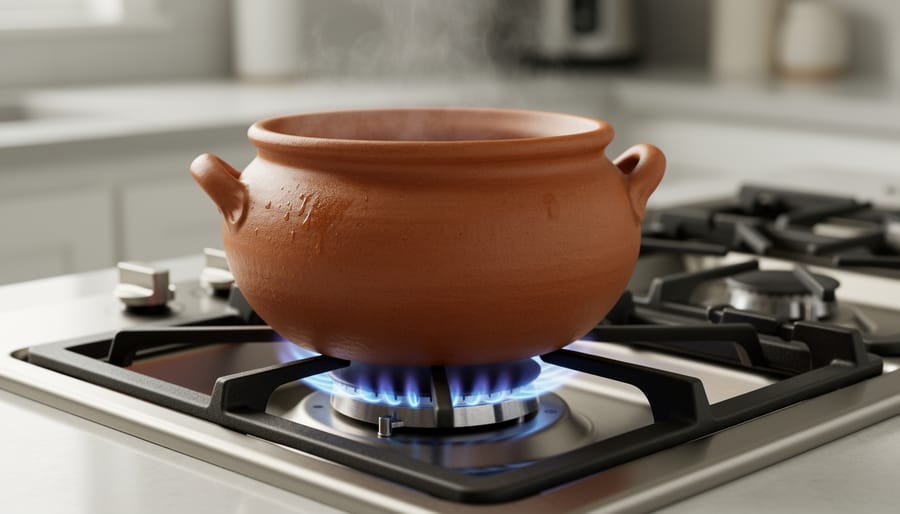
Start by placing your room-temperature pot on a cold stovetop or in a cold oven. This is essential because introducing clay to sudden heat is like jumping into a hot tub without testing the water first. Turn your burner to the lowest setting possible, or set your oven to around 200°F. Let your pot warm gradually for about 10-15 minutes at this gentle temperature.
After this initial warming, increase the heat incrementally every 10 minutes. For stovetop cooking, move from low to medium-low, then to medium over the course of 30-40 minutes. In the oven, raise the temperature by 50-degree intervals until you reach your desired cooking temperature. This patient approach allows the clay’s molecules to expand evenly, preventing the stress fractures that occur when one part heats faster than another.
Here’s a helpful tip: always add a bit of liquid to your pot before heating. Even a quarter cup of water or broth creates a buffer that helps distribute heat more evenly throughout the clay walls. This eco-friendly cooking method might take more time than modern cookware, but it honors the artisan craftsmanship while protecting your investment for years of sustainable, delicious home cooking.
Cooking with Handmade Clay: What You Need to Know
Best Heat Sources for Clay Cookware
Your beautiful handmade clay cooking pot is wonderfully versatile, adapting to various heat sources when used with proper care. Understanding which methods work best will help you cook safely while preserving your artisan cookware for years to come.
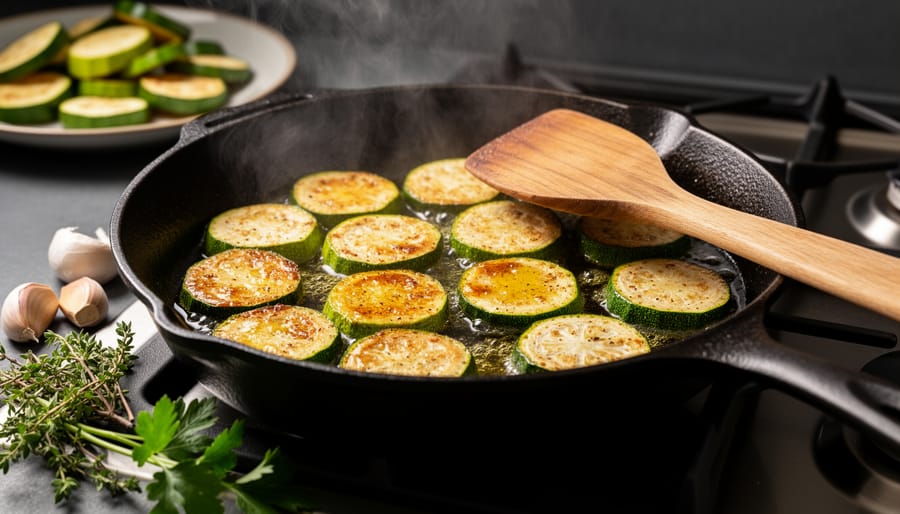
Gas stoves are excellent companions for clay cookware. The even, controllable flame allows you to adjust heat gradually, which clay appreciates. When using clay pots on gas stoves, always start with low heat and increase gradually. Never place a cold clay pot directly over high flames, as thermal shock can cause cracking. A heat diffuser adds an extra layer of protection, distributing warmth more evenly across the pot’s base.
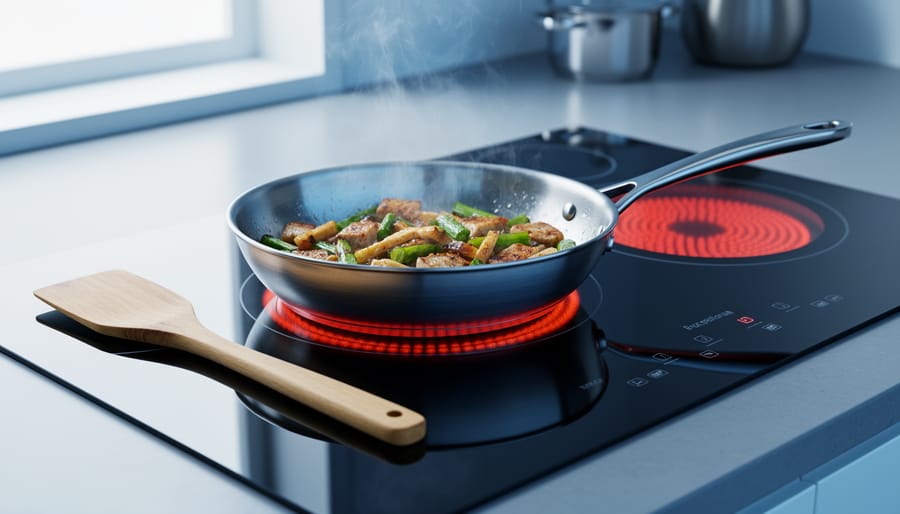
Electric ranges require extra attention. Coil elements work reasonably well with clay pots, though a heat diffuser is strongly recommended. Glass-top ranges present more challenges due to their flat, concentrated heat zones, which can create hot spots. If using electric heat, preheat your burner on low before placing your pot.
Clay cookware truly shines as oven-safe cookware. The surrounding heat mimics traditional earth oven cooking, creating wonderfully tender dishes. Always place clay pots in a cold oven and allow them to heat gradually with the oven temperature.
For those drawn to traditional cooking methods, open fires and fireplaces offer an authentic, eco-friendly experience. Place your clay pot on stable coals rather than direct flames, rotating occasionally for even cooking. This time-honored method connects us to generations of hearth cooking traditions while creating memorable meals in your home’s warm gathering space.
The Low-and-Slow Philosophy
Clay cooking pots embrace a beautiful paradox: their strength lies in their gentleness. Unlike metal cookware that conducts heat rapidly and unevenly, clay vessels work their magic through patient, gradual warmth. Think of it as the difference between a quick sprint and a leisurely walk—both get you there, but the journey creates entirely different experiences.
When you cook low and slow in a clay pot, you’re engaging with an ancient rhythm that simply can’t be rushed. The porous earthenware absorbs heat slowly and distributes it evenly throughout the entire vessel, creating a cocoon of consistent temperature that wraps around your ingredients. This gentle approach prevents the harsh temperature spikes that can toughen proteins or scorch delicate sauces.
The real magic happens as moisture circulates within the pot. Because you’ve soaked your clay vessel before cooking, it releases steam throughout the process, essentially allowing your food to braise in its own juices. This creates incredibly tender meats that fall off the bone and vegetables that maintain their integrity while becoming beautifully soft.
This method also deepens flavors in ways that high-heat cooking simply cannot achieve. Spices bloom slowly, releasing complex aromatics. Natural sugars caramelize without burning. Every ingredient has time to share its essence with its neighbors, creating layers of taste that develop hour by hour.
For those who appreciate the warmth and intentionality of traditional cooking methods, clay pot cookery offers a sustainable, eco-friendly approach that transforms meal preparation into a meditative practice—honoring both the craft and the ingredients themselves.
Daily Care That Keeps Clay Pots Beautiful
The Right Way to Clean Clay
Caring for your handmade clay cooking pot is simpler than you might think, though it does require a gentler touch than modern cookware. The porous nature of unglazed clay makes these vessels wonderfully efficient at heat retention, but it also means they need proper cleaning methods to preserve their unique qualities.
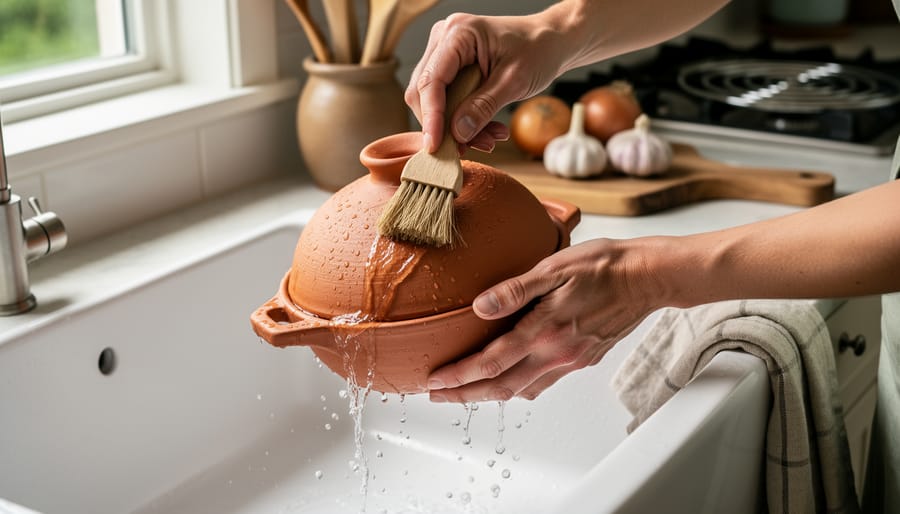
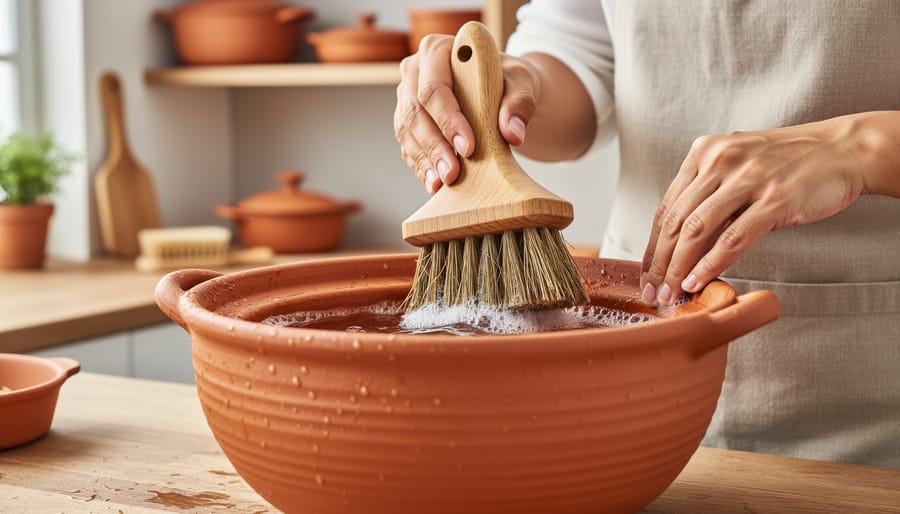
The golden rule? Keep soap to an absolute minimum. Clay’s porous surface absorbs whatever touches it, and soap can seep into those tiny air pockets, affecting the taste of your future meals. For everyday cleaning, warm water and a soft cloth or natural bristle brush work beautifully. Simply let the pot cool completely, rinse thoroughly, and gently scrub away any food particles.
When stubborn residue appears, resist the urge to reach for harsh detergents or abrasive scrubbers. Instead, create a natural paste using baking soda and water. Apply it to the affected area, let it sit for a few minutes, then gently scrub with a soft brush. For particularly persistent spots, fill the pot with warm water and add a tablespoon of baking soda, letting it soak for several hours.
After cleaning, always dry your clay pot completely before storing. Place it upside down in a well-ventilated area, allowing air to circulate freely. This eco-friendly cleaning approach not only protects your investment but also maintains the pure, earthy qualities that make clay cookware such a treasured addition to your home kitchen.
Drying and Storage Essentials
Proper drying and storage of your handmade clay cooking pots are essential for preserving these beautiful, eco-friendly pieces for years to come. After washing your pot, allow it to air dry completely before storing. Place it upside down or on its side in a well-ventilated area away from direct sunlight or heat sources. Never store a damp pot, as trapped moisture can lead to mold growth or unpleasant odors that affect your food’s flavor.
The ideal storage location is a cool, dry cupboard with good air circulation. If stacking multiple pots, place a soft cloth or paper towel between each piece to prevent scratching and allow air flow. Avoid storing your clay pot in a sealed plastic bag or airtight container, which can trap moisture and encourage mold.
For pots used occasionally, check them every few months to ensure they remain dry and fresh-smelling. If you notice any musty odors, simply air the pot out in sunlight for a few hours and re-season if needed. This gentle care routine honors the traditional craftsmanship of your artisan cookware while ensuring it remains a cherished part of your sustainable cooking lifestyle.
Troubleshooting Common Clay Pot Problems
Dealing with Stains and Discoloration
First, let’s put your mind at ease: those subtle color changes developing on your handmade clay pot are completely natural and actually a sign you’re using it well. Think of it as a patina, much like the seasoning that builds on a cherished cast iron skillet. This darkening, especially around the base and sides, tells the story of your cooking adventures and doesn’t affect performance or safety.
However, if you notice stubborn stains or discoloration that concerns you, there are gentle remedies. For minor marks, create a paste using baking soda and water, apply it to the stained area, and let it sit for 15-20 minutes before rinsing thoroughly. For more persistent discoloration, fill your pot with water and add two tablespoons of white vinegar, then bring it to a gentle simmer for about ten minutes. This eco-friendly approach lifts stains without harsh chemicals that could damage the clay’s natural properties.
Avoid bleach or abrasive cleaners entirely, as these can compromise the clay’s integrity and introduce unwanted chemicals into your cooking vessel. Remember, some staining simply adds character to your artisan cookware, much like the warm patina that develops on well-loved hearth tools over years of creating cozy home-cooked meals.
When Small Cracks Appear
Not all cracks signal the end of your cherished clay pot’s journey. Understanding which ones you can remedy and which mean it’s time to retire your cookware helps you make safe, informed decisions.
Hairline cracks that appear on the exterior, particularly near the rim or base, are often purely cosmetic. These surface imperfections rarely affect cooking performance. You can stabilize minor exterior cracks using a traditional milk remedy: simmer the pot in whole milk for 20-30 minutes, allowing the milk proteins to seal the fissure. Some artisans swear by a rice water soak as an eco-friendly alternative that achieves similar results.
However, cracks that penetrate through to the interior or appear near the bottom where heat concentrates require careful assessment. If water seeps through when you fill the pot, it’s compromised. Interior cracks can harbor bacteria and may worsen with temperature changes, creating safety hazards.
Deep structural cracks, especially those that widen during heating or show multiple branches, mean your pot has served its purpose. There’s no shame in retiring a well-loved cooking vessel—these handmade pieces naturally have finite lifespans, just like the traditional hearth cooking methods they embody.
When in doubt, prioritize safety over sentiment. A cracked pot makes a beautiful planter, honoring its craftsmanship while protecting your kitchen from potential hazards.
Seasonal Storage and Long-Term Preservation
When your fireplace cooking adventures wind down for the season, proper storage ensures your handmade clay pots remain in excellent condition for years to come. Think of this as tucking your cookware in for a restful period, protecting your investment in these beautiful, eco-friendly pieces.
Before storing your pots, ensure they’re completely clean and thoroughly dry. Any residual moisture trapped during storage can lead to mildew or, worse, cracking when temperatures fluctuate. Allow your pots to air dry for at least 48 hours in a well-ventilated area after their final cleaning.
Choose a storage location with stable temperatures, away from extreme heat or cold. Basements with high humidity aren’t ideal, nor are unheated garages where winter temperatures plummet. A pantry, kitchen cabinet, or climate-controlled storage room works perfectly. The goal is avoiding dramatic temperature swings that stress the clay’s natural structure.
Wrap each pot individually in clean cotton cloths or paper to protect against dust and accidental chips. Avoid plastic wrap, which can trap moisture. If stacking multiple pieces, place soft padding between them to prevent surface damage.
Consider your pots’ journey back to active use too. When bringing them out of storage, let them gradually adjust to room temperature before use, especially if they’ve been stored in a cooler space. This gentle transition respects the clay’s nature and prevents thermal shock.
With thoughtful storage practices, your handmade clay pots will be ready to enhance your hearth cooking experiences season after season, continuing their role in creating warm, memorable moments around your fireplace.
Caring for your handmade clay cooking pots is more than maintenance—it’s an investment in a lifestyle that values tradition, sustainability, and the simple pleasure of preparing meals with intention. These artisan pieces aren’t designed for convenience or speed, and that’s precisely their gift. They invite you to slow down, to tend the fire or stove more carefully, to savor the transformation of raw ingredients into nourishing meals.
When you embrace clay pot cooking, you’re joining countless generations who understood that the best things take time. The gentle, even heat these vessels provide creates flavors that modern cookware simply can’t replicate. More than that, you’re choosing an eco-friendly path—these pots are made from earth, require no industrial processes, and when properly cared for, can last decades or even become family heirlooms.
Your clay pot becomes seasoned with your cooking history, developing character with each use. The patina it develops tells the story of your kitchen, your favorite recipes, the warmth you’ve brought to your hearth. By giving these pieces the attention they deserve, you’re not just preserving cookware—you’re honoring craftsmanship, supporting sustainable living, and creating meaningful connections between your home, your food, and the earth itself.