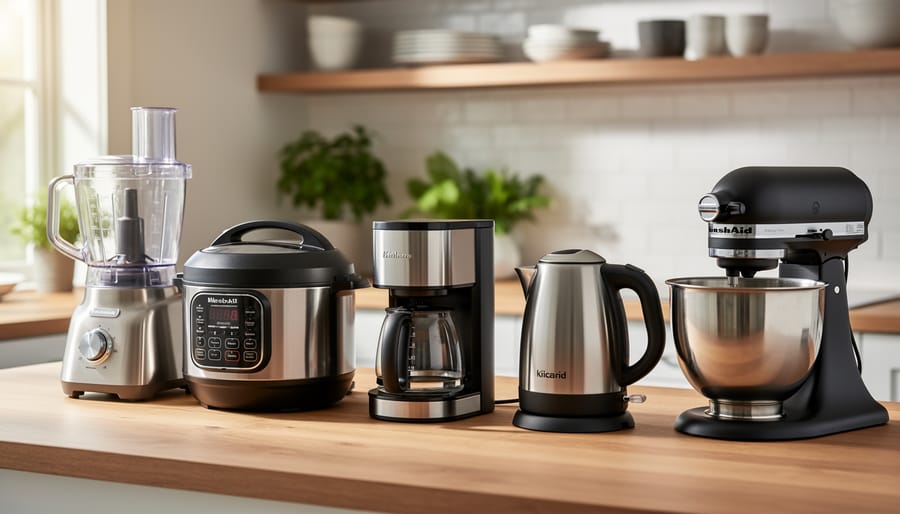


Prioritize energy-efficient models when building your small appliance collection—look for Energy Star ratings that can reduce your electricity bills by 10-50% annually while creating a more sustainable kitchen environment. Just as selecting the right heating solution transforms your living space, choosing appliances with proper wattage specifications (typically 300-1500W for small appliances) ensures they match your home’s electrical capacity and usage patterns.
Focus on multifunctional appliances that consolidate kitchen tasks: a quality food processor eliminates the need for separate choppers, slicers, and blenders, while a programmable multi-cooker replaces slow cookers, rice makers, and pressure cookers. This approach mirrors the efficiency mindset of modern homeowners who value both functionality and space conservation.
Examine motor power specifications for longevity—blenders need 500-1000 watts for consistent performance, stand mixers require 250-400 watts for dough preparation, and coffee grinders perform best with 150-200 watts. These numbers directly impact appliance lifespan and your ability to handle daily cooking demands without premature replacement costs.
Consider compact dimensions alongside capacity measurements: a 3-4 cup coffee maker suits small households, while 1.5-2 liter electric kettles provide versatility without counter clutter. Small kitchen appliances should enhance your daily rituals—from morning coffee to evening meal prep—creating the same warmth and comfort in your kitchen that a well-chosen fireplace brings to your living areas. Understanding these specifications empowers you to build a practical, energy-conscious appliance collection that serves your household’s unique needs while maintaining the cozy, intentional home environment you’re cultivating.
Understanding Small Electric Appliance Specifications
Power Consumption and Your Home’s Energy Profile
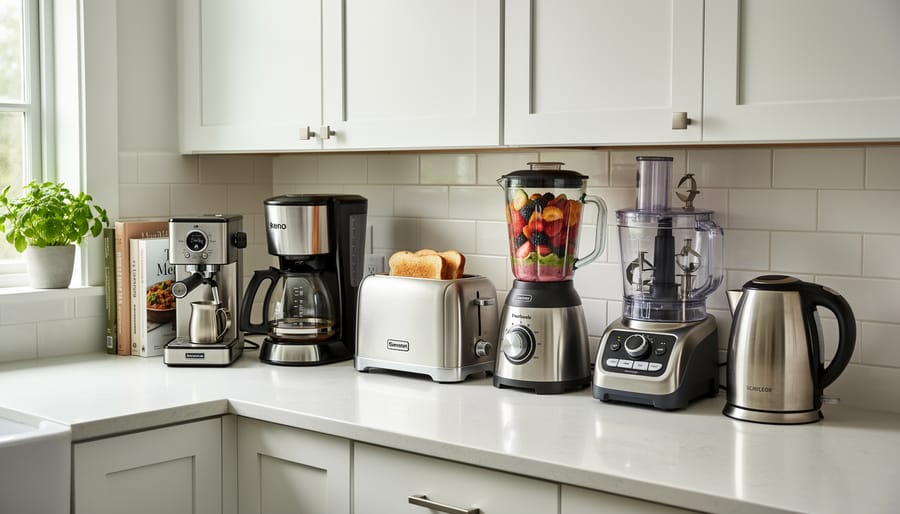
Understanding the power consumption of your small kitchen appliances is essential for creating an energy-conscious home that balances convenience with sustainability. Just as selecting an eco-friendly fireplace enhances your home’s warmth while minimizing environmental impact, choosing efficient kitchen appliances contributes to a more sustainable lifestyle throughout your entire living space.
Most small kitchen appliances range from 200 to 1500 watts, with items like coffee makers and toasters typically using 800-1200 watts, while blenders and food processors consume 300-700 watts. Smaller gadgets like electric can openers or milk frothers draw minimal power at 100-200 watts. These numbers matter because, similar to energy consumption concerns with heating systems, even compact appliances can impact your monthly utility bills when used daily.
When building your kitchen appliance collection, look for Energy Star ratings and efficient heating elements that reduce standby power consumption. Consider appliances with auto-shutoff features and programmable settings that prevent unnecessary energy waste. Multi-functional devices also deserve attention, as a single appliance that performs several tasks typically uses less cumulative energy than owning separate gadgets for each function.
Creating a cozy, efficient home extends beyond your fireplace to every corner of your living space. By selecting small kitchen appliances with favorable energy profiles, you’re making conscious choices that reduce your carbon footprint while maintaining the comfort and convenience that make a house feel like home.
Size, Capacity, and Counter Space Reality
Before you fall in love with that compact air fryer or sleek countertop oven, take a moment to measure your actual kitchen space. The glossy product photos rarely show how much room these appliances truly need. Start by measuring your available counter space, cabinet depth, and the clearance around existing appliances. Remember that proper appliance placement requires breathing room for ventilation and safe operation.
When evaluating capacity, think realistically about your household size and cooking habits. A 2-quart mini slow cooker might look adorable, but will it actually feed your family? Similarly, that 10-cup food processor may be overkill if you’re cooking for one or two people. Check the interior dimensions, not just the exterior footprint. Some appliances appear compact outside but offer surprisingly generous cooking space inside, while others do the opposite.
Consider your storage situation too. Will this appliance live on your counter permanently, or do you have cabinet space to tuck it away? Appliances that earn their counter real estate through daily use create a more efficient, welcoming kitchen where you’ll actually enjoy spending time.
Essential Small Electric Kitchen Appliances by Category
Coffee and Beverage Makers
There’s something wonderfully comforting about starting your morning with a perfectly brewed cup of coffee or tea, much like gathering around a warm hearth. Coffee and beverage makers have become essential companions in creating those cozy daily rituals that make a house feel like home.
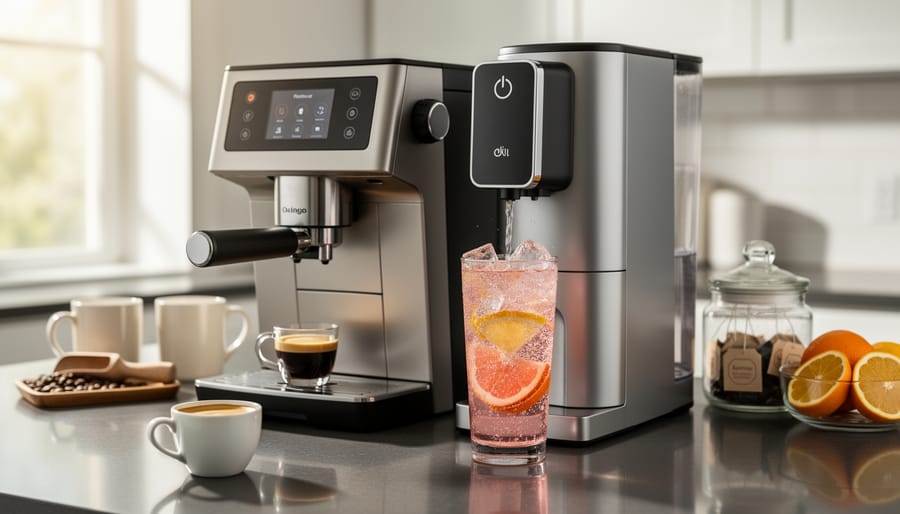
Coffee makers range from simple drip models to sophisticated programmable machines. Most standard drip coffee makers operate between 900-1200W and brew 8-12 cups in about 10 minutes. Look for models with brew-strength controls and thermal carafes that keep coffee hot without wasting energy on warming plates. Programmable timers let you wake up to freshly brewed coffee, adding comfort to your morning routine.
Electric kettles are remarkably efficient, typically using 1200-1500W to boil water in just 3-5 minutes. This makes them more energy-conscious than stovetop kettles or microwaves. Temperature control features are valuable for tea enthusiasts, as different teas require specific water temperatures. Variable temperature settings usually range from 160°F to 212°F, ensuring optimal flavor extraction.
Espresso machines bring café-quality beverages home, though they’re more substantial investments. These machines typically draw 1000-1500W and include pressure pumps rated at 15 bars for authentic espresso extraction. Consider capacity needs: single-serve units are compact, while larger machines accommodate multiple cups.
When choosing beverage makers, think about your daily consumption patterns, counter space, and energy efficiency. Models with auto-shutoff features and insulated components reduce unnecessary power consumption, aligning with mindful home management while delivering the warmth and satisfaction of perfectly prepared beverages.
Food Preparation Appliances
Food preparation appliances are the hardworking helpers that turn meal prep from a chore into a pleasure, much like how the right heating solution transforms a house into a warm, inviting home. Understanding their key specifications ensures you choose tools that truly match your cooking lifestyle.
Blenders are powered by motors ranging from 300 to 1500 watts, with higher wattage handling tougher ingredients like frozen fruits and nuts. Look for models with multiple speed settings, typically 3 to 10 speeds plus a pulse function, which gives you control for everything from gentle mixing to complete pulverization. Jar capacity varies from 32 to 72 ounces, and stainless steel or hardened plastic blades offer durability and performance.
Food processors share similar motor power ranges but focus on versatility with interchangeable blades and discs. Bowl capacity runs from 7 to 14 cups, perfect for chopping vegetables, shredding cheese, or making dough. Quality models feature stainless steel blades that stay sharp through years of use.
Hand mixers offer portability with motors between 150 and 300 watts and 5 to 9 speed settings. They’re energy-efficient options ideal for lighter tasks like whipping cream or mixing batters.
Stand mixers are the powerhouses, boasting 250 to 575 watts with 4.5 to 8-quart bowls. Their planetary mixing action and multiple attachments make them kitchen centerpieces for serious bakers. While they consume more energy, their efficiency in handling large batches actually reduces overall preparation time, supporting a more sustainable approach to home cooking.
Cooking and Heating Appliances
When it comes to bringing warmth and comfort into your kitchen, cooking and heating appliances do more than just prepare meals—they create that inviting atmosphere we all crave in our homes. These versatile tools transform your cooking experience while adding efficiency to your daily routine.
Toasters and toaster ovens are kitchen staples that deserve careful consideration. Standard toasters typically accommodate two to four slices and feature adjustable browning controls ranging from light to dark settings. Toaster ovens offer more flexibility, with temperature ranges usually spanning 150°F to 450°F and capacities handling everything from toast to small casseroles. Look for models with multiple rack positions and timer functions that provide automatic shutoff for peace of mind.
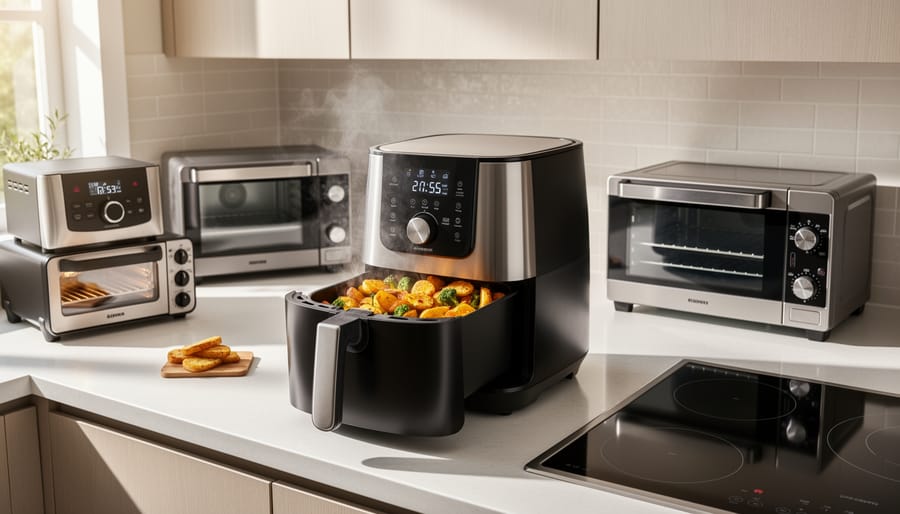
Air fryers have revolutionized home cooking by combining speed with healthier preparation methods. Most models operate between 180°F and 400°F, using rapid air circulation technology to achieve crispy results with minimal oil. Capacity matters here—smaller units hold 2-3 quarts suitable for couples, while family-sized versions reach 6-8 quarts. Digital controls and preset cooking functions make these appliances remarkably user-friendly.
Slow cookers bring that wonderful sense of coming home to warm, ready-to-eat meals. These energy-efficient appliances typically range from 1.5 to 8 quarts and operate on low settings around 190°F or high settings near 280°F. Many feature programmable timers and automatic warming modes.
Electric griddles provide consistent heating across flat cooking surfaces, usually offering temperature controls from 200°F to 425°F. Their nonstick surfaces and grease channels make them perfect for preparing family breakfasts while keeping energy consumption minimal—an eco-friendly choice for conscious homeowners.
Specialty and Convenience Appliances
These specialty appliances might not see daily use, but they can genuinely transform your kitchen routine when you need them. Think of them like adding the perfect accent to a cozy room—they bring something special to the space when called upon.
Electric can openers are worth considering if you have arthritis or limited hand strength. Look for models with automatic shut-off features and smooth-edge cutting mechanisms that prevent sharp lid edges. Most draw around 60-100 watts, making them energy-efficient helpers.
Juicers come in two main types: centrifugal (faster, more affordable, 400-1200 watts) and masticating (slower, better nutrient retention, 150-400 watts). If you’re committed to fresh juice regularly, a masticating juicer is the eco-friendlier choice with less oxidation and waste.
Waffle makers range from basic 800-watt models to Belgian-style versions requiring 1000-1400 watts. Nonstick plates are essential, and adjustable browning controls help you achieve perfect results every time. They’re wonderful for creating warm weekend breakfasts that bring the family together.
Panini presses typically need 750-1500 watts and should feature adjustable height controls to accommodate different sandwich thicknesses. Floating hinges ensure even pressing, while nonstick surfaces simplify cleanup.
Rice cookers (300-1000 watts depending on capacity) are absolutely worth the space if you regularly prepare rice or grains. Modern versions often include slow-cooking and steaming functions, making them surprisingly versatile. Look for models with automatic keep-warm settings and inner pots that are easy to clean.
Smart Kitchen Technology
Modern kitchens are embracing connectivity, and many small electric appliances now feature WiFi capabilities and smartphone app control. These smart appliances promise convenience through remote operation, recipe guidance, and automated cooking adjustments. However, it’s worth considering whether these features genuinely enhance your daily routine or simply add complexity.
Smart coffee makers can brew your morning cup before you leave bed, while intelligent toasters remember your preferred browning settings. App-controlled multi-cookers offer thousands of guided recipes with automatic temperature and timing adjustments. Some blenders even track nutritional information and suggest ingredient combinations based on what’s in your pantry.
The key specifications to examine include compatibility with your home’s WiFi network (most require 2.4GHz networks), whether the appliance functions without internet connectivity during outages, and how user-friendly the companion app truly is. Energy monitoring features can help you track consumption patterns, aligning with eco-conscious household management.
Before investing in smart kitchen technology, consider whether you’ll actually use these features regularly. A reliable, energy-efficient standard appliance often serves most households perfectly well. Smart features shine brightest when they solve specific problems in your cooking routine, not just because they’re technologically impressive. Test app interfaces when possible and read reviews about long-term connectivity reliability before making your purchase decision.
Eco-Friendly and Energy-Efficient Options
Just as you’d choose a fireplace that warms your home efficiently while respecting the environment, selecting eco-friendly kitchen appliances reflects the same thoughtful approach to creating a sustainable, comfortable living space. The good news? Many small electric kitchen appliances now offer impressive energy-efficient home solutions that reduce both your carbon footprint and utility bills.
Look for appliances with Energy Star certification, which guarantees they meet strict efficiency standards set by the EPA. These models use 10-50% less energy than conventional options without sacrificing performance. For instance, an Energy Star-certified toaster oven can cook your morning toast using significantly less power than heating up a full-size oven.
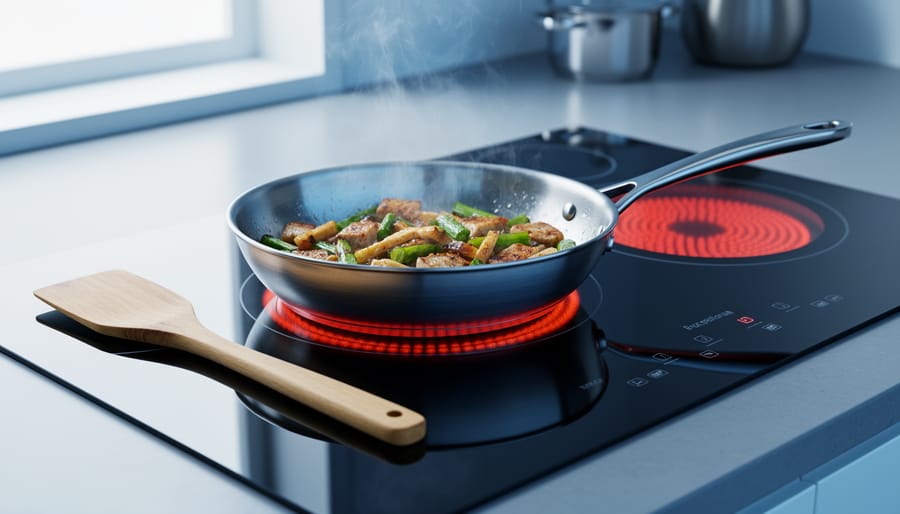
Pay attention to standby power consumption too. Many modern appliances feature auto-shutoff functions that prevent energy waste when not in use. Induction cooktops, for example, are game-changers—they heat 50% faster than gas or electric stoves while using less energy and keeping your kitchen cooler.
Consider appliances made from sustainable materials like recycled stainless steel, BPA-free plastics, or bamboo components. Brands increasingly prioritize recyclable packaging and repairable designs that extend product lifespan, reducing landfill waste.
Small changes add up. Choosing a high-efficiency blender, coffee maker, or slow cooker might seem modest, but when combined with other conscious choices throughout your home, you’re creating a genuinely sustainable lifestyle that honors both comfort and environmental responsibility.
How to Read Specification Sheets Like a Pro
When you’re browsing for that perfect countertop blender or toaster oven, specification sheets can feel like they’re written in another language. But here’s the thing: knowing how to decode these numbers transforms you from an overwhelmed shopper into a confident decision-maker.
Start with wattage, which appears on nearly every small kitchen appliance. While higher wattage generally means more power, what really matters is whether that power suits your needs. A 300-watt hand mixer handles cookie dough beautifully, but trying to use it for bread dough? That’s asking for trouble. Meanwhile, a 1500-watt blender might be overkill if you’re just making smoothies, and it’ll definitely impact your electricity bill more than a 600-watt model.
Capacity measurements deserve a skeptical eye. Manufacturers often list the absolute maximum capacity, but real-world usable space is usually about 20-30% less. If a food processor claims a 12-cup capacity, plan on comfortably processing around 8-9 cups. This isn’t dishonesty, just physics – you need room for ingredients to move and blend properly.
Watch for vague terms like “powerful,” “professional-grade,” or “restaurant-quality.” These sound impressive but mean absolutely nothing without specific performance metrics. Instead, look for concrete details: blade speeds measured in RPM, temperature ranges in actual degrees, or timer precision.
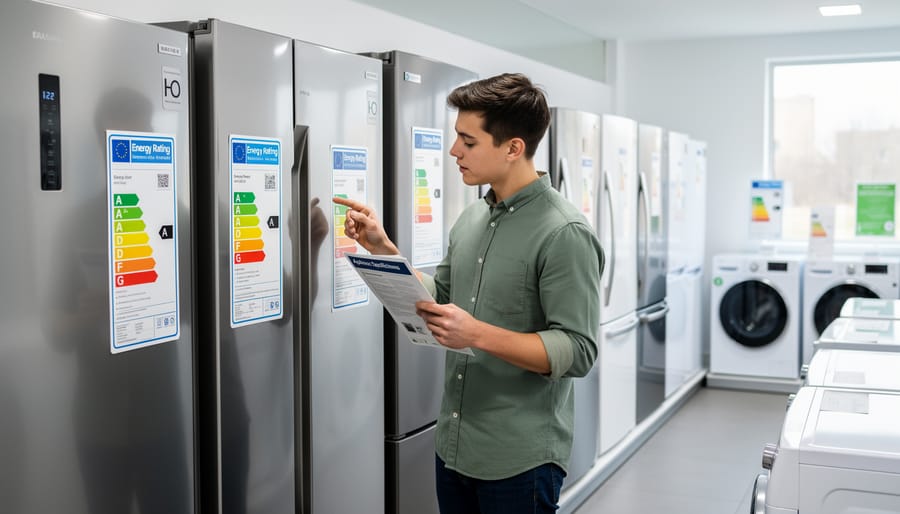
Energy efficiency ratings matter more than many realize. An Energy Star certified appliance might cost slightly more upfront, but it creates a cozier, more sustainable home while reducing monthly expenses. Think of it like choosing an efficient fireplace insert – the initial investment pays dividends in comfort and savings.
Pay attention to dimension specifications, especially interior versus exterior measurements. That sleek toaster oven might fit your counter, but will your 9×13 casserole dish actually fit inside? Check both. Also note cord length – surprisingly often overlooked until you’re rearranging your entire kitchen layout.
Finally, warranty length often signals manufacturer confidence in their product’s durability. A five-year warranty suggests quality construction, while a skimpy 90-day coverage? That’s a red flag worth heeding.
Matching Appliances to Your Lifestyle and Home
Before you start filling your kitchen with every appealing gadget, take a moment to think about what truly fits your life. Just as choosing the right heating solution depends on your home’s layout and your family’s needs, selecting kitchen appliances should reflect how you actually cook and live.
Start by honestly assessing your household size and cooking frequency. A single person or couple might thrive with a compact toaster oven and personal blender, while a family of five will need more robust options. Do you cook elaborate meals daily, or are you primarily reheating and preparing quick dishes? Your answers should guide your shopping list.
Consider your available counter and storage space alongside your electrical capacity. Older homes, especially those with charming character, may have limited outlets and circuit capacity. Plugging multiple high-wattage appliances into the same circuit can trip breakers and create safety hazards. Check your kitchen’s electrical setup before investing in power-hungry appliances like air fryers or electric pressure cookers.
Think about kitchen layout considerations too. Where will these appliances live? Items used daily deserve prime real estate on your countertops, while occasional-use gadgets should have designated storage spots. A cluttered kitchen feels anything but cozy.
Energy efficiency matters for both your wallet and the environment. Look for Energy Star ratings and consider how each appliance contributes to your home’s overall energy footprint. Small, efficient appliances that serve multiple purposes align beautifully with creating a warm, sustainable home environment. Choose appliances that earn their place through regular use rather than collecting dust, and your kitchen will become a more efficient, enjoyable space that complements your home’s welcoming atmosphere.
Creating a truly welcoming home means thinking beyond just heating solutions. The right small electric kitchen appliances transform your kitchen into a warm, inviting hub where family and friends naturally gather, complementing the cozy atmosphere you’ve cultivated throughout your living spaces. As you build your appliance collection, focus on specifications that genuinely match your lifestyle rather than chasing every trendy gadget.
Energy efficiency deserves special attention when selecting kitchen appliances. Look for Energy Star ratings and pay attention to wattage specifications, much like you’d consider the efficiency of modern heating solutions. These choices reduce your environmental footprint while keeping operating costs manageable, aligning perfectly with sustainable living principles.
Consider how each appliance fits into your daily routines and available counter space. A powerful blender might seem appealing, but if you rarely make smoothies, that countertop real estate could serve you better elsewhere. Think about warranty coverage, ease of cleaning, and replacement part availability as part of your decision-making process.
The warmth of a well-appointed home extends from your fireplace to your kitchen. By choosing appliances thoughtfully and prioritizing both functionality and sustainability, you’re investing in a lifestyle that values comfort, efficiency, and mindful living for years to come.