


Evacuate your home immediately if you smell gas—that distinctive rotten egg odor means danger. Once you’re safely outside, call RG&E’s 24-hour emergency line at 1-800-743-1701 from a neighbor’s phone or cell phone away from the building. Never turn electrical switches on or off, light matches, or use any device that could create a spark when gas is present.
For Rochester-area homeowners, understanding gas safety isn’t just about emergencies—it’s about protecting your family year-round, especially if you rely on gas fireplaces or heating systems for comfort. Natural gas leaks can occur from aging pipes, improper installations, or appliance malfunctions, making prevention and early detection essential skills for every household.
This guide addresses your immediate safety concerns first, then helps you understand how to prevent gas leaks through proper maintenance, recognize warning signs before they become emergencies, and ensure your gas appliances meet current code requirements. Whether you’re enjoying the ambiance of a gas fireplace or heating your home efficiently, knowing these safety protocols transforms your relationship with natural gas from anxious to confident, allowing you to embrace the warmth without worry.
Recognizing a Natural Gas Leak in Your Home
Your senses are your first line of defense when it comes to detecting a natural gas leak in your home. Understanding what to look, listen, and smell for can help you respond quickly and keep your family safe, especially if you rely on natural gas for heating or that cozy fireplace that anchors your living space.
The most recognizable sign of a gas leak is the distinctive sulfur or rotten egg smell. Natural gas is actually odorless in its pure form, but utility companies like RG&E add a chemical called mercaptan to give it that unmistakable odor. This safety additive is intentionally pungent so even a small leak becomes noticeable. If you catch a whiff of this smell near your fireplace, furnace, or anywhere in your home, take it seriously.
Sound provides another important clue. A hissing or whistling noise near gas lines, your meter, or appliances can indicate gas escaping under pressure. You might hear this near your gas fireplace connections or along pipes in your basement. Pay attention to any unusual sounds, especially if they’re accompanied by that sulfur smell.
Visual signs often appear outdoors but are equally important. If you notice dead or dying vegetation in an otherwise healthy area, particularly near underground gas lines, this could signal a leak. Bubbles rising in standing water, puddles, or wet areas near gas lines are another red flag. You might also see a white cloud, mist, or dust cloud near the ground blowing from underground, which occurs when gas displaces soil and creates a visible disturbance.
Being familiar with these warning signs helps protect your home and family while ensuring your gas heating systems and fireplaces operate safely and efficiently.
Immediate Steps When You Suspect an RG&E Gas Leak
If you suspect a gas leak in your home, every second counts. Natural gas is generally safe when properly contained, but a leak creates a serious hazard that requires immediate action. Here’s exactly what you need to do, in order:
First and foremost, evacuate everyone from your home immediately. Don’t take time to gather belongings or investigate the source of the smell. Get yourself, your family, and your pets outside to a safe location at least 100 feet away from your home. Leave doors open as you exit to help ventilate the area.
As you leave, resist the urge to turn on or off any lights, appliances, or electronic devices. This includes your phone. Even the tiny spark from flipping a light switch or touching a doorbell can ignite leaking gas. Don’t start your car if it’s in an attached garage, and avoid using anything that could create a spark or flame.
Never attempt to locate the leak yourself or shut off gas valves unless you’ve been trained to do so. Your job is simply to get to safety. This isn’t the time to play detective or hero, especially if you have a gas fireplace or other gas appliances that might be involved.
Once you’re at a safe distance from your home, call RG&E’s 24-hour emergency gas leak line at 800-743-1701. This number is staffed around the clock, every day of the year. RG&E will dispatch trained technicians immediately to assess and address the situation.
If you notice flames, hear a loud roaring sound, or if someone is injured or unconscious, call 911 first before contacting RG&E. Emergency responders and utility professionals will work together to secure the scene and protect your neighborhood. Your safety and the safety of your neighbors is the top priority in any gas leak situation.
How RG&E Responds to Gas Leak Reports
When you report a gas leak to RG&E, you can expect a swift and professional response designed to protect your home and family. Understanding their emergency protocol helps you feel confident during what can be an understandably stressful situation.
RG&E takes gas leak reports seriously, responding to emergency calls 24 hours a day, 7 days a week. Their commitment is to arrive at your location as quickly as possible, typically within an hour for emergency situations. This rapid response time reflects the utility’s understanding that gas leaks require immediate attention, whether they’re affecting your heating system, fireplace, or other gas appliances.
When the RG&E technician arrives, they’ll conduct a thorough investigation using specialized detection equipment to locate the source of the leak. This isn’t just a quick check—they’ll systematically test gas lines, connections, and appliances throughout your home. The technician will explain what they’re doing and keep you informed throughout the process, making the experience less intimidating.
If a leak is found on RG&E’s side of the meter, they’ll repair it at no charge to you. This no-cost emergency service policy means you shouldn’t hesitate to call when you suspect a problem. However, if the issue originates within your home’s private piping or appliances, you’ll need to arrange for repairs through a qualified contractor.
Once the immediate danger is addressed, the technician will provide guidance on next steps and answer any questions about your gas system’s safety, ensuring you feel secure in your home again.
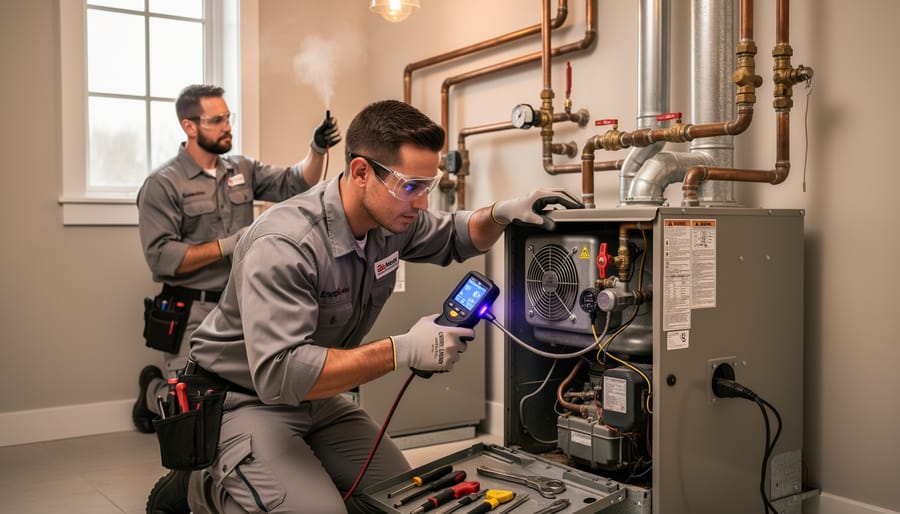
Common Causes of Gas Leaks in Home Heating Systems
Gas Fireplace Connection Vulnerabilities
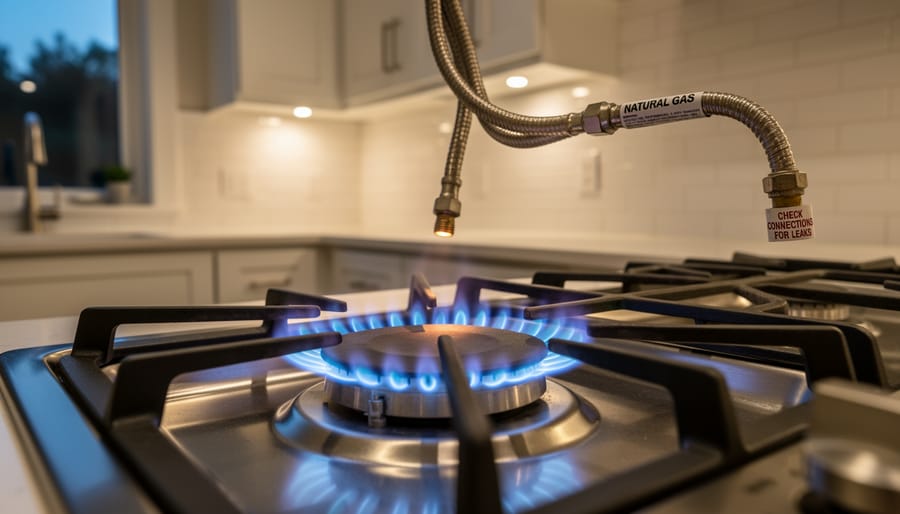
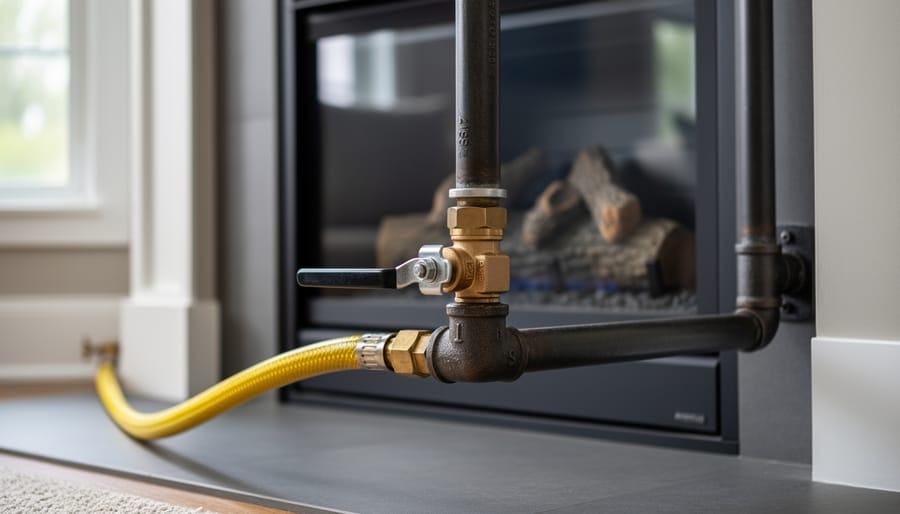
Gas fireplaces bring wonderful ambiance to your home, but they require careful attention to connection points where leaks commonly occur. The flex line connections that link your fireplace to the main gas supply are particularly vulnerable, especially if they weren’t properly secured during installation or have loosened over time. These flexible connectors, while convenient, need regular inspection to ensure they maintain tight, secure connections at both ends.
Your fireplace’s shut-off valve represents another critical checkpoint. This valve should operate smoothly and seal completely when closed. If you notice stiffness or hear hissing when the valve is in the off position, contact RG&E immediately. The pilot light assembly, with its small gas flow and numerous fittings, can develop leaks that are easy to overlook but potentially dangerous.
Ensuring code-compliant installations from the start prevents many connection vulnerabilities. Professional installers understand proper torque specifications and use appropriate sealants designed for gas applications. Annual maintenance checks should include testing all connection points with approved leak detection solutions, never just relying on your sense of smell, as natural gas additives can fade over time.
Seasonal Factors That Increase Leak Risk
Your home’s gas lines face unique challenges throughout the year, particularly during our Rochester winters and seasonal transitions. Understanding these seasonal risks helps you stay vigilant when your gas fireplace and heating systems need extra attention.
Winter’s freeze-thaw cycles place considerable stress on underground gas lines. As temperatures fluctuate above and below freezing, soil expands and contracts, potentially shifting pipes and loosening connections. This ground movement can create microscopic cracks or separate joints that may develop into leaks over time.
The transition periods between seasons deserve special consideration. When you restart your gas fireplace after months of summer inactivity, dried seals and gaskets may have deteriorated, allowing small leaks to occur. Similarly, connections that remained stable during consistent winter use might shift as you prepare systems for warmer months.
Spring thaw presents another vulnerable period. As snow melts and water saturates the ground, increased soil movement can affect outdoor gas line integrity. Heavy rain and flooding may also expose previously buried lines or cause erosion around connection points.
Make seasonal inspections part of your home safety routine. Before firing up your fireplace each fall, schedule a professional inspection. After harsh winters, check for any signs of ground shifting near gas meters or outdoor connections. This proactive approach keeps your family safe while maintaining the cozy warmth your home deserves.
Code Compliance for Gas Connections in New York
When you’re enjoying the cozy warmth of your gas fireplace or heating system in RG&E’s service area, it’s reassuring to know that multiple layers of safety regulations work behind the scenes to protect your home and family. Understanding these codes helps you ensure your gas connections meet proper standards and reduces the risk of dangerous situations like gas leaks.
In New York State, all gas installations must comply with the state’s building codes, which are based on nationally recognized standards. The primary framework comes from NFPA 54, also known as the National Fuel Gas Code. This comprehensive guide covers everything from proper pipe sizing to ventilation requirements for gas appliances. Think of it as the rulebook that keeps gas systems operating safely and efficiently throughout your home.
RG&E customers should be aware that local municipalities often add their own amendments to these state codes. Your town or county might have specific requirements regarding gas line installations, meter placement, or inspection procedures. It’s always wise to check with your local building department before starting any gas-related project, whether you’re installing a new gas fireplace or upgrading your heating system.
RG&E itself maintains specific requirements for gas service connections and appliance installations. These guidelines ensure that your equipment integrates safely with their distribution system. For instance, when installing a gas fireplace, you’ll need to follow fireplace safety codes that address proper clearances, ventilation, and gas line connections. Working with licensed professionals who understand both RG&E requirements and local codes is essential for any gas appliance installation, helping you create a warm, welcoming space while maintaining the highest safety standards for your family.
Safe Installation Practices for Gas Fireplaces and Heating Appliances
When it comes to gas fireplace and heating appliance installation, cutting corners isn’t just against code—it’s genuinely dangerous. Your home’s warmth and ambiance should never come at the expense of your family’s safety.
Always hire a licensed, certified gas professional for any installation or modification work. These experts understand local codes, RG&E requirements, and proper installation practices that protect your home. While DIY projects can be rewarding, gas work isn’t the place to learn on the job.
Your installer should use only approved materials—typically black steel or corrugated stainless steel tubing designed specifically for gas applications. Proper pipe sizing matters tremendously; undersized pipes restrict flow and create hazards. Each appliance needs an accessible shut-off valve within six feet, allowing you to quickly stop gas flow during emergencies or maintenance.
Ventilation cannot be overlooked. Gas appliances consume oxygen and produce combustion byproducts that must be safely exhausted. Modern direct-vent and sealed-combustion systems offer excellent efficiency while maintaining adequate ventilation—a win for both safety and eco-friendly heating.
Never skip permits and inspections. Yes, they add time and cost, but they ensure your installation meets current safety standards. These inspections catch issues before they become emergencies, giving you genuine peace of mind as you enjoy your fireplace’s cozy glow.
Remember, a properly installed gas fireplace becomes a cherished lifestyle element, providing years of safe, efficient warmth for your family.
Preventive Maintenance to Avoid Gas Leaks
Keeping your home’s gas systems in top shape isn’t just about safety—it’s about creating a more efficient, eco-friendly home environment. Think of preventive maintenance as your first line of defense against gas leaks, and the good news is that it’s easier than you might think.
Start by scheduling annual professional inspections with a qualified technician. These experts can spot potential issues before they become serious problems, checking everything from your gas fireplace to your water heater connections. Between professional visits, you can do your part with simple monthly visual checks. Look for any signs of wear around gas line connections, corroded fittings, or loose joints—these are often early warning signs.
Here’s a practical tip: walk through your home in a quiet moment and listen. That faint hissing sound near a gas appliance? It’s never normal and deserves immediate attention. While you’re being proactive, make sure you have carbon monoxide detectors installed near all sleeping areas and on every level of your home. Test them monthly and replace batteries twice a year—many people do this when changing clocks for daylight saving time.
If your home is more than 20 years old, consider having your gas lines inspected for potential upgrades. Older systems may not meet current safety standards, and modern lines are more efficient and environmentally friendly. Properly maintained gas systems use less energy, reducing your carbon footprint while keeping your family safe and your home cozy.
Gas leaks are undeniably serious situations that demand immediate attention and respect, but understanding how to respond shouldn’t leave you feeling anxious about enjoying the warmth and comfort of your gas fireplace. Knowledge is your greatest ally when it comes to home safety. By familiarizing yourself with the distinctive smell of natural gas, knowing exactly when to call RG&E’s emergency line, and understanding the simple steps to take during a suspected leak, you’ve equipped yourself to handle any situation with confidence.
Take a moment today to save RG&E’s emergency number in your phone, share it with family members, and post it somewhere visible in your home. Schedule that annual maintenance appointment for your gas fireplace and heating system—it’s a small investment that pays dividends in safety and efficiency. Consider these routine checks and professional inspections as essential care for the cozy gathering space your fireplace provides.
With proper preparation and regular maintenance, you can enjoy the inviting ambiance and eco-friendly warmth of your gas fireplace with complete peace of mind, knowing you’re creating a safe, comfortable haven for your family.