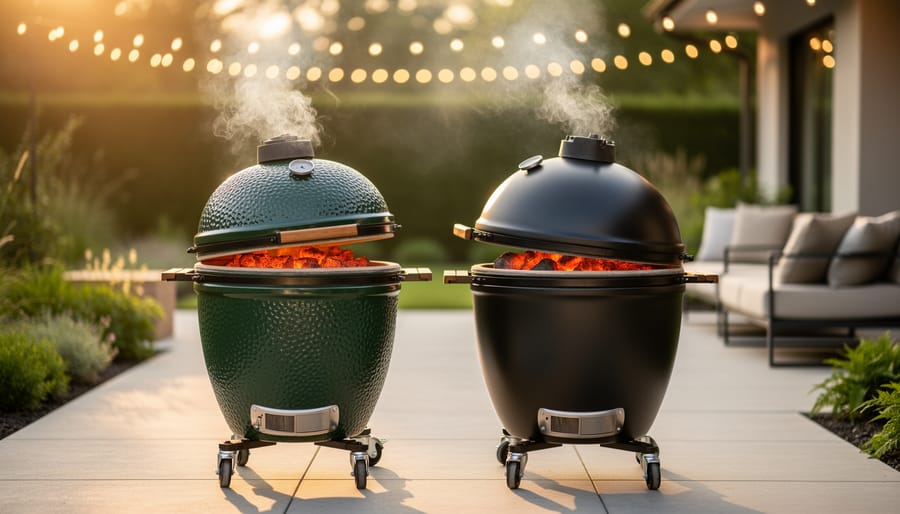


Standing in front of two kamado grills at your local outdoor store, you’re facing a question thousands of backyard cooking enthusiasts grapple with every year: Does the Big Green Egg’s iconic status and premium price tag deliver genuinely superior performance, or can alternative ceramic kamado brands give you the same exceptional cooking experience for hundreds less?
The truth is more nuanced than most retailers want you to know. While the Big Green Egg pioneered kamado cooking in America and maintains impressive brand loyalty, competitors like Kamado Joe, Vision Grills, and Char-Griller have engineered ceramic cookers that match—and sometimes exceed—the Egg’s capabilities at significantly lower price points. You’re not just paying for performance when you choose Big Green Egg; you’re investing in a specific ecosystem, warranty structure, and community that may or may not align with your actual grilling needs.
This comparison cuts through the marketing hype to examine what really matters: heat retention and distribution, build quality and longevity, accessory compatibility, customer support, and ultimately, whether that price difference translates to better brisket, pizza, or slow-roasted pork shoulder. Whether you’re a weekend warrior looking to elevate your outdoor cooking game or a serious pitmaster building your backyard retreat, understanding these differences ensures your investment delivers the warmth, flavor, and gathering space your home deserves for years to come.
What Makes a Kamado Grill Special (And Why Everyone’s Talking About Them)
If you’ve spent any time exploring outdoor cooking, you’ve probably noticed the buzz around kamado grills. These distinctive egg-shaped cookers aren’t just another trend—they’re actually based on an ancient Japanese cooking vessel that’s been refined over centuries. The word “kamado” literally means “stove” or “cooking range,” and these versatile grills have become the heartbeat of many outdoor living spaces, transforming backyards into year-round cooking destinations.
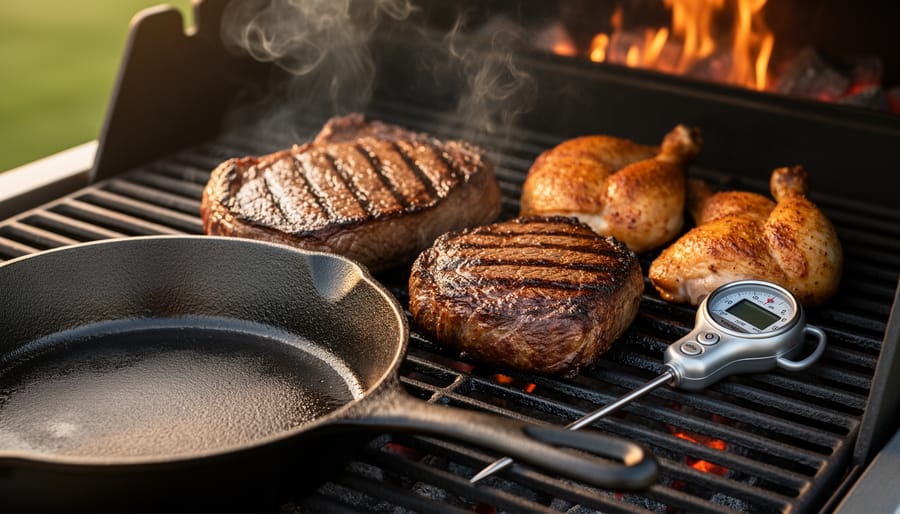
What makes kamado grills so compelling is their incredible versatility. Unlike traditional grills that do one thing well, a kamado can sear steaks at 700 degrees, slow-smoke brisket for 14 hours at 225 degrees, or even bake artisan pizza and fresh bread. This means you’re not just buying a grill—you’re investing in a complete outdoor cooking system that can handle everything from weeknight dinners to weekend entertaining.
The secret lies in their thick ceramic walls and the ceramic heat retention properties that make these cookers so efficient. That dense ceramic construction holds heat remarkably well, using significantly less charcoal than metal grills while maintaining rock-solid temperature stability. This efficiency isn’t just good for your wallet—it’s an eco-friendly approach to outdoor cooking that aligns with modern sustainable living values.
Beyond performance, kamado grills have become genuine lifestyle pieces. Their striking appearance and compact footprint make them perfect for patios, decks, and outdoor kitchens where space and aesthetics matter. They create a gathering point, much like an outdoor fireplace, where family and friends naturally congregate to enjoy both the cooking process and the warmth these grills radiate.
Whether you’re considering the iconic Big Green Egg or exploring other ceramic kamado options, understanding these shared benefits helps you appreciate why these cookers command such devoted followings—and why they might be the perfect centerpiece for your outdoor space.
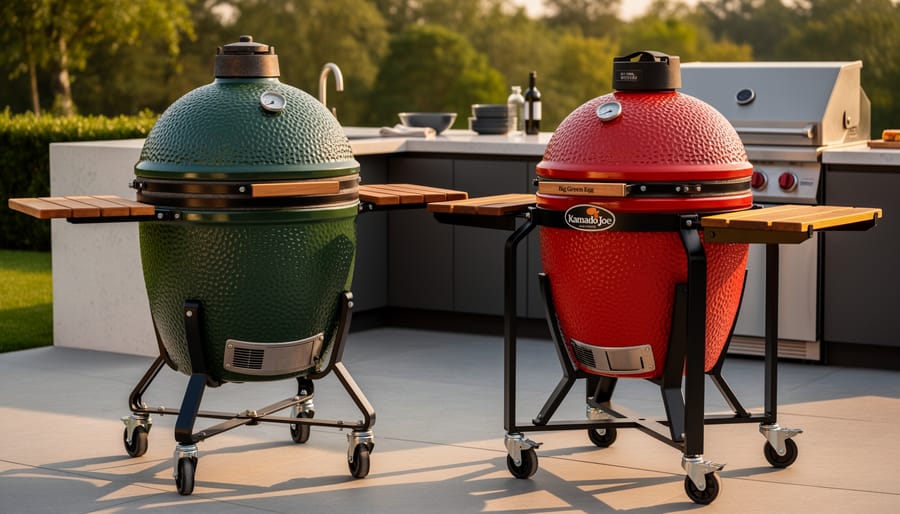
The Big Green Egg Legacy: More Than Just a Brand Name
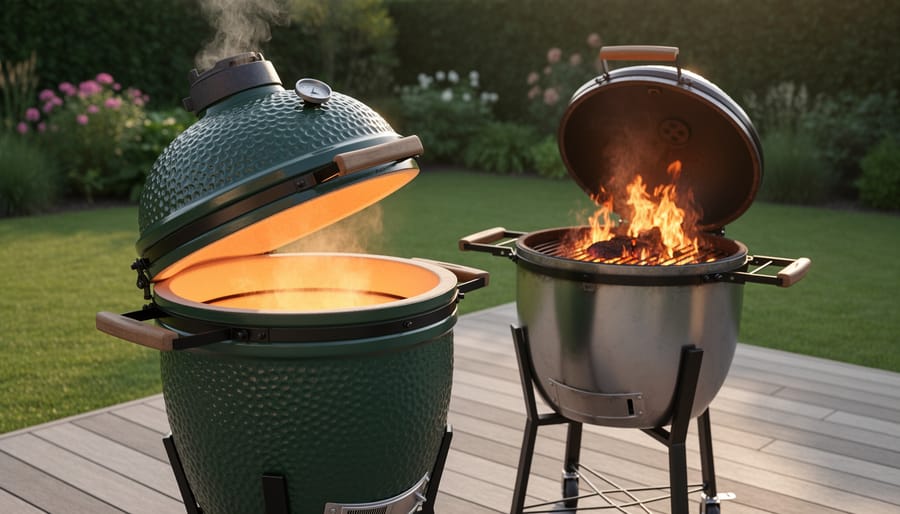
The BGE Lineup: Finding Your Size
Big Green Egg offers a thoughtful range of sizes to match your outdoor cooking lifestyle, from intimate gatherings to neighborhood feasts. The MiniMax is perfect for tailgating or small patios, handling meals for 1-2 people with its compact footprint. Step up to the Small for couples or small families, while the Medium becomes the sweet spot for most homeowners, comfortably feeding 4-6 people and fitting nicely on standard outdoor tables.
The Large model reigns as their bestseller, offering versatility for families of 6-8 with enough space for whole chickens, multiple racks of ribs, or a week’s worth of meal prep. For serious entertainers, the XLarge accommodates parties of 12-15, while the 2XL stands as the ultimate outdoor cooking centerpiece, capable of serving crowds of 20 or more.
Think of choosing your Egg size like selecting the right fireplace for your home—it’s about matching capacity to your lifestyle. A couple who loves weekend dinners won’t need the same cooking real estate as someone hosting monthly backyard gatherings. Most first-time buyers find the Large or Medium provides that ideal balance between everyday usability and party-ready performance, creating a natural gathering point that brings warmth and flavor to your outdoor living space.
What You’re Really Paying For
When you invest in a Big Green Egg, you’re buying more than just a ceramic kamado grill. The price tag includes several key elements that other brands may not offer as comprehensively.
First and foremost, BGE backs their ceramic components with a lifetime warranty. This isn’t a limited lifetime policy with fine print loopholes. The ceramic body, lid, and firebox are covered for as long as you own the grill, providing genuine peace of mind for what’s essentially an outdoor heirloom piece.
The dealer network makes a real difference too. Authorized BGE dealers provide face-to-face support, assembly assistance, and troubleshooting help. If something goes wrong, you’re not navigating automated phone systems or waiting weeks for email responses. You have a local expert who knows your specific grill and can often resolve issues quickly.
The accessory ecosystem is remarkably robust. BGE has spent decades developing and refining accessories that work flawlessly with their grills. From pizza stones to multi-level racks, convEGGtors to table nests, everything integrates seamlessly. While this means you’ll likely spend more on BGE-branded accessories, you’re also avoiding the frustration of ill-fitting third-party parts.
The brand also maintains extensive online communities and resources. Recipe databases, cooking classes, and user forums create a supportive environment for both beginners and experienced outdoor cooking enthusiasts. This ecosystem transforms your grill from a simple cooking tool into a lifestyle element that brings warmth and gathering to your outdoor space.
Generic Kamado Grills: The Competition That’s Heating Up
Innovation Leaders: Kamado Joe and Premium Alternatives
For years, Big Green Egg enjoyed its position as the premium kamado standard. But innovative brands like Kamado Joe saw an opportunity to push the category forward by introducing thoughtful improvements that genuinely enhance the outdoor cooking experience.
Kamado Joe made waves with its Divide and Conquer cooking system, a revolutionary multi-level, flexible cooking rack that transforms how you use the grill’s space. Instead of a single cooking surface, you can create different heat zones, smoking on one level while searing on another. It’s the kind of feature that makes you wonder why nobody thought of it sooner.
The air lift hinge was another game-changer. Anyone who’s wrestled with a heavy ceramic lid knows the struggle. Kamado Joe’s spring-assisted hinge makes opening and closing effortless, reducing strain and making your outdoor cooking sessions more enjoyable. It’s a small detail that makes a big difference in daily use.
Premium gaskets also entered the conversation through these innovations. High-temperature gaskets that maintain their seal longer and better became standard on many alternatives, improving heat retention and efficiency. These aren’t just bells and whistles—they’re practical improvements that affect your cooking results and fuel consumption.
What’s telling is that Big Green Egg has gradually adopted similar features in response, recognizing their value. This healthy competition benefits everyone who loves outdoor cooking, creating warmer gathering spaces where families can enjoy beautifully prepared meals together. The innovation race has elevated the entire kamado category, giving you better options regardless of which brand you choose.
Budget-Friendly Options That Don’t Compromise on Flavor
You don’t need to spend Big Green Egg money to enjoy exceptional kamado-style cooking at home. Several manufacturers have created outstanding ceramic kamados that deliver authentic performance at friendlier price points. Brands like Kamado Joe, Char-Griller Akorn, and Vision Grills offer excellent heat retention, moisture-locking capabilities, and that signature wood-fired flavor you’re after, often for 30-50% less than premium options.
What makes these alternatives particularly appealing is their commitment to quality without the luxury markup. You’ll find thick ceramic walls that maintain steady temperatures, efficient air flow systems, and generous cooking surfaces perfect for family gatherings. The cooking results are genuinely impressive, creating that same outdoor ambiance and bringing people together around delicious food.
For those watching their budget more carefully, metal kamado-style grills provide another path forward. While they may require slightly more attention to temperature management, modern insulated steel versions have closed the performance gap considerably. Think of it as choosing between a luxury fireplace and a well-designed efficient model—both create warmth and atmosphere, just with different investment levels. The key is matching your choice to how you’ll actually use it, ensuring years of satisfying outdoor cooking experiences.
Head-to-Head: Performance Where It Actually Matters
Temperature Control and Stability
Both kamado ceramic grills and the Big Green Egg excel at maintaining rock-solid temperatures, which is what makes ceramic cooking such a game-changer for your outdoor living space. The thick ceramic walls act like a thermal blanket, holding heat beautifully whether you’re perfecting low-and-slow smoking at 225°F or cranking up to 700°F for searing steaks.
In practice, both styles perform remarkably similarly. The Green Egg’s slightly thicker walls may hold temperature a hair longer during weather changes, but most alternative kamado brands have narrowed this gap considerably. What matters more is learning your specific grill’s personality—how to adjust the vents precisely for your desired temperature.
The learning curve is real but rewarding. Expect a few practice sessions to master airflow control, as ceramic grills respond more slowly than gas but hold steady for hours once dialed in. Many modern temperature monitoring systems can help you track performance while you’re learning.
The eco-friendly benefit here is significant: both options use far less fuel than traditional grills because that excellent insulation means you’re not constantly burning charcoal to compensate for heat loss.
Fuel Efficiency: Your Wallet Will Notice
Here’s something that’ll warm your heart and your wallet: both kamado-style grills and the Big Green Egg are remarkably fuel-efficient compared to traditional charcoal grills. The superior ceramic construction in both options means you’ll use significantly less charcoal per cook session.
In real-world testing, most users report burning through about half the charcoal they’d use in a standard kettle grill. A single load of quality lump charcoal can last 12-18 hours at low-and-slow temperatures, making weekend smoking sessions incredibly economical. The tight seal and thick ceramic walls trap heat so efficiently that you’re essentially getting more cooking power from every briquette.
Where the Green Egg and other kamado grills differ is minimal. Some users claim the Egg’s tighter tolerances reduce minor air leaks, potentially extending burn times by 30-60 minutes on long cooks. However, standard kamado grills with properly maintained gaskets perform nearly identically. Over a season of regular grilling, you might save enough on charcoal to buy a nice bottle of wine, but not enough to justify hundreds in upfront costs unless you’re cooking daily.
Cooking Space and Versatility
When it comes to creating memorable outdoor cooking experiences, both kamado ceramic grills and the Big Green Egg shine with impressive versatility. These dome-shaped beauties accommodate multiple cooking levels using adjustable racks and heat deflectors, allowing you to smoke brisket low and slow on one level while keeping sides warm above.
The Big Green Egg offers an extensive ecosystem of branded accessories, from pizza stones to multi-level cooking racks, though they come at premium prices. Generic kamado grills typically accept universal accessories that fit standard sizes, giving you more budget-friendly options without sacrificing functionality.
Both designs excel at temperature flexibility, ranging from gentle smoking at 225 degrees to pizza-oven blazing at 700-plus degrees. The real difference lies in accessory availability: Big Green Egg’s proprietary system ensures perfect fits but limits your choices, while alternative kamados embrace compatibility with third-party options.
For homeowners seeking to expand their outdoor entertaining space, either option transforms your patio into a versatile cooking haven. Consider how the accessory ecosystem fits your cooking style and budget when making your choice.
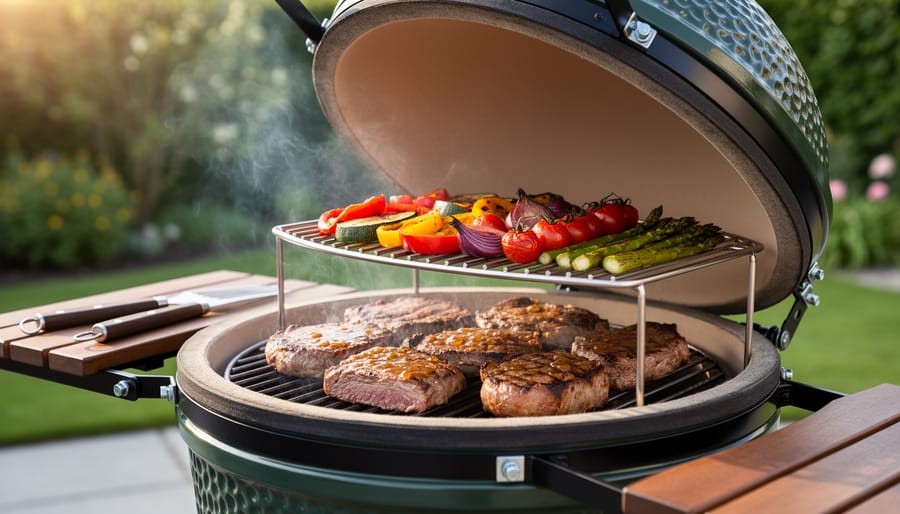
Build Quality and Longevity: What Holds Up Over the Years
When you’re investing in a kamado-style grill, you’re not just buying cooking equipment—you’re adding a centerpiece to your outdoor living space that should last for years, much like a quality fireplace becomes a permanent fixture in your home. Understanding how these grills hold up over time is essential to making the right choice.
The Big Green Egg has built its reputation partly on construction quality. Their ceramic walls typically measure between 3/4 to 1 inch thick, using a proprietary clay blend that’s been refined over decades. This thickness provides excellent heat retention and helps the unit withstand thermal shock—those rapid temperature changes that can crack lesser ceramics. The hardware components, including the spring-loaded hinge and stainless steel bands, are designed for longevity, though some users report surface rust on bands after several years of outdoor exposure.
Alternative kamado brands vary more widely in their construction approach. Some budget-friendly options use ceramic as thin as 1/2 inch, which can compromise both heat retention and durability. However, premium alternatives like Kamado Joe match or exceed the Big Green Egg’s ceramic thickness, using similar high-grade materials. The key difference often lies in quality control consistency—Big Green Egg’s manufacturing process results in fewer reports of ceramic defects or stress cracks.
Gasket longevity deserves special attention because it directly affects performance. Big Green Egg’s felt gaskets typically last 3-5 years with regular use, though you’ll need to replace them eventually—a simple maintenance task. Many alternative brands use similar gasket materials with comparable lifespans.
Real-world longevity reports reveal interesting patterns. Big Green Egg owners frequently report 10-20 years of use with minimal issues beyond routine gasket replacement and occasional hardware maintenance. Alternative kamado owners experience more variable outcomes—premium brands show similar longevity, while budget options may develop cracks, loose hardware, or thermal performance degradation within 5-7 years.
Weather resistance matters significantly for outdoor cooking equipment. Properly cared for ceramic grills from both categories can withstand years of weathering, though investing in a quality cover protects your investment regardless of brand. The ceramic itself is naturally weather-resistant, creating that cozy outdoor gathering spot where memories are made, season after season.
The True Cost of Ownership Beyond the Price Tag
When you’re considering a kamado grill investment, looking beyond that initial price tag reveals the complete financial picture. Let’s walk through what ownership really costs for both Big Green Egg and alternative ceramic kamado grills.
A large Big Green Egg typically starts around $1,000 to $1,200, while comparable kamado alternatives range from $500 to $800. That difference alone could cover a substantial accessory collection. However, the initial purchase is just your starting point.
Essential accessories add up quickly for both options. You’ll need a heat deflector for indirect cooking (around $80-$150), a quality cover ($50-$100), and likely a grill gripper or ash tool ($20-$40 each). Many cooking enthusiasts also invest in a raised grid system, pizza stone, or smoking accessories. Big Green Egg’s proprietary accessories often command premium prices, while generic kamado alternatives typically offer more budget-friendly options that fit multiple brands.
Here’s where things get interesting for your long-term budget. Both ceramic kamado grills are remarkably durable, but wear items need eventual replacement. Gaskets, hardware, and grates will require attention every few years. Big Green Egg’s extensive warranty coverage and established parts network provide peace of mind, though replacement parts carry that brand premium. Alternative kamados may have shorter warranties, but their replacement parts typically cost 30-50 percent less.
Let’s consider realistic five-year scenarios. A Big Green Egg setup might total $1,500-$2,000 including accessories and maintenance. A quality alternative kamado could run $1,000-$1,400 for similar capabilities. Both options hold their value remarkably well in the secondary market, with Big Green Eggs often commanding 50-60 percent of original price years later, while alternatives typically retain 40-50 percent.
The real question becomes whether that price difference matters for your outdoor cooking lifestyle and budget comfort zone.
Which Kamado Grill Belongs in Your Outdoor Space?
Choosing between a Big Green Egg and alternative kamado grills ultimately comes down to understanding your outdoor cooking ambitions and how this investment fits into your lifestyle.
If you’re a beginner enthusiast just discovering the world of kamado cooking, brands like Kamado Joe Classic or Vision Grills offer exceptional value without sacrificing performance. You’ll get authentic ceramic construction, temperature control capabilities, and years of reliable service while keeping your investment below $800. This approach lets you explore kamado techniques without the premium price tag, making it easier to justify expanding your outdoor cooking space with complementary features later.
Serious grillers who plan to use their kamado multiple times weekly and want the confidence of established customer support might find the Big Green Egg’s lifetime warranty and extensive dealer network worth the premium. The investment makes particular sense if you’re creating a permanent outdoor kitchen installation where brand recognition and resale value matter.
Value seekers should focus on ceramic alternatives that include accessories in their base package. Many kamados bundle heat deflectors, multi-level racks, and covers that would cost hundreds extra for a Big Green Egg. Calculate the total system cost, not just the grill price.
Space-conscious homeowners might prefer compact models like the Kamado Joe Jr. or similar 13-inch alternatives, which deliver full kamado functionality in apartment-friendly sizes.
The truth is, any quality ceramic kamado transforms your outdoor cooking experience. Your choice should reflect your budget comfort zone and how this piece fits into your vision for creating inviting outdoor spaces where family and friends naturally gather around great food and warmth.
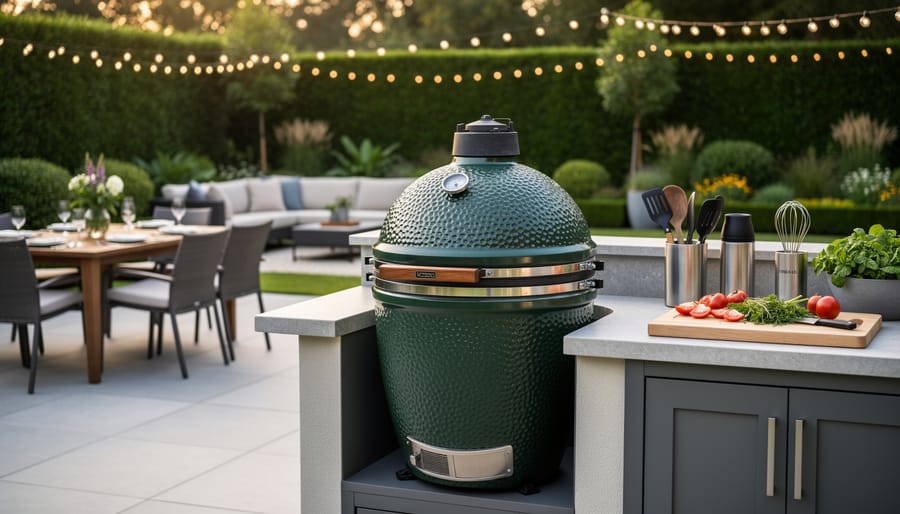
Here’s the truth: whether you choose a Big Green Egg or another quality kamado ceramic grill, you’re investing in something truly special for your outdoor cooking space. Both options can transform your backyard into a gathering place where friends and family naturally gravitate, drawn by incredible aromas and the promise of unforgettable meals.
The best choice really comes down to your individual priorities. If you value extensive community support, a proven track record spanning decades, and don’t mind paying premium prices for brand recognition, the Big Green Egg delivers. If you’re looking for similar performance with potentially better value, excellent warranties, and modern innovations, alternative kamado brands deserve serious consideration.
Think about how your outdoor cooking area fits into your home’s overall warmth and character. Just as a well-chosen fireplace becomes the heart of your indoor living space, a kamado grill can anchor your outdoor environment, creating that same magnetic pull that brings people together. Whether you’re slow-smoking brisket for twelve hours or searing steaks at scorching temperatures, these versatile cookers excel at creating memorable experiences.
The most important decision isn’t which brand you choose, but simply deciding to begin your kamado journey. These remarkable grills represent an eco-friendly approach to outdoor cooking, using less fuel while delivering exceptional results. So weigh your priorities, set your budget, and take that first step toward transforming your outdoor space into a true extension of your home’s welcoming atmosphere.