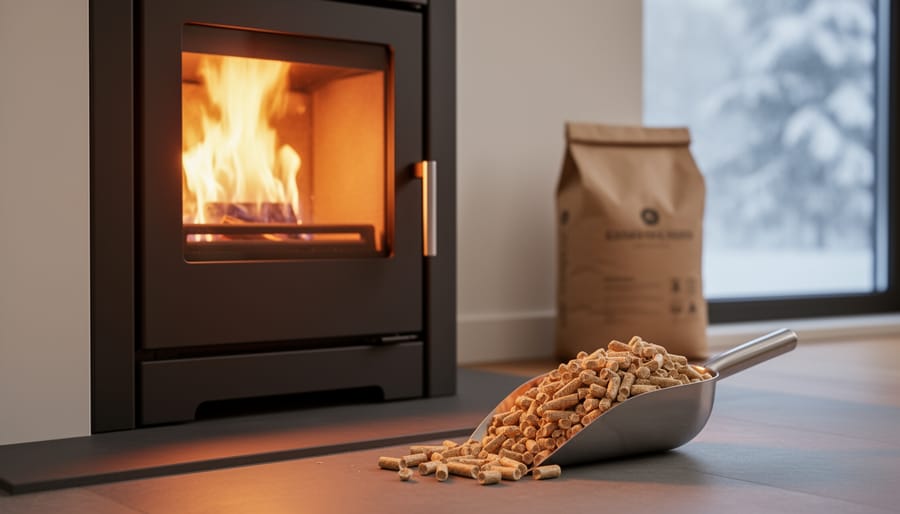


Choose pellets displaying the Pellet Fuels Institute (PFI) logo or European ENplus certification on the bag, which guarantee consistent heat output, minimal ash production, and reduced maintenance headaches. These stamps aren’t marketing gimmicks—they represent rigorous third-party testing that verifies moisture content stays below 8%, ash levels remain under 1%, and BTU ratings meet precise benchmarks that directly impact how warm your home gets and how often you’ll clean your stove.
Compare certified pellets against bargain alternatives by calculating cost per BTU rather than price per bag, since premium certified pellets typically produce 8,200-8,500 BTUs per pound while uncertified options may deliver 20-30% less heat despite appearing cheaper. You’ll burn through low-quality pellets faster, negate any savings, and subject your stove to excessive clinker buildup that shortens equipment life and voids warranties.
Verify certification claims by checking manufacturer websites or scanning QR codes many brands now include, as counterfeit labels occasionally appear on substandard products. Legitimate certifications require annual audits and random testing, meaning certified pellets maintain quality consistency across multiple bags and seasons—a crucial advantage when you’re relying on your pellet stove as a primary heat source during winter months.
Stock certified pellets from reputable dealers who store inventory properly in climate-controlled environments, since exposure to moisture degrades pellet performance regardless of initial quality. Your fireplace deserves fuel that burns cleanly, heats efficiently, and aligns with eco-friendly heating principles by maximizing energy extraction from renewable wood fiber.
Why Pellet Quality Standards Exist in the First Place
If you’ve ever wondered why there’s so much fuss about pellet certifications, you’re not alone. It might seem like just another layer of bureaucracy, but these quality standards actually exist to solve very real problems that pellet stove owners face every day.
First and foremost, pellet quality standards protect your investment. Your pellet stove or fireplace insert represents a significant financial commitment, and poor-quality pellets can cause serious damage over time. Low-grade pellets often contain excessive ash, moisture, or contaminants that lead to clinker formation—those stubborn, rock-hard deposits that can clog burn pots and damage critical components. Standards ensure pellets burn cleanly and won’t gunk up your equipment.
Consistency is another major reason these standards exist. When you’re relying on your fireplace as a lifestyle element and primary heat source, you need predictable performance. Certified pellets deliver reliable BTU output, meaning you can accurately gauge how much fuel you’ll need throughout the heating season. No surprises, no sudden temperature drops on the coldest night of winter.
Then there’s the maintenance factor. Nobody wants to spend their weekends scraping excessive ash and cleaning glass doors. High-quality, standardized pellets produce significantly less ash—sometimes as little as half the amount of uncertified alternatives—which translates to fewer cleaning sessions and more time enjoying your fireplace’s warmth and ambiance.
Finally, these standards support eco-friendly heating solutions. Certified pellets burn more efficiently, producing fewer emissions and particulate matter. This protects both your indoor air quality and the environment, making your heating choice genuinely sustainable rather than just convenient.
In short, pellet standards aren’t red tape—they’re your assurance of quality, performance, and peace of mind.
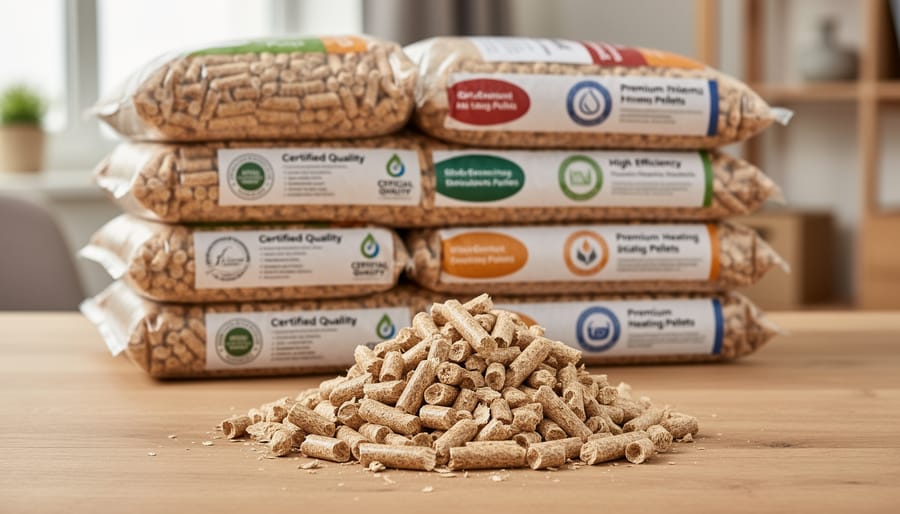
The Major Certification Programs You’ll Actually Encounter
ENplus: The European Gold Standard That’s Going Global
If you’re serious about getting the best performance from your pellet fireplace, you’ll want to become familiar with ENplus—Europe’s premier wood pellet certification that’s become the gold standard worldwide. Think of it as the organic label of the pellet world, giving you confidence in what you’re burning.
ENplus divides pellets into three distinct tiers, and understanding them helps you match fuel to your fireplace’s needs. ENplus A1 represents the premium category, made from virgin wood with minimal ash content (less than 0.7%). These pellets burn cleaner, produce less residue, and are ideal for modern, high-efficiency stoves where maintenance matters. If you’re someone who wants maximum heat with minimum fuss, A1 is your friend.
ENplus A2 pellets step down slightly, allowing up to 1.2% ash content. They might include chemically untreated wood waste alongside virgin materials. You’ll notice slightly more ash buildup, but they still deliver excellent performance at a more accessible price point. For most homeowners, A2 pellets strike that sweet spot between quality and value.
ENplus B pellets, with up to 2% ash content, are typically reserved for industrial heating systems rather than residential fireplaces. They’re perfectly functional but require more frequent cleaning—something most of us would rather avoid on chilly evenings.
What makes ENplus special isn’t just the quality benchmarks; it’s the comprehensive supply chain certification. Every step from production to your doorstep gets monitored, ensuring consistency. This European-born standard has earned global recognition because it delivers on its promise: reliable, eco-friendly heating that protects both your investment and the environment. When you see that ENplus seal, you’re buying peace of mind along with your pellets.
PFI Standards: America’s Answer to Quality Pellets
If you’re shopping for pellets in North America, you’ll want to become familiar with the Pellet Fuels Institute (PFI) standards. Think of PFI as America’s homegrown answer to Europe’s ENplus system, designed specifically for our market and climate needs.
The PFI certification program focuses on two main grades: Premium and Standard. Premium grade pellets contain less than one percent ash content, have minimal moisture (typically under six percent), and produce at least 8,200 BTUs per pound. These are your top-tier pellets that deliver consistent heat and leave your stove cleaner. Standard grade pellets allow for slightly higher ash content (up to three percent) and may produce a bit less heat, but they’re still perfectly suitable for most residential heating needs.
While ENplus tends to be more stringent in certain areas like fines content (those dusty particles at the bottom of the bag), PFI standards are tailored to American manufacturing processes and equipment. Both certifications ensure you’re getting quality fuel, though ENplus might have a slight edge in ultra-low ash performance.
The real beauty of PFI certification lies in its transparency. When you see that PFI logo on your pellet bag, you’re getting a guarantee that the manufacturer has submitted to regular testing and quality audits. This means fewer service calls, better heat output, and a cleaner burn throughout your heating season. For most homeowners, Premium grade PFI pellets strike the perfect balance between performance and value, making them an excellent choice for keeping your home cozy all winter long.
CANplus and Other Regional Certifications Worth Knowing
If you’re shopping across borders or considering imported pellets, you might encounter CANplus certification from Canada. This standard closely mirrors the premium PFI program but operates specifically within the Canadian market. CANplus-certified pellets typically meet stringent quality benchmarks for ash content, moisture levels, and heat output, making them comparable to their American PFI counterparts.
For homeowners in border regions or those ordering pellets online, understanding CANplus can open up additional purchasing options without compromising quality. The certification ensures Canadian-produced pellets deliver consistent performance in your fireplace or stove, regardless of where you live.
Beyond North America, European standards like ENplus dominate international markets. While less common in U.S. retail stores, you might find European pellets through specialty suppliers or when researching eco-friendly heating solutions online. These certifications matter most when you’re evaluating imported options or planning to use your fireplace as a primary heat source where fuel consistency becomes critical.
The practical takeaway? Regional certifications like CANplus function similarly to domestic standards, so focus on the quality indicators rather than getting caught up in geographic differences. Your fireplace will respond to pellet quality regardless of which certification label appears on the bag.
What These Certifications Actually Test (In Plain English)
Ash Content: Why Lower Numbers Save You Cleanup Time
Think of ash content as the housekeeping report card for your pellets. When wood pellets burn, they leave behind ash residue, and premium pellets certified to standards like PFI or ENplus typically contain 1% ash content or less. That’s remarkably low compared to uncertified pellets, which can produce three to five times more ash.
Why does this matter for your daily life? Less ash means you’ll spend significantly less time cleaning your firebox, ash pan, and exhaust system. Instead of cleaning every few days, quality low-ash pellets might only require attention once a week or even less, depending on how often you use your fireplace. That’s more time enjoying the cozy ambiance and less time with the vacuum and dustpan.
Beyond convenience, lower ash content also benefits your equipment’s health. Excess ash can accumulate in your stove’s burn pot and air passages, reducing efficiency and potentially causing malfunctions. Quality pellets with minimal ash help your system breathe easier, maintain optimal performance, and extend its lifespan. When you’re comparing pellet options, that seemingly small percentage difference in ash content translates directly into real-world maintenance savings and a cleaner, more enjoyable heating experience.
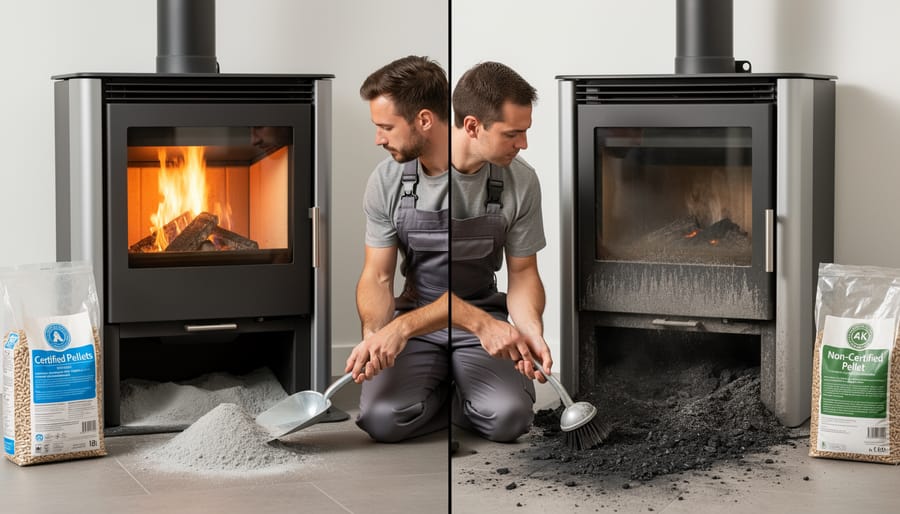
Moisture Content: The Secret to Efficient Burning
Think of moisture content as the difference between trying to light a fresh green branch versus a perfectly seasoned log. Wood pellets should contain no more than 8% moisture—and premium certified pellets typically stay well below 6%. This seemingly small percentage makes a dramatic difference in your fireplace’s performance.
When pellets contain excess moisture, you’re essentially burning water along with wood. This means lower heat output, more smoke, and that frustratingly slow burn that leaves you constantly adjusting your stove settings. Wet pellets also produce more creosote buildup in your chimney, creating potential safety hazards.
Properly dried pellets deliver efficient burning with consistent, controllable flames and maximum heat transfer to your living space. You’ll notice the difference immediately—cleaner glass, less ash, and more warmth per pound burned. This efficiency isn’t just about comfort; it’s about getting full value from every bag you purchase.
Quality certifications verify moisture levels through rigorous testing, giving you confidence that your pellets will perform as expected. Combined with proper storage techniques to maintain pellet quality after purchase, you’re ensuring optimal performance throughout the heating season.
Durability and Fines: Protecting Your Pellet Stove’s Mechanisms
Think of your pellet stove’s mechanics like a finely-tuned machine that deserves clean fuel. High-quality pellets with minimal dust and fines make all the difference in keeping your system running smoothly for years to come.
Durable pellets that hold together well during transport and handling protect your stove’s auger system from excessive wear. When pellets crumble easily, the resulting dust and fines can clog the auger mechanism, causing frustrating jams and potentially expensive repairs. These tiny particles also accumulate in your burn pot, creating uneven burning patterns and reducing heat output.
Premium certified pellets typically contain less than one percent fines, while lower-quality options might have three percent or more. That difference might seem small, but it translates directly into how often you’ll need to clean your stove and how long your equipment lasts. Less dust means fewer maintenance headaches and more time enjoying the cozy warmth of your fireplace as a lifestyle element in your home.
By choosing pellets that meet strict durability standards, you’re not just buying fuel; you’re investing in your stove’s longevity and your own peace of mind.
Heat Value (BTUs): Getting the Warmth You’re Paying For
When shopping for pellets, you’ll notice BTU ratings prominently displayed on bags—but what does this actually mean for your home’s comfort? BTU (British Thermal Unit) measures heat output, with quality pellets typically ranging from 8,000 to 8,500 BTUs per pound. Higher numbers translate to more warmth from less fuel, making your fireplace more efficient and keeping your heating costs down.
Here’s where certifications become your ally. Certified pellets must meet strict BTU consistency standards, ensuring the bag you buy in January performs just like the one from October. Without certification, you might face frustrating variations—one batch heating beautifully while the next leaves you reaching for a sweater. Think of it as investing in reliable warmth rather than gambling on inconsistent performance. Premium certified pellets deliver predictable heat output, helping you accurately calculate seasonal fuel needs while maintaining that cozy ambiance you’re creating as part of your lifestyle. It’s not just about staying warm; it’s about efficient, eco-friendly heating you can count on.
How to Read a Pellet Bag Like a Pro
Picking up a bag of pellets shouldn’t feel like decoding a secret message, but those labels can be overwhelming at first glance. Let’s break down what really matters when you’re standing in the store aisle, trying to decide if that premium bag is worth the extra few dollars.
Start with the certification logo. Look for the Pellet Fuels Institute (PFI) stamp, which is the gold standard in North America. This certification means the pellets have been independently tested and meet strict quality benchmarks for heat output, ash content, and moisture levels. Think of it as your quality assurance badge that these pellets will perform consistently in your fireplace.
Next, check the premium or standard grade designation. Premium grade pellets contain less than 1% ash content and deliver higher heat output, making them ideal for your home heating needs. Standard grade pellets have slightly more ash but can still work well if you don’t mind cleaning your stove a bit more frequently. The grade should be clearly marked on the front of the bag.
Pay attention to the raw material listed. Hardwood pellets typically produce more heat and less ash, while softwood pellets burn hotter but faster. Many quality brands use a mix. What you want to avoid are pellets with additives, fillers, or unclear material sourcing. If the bag doesn’t specify what’s inside, that’s your first red flag.
The specifications panel tells the technical story. Look for moisture content under 8%, ash content percentages, and BTU ratings. Higher BTUs mean more heat per pound, translating to better value for your money and fewer trips to restock your pellet supply.
Watch out for bags with excessive dust at the bottom, which indicates poor manufacturing quality. Also be wary of suspiciously cheap pellets without any certifications, unusually light bags that might contain filler materials, or packaging that doesn’t list basic specifications. Quality pellets are an investment in your comfort and your stove’s longevity.
The Real Cost Difference: Are Certified Pellets Worth the Premium?
Let’s talk about what’s actually in your wallet when you choose certified versus non-certified pellets. The price gap typically runs between $30 to $80 more per ton for certified pellets, which initially seems like a significant premium. But here’s where the math gets interesting.
Non-certified pellets might save you upfront, but they often contain higher moisture content and more ash. This means you’re burning more pellets to achieve the same heat output. In practical terms, if you’re using a ton of pellets per month during winter, inefficient pellets could require an extra 10-15% fuel to maintain your desired temperature. That premium you avoided? It just disappeared in extra bags of pellets.
The maintenance factor deserves serious consideration too. Homeowners burning non-certified pellets typically clean their stoves weekly versus biweekly with premium options. Beyond the time investment, you’re looking at more frequent professional cleanings. Annual maintenance costs can easily run $150-300 higher when burning lower-quality fuel, as technicians spend more time removing stubborn clinkers and creosote buildup.
Equipment longevity represents the hidden value in certified pellets. Your pellet stove is a significant investment, often $2,000-5,000 or more. Lower-quality pellets accelerate wear on augers, burn pots, and heat exchangers. Replacing these components runs hundreds of dollars, and premature equipment failure could mean replacing your entire unit years earlier than expected.
Here’s a real-world scenario: A homeowner burning four tons annually saves $200 choosing non-certified pellets. However, they spend an extra $150 on maintenance, use 15% more fuel (roughly $300 additional cost), and experience equipment issues requiring $400 in repairs. The actual annual loss totals $650 compared to using certified pellets.
The sweet spot for certified pellets comes when you’re seriously committed to reducing heating costs through your fireplace as a primary heat source. If you burn three or more tons annually, premium pellets typically pay for themselves within a single season through efficiency gains alone. For occasional users burning less than a ton yearly, the maintenance benefits still justify the modest price increase, protecting your investment while ensuring cleaner indoor air quality.
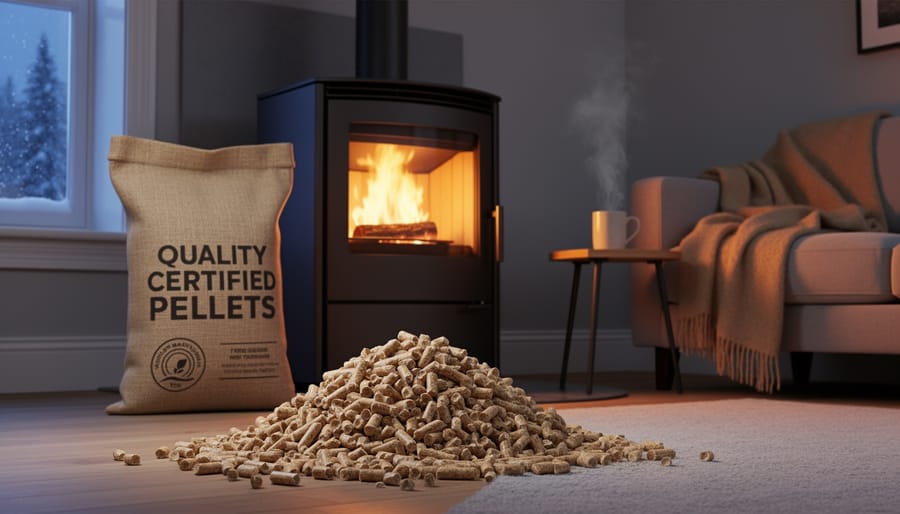
What Happens When You Use Non-Certified Pellets (Lessons from Real Homeowners)
Let me share some eye-opening stories from homeowners who learned the hard way about cutting corners on pellet quality.
Sarah from Vermont thought she’d found a bargain: pellets at half the price of certified brands. Within three months, her pellet stove required a $450 repair. The culprit? Excessive ash buildup from high-ash-content pellets clogged her burn pot and damaged the auger motor. “I saved maybe $100 on pellets,” she told us, “but spent four times that fixing the damage.”
Then there’s Mike in Colorado, who experienced what he called the “smoke show nobody wants.” Non-certified pellets with high moisture content created incomplete combustion in his fireplace, filling his living room with smoke during a holiday gathering. Beyond the embarrassment, he discovered his chimney needed professional cleaning six months early, costing another $200.
The ripple effects extend beyond immediate repairs. Homeowners consistently report that poor-quality pellets reduce heating efficiency by 20-30%, meaning you’re burning more fuel to achieve the same warmth. That budget bargain quickly evaporates when you’re feeding your stove extra pellets just to stay comfortable.
Perhaps most concerning are the hidden safety risks. Jessica in Maine noticed unusual creosote buildup after switching to discount pellets, a condition that significantly increases fire risk. Her annual inspection revealed dangerous accumulation levels that required immediate attention.
These real-world experiences highlight an important truth: certified pellets aren’t just about following rules. They’re about protecting your investment in equipment longevity, maintaining your home’s safety, and ensuring the cozy, efficient heating experience you deserve. The few extra dollars per bag for certified pellets pale in comparison to repair bills, safety hazards, and the frustration of unreliable heating when you need it most.
The Eco-Friendly Side of Pellet Standards
Choosing certified pellets isn’t just about keeping your fireplace running smoothly—it’s also one of the most meaningful choices you can make for the environment. When you see quality certifications on your pellet bag, you’re looking at a product that meets stringent environmental standards, not just performance benchmarks.
Certified pellets typically produce significantly lower emissions than their uncertified counterparts. We’re talking about reduced particulate matter, less ash, and cleaner burns that contribute to better air quality both inside your home and in your community. Those premium certifications you might have noticed? They often indicate pellets that burn at higher efficiencies, meaning you’re using less fuel to generate the same amount of warmth—a win for your wallet and the planet.
The sustainability story goes deeper than just what happens in your fireplace, though. Quality certifications frequently include requirements for responsible forestry practices. Many certified pellet manufacturers source their raw materials from sustainably managed forests or use wood waste that would otherwise end up in landfills. You’re essentially giving new life to sawdust, wood chips, and lumber scraps that are byproducts of other industries.
There’s also the waste factor to consider. Higher-quality certified pellets produce less ash, which means fewer trips to empty your ash pan and less material heading to the trash. Some homeowners find they can even use the minimal ash from premium pellets as a garden amendment, completing a full circle of sustainability.
When you choose certified pellets, you’re not just making a purchase decision—you’re casting a vote for manufacturing practices that prioritize environmental responsibility. It’s a simple way to align your home heating with your values, without compromising on the cozy ambiance you love.
Smart Shopping: Finding Quality Certified Pellets Near You
Finding quality certified pellets doesn’t have to be complicated once you know where to look and what to consider. Your local hearth and fireplace specialty stores are excellent starting points, as staff typically understand the nuances of different certifications and can recommend products suited to your specific stove model. Many hardware stores and home improvement centers now carry certified pellets too, though selection may be more limited.
Timing your purchases strategically can save you money and ensure availability. Buy pellets during summer months when demand is low and retailers often offer discounts. Many seasoned pellet stove users purchase their entire winter supply in June or July, taking advantage of early-bird pricing that can save 10-20% compared to peak season costs.
Bulk purchasing offers additional savings, but requires proper planning. A typical household burning pellets as a primary heat source uses 3-5 tons per season. Purchasing by the pallet (typically 50 bags) or multiple pallets reduces per-bag costs significantly. Just ensure you have adequate dry storage space before committing to large quantities.
Online retailers and agricultural cooperatives are increasingly popular sources, often offering competitive pricing and convenient delivery. However, inspect pellets upon delivery, checking bags for damage or moisture exposure during transport.
Quality maintenance doesn’t end at purchase. Proper storage best practices are essential for preserving pellet performance. Store bags on pallets or shelves, never directly on concrete floors where moisture can wick upward. Keep them in climate-controlled spaces whenever possible, as humidity degrades pellet quality and can void warranties. Rotate your stock using older bags first, and always keep bags sealed until ready to use. This attention to storage ensures your certified pellets deliver the efficient, clean-burning performance you paid for throughout the heating season.
Understanding pellet certifications doesn’t have to feel overwhelming. Now that you know what those labels mean, you can shop with confidence, knowing exactly what you’re bringing into your home. Quality certified pellets aren’t just about following rules – they’re about creating a more comfortable living space, protecting your investment in your heating system, and yes, saving money in the long run through better efficiency and fewer maintenance headaches.
Take a moment to check the bag of pellets you’re currently using. Look for those certification marks we’ve discussed. If you don’t see them, it might be time to reconsider your choice. Your fireplace deserves fuel that performs as beautifully as it looks, and you deserve the peace of mind that comes with knowing you’ve made an informed, eco-friendly decision. When you choose certified pellets, you’re not just buying fuel – you’re investing in warmth, reliability, and a cleaner future for your home.