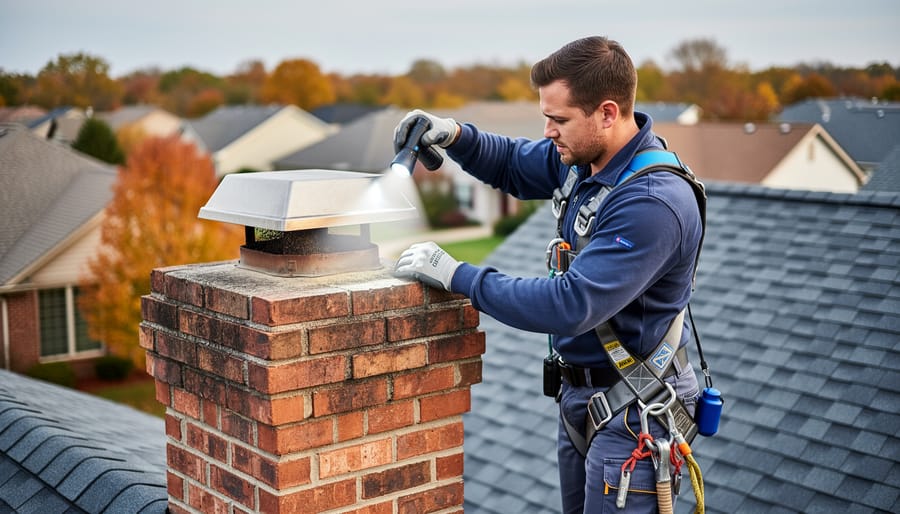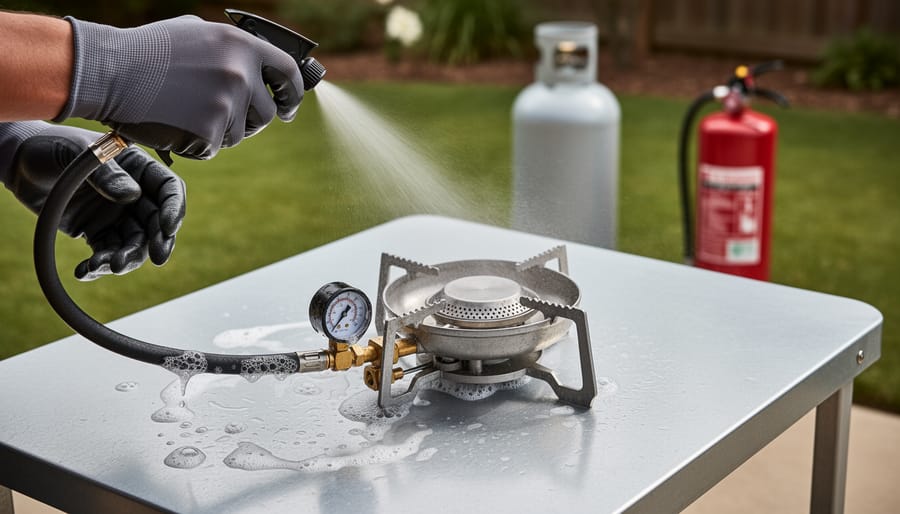


Verify your electrical clearances meet code requirements before installing or upgrading any fireplace system—the National Electrical Safety Code (NESC) and National Electrical Code (NEC) establish different standards, and homeowners working with fireplaces need to understand which applies to their project. The NESC governs utility company infrastructure and outdoor power lines, while the NEC controls residential wiring inside your home, making it the relevant code for most fireplace installations.
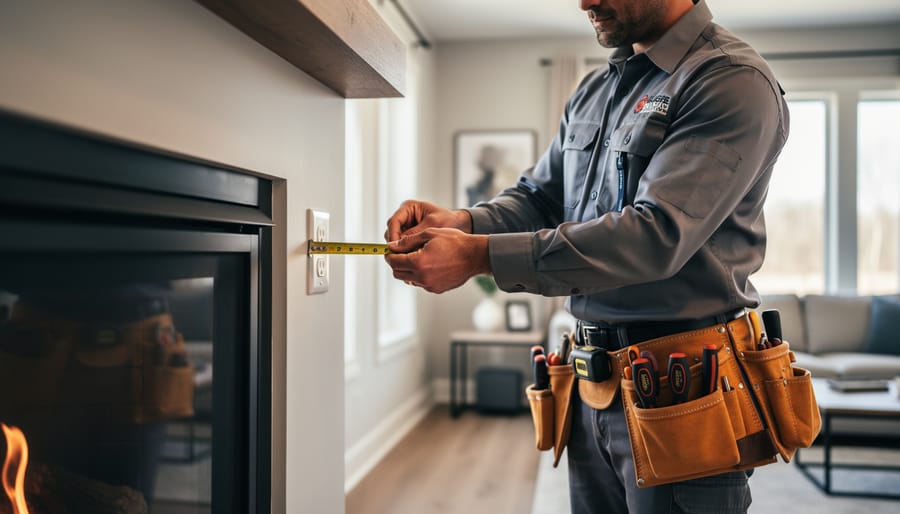
Measure the distance between your fireplace’s electrical components and combustible materials, ensuring minimum clearances of 36 inches from the firebox opening to any electrical outlets or switches unless your manufacturer’s specifications state otherwise. These safety clearance requirements exist because heat radiating from your hearth can damage wiring insulation, creating fire hazards that insurance companies scrutinize closely.
Document your electrical layout with photographs and measurements before beginning work, as inspectors will verify that junction boxes, receptacles, and wiring runs maintain proper spacing from heat sources. Gas fireplaces with electronic ignition systems require dedicated circuits in many jurisdictions, while electric fireplaces demand specific amperage ratings based on their heating capacity.
Contact your local building department before starting any fireplace project to confirm which code edition your municipality enforces, since requirements vary by region and some areas adopt codes with local amendments. Understanding these distinctions protects your family’s safety while ensuring your beautiful new hearth meets legal standards, preventing costly retrofits and potential insurance claim denials down the road.
Why Electrical Clearances Matter for Your Fireplace
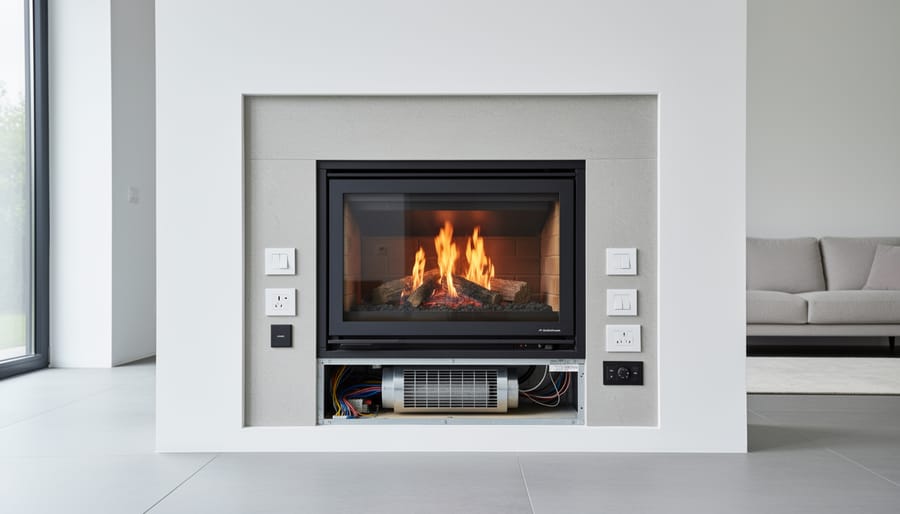
The Electrical Components You Might Be Overlooking
Modern fireplace systems are far more sophisticated than many homeowners realize, incorporating numerous electrical components that must comply with safety codes. Understanding these elements is essential for proper installation and long-term safety in your home.
Direct-wire electric fireplaces represent one of the most significant electrical considerations. Unlike plug-in models, these units connect directly to your home’s electrical system, requiring a dedicated circuit and proper junction box installation. This permanent connection demands strict adherence to clearance requirements, particularly regarding combustible materials and accessibility for future servicing.
Remote control systems and thermostatic controls have become standard features in contemporary fireplace design, adding both convenience and energy efficiency to your heating solution. These wireless and wired control systems require careful routing of low-voltage wiring, which must maintain appropriate separation from gas lines and maintain clearances from heat sources to prevent degradation over time.
Gas valve wiring is another frequently overlooked component. Even gas fireplaces rely on electrical connections to operate their valve systems safely. These connections must be positioned where they won’t be exposed to excessive heat while remaining accessible for maintenance and emergency shutoffs.
Blower motors, which circulate warm air throughout your living space, represent a significant electrical draw and generate their own heat. Proper clearances ensure these motors operate efficiently without overheating, extending their lifespan while maximizing your fireplace’s heating potential as an eco-friendly heating solution.
Finally, ambient lighting systems integrated into modern fireplace designs add atmosphere while requiring their own electrical considerations. LED systems have made these features more energy-efficient, but they still need proper installation with adequate clearances to prevent heat damage and ensure safe operation for years to come.
When Your Fireplace Needs an Electrician
While many fireplace projects can be rewarding DIY undertakings, electrical work often crosses into territory where professional expertise isn’t just recommended—it’s legally required. Understanding when to call a licensed electrician protects both your home and your family, and can save you from costly code violations down the road.
Any time you’re installing new electrical circuits for your fireplace, whether for a direct-vent blower, gas fireplace ignition system, or ambient lighting, you’ll likely need both a permit and a licensed electrician. Most jurisdictions require permits for any work that involves running new wiring through walls, upgrading your electrical panel, or installing dedicated circuits. This isn’t bureaucratic red tape—it ensures your installation meets safety standards and gets proper inspection.
You should definitely call a professional electrician if you’re uncomfortable working with your home’s electrical panel, need to install a 240-volt circuit for certain electric fireplaces, or if your existing wiring doesn’t meet current code requirements. Licensed electricians understand local amendments to the National Electrical Code and can navigate the permit process efficiently.
Even if you’re handy with basic home repairs, electrical work near combustible materials requires specialized knowledge. A professional can ensure proper clearances, correct wire sizing, and appropriate circuit protection. They’ll also document the installation properly for future homeowners and your insurance company.
Remember, cutting corners on electrical work isn’t an eco-friendly heating solution—it’s a fire hazard. Professional installation might cost more upfront, but it guarantees your cozy fireplace enhancement remains safe for years to come.
Understanding NESC vs. NEC: Which Code Applies to You
The National Electrical Code and Your Indoor Fireplace
When you’re creating a cozy gathering space around your indoor fireplace, the electrical components might not be the most glamorous consideration, but they’re absolutely essential for safety and functionality. The National Electrical Code sets specific requirements for electrical installations near fireplaces to prevent fire hazards and ensure your heating solution remains both effective and safe.
First, let’s talk about outlet placement. The NEC requires that electrical outlets be positioned at least 36 inches away from the fireplace opening. This clearance prevents outlets from being exposed to excessive heat that could damage wiring or create fire risks. If you’re planning to install a television above your mantel or add lighting to enhance your fireplace’s ambiance, understanding these requirements upfront saves costly modifications later.
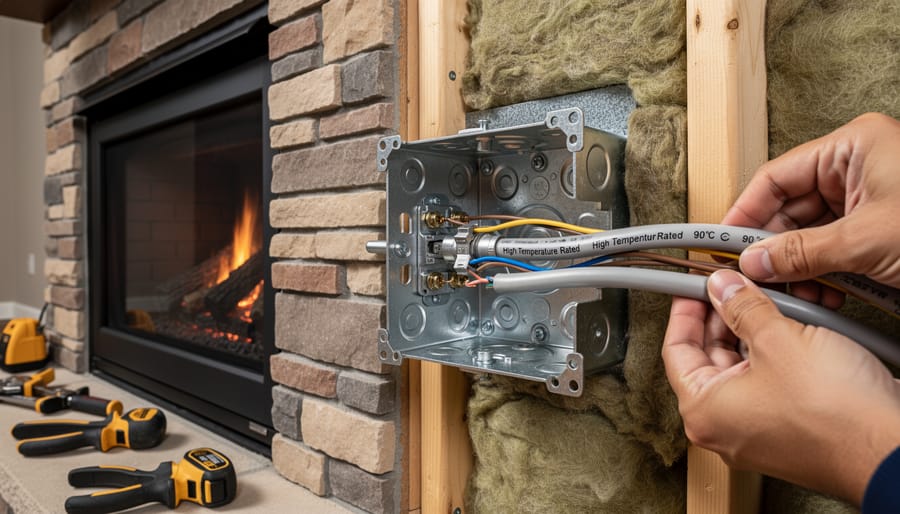
Wiring in high-heat areas demands special attention. Standard electrical wiring simply can’t withstand the temperatures generated near fireplaces. The NEC mandates the use of high-temperature rated wire, typically rated for at least 194 degrees Fahrenheit, in areas within 3 feet of the fireplace. This isn’t just bureaucratic red tape—it’s a critical safety measure that protects your home from electrical fires.
Junction boxes near fireplaces also have specific requirements. They must be rated for high-temperature environments and positioned where they won’t be exposed to direct heat. Metal junction boxes are generally preferred over plastic in these applications because they offer better heat resistance and durability.
Remember, while some homeowners feel confident tackling electrical projects, fireplace-related electrical work often requires professional expertise. Local building codes typically require permits and inspections for electrical installations near fireplaces, ensuring your eco-friendly heating solution doesn’t compromise your home’s safety. A licensed electrician familiar with fireplace installations can navigate these requirements efficiently while keeping your family safe.
Outdoor Fireplace Installations: When NESC Rules Apply
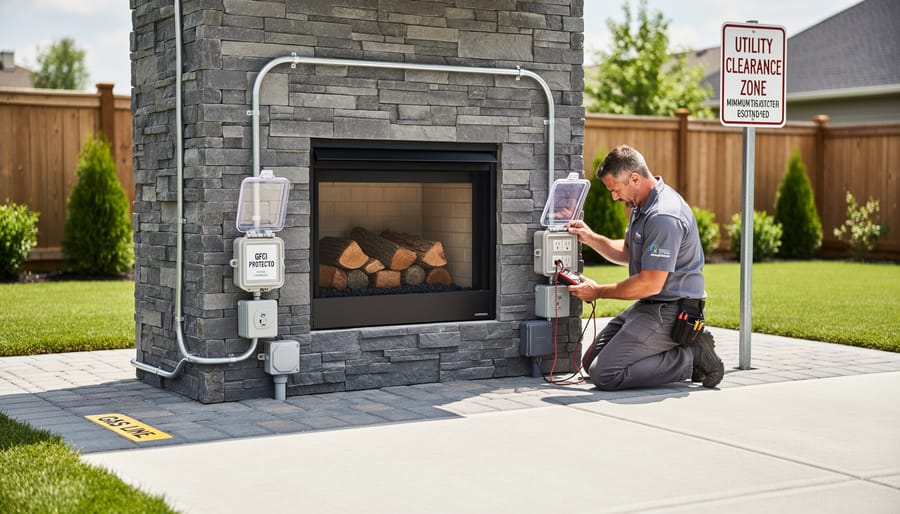
Planning an outdoor fireplace installation brings dreams of cozy evenings under the stars, but understanding electrical safety codes ensures those dreams don’t go up in smoke. While most homeowners focus on the National Electrical Code (NEC) for their outdoor fireplace wiring, the National Electrical Safety Code (NESC) becomes relevant when your installation sits near utility service lines or overhead power delivery systems.
The NESC primarily governs utility-owned equipment and the space around overhead and underground power lines. If your outdoor fireplace location falls within proximity to these utilities, you’ll need to maintain specific clearances. For overhead service lines, the NESC typically requires minimum clearances of 10 feet horizontally and 12 feet vertically from any structure, including chimneys and fireplace components. These measurements protect both your installation and utility workers who may need access.
Underground utility lines present different considerations. Before breaking ground for your outdoor fireplace foundation, always call 811 for utility location services. NESC guidelines require careful planning around buried electrical infrastructure, particularly when installing gas lines or electrical circuits for fireplace accessories like lighting or blowers.
Your local utility company enforces NESC regulations and maintains authority over their service equipment. Contact them early in your planning process, especially if your outdoor fireplace sits near property line utilities or shared transformer boxes. They’ll review your plans for compliance and may require adjustments to your proposed location.
Remember, weatherproof electrical installations for outdoor fireplaces must meet both NESC clearances and NEC requirements for proper grounding, GFCI protection, and appropriate conduit systems. This dual compliance ensures a safe, eco-friendly heating solution that enhances your outdoor living space without compromising electrical safety standards.
Critical Clearance Requirements for Fireplace Electrical Work
Heat Zone Clearances: Protecting Your Wiring
When you’re planning that cozy fireplace installation, understanding how heat affects your electrical wiring is absolutely crucial for your family’s safety. Think of it this way: electrical wires have temperature limits just like anything else in your home, and exceeding those limits can lead to insulation breakdown, shorts, and potentially dangerous situations.
The National Electrical Code requires that wiring near heat-producing areas must be rated for the temperatures they’ll encounter. Standard household wiring typically has insulation rated for 60°C (140°F) or 90°C (194°F), but near your fireplace or chimney, you may need special high-temperature wire rated for 150°C (302°F) or higher. This isn’t just a suggestion—it’s about preventing wire insulation from becoming brittle and failing over time.
Here’s what you need to know: electrical components should maintain a minimum distance of 3 inches from heat sources unless they’re specifically rated for higher temperatures. For fireplaces, this means keeping junction boxes, outlets, and standard wiring well away from the firebox, flue pipes, and chimney structures. If you absolutely must route wiring through a warm area, you’ll need to use appropriately rated conductors and protective conduit.
Many homeowners overlook the fact that heat radiates outward and upward, so even wiring that seems “safe” above a fireplace can be at risk. This is where maintaining proper clearances becomes essential—not just for the fireplace itself, but for every electrical component in the vicinity.
When working with an electrician on your fireplace project, discuss the specific heat zones in your installation. They should assess ambient temperatures and select wire types accordingly, ensuring your heating solution remains both cozy and safe for years to come.
Outlet and Switch Placement Rules
When planning your cozy fireplace retreat, understanding where electrical outlets and switches can safely be positioned is essential for both functionality and safety. The National Electrical Code provides clear guidelines to ensure your electrical components don’t interfere with your fireplace’s operation or create hazardous conditions.
First and foremost, outlets and switches must maintain a minimum clearance of 36 inches from the fireplace opening itself. This measurement applies to both traditional wood-burning fireplaces and modern gas units. The reasoning is straightforward: electrical components can become damaged from heat exposure, and keeping them at this distance protects both the wiring and reduces fire risk.
Around the hearth area, specific rules apply based on your fireplace type. For combustible hearth extensions, outlets cannot be installed within the hearth material itself or within 12 inches of the hearth’s edge. This prevents potential overheating of the electrical components embedded in materials that could ignite under sustained heat exposure.
When installing switches to control your fireplace’s gas logs or accessories, position them at least 36 inches laterally from the opening edge. This placement ensures safe operation even when your fireplace is generating significant warmth during those chilly winter evenings.
Behind combustible mantels, outlets require additional consideration. The code mandates at least 12 inches of clearance between any outlet box and combustible materials that could be affected by residual heat. If you’re dreaming of decorative lighting near your fireplace, work with a licensed electrician to ensure proper spacing while maintaining that inviting ambiance you desire. Remember, these clearances aren’t suggestions but essential safety measures protecting your home and family.
Junction Box and Conduit Requirements
When installing electrical components near your fireplace, proper junction box placement and conduit selection are essential for both safety and long-term functionality. Junction boxes must be positioned at least 12 inches away from the fireplace opening and should never be located within the firebox itself or in direct contact with heat-producing surfaces. This spacing protects the electrical connections from extreme temperatures that could compromise wire integrity and create fire hazards.
For high-heat areas surrounding your fireplace, standard plastic conduit won’t cut it. You’ll need metal conduit, specifically rigid metal conduit or intermediate metal conduit, which can withstand the elevated temperatures common in these zones. These materials resist heat degradation and provide superior protection for your electrical wiring, making them the safe choice for your home’s heating centerpiece.
Accessibility is another crucial consideration that many homeowners overlook during installation. All junction boxes and conduit connections must remain accessible for future maintenance and inspections. This means avoiding the temptation to bury boxes behind permanent stone or brick facings. Instead, use removable access panels that blend with your fireplace design. This forward-thinking approach ensures that when routine electrical maintenance is needed, you won’t face costly demolition work. Remember, proper installation today means safer, more efficient operation of your eco-friendly heating solution for years to come.
Hearth Protection and Electrical Safety: A Dual Approach
Non-Combustible Materials Around Electrical Components
When you’re creating a cozy fireplace setup in your home, choosing the right materials around electrical components isn’t just about meeting code requirements—it’s about ensuring your family’s safety for years to come. The good news is that several attractive, approved materials can protect both your walls and electrical installations while complementing your home’s aesthetic.
Non-combustible materials are your best friends in this situation. These include natural stone, brick, ceramic tile, cement board, and steel. These materials won’t ignite or contribute to flame spread, making them ideal choices where your fireplace hearth meets electrical outlets, junction boxes, or wiring. When installing a hearth extension, for example, cement board provides an excellent base layer before you add your decorative stone or tile finish.
For wall protection near both your fireplace and electrical components, you’ll want to maintain proper spacing. A common approach involves installing cement board or metal shields with appropriate air gaps behind them. This creates what’s called a heat shield that allows air circulation while protecting electrical boxes and wiring from excessive heat exposure.
Remember that materials rated as fire-resistant aren’t the same as non-combustible. Fire-resistant materials like drywall may slow fire spread but can still burn under intense heat. When your electrical components are nearby, always opt for truly non-combustible options. If you’re unsure about a particular material, check its fire rating and consult with both your electrician and fireplace installer—these professionals can work together to ensure your installation meets both electrical safety codes and fireplace clearance requirements while creating the warm, inviting space you’re dreaming of.
GFCI and AFCI Protection Requirements
Modern fireplace installations bring the warmth and ambiance you love into your home, but they also require specific electrical protections to keep your family safe. Two critical safety devices—GFCI (Ground Fault Circuit Interrupter) and AFCI (Arc Fault Circuit Interrupter) protection—are now required for most fireplace electrical circuits, and understanding when you need them is essential for both DIY projects and overseeing professional installations.
GFCI protection is your first line of defense against electrical shock. These devices monitor electrical current and instantly shut off power if they detect a ground fault, which could occur if moisture or debris creates an unintended electrical path. For fireplace installations, GFCI protection is typically required for any outlets located within six feet of the fireplace opening and for all receptacles in areas where moisture might be present. This is particularly important if you’re installing a fireplace in a basement or near bathroom areas.
AFCI protection takes safety a step further by detecting dangerous arc faults—those tiny electrical sparks that can start fires inside your walls. Modern electrical codes require AFCI protection for circuits serving living areas where fireplaces are commonly installed. Think of it as an eco-friendly heating solution that also protects your home from hidden electrical dangers.
When planning your fireplace installation, verify with your local building department which specific protections apply to your situation. While these requirements might seem like added complexity, they’re actually sophisticated safety features that allow you to enjoy your fireplace’s cozy atmosphere with complete peace of mind.
Common Code Violations to Avoid
The Extension Cord Trap
Let’s be honest—we’ve all been guilty of it at some point. That extension cord snaking across the room to power your beautiful electric fireplace might seem like a temporary fix, but if it’s been there for more than a few weeks, it’s become a permanent problem. Extension cords simply aren’t designed to handle the sustained electrical load that electric fireplaces require, typically drawing 1,500 watts or more during operation.
The National Electrical Code is crystal clear on this point: electric fireplaces need dedicated circuits with properly rated outlets installed within reaching distance of the unit. This isn’t just bureaucratic red tape—it’s about preventing overheated wires, melted insulation, and potential fire hazards in your walls. Extension cords lack the robust construction and heat dissipation capabilities of permanent wiring, making them dangerous for continuous high-wattage use.
If your fireplace’s location doesn’t have a conveniently placed outlet, it’s time to call a licensed electrician to install a dedicated 20-amp circuit. Yes, it’s an upfront investment, but it’s a small price compared to the peace of mind knowing your cozy heating solution isn’t creating hidden dangers. Think of it as part of creating a truly safe, sustainable comfort zone in your home.
Improper Wiring in High-Heat Zones
One of the most serious electrical violations near fireplaces involves using standard NM cable, commonly called romex, in areas exposed to elevated temperatures. While romex is perfectly suited for most home wiring projects, it becomes a hidden hazard when routed too close to fireplace components or chimney structures.
Standard romex carries a temperature rating of just 60-90 degrees Celsius, but surfaces near an active fireplace routinely exceed these limits. The plastic insulation can gradually deteriorate, becoming brittle and cracked. This degradation happens silently behind your walls, creating conditions ripe for electrical shorts or even fire.
The National Electrical Code requires high-temperature wire types like THHN in conduit or specially rated cables when running electrical circuits near heat-producing appliances. These wires can withstand temperatures up to 90 degrees Celsius and beyond, providing the safety margin your home deserves.
If you’re planning to install outlets for fireplace blowers, television mounting above the mantel, or ambient lighting around your hearth, consult with a licensed electrician familiar with fireplace installations. They’ll ensure proper wire selection and routing that keeps your cozy gathering space both beautiful and safe. Remember, creating a warm, inviting atmosphere shouldn’t come at the expense of your family’s safety or your home’s structural integrity.
Eco-Friendly Electrical Solutions for Modern Fireplaces
Modern electric fireplaces offer a wonderful opportunity to embrace both comfort and sustainability, but achieving optimal performance starts with proper electrical installation that meets code requirements. When your fireplace’s electrical system is correctly designed and installed, you’re not just avoiding breaking code—you’re creating the foundation for a more efficient, eco-friendly heating solution.
Today’s energy-efficient electric fireplaces can significantly reduce your home’s carbon footprint when paired with smart electrical controls. Programmable thermostats and smartphone-enabled systems allow you to heat only the rooms you’re using, reducing unnecessary energy consumption. However, these smart controls require dedicated circuits and proper wiring to function safely and effectively. Installing them according to National Electrical Code standards ensures they operate at peak efficiency without power fluctuations that can waste energy.
Zone heating represents one of the most environmentally conscious approaches to home comfort. By using an electric fireplace to warm your primary living space, you can lower your whole-house thermostat and reduce overall energy usage. This strategy works best when your fireplace’s electrical system includes appropriate circuit capacity and placement that allows for optimal heat distribution throughout your main gathering areas.
Modern energy-efficient electric fireplace models draw less power while producing more targeted heat than older versions, but they still need adequate electrical infrastructure. Proper clearances and correct wire sizing prevent energy loss through inefficient connections and ensure your fireplace delivers maximum warmth per kilowatt used.
When planning your eco-friendly fireplace installation, work with licensed electricians who understand both code requirements and energy efficiency principles. This partnership ensures your electrical setup supports your environmental goals while maintaining the safety standards that protect your home and family for years to come.
Working with Inspectors: What to Expect
When your electrical installation is ready, the inspector’s visit might feel a bit nerve-wracking, but knowing what to expect can turn it into a straightforward experience. Think of your electrical inspector as a helpful partner in creating a safe, warm gathering space around your new fireplace rather than someone looking to find fault with your work.
Inspectors typically begin by reviewing your permit paperwork and any submitted plans. They’ll verify that the installation matches what was approved and meets current code requirements. For fireplace installations, they pay close attention to outlet placement near combustible materials, proper grounding of electrical components, and ensuring that all wiring is appropriately sized for the load. Don’t be surprised if they ask about your heating goals or how you plan to use the space—understanding the lifestyle aspect helps them evaluate whether the installation truly serves your needs safely.
During the walkthrough, inspectors examine clearances between electrical boxes, receptacles, and your fireplace structure. They’ll check wire routing, junction box accessibility, and whether connections are properly secured. If you’ve incorporated eco-friendly heating solutions like an electric fireplace insert or pellet stove with electrical components, they’ll verify those installations follow manufacturer specifications and maintain required distances from walls and furnishings.
Common questions include asking about the amperage of circuits, whether GFCI protection is installed where required, and confirming that all work was performed according to the approved plans. They might also inquire about future modifications you’re considering to ensure the current setup accommodates those safely.
To pass inspection on your first attempt, ensure all work is complete before scheduling. Leave junction boxes accessible, keep the area clean and well-lit for easy examination, and have your permits and documentation ready. If you’ve hired a licensed electrician, they should be present to answer technical questions. Most importantly, never attempt to cover up work before inspection—transparency demonstrates you prioritize safety in creating your cozy, compliant hearth space.
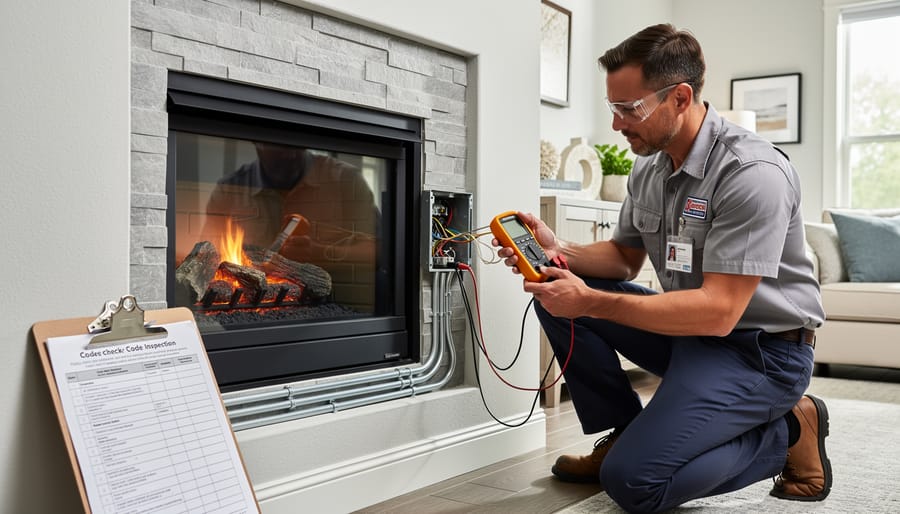
Understanding electrical safety code clearances isn’t about jumping through regulatory hoops—it’s about creating a sanctuary where your family can gather safely around the warmth and glow of your fireplace. These codes exist because electrical hazards near heat sources are invisible threats that can develop slowly over time, making proper clearances your first and best line of defense.
While it might be tempting to adjust wire placement for aesthetics or squeeze installations into tight spaces for convenience, these compromises can have serious consequences. A beautifully designed fireplace loses all its charm if it becomes a safety hazard. The peace of mind that comes from knowing your installation meets all safety standards is priceless—it transforms your fireplace from a potential worry into the cozy focal point you envisioned.
Always work with licensed electricians and certified fireplace professionals who stay current with code requirements. Their expertise ensures your investment protects your home’s value while safeguarding what matters most. When you’re curled up enjoying those dancing flames on a cold evening, you should be thinking about comfort and connection, not wondering if everything is properly installed. A safe fireplace is a fireplace you can truly enjoy for years to come.