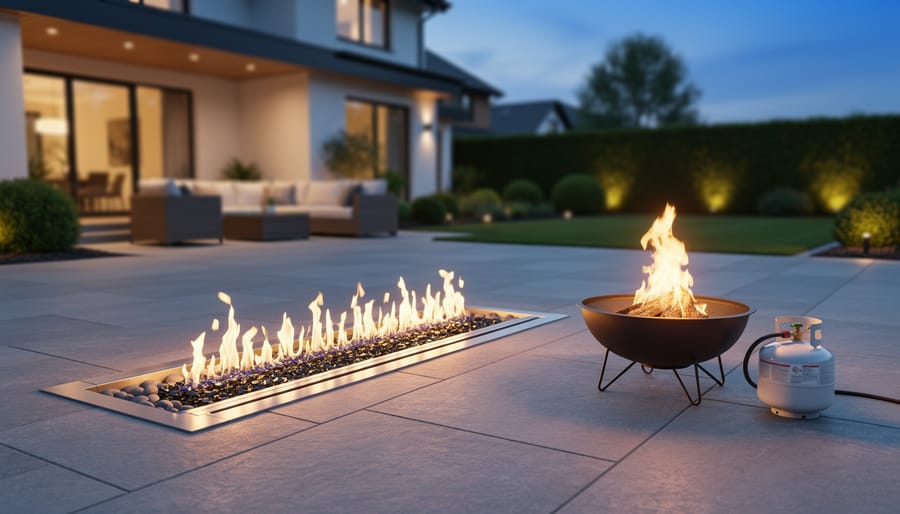


Choosing between natural gas and propane for your backyard fire pit affects everything from your monthly fuel costs to installation complexity and long-term flexibility. Natural gas connects directly to your home’s gas line, offering unlimited fuel supply without refills, while propane operates from portable tanks that give you installation freedom anywhere in your yard. The decision hinges on three practical considerations: whether you already have natural gas service at your property, how far your desired fire pit location sits from existing gas lines, and whether you prioritize convenience over installation flexibility.
Natural gas typically costs 30-40% less per BTU than propane, translating to significant savings if you use your fire pit regularly throughout the year. However, installation expenses tell a different story—running a new gas line to your patio can cost $500 to $2,000 depending on distance and local codes, while propane fire pits require minimal setup and can be relocated as your outdoor space evolves. This upfront investment matters most for homeowners committed to a permanent outdoor living area.
Both fuel types burn cleanly and create the same warm ambiance that transforms your backyard into an inviting gathering space. Propane delivers slightly higher BTU output per cubic foot, producing more intense flames in smaller burner systems, while natural gas provides consistent pressure for reliable performance. Understanding these differences empowers you to select the fuel type that aligns with your budget, property layout, and lifestyle needs, ensuring years of cozy evenings under the stars.
Understanding the Basics: How Each Fuel Type Works

What Is Natural Gas?
Natural gas is the fuel that likely already heats your home and powers your kitchen appliances, delivered directly to your property through underground pipelines maintained by your local utility company. This same convenient fuel source can power your outdoor fire pit, creating a seamless connection between your home’s existing infrastructure and your backyard gathering space.
Unlike propane, which requires refillable tanks, natural gas flows continuously through buried pipes, meaning you’ll never run out mid-gathering or need to monitor fuel levels. When you turn on your natural gas fire pit, you’re tapping into the same reliable supply that keeps your home comfortable year-round. The gas itself is primarily methane, a clean-burning fossil fuel that produces consistent flames with minimal residue.
What makes natural gas particularly appealing for fire pits is its permanent installation approach. Once a licensed professional connects your fire pit to your home’s gas line, you’re set for years of hassle-free operation. There’s no storing fuel tanks, no refilling trips, and no worrying about running low during your next outdoor dinner party. For homeowners who value convenience and already have natural gas service, this fuel option transforms your fire pit into a true extension of your home’s comfort system, ready to create warmth and ambiance at the simple turn of a valve.
What Is Propane?
Propane is a liquefied petroleum gas that’s stored under pressure in portable tanks, making it an incredibly versatile fuel choice for fire pits. Unlike natural gas that flows through underground pipes, propane gives you the freedom to place your fire pit anywhere in your outdoor space without worrying about gas line locations.
You’ll find propane tanks in various sizes, from small 20-pound cylinders perfect for portable fire pits to larger 100-pound tanks for permanent installations. When your tank runs low, you have two convenient options: exchange it at local retailers like grocery stores and gas stations, or have it refilled at propane service centers. Many homeowners appreciate this flexibility, especially if they already use propane for grills or other outdoor appliances.
As a fire pit fuel, propane burns clean with minimal smoke and no ash, creating a hassle-free ambiance for your outdoor living space. It ignites instantly with the turn of a knob and offers precise flame control, letting you adjust the warmth and atmosphere to match your mood. The propane fire pit advantages extend beyond convenience—it’s also an eco-friendly option that produces fewer emissions than wood-burning alternatives, aligning perfectly with sustainable outdoor living practices.

Cost Comparison: Which Fuel Saves You More Money?
Installation and Setup Costs
When weighing your options between natural gas and propane fire pits, understanding the upfront investment is essential to making a choice that fits your budget and lifestyle.
Natural gas fire pits typically require a more substantial initial investment, primarily due to the need for professional gas line installation. If your outdoor space doesn’t already have a natural gas connection, you’ll need to hire a licensed plumber or gas technician to run a line from your home’s existing gas supply. This installation generally ranges from $500 to $2,000, depending on the distance from your main gas line, local labor rates, and any excavation work required. Keep in mind that permits may be necessary in many municipalities, adding another $50 to $200 to your total costs. However, once installed, this connection becomes a permanent, hassle-free feature of your outdoor living space.
Propane fire pits offer a more budget-friendly entry point. Since they operate on portable propane tanks, there’s no need for complex infrastructure. A standard 20-pound propane tank costs between $50 and $60 when purchased new, though many homeowners opt for tank exchange programs at local retailers for around $20 to $25 per refill. If you prefer a more permanent propane solution, installing a larger underground tank can run $1,500 to $3,000, including installation.
The fire pit units themselves are comparably priced for both fuel types, typically ranging from $300 to $3,000 depending on size, materials, and design features. This means your fuel choice primarily affects the infrastructure investment rather than the centerpiece itself, making propane the clear winner for those seeking immediate, lower-cost setup.
Ongoing Fuel Expenses
When it comes to keeping your outdoor fire burning, the fuel expenses tell an important story. Natural gas typically costs between $0.60 to $1.20 per hour of operation, depending on your regional rates and fire pit size. Propane runs slightly higher, averaging $1.50 to $3.00 per hour, though these costs fluctuate with seasonal demand and your local market conditions.
The real-world difference becomes clear when you consider your lifestyle and usage patterns. If you’re someone who loves cozy evenings around the fire pit several times a week, natural gas offers predictable costs that blend into your monthly utility bill. Over a typical season with regular use, you might spend $200-400 on natural gas compared to $400-800 for propane.
Regional variations matter significantly. In areas with abundant natural gas infrastructure, like the Northeast and Midwest, you’ll likely see lower per-therm costs. Propane prices swing more dramatically, especially in rural areas where delivery fees add up and winter demand drives prices higher.
Your usage frequency plays the deciding role in lifetime costs. Occasional weekend gatherings might only set you back $50-100 annually with either fuel type, making the choice less critical. However, if your fire pit becomes a nightly gathering spot from spring through fall, natural gas delivers substantial savings while supporting a more eco-friendly heating solution with lower carbon emissions per BTU. Consider tracking your anticipated usage hours to calculate which option aligns better with both your budget and environmental values.
Convenience and Practicality: Your Day-to-Day Experience
Natural Gas: Set It and Forget It
Natural gas fire pits offer the ultimate convenience factor: once installed, you simply turn them on whenever you’re ready to enjoy an evening outdoors. There’s no need to monitor fuel levels, swap out tanks, or make last-minute runs to refill propane before guests arrive. Your fire pit connects directly to your home’s natural gas line, providing an unlimited fuel supply that’s always ready when you are.
This “set it and forget it” approach makes natural gas incredibly appealing for homeowners who already have gas lines running to their property. If your home uses natural gas for heating, cooking, or a water heater, extending a line to your outdoor living space is often straightforward. The installation does require professional help and proper permits, but once completed, you’ll enjoy years of hassle-free operation.
The continuous fuel supply means your fire pit becomes a true lifestyle element, ready to create ambiance at a moment’s notice without any preparation. You’ll never experience that disappointing scenario where your propane tank runs empty mid-gathering. For homeowners seeking maximum convenience and minimal maintenance, natural gas delivers an effortless outdoor heating solution that integrates seamlessly with your home’s existing infrastructure. The tradeoff is flexibility—your fire pit stays put where the gas line terminates, so placement requires careful planning during installation.
Propane: Portable and Flexible
Propane fire pits offer unmatched freedom when it comes to placement and installation. Unlike natural gas options tethered to fixed utility lines, propane systems can go virtually anywhere in your outdoor space. Want to create a cozy gathering spot at the far end of your garden? No problem. Planning to redesign your patio layout next season? Simply move your propane fire pit to its new location without calling a professional.
This flexibility extends to installation simplicity. Most propane fire pits connect directly to a standard tank with basic fittings, meaning you can often set up your new fire feature in an afternoon without permits or utility company involvement. It’s an ideal solution for renters or homeowners who prefer DIY projects over contractor coordination.
The independence from utility infrastructure makes propane particularly appealing for properties without existing gas lines, potentially saving thousands in trenching and connection costs. However, this convenience comes with ongoing responsibilities. You’ll need to monitor fuel levels and arrange refills or exchanges, typically every 10-20 hours of burn time depending on tank size and heat output.
Storage presents another consideration. While hiding propane tanks creatively can maintain your outdoor aesthetic, you’ll need adequate space near your fire pit that meets safety clearance requirements. Despite these practical realities, propane’s portability remains its defining advantage for creating flexible outdoor living spaces.
Performance and Heat Output: What You’ll Actually Feel

BTU Output and Heat Efficiency
When it comes to creating that perfect cozy atmosphere in your outdoor space, understanding BTU output helps you choose the right fuel for your lifestyle. Both natural gas and propane deliver impressive heat, but there are some meaningful differences worth considering.
Propane has a natural advantage in raw power, producing approximately 2,500 BTUs per cubic foot compared to natural gas’s 1,000 BTUs. This means propane burns hotter and can generate more warmth from a smaller flame. For homeowners in cooler climates or those who love gathering around the fire pit on chilly evenings, propane’s higher heat output creates that inviting warmth you’re looking for.
However, don’t let the numbers alone guide your decision. Natural gas fire pits can easily compensate by using larger burners or adjusting flow rates to match propane’s warmth. The real-world difference in comfort is often negligible when your fire pit is properly sized for your space.
What matters most is consistent performance. Natural gas maintains steady pressure through your home’s gas line, delivering reliable heat without interruption. Propane can experience slight pressure drops as tanks empty, though this rarely affects your evening’s enjoyment noticeably. Both fuels efficiently convert to radiant heat, making them excellent eco-friendly heating solutions for extending your outdoor season.
Flame Quality and Ambiance
When it comes to creating that perfect outdoor gathering spot, the quality of your flames matters more than you might think. Both natural gas and propane fire pits deliver beautiful, dancing flames, but there are subtle differences worth considering for your backyard ambiance.
Propane typically produces a slightly brighter, more vibrant flame with hints of orange and yellow, creating that classic campfire glow many homeowners love. The flames tend to be a bit more visible and dramatic, especially as evening falls. Natural gas, on the other hand, burns with a slightly softer, more consistent blue-based flame. While some purists prefer the steadier appearance, others find it less visually dynamic than propane’s livelier dance.
The good news? Both fuel types can be enhanced with fire glass, lava rocks, or ceramic logs to amplify the aesthetic experience and diffuse the flames beautifully. These additions help create a more personalized look regardless of which fuel you choose.
From a lifestyle perspective, the difference in flame quality is relatively minor for most people. Your choice of fire pit design, burner configuration, and decorative media will likely have a bigger impact on overall ambiance than the fuel source itself. Both options provide plenty of warmth and visual appeal for cozy evening gatherings.
Environmental Impact: The Greener Choice for Your Home
Emissions and Air Quality
When it comes to what’s floating in the air around your cozy fire pit gathering, both natural gas and propane are among the cleanest-burning fossil fuels available. The good news? You’re making an eco-conscious choice either way compared to traditional wood-burning options.
Propane edges ahead slightly in the cleanliness department. It produces virtually no particulate matter and fewer carbon emissions per BTU than natural gas. When propane burns, it releases primarily water vapor and carbon dioxide, making it one of the most environmentally friendly fuel options for outdoor heating.
Natural gas is also remarkably clean, though it produces marginally more carbon dioxide and nitrogen oxides than propane. The difference is minimal in practical terms—you won’t notice air quality issues with either fuel during your outdoor gatherings.
Both fuels eliminate the smoke, ash, and airborne particles that wood fires create, which is wonderful news for guests with respiratory sensitivities. There’s no lingering smoky smell on clothes or concerns about particulate pollution drifting into your home. For those prioritizing eco-friendly heating solutions without sacrificing ambiance, either option keeps your outdoor space fresh and breathable.
Sustainability Considerations
When weighing the sustainability of these two options, it’s helpful to look beyond what happens in your backyard. Both natural gas and propane are fossil fuels, so neither is a completely green choice, but there are meaningful differences in their environmental footprints.
Natural gas requires extensive pipeline infrastructure, which involves ongoing land use and maintenance. However, once those pipes are laid, the fuel travels efficiently to your home with minimal additional transportation emissions. Propane, on the other hand, needs regular truck deliveries, adding transportation-related emissions to its overall impact. On the extraction side, natural gas often comes as a byproduct of oil drilling, while propane can be refined from both petroleum and natural gas processing.
Looking ahead, both fuels face an uncertain future as renewable energy sources become more accessible. If eco-friendly heating solutions matter to you, consider pairing your fire pit with other sustainable practices around your home, like energy-efficient appliances or solar panels. Some homeowners also limit their fire pit use to special occasions, treating it as a lifestyle element that enhances outdoor gatherings rather than an everyday heat source. This mindful approach lets you enjoy the warmth and ambiance while minimizing your environmental impact.
Safety Considerations: What You Need to Know
Both natural gas and propane fire pits offer excellent safety records when properly installed and maintained, so you can enjoy the warmth and ambiance with peace of mind. Understanding the specific safety considerations for each fuel type helps you create a secure outdoor living space for your family and guests.
Natural gas fire pits connect directly to your home’s gas line, which means you won’t need to worry about running out of fuel mid-gathering. However, professional installation is essential. A certified technician should handle all connections to ensure proper pressure regulation and leak-free operation. The permanent installation also means you’ll need to consider fire pit placement carefully during the planning stage, as relocating becomes a significant undertaking.
Propane systems offer flexibility but require attention to tank storage and handling. Store propane tanks upright in well-ventilated outdoor areas, away from enclosed spaces where gas could accumulate. Never store tanks indoors or in garages. Check connections regularly for wear, and replace old or damaged hoses promptly. The self-contained nature of propane makes leak detection straightforward—you’ll typically smell the added odorant immediately.
For both fuel types, install your fire pit on stable, non-combustible surfaces and maintain proper clearances from structures, overhanging branches, and combustible materials. Most municipalities require at least ten feet of clearance from buildings. If you’re comparing options beyond just fuel types, our guide on gas versus wood fire pits provides additional safety insights.
Essential safety practices include performing regular inspections of all components, keeping a fire extinguisher nearby, never leaving your fire pit unattended, and ensuring everyone knows how to shut off the gas supply in emergencies. Natural gas systems should have clearly marked shut-off valves, while propane users should know how to close the tank valve quickly. With proper precautions and regular maintenance, both options provide years of safe enjoyment.

Making the Right Choice for Your Property
Best Scenarios for Natural Gas
Natural gas shines as the superior choice when you’ve already got a natural gas line running to your property. If your home uses natural gas for heating or cooking, extending that line to your outdoor living space makes perfect sense both financially and practically. This option becomes especially attractive for homeowners who envision their fire pit as a lifestyle centerpiece—a gathering spot they’ll use frequently throughout cooler months. The unlimited fuel supply means you’ll never run out mid-evening, making natural gas ideal for those who love spontaneous gatherings or extended outdoor entertaining sessions. Properties with permanent outdoor kitchens or built-in seating areas benefit most from natural gas installations, as the infrastructure investment pays dividends through years of hassle-free operation. You’ll also appreciate natural gas if you value eco-friendly heating solutions with lower carbon emissions and prefer a clean-burning flame that requires minimal maintenance.
Best Scenarios for Propane
Propane shines in situations where natural gas simply isn’t practical or available. If your property lacks natural gas infrastructure—common in rural areas or newer developments—propane offers a complete solution without requiring utility company involvement or expensive line installation. It’s ideal for homeowners who value flexibility, as you can position your fire pit anywhere on your property and even relocate it seasonally to follow the sun or accommodate different entertaining areas.
Renters and those living in properties with strict landscaping restrictions particularly benefit from propane’s portability. You won’t need to dig trenches or obtain utility permits, making it perfect when permanent installations aren’t feasible. Propane also suits those who entertain infrequently or seasonally, since you’re not paying ongoing connection fees for a feature you’ll only use occasionally.
For the eco-conscious homeowner seeking convenience, propane’s cleaner burn compared to wood combines environmental responsibility with the ambiance you’re craving. If you already use propane for other purposes like grilling or heating, adding a fire pit to your existing fuel source creates a streamlined outdoor living experience.
Choosing between natural gas and propane for your fire pit isn’t about finding a universal winner—it’s about discovering what works best for your unique outdoor living vision. Both fuel types bring their own advantages to your backyard, and the right choice emerges from understanding your specific circumstances.
If you have existing natural gas infrastructure and prioritize seamless convenience for frequent entertaining, natural gas offers an effortless solution that becomes part of your home’s permanent landscape. The uninterrupted fuel supply and minimal maintenance make it ideal for those who want their fire pit to be as easy as flipping a light switch.
On the other hand, propane provides unmatched flexibility and lower upfront costs, making it perfect for renters, those without gas lines, or anyone who values the freedom to rearrange their outdoor space. The portability factor transforms propane into the go-anywhere option that adapts as your needs evolve.
Consider your property layout, how often you’ll gather around the flames, your budget parameters, and whether you might relocate in the future. Think about what matters most—installation simplicity, long-term operating costs, or placement flexibility.
Whichever path you choose, you’re investing in more than just a heating source. You’re creating a gathering spot where memories form, conversations flow, and your outdoor space becomes an extension of your home’s welcoming warmth. Trust your instincts, evaluate your priorities, and confidently build the backyard retreat that perfectly matches your lifestyle and brings your outdoor entertaining dreams to life.