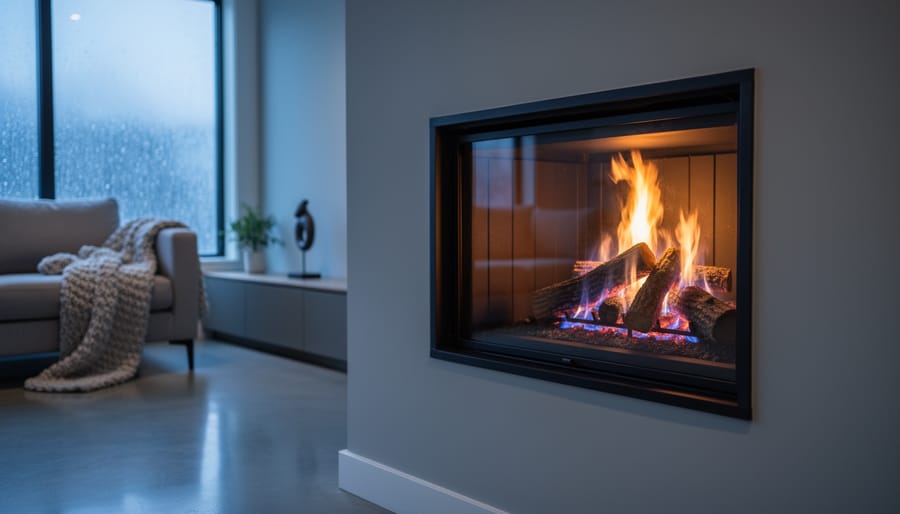


Gas fireplaces typically consume between 30,000 to 60,000 BTUs per hour, translating to roughly 0.3 to 0.6 therms of natural gas for each cozy evening by the flames. At current national averages, this means operating your fireplace costs anywhere from $0.30 to $2.00 per hour depending on your unit’s efficiency and local gas rates.
The real answer to whether your fireplace guzzles gas hinges on how you use it. Running a gas fireplace continuously for ambiance throughout winter months can add $200-400 to your annual heating bills, while occasional evening use might only increase costs by $30-50. Most modern units with electronic ignition and variable flame controls consume significantly less than older standing-pilot models, which burn gas constantly just to keep the pilot light flickering.
Understanding your fireplace’s consumption isn’t just about the dollars leaving your wallet. Today’s eco-conscious homeowners recognize that gas fireplaces offer a cleaner-burning alternative to wood while delivering instant warmth exactly where you need it. The key lies in making informed choices about when to fire it up, which efficiency features matter most, and how to optimize your specific unit for both comfort and cost-effectiveness. Whether you’re contemplating a new installation or managing an existing fireplace, knowing the numbers empowers you to enjoy radiant warmth without the budget burn.
Understanding How Gas Fireplaces Consume Fuel
BTU Ratings: The Language of Gas Fireplaces
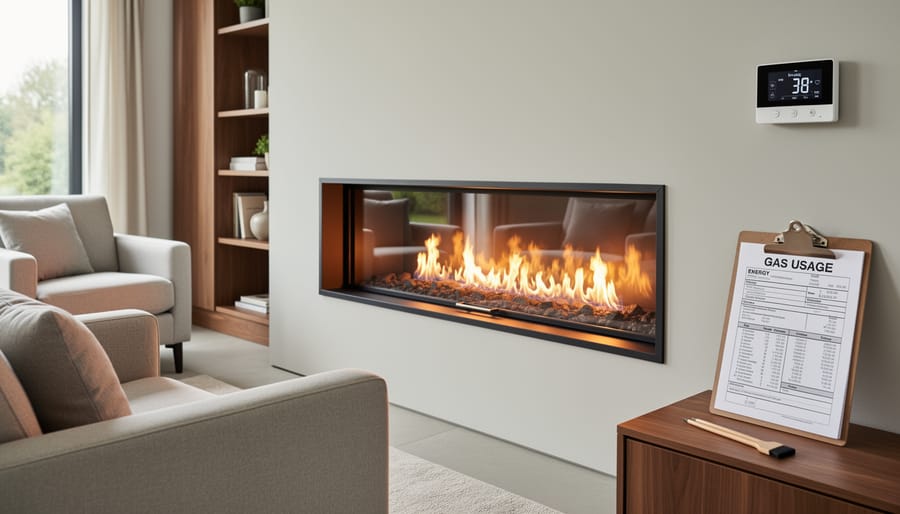
Understanding BTU ratings is like learning to read the language of your gas fireplace—it tells you exactly how much heat you’re getting and, consequently, how much gas you’ll consume. BTU stands for British Thermal Unit, which measures the energy needed to heat one pound of water by one degree Fahrenheit. In practical terms for your home, higher BTUs mean more heat output and greater gas consumption.
Most gas fireplaces fall into predictable ranges based on their design. Small decorative units typically produce 10,000 to 15,000 BTUs per hour—perfect for creating ambiance without overwhelming a room. Medium-sized fireplaces range from 20,000 to 30,000 BTUs, offering a balance between aesthetics and functional heating for average living spaces. Larger statement fireplaces can reach 40,000 BTUs or more, capable of warming expansive areas but consuming considerably more gas.
Here’s what this means for your wallet: a 30,000 BTU fireplace running at full capacity uses approximately 30 cubic feet of natural gas per hour. At average rates, that translates to roughly 30 cents per hour of operation. Understanding your fireplace’s BTU rating helps you estimate costs accurately and choose settings that match your heating needs without waste.
The Difference Between Natural Gas and Propane
Understanding the difference between natural gas and propane helps you anticipate what your fireplace will actually cost to run. Natural gas connects directly to your home through utility lines, making it incredibly convenient—you’ll never run out mid-winter. Propane, on the other hand, comes delivered in tanks that you’ll need to monitor and refill.
Cost-wise, natural gas typically runs about 30-40% less expensive per BTU than propane in most regions, though prices fluctuate with market conditions. This means your monthly heating bills will generally be lower with natural gas. However, propane burns hotter and more efficiently, producing about 2,500 BTUs per cubic foot compared to natural gas’s 1,000 BTUs. This efficiency means you’ll use less propane to generate the same warmth.
From an eco-friendly perspective, both fuels burn cleaner than wood, but natural gas edges ahead slightly with lower carbon emissions. If you’re focused on sustainable heating solutions, either option represents a responsible choice for creating that cozy ambiance you love.
Your location and existing infrastructure often determine which fuel makes the most sense. Homes with natural gas lines already installed enjoy seamless, economical operation, while rural properties without gas access find propane a reliable alternative.
The Real Numbers: What You’ll Actually Pay
Average Hourly Operating Costs
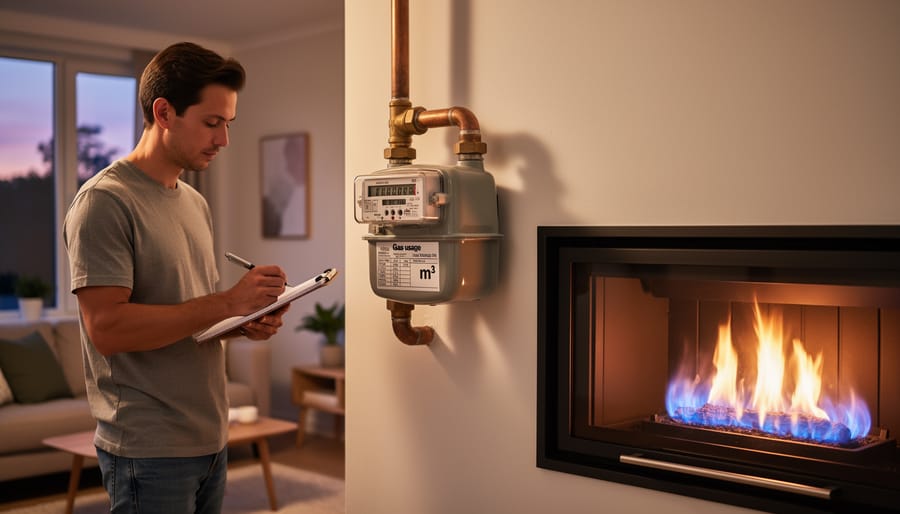
Understanding what you’ll actually spend when cozying up by your gas fireplace helps you budget wisely and enjoy those crackling flames without financial worry. The hourly operating costs vary based on your fireplace size and how efficiently it converts gas into heat.
For a small to medium-sized gas fireplace (around 20,000-30,000 BTUs), you’re typically looking at costs between $0.20 and $0.50 per hour. This assumes natural gas prices averaging $1.00 to $1.50 per therm, which is common across much of the United States. If you’re running your fireplace for a cozy evening—let’s say three hours—that’s roughly $0.60 to $1.50 per session.
Larger fireplaces that output 40,000 BTUs or more will naturally consume more gas, pushing your hourly costs to approximately $0.60 to $1.00 per hour. These statement pieces create incredible ambiance but do require a bit more budget consideration.
Efficiency ratings make a significant difference in these calculations. Modern high-efficiency models (75-85% efficiency) convert more of your gas into actual heat rather than losing it up the chimney. Older, less efficient units might cost 20-30% more to operate for the same warmth level.
Your local natural gas rates heavily influence these numbers, so check your utility bill to calculate your specific costs. Some regions enjoy rates as low as $0.70 per therm, while others might pay $2.00 or more. As a lifestyle element that brings family together and creates memorable moments, most homeowners find these costs quite reasonable compared to the value they receive.
Monthly and Seasonal Cost Projections
Understanding what you’ll actually spend over time helps you budget wisely and avoid surprises on your utility bill. Let’s break down realistic scenarios based on typical usage patterns.
For occasional users who enjoy their gas fireplace on chilly evenings and weekends, expect to run it about 3-4 hours per day during colder months. At an average cost of $0.60 per hour, this translates to roughly $54-72 monthly during peak winter season. Over a five-month heating period, you’re looking at approximately $270-360 annually.
If you’re a frequent user who relies on your fireplace as supplemental heating throughout the day, running it 8 hours daily will cost around $144 monthly, or about $720 for the winter season. This works out to less than many space heaters while providing superior ambiance.
Seasonal variations matter significantly. November through March typically sees the highest usage, while shoulder seasons like October and April might involve occasional use, costing just $20-30 monthly. Summer months generally mean zero fireplace expenses.
Geographic location plays a crucial role too. Homeowners in mild climates might spend only $150-200 annually on fireplace gas, while those in colder regions could see costs closer to $500-800. Natural gas prices also fluctuate by region and season, so checking your local utility rates gives you the most accurate picture.
The good news? Even heavy fireplace use remains surprisingly affordable compared to other heating methods, making it both a practical and lifestyle-enhancing investment for your home.
Factors That Drive Your Gas Bill Up (Or Down)
How Your Home’s Insulation Plays a Role
Your home’s insulation quality significantly impacts how much gas your fireplace consumes. Think of it this way: running a gas fireplace in a poorly insulated home is like trying to fill a bucket with holes. The warmth escapes through drafty windows, inadequate wall insulation, and unsealed gaps, forcing your fireplace to work harder and consume more gas to maintain comfortable temperatures.
Well-insulated homes retain heat more effectively, meaning your fireplace doesn’t need to run as long or at higher settings to keep spaces cozy. This translates directly to lower gas consumption and reduced monthly costs. Simple improvements like weather-stripping doors, adding attic insulation, or sealing air leaks around windows can dramatically improve your home’s thermal efficiency.
Consider this from an eco-friendly perspective: better insulation means you’re burning less fuel overall, reducing your carbon footprint while enjoying the ambiance and warmth your fireplace provides. Before cranking up your gas fireplace, evaluate your home’s insulation. Investing in energy efficiency improvements often pays for itself through reduced heating costs, making your fireplace both an economical and environmentally conscious heating choice for those chilly evenings.
The Impact of Fireplace Age and Technology
The age of your fireplace plays a significant role in determining how much gas you’ll actually use. If you’re still relying on an older model from the 1980s or 1990s, you might be using considerably more gas than necessary. These vintage units often operate with efficiency ratings as low as 50-60%, meaning nearly half the gas you’re paying for literally goes up the chimney.
Modern gas fireplaces tell a completely different story. Today’s high-efficiency models boast impressive ratings of 75-90%, with some premium units reaching even higher. This technological leap translates directly to your wallet—upgrading from an old 55% efficient fireplace to a new 85% efficient model could reduce your gas consumption by roughly 35% while providing the same cozy warmth you love.
What makes newer fireplaces so much better? Advanced features like sealed combustion systems, electronic ignition that eliminates wasteful pilot lights, modulating burners that adjust flame intensity, and superior insulation all contribute to remarkable efficiency gains. Many contemporary models also include programmable thermostats and remote controls, giving you precise control over when and how much gas you use.
If your fireplace is over 15 years old, it’s worth considering an upgrade not just for the gas savings, but also for the improved comfort and eco-friendly benefits. The initial investment often pays for itself within several years through reduced energy bills, making it both a lifestyle enhancement and a smart financial decision for the environmentally conscious homeowner.
Fireplace Regulations That Affect Your Gas Usage
Energy Efficiency Standards and Certifications
When you’re shopping for a gas fireplace or evaluating your current one, understanding efficiency standards can help you choose a model that keeps operating costs down. These certifications aren’t just bureaucratic red tape—they’re designed to protect your wallet and the environment.
The Environmental Protection Agency doesn’t directly regulate gas fireplaces like it does wood-burning units, but you’ll still find important efficiency guidelines through industry standards. The American National Standards Institute (ANSI) sets safety and performance benchmarks that reputable manufacturers follow, ensuring your fireplace operates reliably without wasting fuel.
What really matters for your gas consumption is the Annual Fuel Utilization Efficiency rating, or AFUE. This percentage tells you how much of the gas your fireplace burns actually converts into heat for your home rather than escaping up the chimney. Modern gas fireplaces typically range from 70% to 90% AFUE, with some high-efficiency models reaching impressive marks above 95%. The higher the rating, the less gas you’ll use to achieve the same cozy warmth.
Look for the Energy Star certification when possible—these models meet strict efficiency criteria and can significantly reduce your heating bills. Direct-vent and sealed combustion systems generally offer the best efficiency because they draw air from outside rather than pulling heated air from your home.
Understanding these standards connects to broader fireplace regulations that shape how we heat our homes responsibly. By choosing a certified, high-efficiency model, you’re making an eco-friendly choice that benefits both your budget and the planet.
Local Codes and Usage Restrictions
Before you cozy up to your gas fireplace this season, it’s worth understanding that where you live can significantly impact how and when you use it. Regional regulations vary widely across the country, and these rules can affect both your operating costs and usage patterns.
Many areas, particularly in regions prone to air quality issues, have established burn bans or restrictions during high-pollution days. These local fireplace restrictions typically focus on wood-burning units, but some municipalities also regulate gas fireplaces during certain weather conditions or alert days. Understanding these regulations helps you plan your heating strategy and avoid potential fines.
Some regions also require permits or inspections for gas fireplace installations, which can influence your initial investment and ongoing maintenance costs. Building codes might specify venting requirements, efficiency ratings, or even mandate certain types of gas appliances in new construction. These standards often aim to promote eco-friendly heating solutions while ensuring safety.
Additionally, your local utility company may offer different rate structures or rebates for efficient gas appliances. Some areas provide incentives for upgrading to high-efficiency models, which can offset your gas consumption costs over time. Check with your municipality and utility provider to understand what applies to your situation, ensuring you’re both compliant and maximizing potential savings.
Smart Ways to Enjoy Your Fireplace Without Breaking the Bank
Zone Heating: Your Secret to Lower Bills
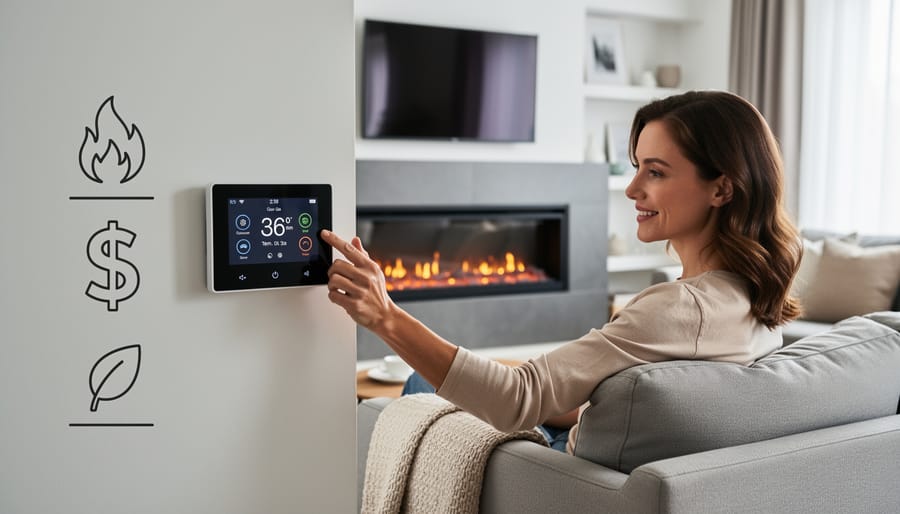
Here’s your money-saving secret: you don’t need to heat your entire home when you’re only using one or two rooms. This is where your gas fireplace becomes a strategic asset in cutting down heating bills.
Think of it as targeted comfort. When your family gathers in the living room for movie night, fire up the gas fireplace and turn down the central thermostat by several degrees. You’ll stay cozy in the space you’re actually using while your furnace takes a break from heating empty bedrooms and hallways. Many homeowners report saving 20-30% on heating costs using this approach during fall and spring months.
The math is simple: running a gas fireplace for a few hours costs significantly less than maintaining whole-house heating at comfortable temperatures. It’s particularly effective for those chilly mornings when you need warmth in the kitchen and family room but don’t want to crank up the entire system.
This strategy works beautifully as an eco-friendly heating solution too. By reducing your overall natural gas consumption through selective heating, you’re lowering your carbon footprint while keeping your wallet happy. It’s comfort where you need it, savings where it counts.
Maintenance Moves That Save Money
Think of your gas fireplace like your car—regular fireplace maintenance keeps it running efficiently and prevents small issues from becoming costly problems. When your fireplace operates at peak performance, it burns gas more completely, meaning you get more heat from every cubic foot of fuel.
Start with the basics: clean those burner ports and logs at least once a year. Dust and debris can block gas flow, forcing your system to work harder and burn more fuel to produce the same warmth. It’s like trying to breathe through a clogged nose—everything takes more effort. A clean burner ensures proper combustion, which directly translates to lower gas bills.
Don’t overlook your pilot light. A yellow or orange flame instead of crisp blue indicates incomplete combustion, wasting gas and potentially creating safety hazards. This simple observation during your fireplace maintenance practices can alert you to adjustment needs before they impact your wallet.
Check your fireplace gaskets and glass seals annually. Even small gaps let heated air escape and draw in cold drafts, forcing your fireplace to consume more gas to maintain comfortable temperatures. Replacing worn seals costs pennies compared to the gas you’ll save throughout the heating season.
Finally, schedule professional inspections every two to three years. Technicians can fine-tune your gas valve, verify proper venting, and catch efficiency-robbing problems you might miss. This investment pays dividends through reduced consumption and extended equipment life.
Comparing Gas Fireplaces to Other Heating Options
When weighing whether gas fireplaces use a lot of gas, it helps to see how they stack up against other heating options you might be considering for your home.
Gas fireplaces generally fall in the middle ground when it comes to operating costs. Electric fireplaces are typically the cheapest to run, costing around $10-15 per month for similar usage. However, they produce less authentic flame effects and may not provide the same cozy ambiance many homeowners crave. They’re essentially space heaters with visual appeal, making them ideal for apartments or situations where venting isn’t possible.
Traditional wood-burning options present a different picture entirely. While wood can be inexpensive if you source it yourself, the reality includes higher maintenance, chimney cleaning costs, air quality concerns, and the physical effort of hauling and storing logs. Many urban areas now restrict wood burning due to environmental regulations, making gas an increasingly practical choice.
Compared to central heating systems, gas fireplaces offer targeted zone heating that can actually reduce overall energy bills. Running your HVAC system to heat your entire home typically costs significantly more than using a gas fireplace to warm the rooms you actually occupy. This makes gas fireplaces an eco-friendly heating solution when used strategically.
The sweet spot for gas fireplaces is their balance of authenticity, convenience, and reasonable operating costs. You get real flames without the mess of wood, better ambiance than electric alternatives, and the flexibility to supplement your primary heating system efficiently. For homeowners who value both lifestyle and practicality, gas fireplaces deliver warmth and charm without breaking the bank.
The good news? Gas fireplaces don’t have to break the bank. When used thoughtfully, they offer an affordable way to add warmth and ambiance to your home without dramatically impacting your utility bills. Throughout this guide, we’ve explored how consumption varies based on fireplace type, usage patterns, and local gas rates—and most importantly, how you can take control of these costs.
Remember the key strategies: use your fireplace as a zone heater for the rooms you actually occupy, invest in a programmable thermostat or timer to prevent unnecessary runtime, schedule annual maintenance to keep efficiency high, and choose AFUE-rated models when purchasing. Even small adjustments, like lowering the flame height during milder evenings, can lead to noticeable savings over time.
Gas fireplaces represent a lifestyle choice that balances comfort with practicality. They provide instant warmth, require minimal effort, and create that cozy atmosphere we all crave during colder months. With the right approach, you can enjoy these benefits while keeping operating costs reasonable and embracing eco-friendly heating solutions. Make informed decisions based on your specific needs, usage habits, and budget—your fireplace should enhance your home life, not complicate it.