

Compare pellet brands by checking their BTU ratings—premium hardwood pellets typically deliver 8,200 to 8,500 BTUs per pound, giving you more heat for your money. Look for the Pellet Fuels Institute (PFI) certification stamp on the bag, which guarantees low ash content (under 1% for premium grade) and consistent moisture levels that prevent your stove from working overtime.
Calculate your actual heating costs by measuring pellets against cordwood in your region. While a ton of pellets runs $250-$350 in most areas, you’re getting precisely controlled heat output and effortless storage compared to cordwood’s unpredictable moisture content and seasoning requirements. Factor in your time—loading pellets takes minutes per day versus the hours spent splitting, stacking, and hauling traditional firewood.
Examine the ash content and fines (sawdust) at the bottom of sample bags before buying in bulk. Quality pellets produce a teaspoon of ash per 40-pound bag and minimal dust, while inferior products leave you cleaning your stove weekly and dealing with clinkers that damage your burn pot. Hardwood pellets from oak, maple, or cherry outperform softwood varieties in both heat output and burn time.
Consider your lifestyle and heating goals honestly. Pellet stoves offer thermostat-controlled convenience and cleaner indoor air, making them ideal for busy homeowners who value eco-friendly heating solutions without the rustic ritual of tending a wood fire. If you cherish the crackling ambiance and hands-on experience of traditional fires, cordwood remains a perfectly valid choice that connects you to time-honored heating traditions.
Why Wood Fuel Pellets Are Winning Over Traditional Cordwood
The Storage Space Reality Check
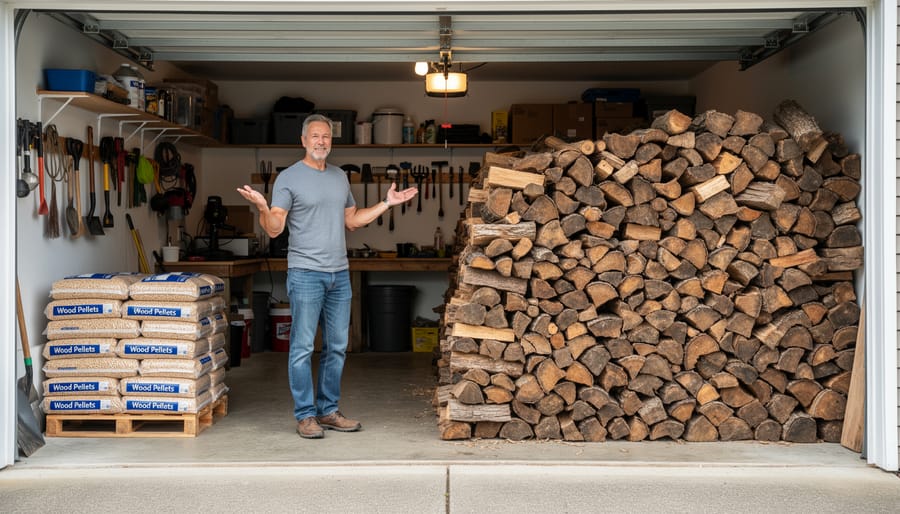
Let’s talk about where you’ll actually store your fuel—because this is where pellets truly shine for many homeowners. If you’ve ever dedicated a corner of your backyard to a towering cordwood stack covered with a tarp, you know the space commitment is real. A full winter’s supply of cordwood typically requires 1-2 cords, which translates to roughly 128-256 cubic feet of stacked wood that needs protection from moisture while still allowing airflow.
Wood pellets change this equation dramatically. That same heating capacity comes in compact 40-pound bags that stack neatly in your garage, basement, or even a closet. A ton of pellets—enough to heat an average home for weeks—occupies just 40-50 cubic feet when bagged. For urban and suburban homes where outdoor space is precious or HOA rules restrict visible wood piles, this difference becomes a lifestyle consideration, not just a convenience factor.
The storage simplicity extends beyond space savings. Pellets stay dry in their bags without the careful stacking and tarping cordwood demands. No worrying about wood-boring insects, no keeping it off the ground, and no seasoning time required. You simply buy, store, and burn—making pellets an eco-friendly heating solution that actually fits modern living spaces.
Moisture Content and Burn Efficiency
One of the most compelling advantages wood pellets bring to your home heating equation is their remarkably consistent moisture content. Quality pellets typically contain just 5-8% moisture, a figure that’s carefully maintained during manufacturing. Compare this to cordwood, which can vary wildly from 15% to over 30% moisture depending on how long it’s been seasoned, where it’s been stored, and even the time of year.
Why does this matter for your cozy evenings by the fire? Moisture content directly impacts burn efficiency. When you burn wet wood, you’re essentially wasting energy evaporating water before the wood can produce heat for your home. Those hissing, popping logs? That’s moisture escaping, taking precious BTUs with it. Pellets, with their low and reliable moisture levels, deliver consistent heat output every time you fill your hopper.
This predictability transforms how you manage your heating. There’s no guessing whether today’s log will burn hot or leave you reaching for an extra blanket. You’ll enjoy steadier temperatures, reduced creosote buildup in your system, and the satisfaction of knowing you’re maximizing every dollar spent on fuel while minimizing your environmental footprint through cleaner, more complete combustion.
What Makes a Wood Pellet “The Best” for Your Fireplace
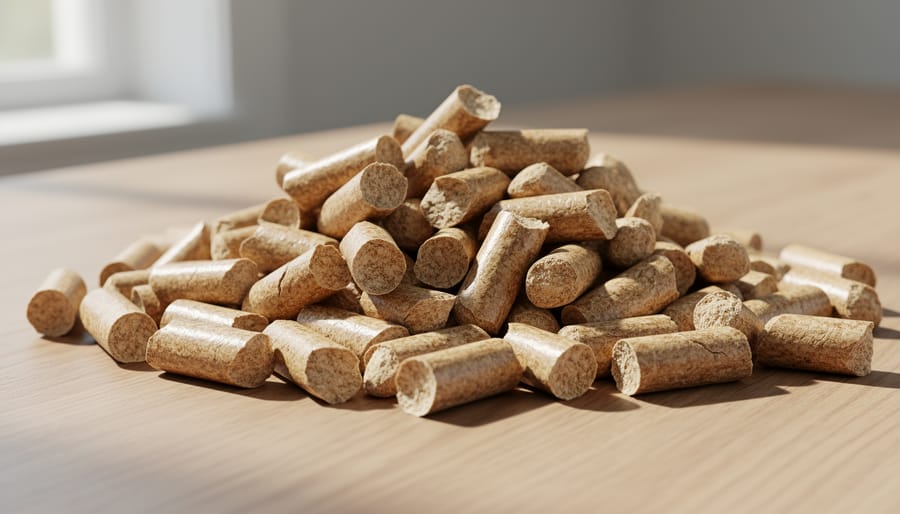
Understanding Pellet Certifications (PFI and ENplus)
When shopping for premium wood pellets, you’ll encounter two major certification standards that serve as your quality guarantee: PFI (Pellet Fuels Institute) and ENplus. Think of these certifications as trusted seals of approval that ensure you’re getting consistent, clean-burning fuel for your home.
PFI certification, predominantly used in North America, establishes strict standards for pellet density, moisture content, and ash production. Premium-grade PFI pellets produce less than 1% ash content, meaning less frequent cleaning and more efficient heat output for your cozy evenings by the fire.
ENplus certification, the European gold standard that’s gaining traction worldwide, goes even further by tracking pellets from forest to your home, ensuring sustainable sourcing practices. ENplus A1 pellets represent the highest quality tier, guaranteeing minimal ash, low moisture, and exceptional heat value.
Both certifications matter because they directly impact your heating experience. Certified pellets burn cleaner, require less maintenance, and produce more consistent warmth. They’re also better for the environment, supporting responsible forestry practices. While certified pellets might cost slightly more upfront, the reduced ash buildup and improved efficiency make them worthwhile investments for homeowners committed to reliable, eco-friendly heating solutions.
Hardwood vs Softwood Pellets: The Real Difference
Here’s the truth that might surprise you: the hardwood versus softwood debate matters far less than you think. Many homeowners assume hardwood pellets automatically burn longer and hotter, but that’s not the whole story.
Both hardwood and softwood pellets can deliver excellent heat when manufactured properly. What truly matters is the BTU rating and moisture content, not whether the pellets came from oak or pine. Quality softwood pellets often outperform poorly made hardwood ones because they’re denser and have lower moisture levels.
That said, there are subtle differences worth noting. Hardwood pellets typically produce slightly less ash, making cleanup easier if that’s important to your lifestyle. Softwood pellets, on the other hand, often cost less and can actually have higher BTU ratings due to their natural resin content.
The real key is checking the certification label. Premium pellets of either type should have consistent density, low moisture (under 8 percent), and minimal ash content. For most pellet stoves, either wood type works beautifully, so choose based on availability, price, and ash preference rather than getting caught up in the hardwood-softwood divide. Your stove doesn’t play favorites, it just wants quality fuel.
The Ash Content Factor
When you’re investing in a pellet stove or furnace for your home, you want fuel that works with you, not against you. That’s where ash content becomes a game-changer. The best wood pellets contain less than 1% ash, which translates directly to less time spent cleaning and more time enjoying your cozy, eco-friendly warmth.
High ash content means you’ll be emptying ash pans weekly instead of monthly, and that residue can accumulate in your burn pot and heat exchanger, reducing efficiency by up to 15%. Think of it this way: premium low-ash pellets are like using high-quality fuel in your car—everything runs smoother, cleaner, and more efficiently. You’ll notice the difference in your heating bills and the hours you save on maintenance, making those extra pennies per bag well worth the investment.
Top Wood Pellet Brands That Deliver Consistent Heat
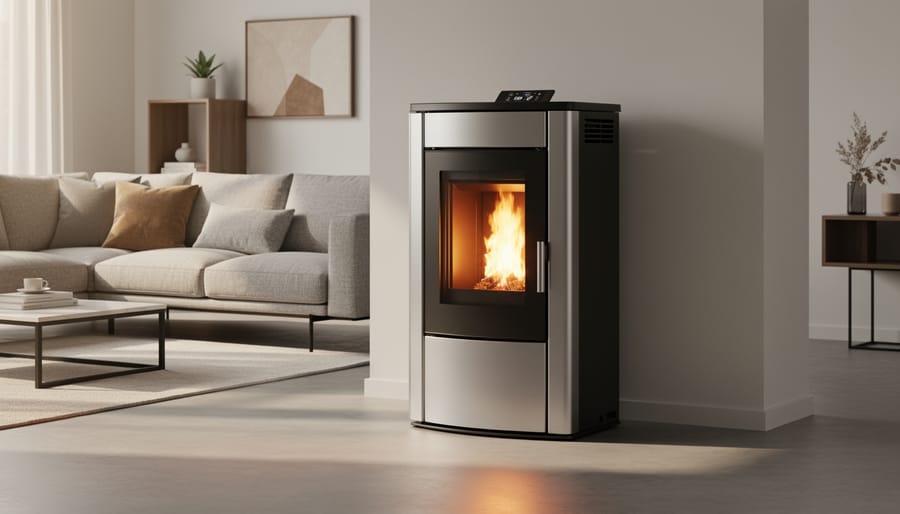
Premium Picks for Maximum Efficiency
When you’re ready to invest in the absolute best pellets on the market, these premium brands deliver exceptional performance that transforms your heating experience. Think of them as the difference between regular coffee and that perfectly crafted cup from your favorite café—the quality really shines through.
Okanagan Douglas Fir pellets consistently top the charts for serious pellet stove enthusiasts. With ash content below 0.3% and BTU ratings exceeding 8,700 per pound, these pellets burn incredibly clean and hot. You’ll spend less time cleaning your stove and more time enjoying the warmth. The pure douglas fir composition means virtually no additives or bark content, resulting in that beautiful, almost glass-like ash that’s easy to remove.
Barefoot Premium Hardwood pellets offer another outstanding option, particularly if you prefer hardwood over softwood. They produce minimal dust in the bag, which means cleaner storage and less maintenance mess around your stove. Their low moisture content—typically under 5%—translates to more efficient combustion and consistent heat output throughout the burn cycle.
LaCrete sawmill pellets have earned their reputation through rigorous quality control. Every batch meets strict specifications for size uniformity and density, ensuring smooth feeding through your auger system without jams or inconsistent flames. The environmental benefits shine here too, as these pellets come from sustainably managed forests with full chain-of-custody certification.
While these premium options cost roughly 15-25% more than standard pellets, homeowners report using less fuel overall due to superior efficiency. You’re not just buying pellets—you’re investing in consistent comfort and hassle-free operation all season long.
Best Value Options for Budget-Conscious Heating
You don’t need to break the bank to keep your home cozy with quality wood pellets. The key is understanding where smart compromises make sense and where they don’t.
Regional brands often deliver exceptional value because they minimize transportation costs while supporting local businesses. Check with nearby farm supply stores or heating equipment dealers for pellets produced within a few hundred miles of your home. These brands may not have national recognition, but they frequently match or exceed premium options in performance while costing $40 to $60 less per ton. Don’t let unfamiliar packaging fool you—regional producers often supply pellets to big-name brands anyway.
Bulk buying transforms decent pellets into great deals. Purchasing 3 to 5 tons at once typically saves $20 to $40 per ton compared to single-bag purchases. Many dealers offer spring and summer discounts when demand drops, letting you stock up at 15 to 20 percent below peak-season prices. Just ensure you have proper covered storage that keeps pellets bone-dry.
Look for pellets certified by the Pellet Fuels Institute, which guarantees they meet baseline quality standards regardless of price point. Even budget-friendly options with PFI certification will burn cleanly and efficiently in your stove. The difference between mid-range and premium pellets often comes down to slightly higher ash content—maybe an extra cleaning session per month—rather than dramatic performance gaps.
Consider mixing strategies too. Use premium hardwood pellets during your coldest months when you’re burning constantly, then switch to value brands during milder shoulder seasons when occasional ash doesn’t disrupt your routine.
Eco-Friendly Pellets Made from Sustainable Sources
Choosing eco-friendly pellets isn’t just good for the planet—it’s a smart move for your home heating routine. Look for pellets crafted from recycled wood waste like sawdust and wood shavings, which give new life to materials that would otherwise end up in landfills. Many premium brands source their materials from sustainable wood sources, ensuring forests are responsibly managed for future generations. These environmentally conscious options typically burn just as efficiently as conventional pellets while reducing your carbon footprint. As homeowners increasingly explore sustainable fuel alternatives, eco-friendly pellets offer a practical way to enjoy cozy warmth without compromising your environmental values. Check product labels for certifications like FSC or SFI to verify genuine sustainability credentials.
The True Cost Comparison: Pellets vs Cordwood Over a Heating Season
Breaking Down the Per-BTU Economics
Let’s talk about what you’re actually getting for your heating dollar. When comparing pellets to cordwood, the sticker price only tells part of the story.
Premium hardwood pellets typically contain around 8,000 BTUs per pound with moisture content below 6%. A 40-pound bag costing $6 delivers roughly 320,000 BTUs. That’s about 53,300 BTUs per dollar in raw heat potential.
Seasoned cordwood varies more dramatically. Well-dried hardwood might offer 20-25 million BTUs per cord at $250-300, working out to roughly 70,000-100,000 BTUs per dollar. Sounds better, right? But here’s where efficiency changes everything.
Modern pellet stoves burn at 75-90% efficiency, while traditional wood stoves typically achieve 60-75%. When you factor in actual heat delivered to your home rather than up the chimney, the gap narrows considerably. Pellets deliver approximately 40,000-47,800 BTUs per dollar to your living space, while cordwood provides roughly 42,000-75,000 BTUs per dollar.
The real winner depends on your local pricing, storage capacity, and lifestyle priorities. Pellets offer convenience and consistent performance, making them ideal for busy households who value their weekends. Cordwood remains economically attractive if you have ample storage space and enjoy the hands-on process of traditional wood heating.
Hidden Costs You’re Not Considering
When comparing heating fuels, the sticker price rarely tells the whole story. Let’s talk about those sneaky expenses that can significantly impact your heating budget and lifestyle.
If you’re burning traditional cordwood, consider the value of your time. Splitting and stacking a full cord typically takes 2-4 hours of physical labor. Even if you’re buying pre-split wood, you’ll still spend time stacking and organizing it properly for seasoning. At even modest hourly rates, this labor adds substantial hidden costs to your fuel bill. Wood pellets, by contrast, arrive in convenient 40-pound bags that stack neatly in minutes.
Delivery fees deserve attention too. Cordwood delivery often comes with minimum order requirements and per-mile charges that can add $50-$150 to your total cost. Pellet delivery tends to be more straightforward, especially if you order by the ton from big-box stores offering free or flat-rate shipping.
Storage solutions represent another consideration. Cordwood requires a dedicated woodshed or covered area taking up significant yard space, potentially costing $300-$1,000 to build or buy. You’ll also need proper ventilation and protection from moisture. Pellets need dry storage but occupy far less space—a ton of pellets fits neatly on a standard pallet in your garage.
Finally, maintenance time matters. Cordwood systems demand daily ash removal, regular chimney cleaning, and constant fire-tending. Pellet stoves automate much of this work, though they do require periodic professional servicing. Factor these hidden costs into your decision for a truly accurate comparison.
When Cordwood Still Makes More Sense
The Appeal of Traditional Wood-Burning
There’s something undeniably magical about a traditional cordwood fire that speaks to our primal connection with warmth and home. The mesmerizing dance of flames, the authentic crackling and popping sounds, and even the ritual of splitting and stacking wood create a deeply satisfying experience that many homeowners cherish. For those who appreciate the hands-on aspect of proper wood burning, there’s a tangible connection to the heating process that pellets simply can’t replicate. The visual drama of larger logs, the aromatic scent of different wood species, and the cozy ambiance they create remain compelling reasons why cordwood continues to hold its place in many homes. If you value these sensory elements and enjoy the more active role in managing your fire, traditional cordwood might align better with your lifestyle preferences.
Rural Advantages and Self-Sufficiency
If you’re fortunate enough to live in a rural area with access to your own woodland or free wood sources, the economics of heating shift dramatically in favor of traditional cordwood. When you can harvest fallen trees from your property, split wood from storm damage, or collect unwanted timber from neighbors, your fuel costs drop to essentially zero beyond your time and equipment investment.
This reality makes pellets a harder sell for rural homeowners with woodland access. Why pay $250-$350 per ton for manufactured pellets when you have a renewable fuel source literally in your backyard? The physical work of processing cordwood becomes part of a self-sufficient lifestyle many rural residents value, connecting them to their land and providing satisfaction that goes beyond simple economics.
That said, pellets still offer convenience advantages even in rural settings. They’re perfect for supplemental heating in secondary spaces, for times when you can’t tend a wood stove, or as backup fuel during busy seasons. Many rural homeowners find a hybrid approach works best, using their own cordwood as the primary heat source while keeping pellets on hand for convenience and flexibility. This strategy honors both the practical reality of available resources and the desire for modern comfort when life gets hectic.
How to Store and Handle Wood Pellets for Peak Performance
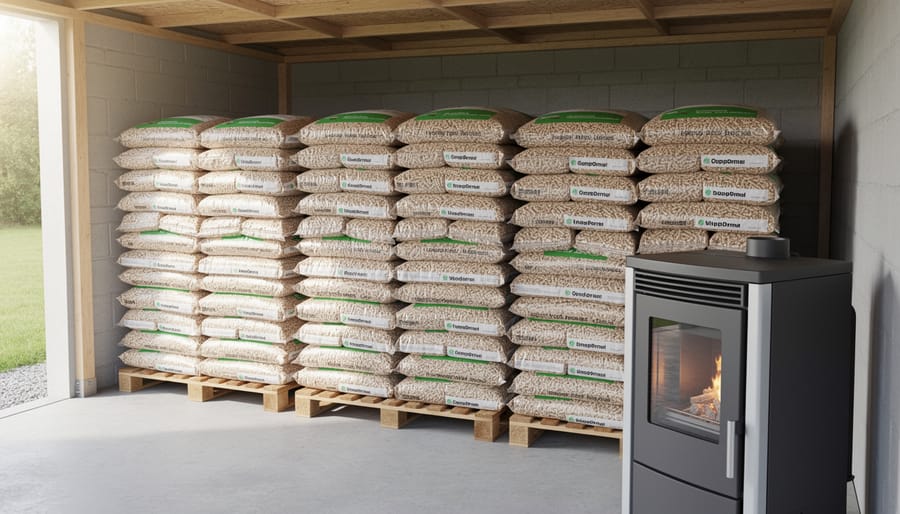
Moisture Is Your Enemy
Here’s the truth about wood pellets: they’re remarkably efficient little powerhouses until they meet their nemesis—moisture. Even a small amount of humidity can transform your premium pellets into sawdust mush that won’t burn properly and can actually damage your pellet stove.
When pellets absorb moisture, they swell, crumble, and lose their compressed density. This means inconsistent feeding through your stove’s auger, increased ash production, and significantly reduced heat output. You’ll end up burning through more pellets while getting less warmth for your home—exactly the opposite of the efficiency you’re after.
The solution? Proper storage is non-negotiable. Always keep pellets in their original sealed bags until you’re ready to use them, and store those bags off the ground on pallets in a climate-controlled space. Your garage works if it’s dry, but avoid damp basements or outdoor sheds. Once you open a bag, transfer any unused pellets to an airtight container with a tight-fitting lid.
Think of it as protecting an investment in your home’s comfort. A little attention to storage conditions means every pellet delivers maximum warmth, keeping your living space cozy while your heating dollars stretch further throughout the season.
Smart Buying: Bulk vs As-Needed Purchasing
Buying wood pellets in bulk typically saves you money—sometimes up to 20% compared to individual bags—making it an attractive option if you have the storage space and use pellets as your primary heat source throughout the winter. A full pallet of forty 40-pound bags gives you roughly one ton of fuel, perfect for homeowners committed to this eco-friendly heating solution for the entire season.
However, smaller quantities make more sense when you’re just starting out, using pellets occasionally for ambiance rather than primary heating, or dealing with limited storage space. Pellets can absorb moisture over time, which reduces their efficiency and creates more ash, so buying what you’ll use within a month or two ensures peak performance. Consider starting with a few bags to test different brands and find what burns best in your stove before committing to bulk purchases. If you do buy in bulk, store pellets in a dry, climate-controlled area—a garage or basement works well—and keep bags sealed until use to maintain that premium quality you paid for.
Choosing the best wood fuel pellets ultimately comes down to your unique situation, and that’s perfectly okay. There’s no one-size-fits-all answer when it comes to heating your home. Throughout this guide, we’ve explored how premium hardwood pellets offer consistent heat and minimal ash, while budget-friendly options can still deliver solid performance for occasional use. We’ve compared pellets to traditional cordwood, examined key quality indicators, and discussed the practical realities of storage, equipment, and ongoing costs.
The beauty of heating with wood, whether pellets or cordwood, is that you’re embracing a time-tested method that connects you to a more natural way of warming your space. You’re also contributing to eco-friendly heating solutions that can reduce your carbon footprint when sourced responsibly. And if you’re curious about expanding your horizons even further, exploring alternative fireplace fuels might open up additional possibilities.
Before you commit to ordering a full season’s worth of pellets, we strongly encourage starting with a test run. Purchase a few bags of different brands that meet your quality criteria and see how they perform in your specific stove or insert. Pay attention to heat output, ash production, and how cleanly they burn. This hands-on experience will give you the confidence to make a larger investment that perfectly matches your needs, budget, and lifestyle.