

Compare heat output ratings across models by checking BTU specifications—most quality 2-burner portable gas stoves deliver between 20,000-30,000 BTUs total, with each burner independently controlled for precise temperature management. Look for models with at least 10,000 BTUs per burner if you plan to boil water quickly or cook multiple dishes simultaneously.
Evaluate portability features beyond just weight by examining folding mechanisms, carry handles, and protective case options. The best 2-burner designs collapse to briefcase size while maintaining sturdy construction, typically weighing 10-15 pounds—light enough for camping trips yet stable enough for outdoor gatherings at home.
Prioritize safety certifications and fuel efficiency ratings when narrowing your choices. CSA or UL-certified models ensure proper gas flow regulation and include automatic shut-off features that prevent dangerous leaks. Modern efficient burners consume approximately one pound of propane per hour at maximum heat, stretching a standard camping cylinder across multiple cooking sessions.
Match burner configuration to your actual cooking patterns rather than assuming more heat equals better performance. Side-by-side burner layouts accommodate larger pots and pans better than front-to-back arrangements, while models with removable grates simplify cleanup after messy outdoor meals. Consider whether you need high-heat searing capability on both burners or prefer one high-output burner paired with a gentler simmer burner for sauces and delicate foods.
Test wind resistance features if you plan outdoor use, as windscreens and recessed burner designs maintain consistent flame performance in breezy conditions where standard portable stoves struggle.
What Makes a 2-Burner Stand Out From Single Burners
When you’re planning meals outdoors or need backup cooking capacity during power outages, the jump from a single burner to a dual-burner setup transforms how you approach meal preparation. Think of it like upgrading from a one-pot kitchen to having actual cooking flexibility—suddenly, you’re not just heating water while your main dish waits its turn.
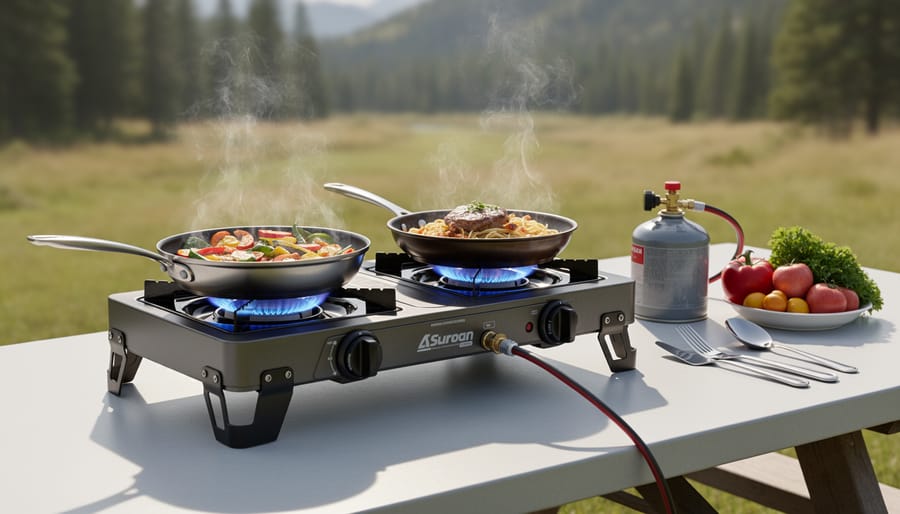
The most immediate advantage is simultaneous cooking. You can boil water for coffee or pasta while sautéing vegetables, or keep a pot of soup warm while grilling sandwiches. This efficiency becomes invaluable during camping trips when hungry family members gather around waiting for breakfast, or during power outages when you’re trying to maintain normal meal routines. Instead of cooking in sequence and serving cold food, everything comes together hot and ready.
For those who view outdoor cooking as part of the lifestyle experience—whether that’s tailgating, RV adventures, or backyard gatherings—a 2-burner stove elevates the entire experience. You’re not just surviving; you’re actually cooking with the same rhythm and flow you’d have at home. This matters when you’re preparing meals for multiple people or tackling recipes that require more than one pot.
The portability trade-off is worth considering. Two-burner models typically weigh between 10-20 pounds and require more storage space than single burner alternatives. However, they remain genuinely portable—far lighter than hauling multiple single burners separately. Most fold into briefcase-style carrying cases that fit easily in vehicle trunks or RV storage compartments.
A 2-burner setup makes sense when you regularly cook for three or more people, prepare multi-component meals, or want emergency preparedness that doesn’t feel like roughing it. The investment pays off in fuel efficiency too, since you’re running one integrated unit rather than managing separate fuel supplies for multiple single burners. For solo adventurers or minimalist campers, a single burner suffices—but for families and serious outdoor cooks, dual burners deliver functionality that justifies the modest increase in size and cost.
The Core Features That Actually Matter
BTU Output and Heat Control
Understanding BTU ratings helps you choose a portable gas stove that matches your actual cooking needs. BTU, or British Thermal Unit, measures the heat output per burner—but bigger isn’t always better for everyday use.
Most quality 2-burner portable stoves offer between 7,000 and 15,000 BTUs per burner. For gentle simmering of soups or warming sauces, you’ll want around 5,000-7,000 BTUs. Medium heat cooking like sautéing vegetables works beautifully at 7,000-10,000 BTUs, while high-heat tasks such as boiling water quickly or searing meat benefit from 12,000-15,000 BTUs.
Here’s what really matters: precise flame control beats raw power every time. A stove that adjusts smoothly from a gentle flicker to full flame gives you versatility for delicate tasks like melting chocolate or keeping dishes warm without scorching. Look for models with responsive control knobs that offer a wide range between the lowest and highest settings.
Think of it like a fireplace damper—you wouldn’t want only full blast or completely off. The ability to fine-tune your heat output transforms cooking from guesswork into an enjoyable, controlled experience. This precision also makes your stove more fuel-efficient, stretching your propane supply further while reducing your environmental footprint.
Fuel Type and Compatibility
Choosing the right fuel type for your portable two-burner stove impacts performance, convenience, and your overall cooking experience. When exploring butane versus propane options, each offers distinct advantages worth considering.
Propane delivers reliable performance in cold weather and high-altitude conditions, making it ideal for year-round outdoor use and emergency preparedness. These canisters are widely available at hardware stores and camping suppliers, often in refillable formats that reduce waste and long-term costs. Butane, conversely, burns cleaner and quieter, perfect for indoor use during power outages or casual outdoor cooking in temperate weather. However, butane struggles below 32 degrees Fahrenheit, limiting cold-weather applications.
Canister compatibility varies by model. Some stoves accept only proprietary cartridges, while others work with standard threaded or puncture-style canisters. Threaded connections offer better reusability and safety, as you can detach partially-used canisters without waste.
Fuel efficiency depends on burner design and BTU output. Quality two-burner models typically consume fuel economically, with propane offering slightly better energy density. Consider purchasing models with adjustable flame control to maximize efficiency and minimize fuel consumption during extended use. For eco-conscious homeowners, choosing refillable propane systems aligns with sustainable practices while ensuring you’re always prepared.
Build Quality and Durability
When evaluating portable gas stoves, the difference between a reliable companion and a frustrating disappointment often comes down to build quality. Look for stoves constructed with stainless steel burners and housing rather than thin stamped metal or flimsy plastic components. Quality models feature brass or chrome-plated brass valve assemblies that resist corrosion and maintain consistent flame control over years of use.
Pay attention to the weight and feel of the unit. While portability matters, a stove that feels suspiciously lightweight often indicates corners cut in materials. Sturdy grates made from cast iron or heavy-gauge steel will support your cookware reliably without warping from repeated heating cycles. Check that burner caps sit securely and wind guards attach firmly, as loose components indicate poor manufacturing tolerances.
The ignition system reveals much about overall quality. Piezo igniters with metal construction and solid clicking action outlast cheaper plastic versions that fail after minimal use. Examine the hose connection points for reinforced fittings and proper gasket seals to prevent leaks. Rubber feet should be thick and well-attached, not thin adhesive pads that peel away quickly. Investing in a well-constructed two-burner stove means enjoying reliable outdoor cooking for camping trips, emergency preparedness, or cozy backyard gatherings for years to come.
Portability Factors: Weight, Size, and Storage
When you’re choosing a portable gas stove for camping adventures, RV trips, or your emergency preparedness kit, the physical dimensions and weight make all the difference between genuine portability and a frustrating hassle. Most 2-burner models weigh between 8 and 15 pounds, which might not sound significant until you’re hauling gear across a campsite or fitting everything into limited RV storage space.
The ideal portable stove balances cooking capacity with manageable size. Look for models measuring roughly 20-25 inches wide when open, which provides adequate cooking space while still fitting into standard camping bins or vehicle compartments. Closed dimensions matter equally—compact folding designs that reduce height to just a few inches make stacking and packing considerably easier.
A quality carrying case transforms portability from acceptable to excellent. Hard-shell cases protect burners and connections during transport, while soft cases with reinforced handles offer lighter-weight convenience. Some manufacturers include divided compartments for propane canisters and accessories, keeping everything organized in one place.
Consider your specific use case: backpackers need ultralight options under 10 pounds, while RV enthusiasts can accommodate sturdier 15-pound models with enhanced wind protection. For home emergency kits, prioritize models that store flat in closets or garage shelving. The most portable stove isn’t necessarily the smallest—it’s the one that fits seamlessly into your lifestyle while delivering reliable warmth and cooking capability when you need it most.
Safety Features You Shouldn’t Compromise On
When you’re investing in a portable gas stove with two burners, safety should be at the very top of your priority list. These compact cooking companions bring convenience to your outdoor gatherings and backup power solutions, but only when they’re equipped with the proper protections. Let’s walk through the critical safety elements that make the difference between a reliable cooking tool and a potential hazard.
First and foremost, look for automatic shut-off systems. These smart features detect when the flame extinguishes unexpectedly, immediately cutting off the gas supply. Think of it as having a vigilant guardian watching over your cooking space, especially important when you’re juggling multiple pots or managing a busy outdoor kitchen setup.
Pressure regulators deserve equal attention. A quality regulator maintains consistent gas flow regardless of temperature changes or fuel levels in your canister. This consistency not only improves cooking performance but prevents dangerous pressure buildups that could lead to flare-ups or equipment failure.
Wind guards might seem like simple add-ons, but they’re essential for outdoor use. These protective barriers keep flames steady even in breezy conditions, preventing gas waste and maintaining safe, predictable heat. Without them, you’re fighting an uphill battle every time nature decides to join your cooking session.
Stability features often get overlooked until it’s too late. Wide, non-slip bases and secure pan supports prevent tipping accidents that could spill hot food or damage your equipment. Check that the burner grates are sturdy enough to handle your heaviest cookware without wobbling.
Certification standards matter tremendously. Look for approval marks from recognized testing organizations like CSA, UL, or CE. These certifications confirm that independent experts have vetted the design for safety compliance.
Finally, understand your ventilation requirements. While these stoves work beautifully outdoors, indoor use demands proper airflow to prevent carbon monoxide buildup. If you’re considering emergency indoor use, ensure adequate ventilation and invest in a carbon monoxide detector. Your portable stove should enhance your lifestyle, not compromise your household’s wellbeing.
Comparing Performance in Real-World Scenarios
Outdoor Cooking and Camping
When you’re cooking under the open sky, your portable two-burner stove faces challenges you’d never encounter in your kitchen. Think of it as bringing the comfort of home-cooked warmth to the wilderness, but your equipment needs to stand up to Mother Nature’s mood swings.
Wind resistance becomes your first concern. Look for models with built-in windscreens or high sidewalls that shield flames from gusts. Without proper wind protection, you’ll waste fuel and watch your dinner take twice as long to prepare. Cold weather performance matters too, especially if you’re camping in shoulder seasons. Stoves with pressure regulators maintain consistent flame output even when temperatures drop, ensuring your morning coffee doesn’t turn into an hour-long ordeal.
Rugged construction separates weekend warriors from serious camp stoves. Stainless steel or heavy-duty aluminum bodies withstand the bumps and jostles of transport, while sturdy grates support cast iron cookware without wobbling. Quick-connect fittings and reliable ignition systems mean fewer frustrations when you’re hungry after a long hike.
For the environmentally conscious camper, fuel efficiency isn’t just about saving money. Choose models with well-designed burners that maximize heat transfer and minimize waste, letting you enjoy outdoor cooking while treading lighter on the landscapes you love exploring.

Emergency Preparedness and Power Outages
When the power goes out, your portable two-burner gas stove becomes an invaluable lifeline for hot meals and comfort. Unlike electric cooktops, these units operate completely independently of your home’s electrical system, making them ideal for backup cooking during emergencies. Most models run on standard propane canisters or butane cartridges, giving you flexibility during extended outages.
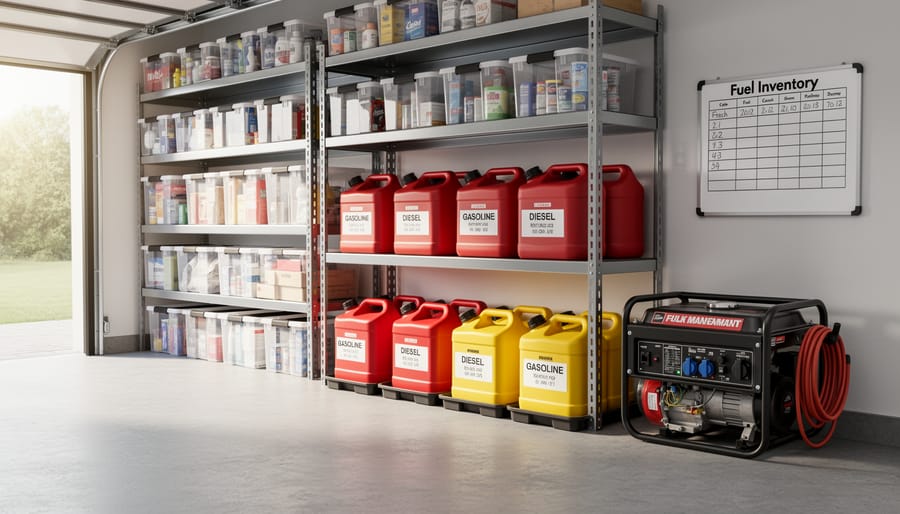
However, proper fuel storage considerations are essential. Store canisters in cool, dry locations away from direct sunlight and heat sources. Keep extras on hand, but rotate your supply regularly to ensure freshness. A single canister typically provides 1-2 hours of cooking time, so plan accordingly.
Safety remains paramount during emergencies. While these stoves are designed for outdoor use, if you must cook indoors temporarily, ensure adequate ventilation by opening windows and doors. Never use them in enclosed spaces without proper airflow, as carbon monoxide buildup poses serious risks. Position the stove on stable, heat-resistant surfaces away from flammable materials, and always keep a fire extinguisher nearby for peace of mind.
Supplemental Kitchen Use
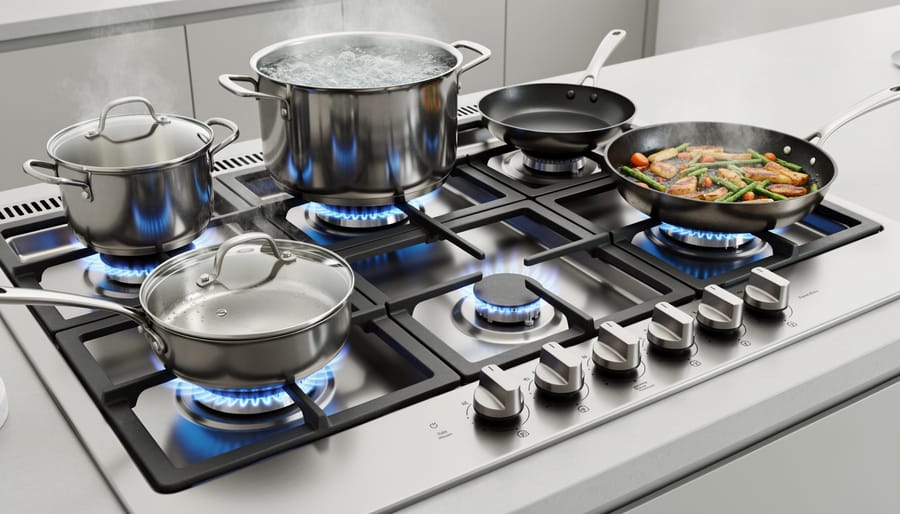
A portable two-burner gas stove becomes your kitchen’s best friend during those moments when your regular cooktop just can’t keep up. Think about Thanksgiving dinner, when you’re juggling multiple dishes and running out of burner space—having an extra portable unit lets you keep that gravy warm while finishing the vegetables, all without the dinner-time scramble.
For homeowners who love outdoor entertaining, these compact units transform your patio or deck into an extension of your kitchen. You can prepare fresh sides right at the gathering spot, keeping you connected with guests rather than running back and forth indoors. The two-burner configuration gives you genuine cooking flexibility, whether you’re simmering a sauce while grilling vegetables or managing two separate dishes simultaneously.
Small living spaces particularly benefit from this supplemental approach. Studio apartment dwellers, in-law suite occupants, or those with kitchenettes often find their single or two-burner built-in setup limiting. A portable gas stove stored away when not needed provides that extra capacity for ambitious cooking projects without permanently taking up precious counter space.
These stoves also shine during kitchen renovations when your main cooking area is temporarily out of commission. Rather than relying solely on a microwave or takeout for weeks, you can maintain relatively normal meal preparation. The portability means you can set up a temporary cooking station wherever it’s convenient, keeping your household running smoothly even during construction chaos. This versatility makes the investment worthwhile beyond just occasional holiday use.
The Environmental Impact of Your Choice
When you’re choosing a portable gas stove, the environmental angle matters more than you might think. These compact cooking solutions actually offer some surprising benefits for eco-conscious homeowners who value sustainable living alongside practical functionality.
Let’s start with fuel efficiency. Two-burner portable gas stoves typically run on propane or butane, both of which burn cleaner than many alternatives. When properly adjusted, these stoves produce minimal carbon monoxide and significantly less particulate matter than wood-burning cooking methods. A well-designed 2-burner model can deliver impressive BTU output while using less fuel overall compared to running a full-sized kitchen range, especially when you’re only cooking for a few people or preparing meals outdoors.
The emissions profile is worth considering too. Modern portable gas stoves have come a long way in combustion efficiency, often achieving near-complete fuel burn when maintained properly. This means fewer unburned hydrocarbons released into the air around your cooking space. Compare this to charcoal grills or older camping stoves, and the difference becomes quite noticeable.
Recyclability presents both challenges and opportunities. Quality portable stoves feature metal components like stainless steel burners and brass fittings that can be recycled at end-of-life. However, some models incorporate plastic housings and rubber hoses that require more careful disposal. When shopping, look for brands committed to using recyclable materials and offering replacement parts rather than forcing you to discard the entire unit when one component fails.
How do they stack up against other cooking methods? Electric portable burners draw from the grid, which may or may not be renewable depending on your location. Traditional campfires produce substantial smoke and particulates. Your 2-burner gas stove hits a practical middle ground, delivering efficient heat with reasonable environmental impact, especially when you choose certified low-emission models and maintain them properly for optimal performance.
What You’ll Actually Spend (Beyond the Price Tag)
When you’re considering a portable gas stove with two burners, understanding the complete financial picture helps you make a smart investment. Let’s break down what you’ll really spend over time.
The initial purchase typically ranges from $50 to $200, depending on quality and features. Budget-friendly models start around $50, while premium stoves with better heat control and durability run closer to $150-200. Think of this as choosing between a basic solution and a long-term companion for your outdoor adventures or emergency preparedness kit.
Fuel costs are where ongoing expenses come into play. A standard 16-ounce propane canister costs about $3-5 and provides roughly 1.5 hours of cooking time on high heat. If you’re using your stove regularly for camping trips or outdoor gatherings, expect to spend $10-20 monthly. For occasional use or emergency backup, you might only go through a few canisters yearly, keeping costs minimal.
Maintenance is refreshingly simple with these stoves. You’ll want to replace burner grates if they rust, typically $10-15 per set every few years. Hoses and regulators for models using refillable propane tanks may need replacement every 3-5 years at around $20-30.
The real value shines when you compare this to dining out or purchasing prepared food during power outages. Many families find their two-burner stove pays for itself within the first year, especially when it becomes part of their eco-friendly outdoor lifestyle, reducing reliance on disposable camping products while providing reliable warmth and cooking capability.
Finding the right portable gas stove with two burners ultimately comes down to aligning features with what matters most to you. If you’re primarily cooking at home during power outages, prioritize safety features and steady heat output. For outdoor adventures, weight and wind resistance become your best friends. Those conscious of their environmental footprint should look for models with efficient fuel consumption and clean-burning technology that minimizes emissions while still delivering the warmth and cooking power you need.
Remember that convenience shouldn’t come at the expense of safety. Always check for automatic shut-off features, proper ventilation requirements, and stability mechanisms that prevent tipping. These elements aren’t just checkboxes on a spec sheet—they’re essential safeguards that protect you, your loved ones, and your surroundings. Similarly, considering the environmental impact of your cooking choices reflects the broader movement toward eco-friendly heating solutions that respect both comfort and sustainability.
The beauty of a quality 2-burner portable gas stove lies in its versatility. Whether you’re adding a temporary cooking solution to your home, preparing meals at a campsite, or ensuring your family stays fed during emergencies, the right model adapts to your lifestyle rather than limiting it. With thoughtful consideration of your specific needs, safety priorities, and environmental values, you’ll discover that this simple piece of equipment brings remarkable warmth, flexibility, and peace of mind to countless cooking situations throughout the year.