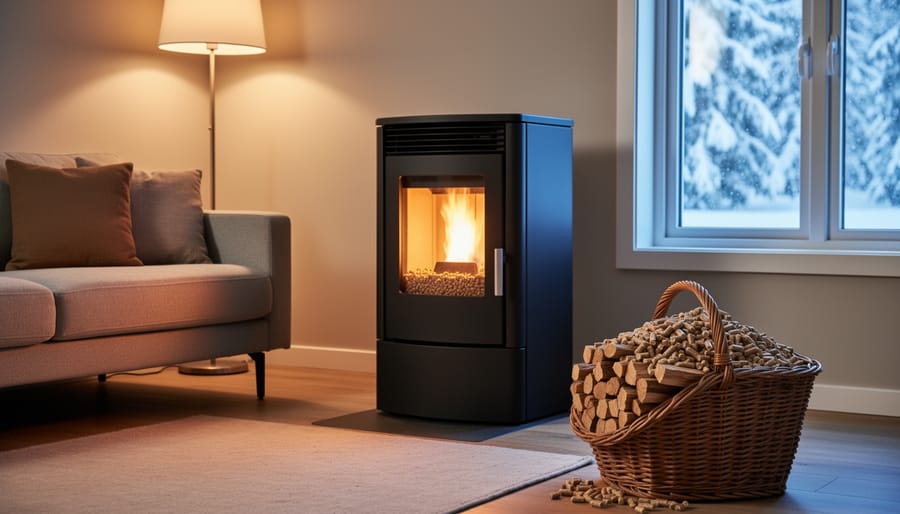


Prioritize stoves with efficiency ratings above 75%, as measured by the EPA certification standards—this percentage tells you exactly how much of your pellet fuel converts to usable heat rather than escaping up the chimney. A stove operating at 85% efficiency, for example, wastes only 15 cents of every dollar you spend on pellets, making it a smart long-term investment for your home’s comfort and your wallet.
Choose premium hardwood pellets over softwood varieties when maximum efficiency matters. Hardwood pellets contain less moisture and produce more BTUs per pound, meaning your stove burns less fuel to generate the same warmth. While softwood pellets cost slightly less upfront, the efficiency gains from hardwood options typically offset the price difference within a single heating season.
Match your stove’s BTU output to your square footage requirements—oversized units cycle on and off frequently, which reduces efficiency and increases maintenance needs, while undersized models run continuously without reaching optimal combustion temperatures. Calculate 30-40 BTUs per square foot for well-insulated homes in moderate climates, adjusting upward for colder regions or older construction.
Clean your burn pot, heat exchanger, and exhaust system every week during peak heating months to maintain factory-rated efficiency levels. Ash buildup restricts airflow and prevents complete combustion, forcing your stove to consume more pellets while producing less heat. This simple maintenance routine takes under 15 minutes but preserves both performance and the eco-friendly benefits that make pellet heating an attractive alternative to fossil fuels.
What Makes a Pellet Stove Truly Efficient?
Understanding Efficiency Ratings and What They Mean for You
When you’re shopping for a pellet stove, those efficiency percentages can feel like alphabet soup. Let’s translate what they actually mean for your home and wallet.
Think of efficiency ratings as a measure of how well your stove converts pellets into usable heat rather than sending warmth up the chimney. A stove rated at 70% efficiency means that 30% of your fuel’s energy escapes as exhaust. Compare that to a 90% efficient model, and you’re suddenly keeping much more heat where you want it—in your living space.
The EPA certification you’ll see on spec sheets isn’t just regulatory paperwork. It confirms that a stove meets strict emissions standards while maintaining its claimed efficiency. When reading specification sheets, look for the overall efficiency percentage first, then check the BTU output range. A stove producing 40,000 BTUs at 85% efficiency delivers significantly more usable heat than one generating the same BTUs at 75% efficiency.
Here’s where many buyers get surprised: peak efficiency versus sustained efficiency. Peak efficiency represents the stove’s best performance under ideal conditions—perfect pellets, optimal settings, and proper venting systems. Sustained efficiency reflects real-world performance over hours of continuous operation. A quality stove maintains 80-85% sustained efficiency, while budget models might drop to 70% or lower as burn rates fluctuate.
The sweet spot for most homeowners sits around 80-85% efficiency. These stoves balance initial cost with long-term fuel savings beautifully. Models boasting 90%+ efficiency typically command premium prices, but they’re worth considering if you’re heating large spaces or prioritizing eco-friendly performance. Every percentage point improvement means less ash cleanup, fewer pellet bags purchased annually, and a smaller carbon footprint warming your home.
Heat Output vs. Efficiency: Finding the Sweet Spot
Finding the right balance between heat output and efficiency is crucial for maximizing comfort while keeping your heating costs manageable. A common misconception is that bigger is always better, but an oversized pellet stove can actually hurt your wallet and comfort level.
BTU output tells you how much heat a stove produces, but higher numbers don’t necessarily mean better efficiency. A stove rated at 50,000 BTUs might sound impressive, but if you’re heating a small 1,200-square-foot home, you’ll end up constantly running it on low settings where combustion isn’t as complete. This wastes pellets and creates more ash buildup, defeating the purpose of choosing an efficient heating solution.
The sweet spot comes from matching your stove’s capacity to your actual heating needs. As a general guideline, you’ll need approximately 25-30 BTUs per square foot in moderate climates, though this varies based on insulation quality and ceiling height. A well-sized stove operates in its optimal efficiency range more often, burning pellets completely and extracting maximum heat from every pound of fuel.
Consider this lifestyle perspective: an appropriately sized stove creates consistent, comfortable warmth throughout your living space without cycling on and off constantly. This steady operation not only saves fuel but also maintains better air quality and reduces maintenance frequency. When shopping for your pellet stove, resist the temptation to oversize for those few exceptionally cold days. Instead, choose a model that matches your typical heating demands, and you’ll enjoy both lower fuel bills and a more eco-friendly heating solution that performs beautifully season after season.
Pellet Types: The Fuel That Powers Your Savings
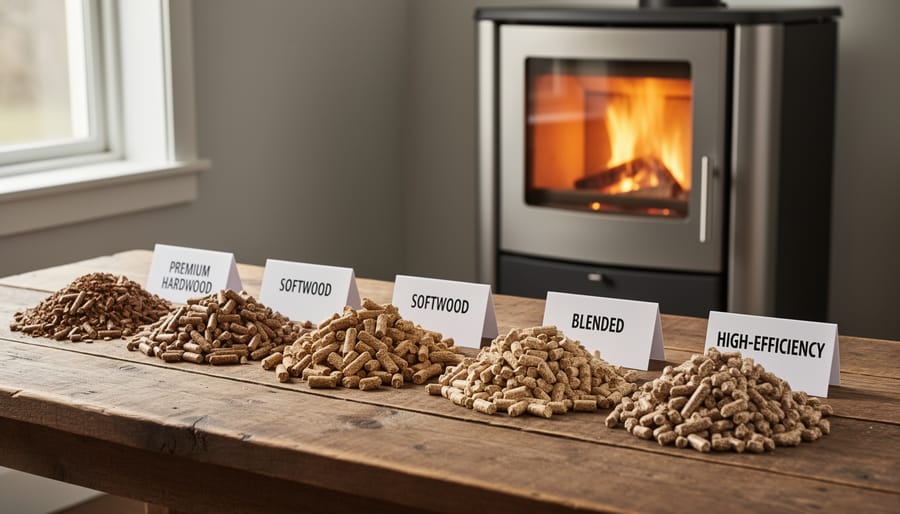
Hardwood vs. Softwood Pellets
When you’re shopping for pellets to fuel your efficient stove, you’ll encounter two main options: hardwood and softwood pellets. Understanding the differences between these fuel types can help you maximize your stove’s performance and keep your home cozy throughout the heating season.
Hardwood pellets come from deciduous trees like oak, maple, and cherry. They’re denser than their softwood counterparts, which means they typically produce more heat per pound. You’ll notice they burn slightly longer and generate less ash, usually around 0.5% to 1% ash content. This makes cleanup easier and means you’ll spend less time maintaining your stove. Many homeowners appreciate hardwood pellets for their consistent performance and the fact that ash buildup won’t interfere with airflow as quickly.
Softwood pellets, made from pine, spruce, and fir, contain more resin and lignin. While they’re slightly less dense, they actually produce comparable heat output because those natural resins pack extra energy. They burn hotter and faster than hardwood pellets, though they do create more ash, typically 1% to 3%. Don’t let that discourage you, though. Many efficient pellet stoves are designed to handle this ash production without any trouble.
So which type works best with high-efficiency stoves? The honest answer is both perform admirably. Your choice often comes down to regional availability and price. Softwood pellets tend to cost less in areas where coniferous forests are abundant, while hardwood pellets may be more economical in deciduous tree regions. Most modern efficient stoves can burn either type beautifully, so focus on finding premium-grade pellets with low moisture content (under 8%) rather than worrying exclusively about wood type. This eco-friendly heating solution works wonderfully regardless of your pellet choice, as long as you’re using quality fuel.
Premium vs. Standard Grade Pellets
Not all wood pellets are created equal, and understanding the grading system can significantly impact both your stove’s performance and your wallet. Premium-grade pellets typically contain less than 1% ash content and maintain moisture levels below 6%, while standard-grade pellets can have up to 3% ash and slightly higher moisture content.
Here’s what makes premium pellets worth considering: they burn hotter and cleaner, producing more heat per pound while leaving minimal residue in your stove. This means fewer cleanings, less maintenance, and ultimately, a longer lifespan for your heating system. When your stove burns efficiently with premium fuel, you’re maximizing the BTU output you’re paying for.
The math often surprises homeowners. While premium pellets might cost 10-20% more per bag, they typically deliver 15-25% better heating efficiency. You’ll burn through fewer bags during the season, and your stove will maintain peak performance with less effort on your part. Think of it as choosing high-grade fuel for your car—the engine simply runs better.
Standard-grade pellets aren’t necessarily bad, but they require more frequent ash removal and can leave behind deposits that reduce airflow and heat transfer over time. If you do opt for standard grade, commit to a stricter cleaning schedule and invest in proper pellet storage to prevent moisture absorption, which further degrades burn quality.
For the most efficient heating experience, premium hardwood pellets offer the best balance of consistent performance and eco-friendly combustion, turning your pellet stove into a truly cost-effective heating solution.
Specialty and Blended Pellets
While traditional wood pellets remain the gold standard for most heating applications, exploring alternative fuels can unlock new efficiency possibilities and cost savings for your home. Specialty pellets made from corn, wheat, cherry pits, and other agricultural byproducts offer intriguing options, though they come with important considerations.
Corn pellets typically generate impressive BTU output, often matching or exceeding premium wood pellets. They burn hot and create minimal ash, making them attractive for rural homeowners with access to affordable local sources. However, corn requires stoves specifically designed or rated for multi-fuel use, as its higher sugar content can cause clinker buildup in standard wood pellet stoves. This compatibility issue is crucial for maintaining long-term efficiency.
Blended pellets that combine wood with corn, grass, or other biomass materials aim to balance performance with cost. These blends can reduce your fuel expenses while maintaining reasonable heat output, though efficiency may vary by 10-15 percent compared to pure hardwood pellets. The key is matching your fuel choice to your stove’s capabilities.
Before experimenting with specialty pellets, always check your manufacturer’s guidelines. Using incompatible fuels can void warranties and damage critical components. When your stove is designed for alternative fuels, these options become viable pathways to efficient, eco-friendly heating that supports local agriculture while warming your home.
The Most Efficient Pellet Stoves on the Market Today
Best for Small Spaces (Up to 1,500 sq ft)
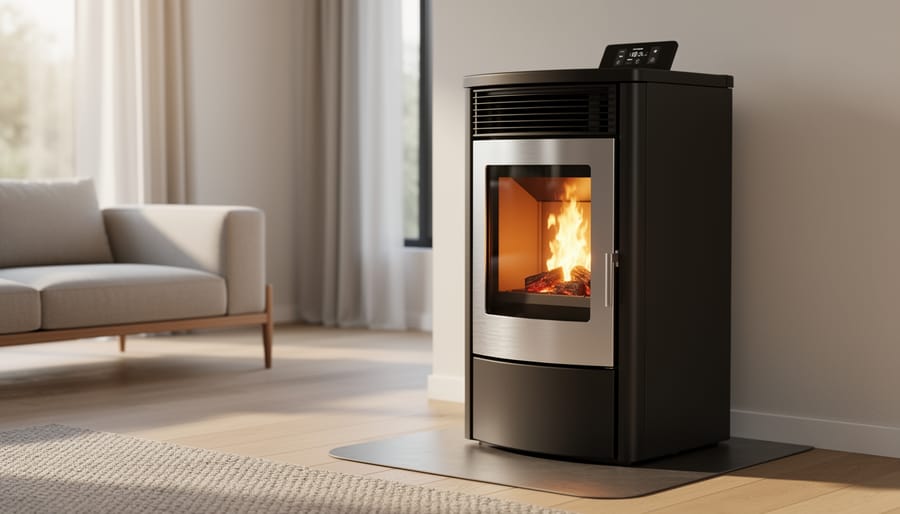
For cozy apartments, smaller homes, or cabins where space comes at a premium, compact pellet stoves deliver impressive heating power without overwhelming your living area. These efficient little workhorses prove that good things truly do come in small packages.
The Comfortbilt HP22 stands out as a top performer for smaller spaces, boasting an 85% efficiency rating while heating up to 1,500 square feet. This 42,000 BTU unit features a sleek design that won’t dominate your room, measuring just 23 inches wide. What makes it particularly appealing for compact living is its quiet operation and programmable thermostat, allowing you to maintain consistent warmth without constant adjustments.
Another excellent choice is the Pleasant Hearth PH35PS, delivering 80-83% efficiency in an even more compact footprint. Perfect for supplemental heating or a single-level cabin, this model burns through just 40 pounds of pellets daily at maximum output. Its top-loading hopper holds 40 pounds, meaning less frequent refilling during those chilly evenings when you’d rather stay curled up with a book.
These smaller models embrace eco-friendly heating by maximizing every pellet’s potential, reducing waste while keeping your space comfortable. They’re also more affordable than their larger counterparts, making them ideal starting points for homeowners exploring pellet heating as a lifestyle choice. The key advantage? You’ll enjoy the ambiance and warmth of a real fire without sacrificing precious floor space or breaking your heating budget.
Best for Medium Homes (1,500-2,500 sq ft)
For families living in medium-sized homes, finding the sweet spot between heating power and fuel economy becomes essential. You’re looking for a pellet stove that can comfortably warm your living space without burning through bags of pellets or sending your electricity bill soaring.
The ideal pellet stove for this square footage range typically features a heat output between 30,000 and 45,000 BTUs. This capacity provides enough warmth to heat your main living areas effectively while maintaining impressive efficiency ratings above 80 percent. Many homeowners find that a well-placed stove in this category can serve as their primary heat source, reducing reliance on traditional heating systems and embracing a more eco-friendly heating approach.
When shopping for your medium-home pellet stove, prioritize models with programmable thermostats and variable heat settings. These features let you customize heating schedules around your family’s lifestyle, ensuring you’re only using fuel when needed. Look for stoves with larger hoppers, typically holding 50 to 60 pounds of pellets, which means fewer refills during busy weekdays.
The best performers in this category often include advanced combustion technology that extracts maximum heat from every pellet while producing minimal ash. This translates to cleaner burns and less maintenance time for you. Many mid-range efficient models also feature quieter blower systems, making them perfect for open-concept living spaces where noise can be a concern. The combination of reliable performance, reasonable fuel consumption, and user-friendly operation makes these stoves an excellent investment for typical family homes.
Best for Large Homes (2,500+ sq ft)
When you’re heating a spacious home over 2,500 square feet, you need a pellet stove that combines serious BTU output with impressive efficiency ratings. The best large-capacity stoves deliver 50,000 to 60,000 BTUs while maintaining efficiency ratings above 80%, making them viable primary heating sources that can reduce your reliance on traditional HVAC systems.
Look for models with hopper capacities of 60 pounds or more, which means fewer refills during cold snaps and more consistent heating throughout your home. Many high-capacity stoves feature programmable thermostats and multi-speed blowers that distribute warmth effectively across multiple rooms or open floor plans. These smart features help maintain your desired temperature while using fuel efficiently.
Top-performing large-capacity stoves often include advanced combustion systems with automatic ignition and self-cleaning burn pots that minimize ash buildup. This technology ensures your stove maintains peak efficiency throughout the heating season without constant maintenance. While these premium models typically cost between $3,000 and $5,000, they deliver substantial savings on heating bills and create a cozy, sustainable warmth that transforms your entire home into a comfortable retreat during winter months.
Features That Maximize Efficiency in Modern Pellet Stoves
Smart Controls and Programmable Thermostats
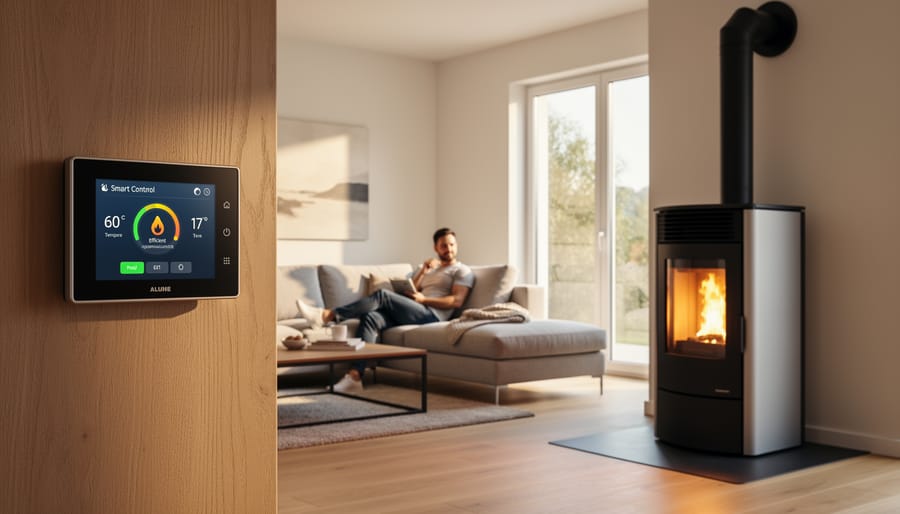
Modern pellet stoves equipped with smart controls represent a significant leap forward in home heating efficiency. These intelligent systems continuously monitor your home’s temperature and automatically adjust pellet feed rates to maintain your desired comfort level without waste. Think of it as having a dedicated heating assistant that never takes a break.
Programmable thermostats allow you to create customized heating schedules that match your daily routine. Set the stove to reduce output during working hours when nobody’s home, then automatically ramp up before your return. This strategic approach can reduce pellet consumption by 20-30% compared to running your stove at constant high settings.
Advanced models now feature WiFi connectivity, letting you control your stove from anywhere using your smartphone. Forget to lower the temperature before leaving for the weekend? Simply adjust it remotely. Some systems even learn your preferences over time, adapting to seasonal changes and optimizing burn cycles without manual intervention.
The environmental benefits extend beyond fuel savings. By maintaining consistent, efficient burns rather than fluctuating temperatures, smart controls minimize emissions and reduce ash buildup. This precision burning means fewer cleaning cycles and longer equipment life, making your investment in an efficient pellet stove even more worthwhile for both your wallet and the planet.
Advanced Combustion Systems
The magic behind today’s most efficient pellet stoves lies in their advanced combustion systems, which are designed to squeeze every bit of warmth from each pellet. Think of it as getting more miles per gallon, but for your home heating.
Modern high-efficiency stoves feature secondary burn chambers that take combustion to the next level. After the initial burn, these chambers reignite unburned gases and particles at extremely high temperatures, converting what would otherwise be wasted smoke into usable heat. This two-stage process can boost efficiency by 10-15% compared to basic models, meaning fewer pellets in your hopper and more warmth in your living space.
Optimized airflow design is equally crucial. The best pellet stoves use carefully engineered air intake systems that deliver precisely the right amount of oxygen to the firebox at exactly the right moment. This creates a more complete, cleaner burn that maximizes heat output while minimizing ash and emissions. Some models incorporate forced-air systems with variable-speed blowers that automatically adjust based on temperature demands.
These combustion innovations don’t just save you money on fuel—they’re also better for the environment. Complete combustion means fewer particulates released into the air, making these systems a win for both your wallet and the planet. When shopping for an efficient pellet stove, look for models that specifically mention multi-stage combustion and precision airflow management.
Convection Blowers and Heat Distribution
Even the most efficient pellet stove can’t reach its full potential without a proper heat distribution system. Think of convection blowers as the hardworking engines that push warmth throughout your living space, ensuring every BTU generated gets where you need it most.
Modern pellet stoves use powerful yet quiet convection fans that circulate heated air away from the firebox and into your home. The best models feature variable-speed blowers that automatically adjust based on heat output, maximizing comfort while minimizing electricity use. This smart technology means you’re not wasting energy pushing air unnecessarily when the stove is operating at lower settings.
Quality heat distribution also depends on proper stove placement. Position your pellet stove in a central location where air can flow freely through doorways and hallways, turning your eco-friendly heating solution into a whole-home comfort system. Some homeowners enhance distribution further by adding ceiling fans on low settings to gently push warm air downward, preventing heat from pooling near the ceiling where it does you little good.
Calculating Your Real-World Savings
Fuel Consumption: What to Expect from Different Efficiency Levels
Understanding how much fuel your pellet stove will consume helps you plan your heating budget and storage needs. The efficiency rating directly impacts how many pellets you’ll burn through during heating season.
A standard pellet stove operating at 70-75% efficiency typically consumes about 40 pounds of pellets per day when running continuously during cold weather. Over a full heating season (roughly October through March in most regions), that translates to approximately 3-5 tons of pellets for a moderately sized home.
Step up to a high-efficiency model rated at 80-85%, and you’ll see noticeable savings. These stoves use around 30-35 pounds daily under similar conditions, potentially reducing seasonal consumption by nearly a ton. That’s not just fuel savings, it’s fewer delivery trips and less storage space needed.
The most efficient pellet stoves, those achieving 85-90% or higher, can operate on as little as 25-30 pounds per day. For an average heating season, you might need only 2.5-3.5 tons total. This efficiency advantage becomes especially valuable in regions with longer winters or when heating larger spaces.
Keep in mind that actual consumption varies based on your home’s insulation, outdoor temperatures, desired indoor comfort level, and how you operate the stove. Running at lower heat settings during milder days stretches your pellet supply further. Additionally, storing pellets correctly ensures they maintain their energy density, so every pellet delivers maximum heat value without waste from moisture damage or deterioration.
Maintaining Peak Efficiency: Making Your Investment Last
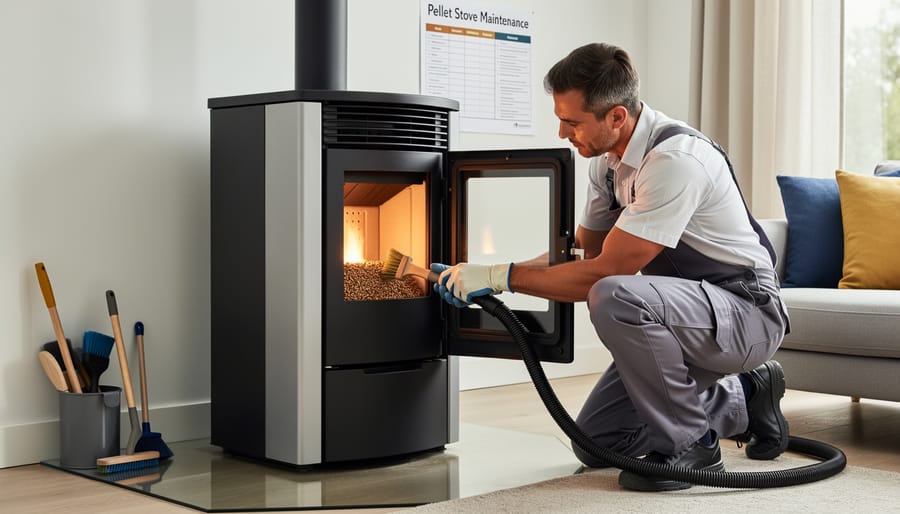
Cleaning Schedules That Preserve Efficiency
Maintaining your pellet stove’s peak efficiency requires consistent cleaning routines that become second nature over time. The good news is that these tasks are straightforward and directly impact your stove’s performance and fuel consumption.
Daily ash removal keeps your burn pot clear and ensures proper airflow, which is essential for complete combustion. Simply wait for the stove to cool, then empty the ash pan—a quick five-minute task that prevents buildup from restricting oxygen flow to the flame. Most efficient stoves make this easy with removable ash drawers.
Weekly cleaning should include wiping down the glass door and vacuuming the heat exchanger tubes where heat transfers from exhaust gases to your living space. Dust and ash accumulation on these surfaces acts as insulation, reducing heat transfer efficiency by up to 20 percent.
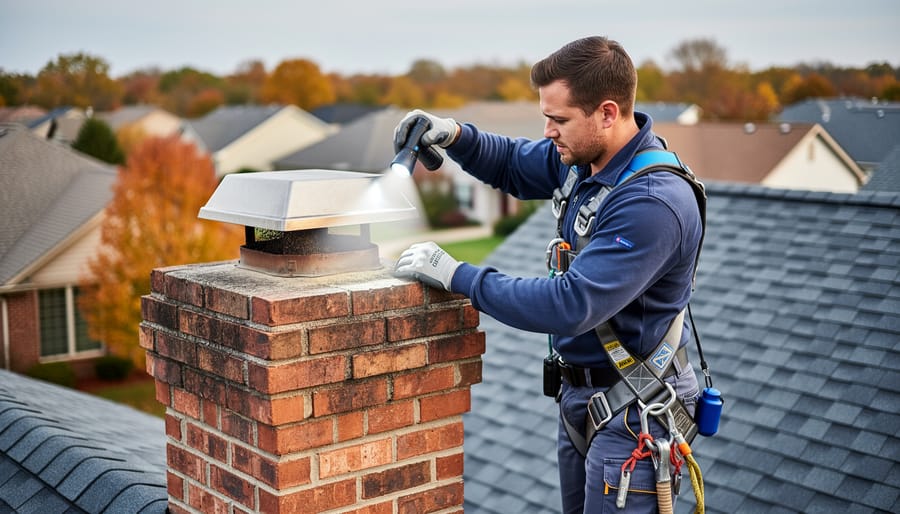
Monthly maintenance involves inspecting and cleaning the exhaust system, including the vent pipe and safe venting components. A clogged exhaust restricts airflow and forces your stove to work harder, burning more pellets for less heat.
Seasonal deep cleaning before winter includes professional inspection of the blower motors, auger system, and door gaskets. These components directly affect combustion efficiency and heat distribution. Think of these cleaning schedules as protecting your investment while keeping your heating costs predictable and your home comfortably warm throughout the season.
Recognizing When Efficiency Is Dropping
Your pellet stove will tell you when something’s not quite right—you just need to know what to listen for. The first telltale sign is usually more frequent refills than usual. If you’re going through pellets faster without changes to your temperature settings, efficiency has likely declined.
Watch your glass door closely. Excessive soot buildup or a cloudy appearance indicates incomplete combustion, meaning your stove is working harder and burning more fuel for the same heat output. Similarly, a lazy, orange flame instead of a bright, lively burn signals poor air-to-fuel ratios that waste pellets.
Pay attention to unusual sounds too. Rattling, excessive rumbling, or changes in the normal operating hum often point to airflow restrictions or mechanical issues. Your heating bills provide another clue—if costs creep up despite consistent usage patterns, your stove isn’t performing optimally.
Check your ash pan more frequently than usual. Excessive ash production or clinkers (hard, rock-like deposits) suggest combustion problems or low-quality pellets. Regular exhaust system cleaning prevents many of these issues from developing.
Finally, trust your comfort level. Rooms that don’t warm as quickly or maintain temperature indicate declining performance. Catching these signs early prevents minor issues from becoming costly repairs while keeping your eco-friendly heating solution running at peak efficiency.
Choosing the most efficient pellet stove is about more than just browsing specifications—it’s an investment in your home’s comfort, your wallet, and our planet’s future. By prioritizing high efficiency ratings above 80%, you’re ensuring that every pellet burned translates into maximum warmth rather than wasted energy. Remember that even the best-rated stove won’t perform optimally without quality fuel, so selecting premium hardwood pellets with low ash content and proper moisture levels is equally essential to achieving peak efficiency.
Think of this decision as creating a partnership between smart technology and natural resources. When you match an EPA-certified, highly efficient pellet stove with top-grade fuel and commit to regular maintenance, you’re not just heating your home—you’re cultivating a sustainable lifestyle that reduces your carbon footprint while lowering heating costs year after year.
Your journey toward efficient, eco-friendly heating starts with informed choices today. Embrace the warmth, enjoy the savings, and take pride in knowing that your heating solution contributes to a greener tomorrow. A cozy, sustainably heated home isn’t just a dream—it’s an achievable reality when efficiency guides your decisions.