

Reaching for a thermometer to check your perfectly roasted meat by the fireplace or testing that batch of homemade caramel requires the right tool, but many home cooks wonder if these two kitchen essentials are actually interchangeable. While both measure temperature, meat thermometers and candy thermometers serve distinctly different purposes in your cooking adventures.
Meat thermometers typically measure lower temperatures, ranging from 120°F to 200°F, designed to gauge doneness in poultry, beef, pork, and fish. They feature shorter stems and deliver quick readings to prevent heat loss from your oven or grill. Candy thermometers, however, climb much higher—often reaching 400°F or more—making them essential for sugar work, deep frying, and confections that demand precise high-heat measurements. Their longer probes keep your hands safely away from boiling syrups and hot oils.
Understanding these differences helps you decide whether you can substitute one for the other or if investing in both makes sense for your cooking style. If you’re someone who enjoys cozy evenings preparing hearth-cooked meals or experimenting with fireside desserts, knowing which thermometer belongs in your kitchen arsenal ensures consistently delicious results without guesswork or safety concerns.
The Core Differences: Built for Different Jobs
Temperature Range: Where Each Thermometer Thrives
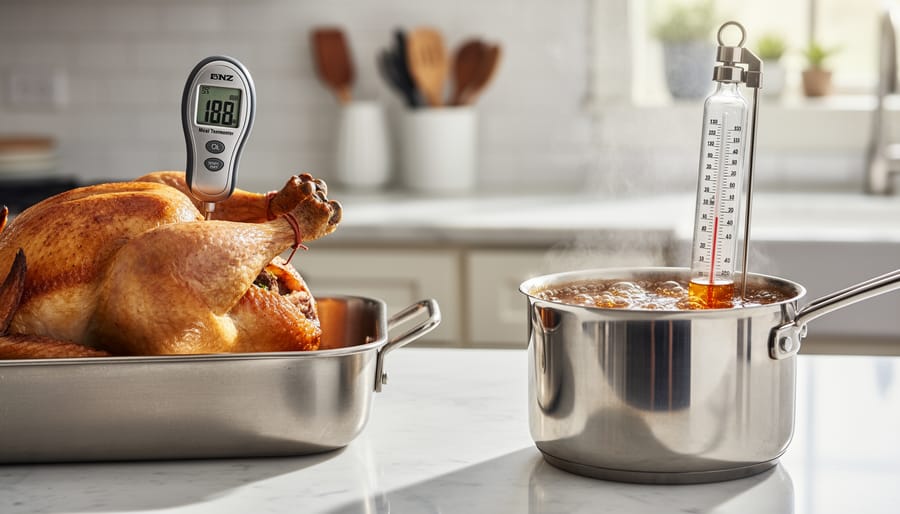
Understanding temperature ranges is like knowing whether you need a light jacket or a winter coat—it’s all about matching the tool to the task. Meat thermometers typically measure from 32°F to 200°F, which perfectly covers everything from checking if your chicken is safely cooked at 165°F to monitoring a slow-roasted brisket. This range works beautifully for proteins and dishes you might prepare on your grill or even over a cozy fireplace cooking setup.
Candy thermometers, on the other hand, climb much higher—usually from 100°F to 400°F. This extended range is essential when you’re boiling sugar syrups that need to reach the hard-crack stage at 300°F or deep-frying donuts at 375°F. Think of it as the difference between measuring room temperature and measuring the heat radiating from your fireplace.
Here’s why this matters for your kitchen adventures: using a meat thermometer for candy-making is like bringing that light jacket to a snowstorm—it simply won’t handle the heat. The thermometer could crack, give inaccurate readings, or fail completely. Conversely, while a candy thermometer can technically read meat temperatures, its less precise readings in the lower range make it less reliable for food safety. Choosing the right thermometer ensures perfectly executed recipes every time.
Construction and Durability Factors
When you’re choosing between these two kitchen companions, understanding their construction differences helps explain why each excels in its specific role. Candy thermometers are the workhorses of high-heat cooking, built with heavy-duty glass or stainless steel that can withstand prolonged exposure to temperatures reaching 400°F or higher. Their robust design protects against the corrosive nature of boiling sugar, which can quickly damage instruments not designed for such harsh conditions. Think of them as the cast iron skillets of thermometers—sturdy, reliable, and made for intense heat.
Meat thermometers, on the other hand, prioritize speed and practicality. Their construction focuses on delivering quick temperature readings, often within seconds, so you’re not losing precious heat from your oven or leaving your roast exposed. They feature moisture-resistant housings since they’re frequently used in steamy, humid environments around grills, ovens, and smoky cooking areas. Whether you’re checking a holiday turkey by your cozy hearth or monitoring ribs on your outdoor grill, meat thermometers are designed for those quick in-and-out readings rather than sitting in bubbling liquids for extended periods.
When You Can (and Can’t) Swap Them
Using a Candy Thermometer for Meat
In a pinch, yes, you can absolutely use a candy thermometer to check your meat temperatures—it’s better than guessing! The good news is that both thermometers measure heat, so the reading itself will be accurate. However, this workaround comes with some practical drawbacks that might test your patience, especially when you’re managing multiple dishes or cooking by your outdoor fire pit.
The biggest challenge is speed. Candy thermometers are designed for slow, gradual temperature monitoring of sugar syrups, not quick spot-checks of meat. You’ll find yourself waiting noticeably longer for a reading—sometimes 30 seconds or more—while precious heat escapes from your roast or steak. This lag time becomes particularly frustrating when you’re trying to catch that perfect medium-rare.
The temperature markings present another hurdle. Candy thermometers typically start around 100°F and focus heavily on the 200-400°F range for various candy stages. Meanwhile, you’re squinting to find those crucial meat temperatures between 145-165°F, which often appear as tiny, closely-spaced marks. The long glass probe also makes maneuvering around bones and getting accurate readings in thinner cuts genuinely awkward. While it works as an emergency backup, investing in a proper meat thermometer will make your cooking experience far more enjoyable and precise.
Using a Meat Thermometer for Candy: The Risky Move
Let’s be honest: using a meat thermometer for candy making is a bit like trying to roast marshmallows over a candle flame when you have a perfectly good fireplace available. Sure, it might work in a pinch, but you’re setting yourself up for disappointment or worse.
The biggest issue comes down to temperature limits. Most meat thermometers max out around 200-220°F, which is perfect for checking whether your chicken is safely cooked but falls dramatically short for candy work. Hard crack stage for candy reaches 300-310°F, and certain recipes push even higher. When you exceed your meat thermometer’s maximum reading, you’re not just getting inaccurate results—you’re potentially damaging the internal components permanently.
Even if your meat thermometer claims to handle higher temperatures, accuracy becomes questionable beyond its intended range. These devices are calibrated for the lower temperature spectrum where meat cooks, not the intense heat required for transforming sugar. You might think your candy has reached soft ball stage when it’s actually nowhere close, resulting in batches that won’t set properly or turn grainy and crystallized.
The probe length presents another practical challenge. Meat thermometers typically feature shorter probes designed for inserting into thick cuts of meat. In a shallow candy pan, you’ll struggle to get proper readings without risking burns to your hands or accidentally touching the pan bottom, which gives falsely high readings. This isn’t just inconvenient—it’s genuinely unsafe when working with molten sugar that can cause severe burns.
Reading Speed and Accuracy: What Really Matters
Instant-Read vs. Continuous Monitoring
The way you use these thermometers tells you everything about their purpose. When you’re grilling steaks by the fireplace or roasting a holiday turkey, you need quick temperature checks at specific moments. Meat thermometers excel at this instant-read approach. You insert them into the thickest part of your protein, get your reading in seconds, and pull them out. Modern wireless meat thermometers take this further by letting you monitor from your cozy spot by the fire without constantly opening the oven.
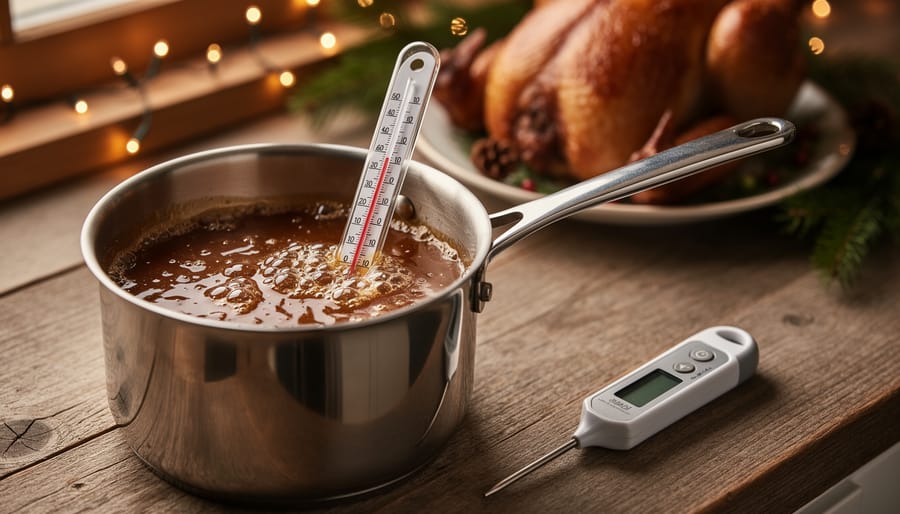
Candy thermometers work completely differently. They clip onto the side of your pot and stay there throughout the entire cooking process. Making caramel or fudge requires watching temperature climb degree by degree through specific stages, and you can’t miss that narrow window when sugar hits the perfect temperature. The continuous monitoring design means you’re never guessing. You’ll see the mercury or digital display rise steadily, giving you time to prepare for the next step. This hands-free approach prevents the constant poking that would disturb your bubbling sugar syrup and potentially ruin your batch.
Design Features That Set Them Apart
Probes, Clips, and Attachment Methods
Understanding how these thermometers attach to your cookware makes a real difference when you’re stirring up a batch of homemade caramels by the fireplace or checking if your holiday roast is ready.
Candy thermometers come equipped with a metal clip that securely fastens to the side of your pot or saucepan. This hands-free design is essential when you’re managing boiling sugar mixtures that require constant attention and stirring. The clip holds the thermometer at just the right depth, keeping the probe tip suspended in the liquid without touching the bottom, which could give you false readings. Think of it as your kitchen companion that stays put while you work.
Meat thermometers take a different approach entirely. They feature probes in various lengths, typically ranging from 4 to 8 inches, designed to penetrate different cuts and sizes of meat. You’ll insert these at an angle into the thickest part of your roast or poultry, checking for doneness at specific moments rather than monitoring continuously. Some models have short, stubby probes perfect for thin chicken breasts, while others sport longer probes ideal for large turkeys or roasts slow-cooking near your hearth. The key difference? Meat thermometers are grab-and-check tools, while candy thermometers stay attached throughout the entire cooking process.
Display Types and Readability
The way your thermometer presents information can make all the difference when you’re hovering over a hot pot or checking a roast by firelight. Meat thermometers typically feature straightforward displays with clear temperature readings and often include helpful doneness zones marked right on the dial or screen. You’ll see indicators for rare, medium, and well-done, making it easy to pull your food at just the right moment without second-guessing the numbers.
Candy thermometers take a different approach, displaying specialized markings for sugar stages like thread, soft ball, hard crack, and caramelization points. These stage indicators are crucial because candy-making depends on precise temperature milestones rather than simple doneness levels. Many candy thermometers use traditional analog designs with tall, easy-to-read scales that let you monitor gradual temperature climbs.
Digital displays have become increasingly popular for both types, offering quick, precise readings that are especially helpful in dim lighting or when you’re managing multiple cooking tasks at once. Some home cooks also appreciate infrared thermometers for surface temperature checks. Ultimately, the display style you choose should match your cooking environment and personal preference for at-a-glance information.
Which One Should Live in Your Kitchen?
For the Grilling Enthusiast
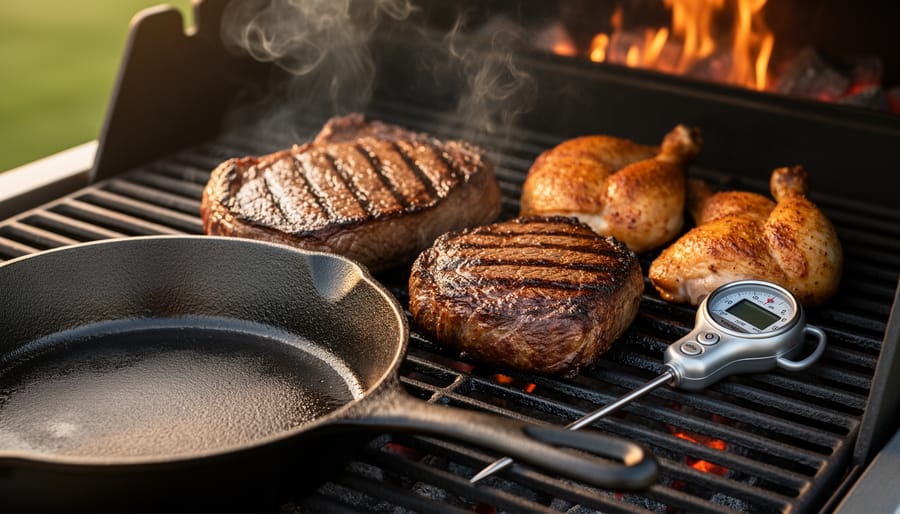
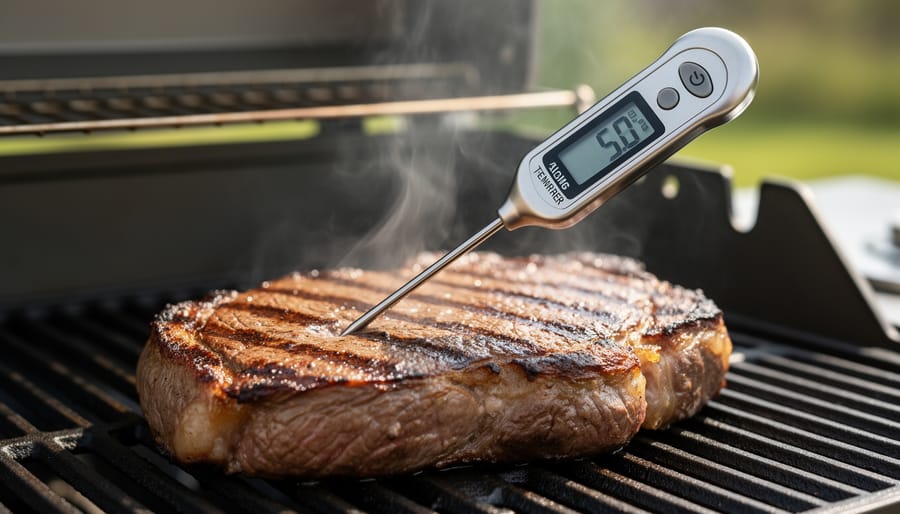
For those who love cooking over open flames, a quality meat thermometer isn’t just helpful—it’s essential. Whether you’re grilling steaks over your backyard fire pit or experimenting with fireplace grilling, the unpredictable nature of live fire makes temperature monitoring crucial. Unlike controlled stovetop candy-making, outdoor cooking involves fluctuating heat zones and varying cooking times. A reliable meat thermometer takes the guesswork out of determining when your food is safely cooked and perfectly tender. Look for models with instant-read capabilities and wide temperature ranges that can handle everything from slow-roasted brisket to seared ribeyes. Many modern options feature wireless connectivity, letting you monitor your meal from the comfort of your fireside seat. This investment not only improves your cooking results but also ensures food safety for family gatherings around the warmth of your outdoor living space.
For Holiday Bakers and Candy Makers
During the holiday season, when your fireplace is crackling and filling your home with warmth, there’s nothing quite like crafting homemade candies and confections to share with loved ones. This is when a candy thermometer truly earns its place in your kitchen. Creating perfect peppermint bark, caramels, or English toffee requires precise temperature control that a meat thermometer simply can’t deliver. Those critical temperature stages—soft ball at 235°F, hard crack at 300°F—make the difference between silky fudge and grainy disappointment. While a meat thermometer tops out around 200-220°F, candy thermometers climb to 400°F, giving you the range needed for sugar work. Picture yourself by the fireside, stirring a pot of homemade caramel sauce, watching the temperature climb to that perfect amber stage. That’s the magic a dedicated candy thermometer brings to your holiday baking traditions.
Smart Shopping: What to Look For
When shopping for thermometers, you don’t need to break the bank to get reliable tools for your kitchen adventures. Meat thermometers typically range from $15 to $80, with quality digital instant-read models landing around $25 to $40. Candy thermometers are generally more affordable, running between $10 and $30 for solid options.
For meat thermometers, prioritize quick response time—look for readings within 2-3 seconds. A wide temperature range (at least -40°F to 450°F) gives you versatility for everything from frozen foods to high-heat grilling. Waterproof construction makes cleaning easier and extends the life of your tool. If you’re passionate about quality meat thermometer brands, consider features like backlit displays for outdoor evening cookouts and auto-shutoff to preserve battery life.
When selecting a candy thermometer, focus on a stainless steel construction with a sturdy clip that secures to your pot. Clear, easy-to-read markings are essential when you’re monitoring rapidly changing temperatures. A protective sheath helps prevent damage when storing. The best models reach at least 400°F and have adjustment mechanisms to calibrate accuracy over time.
Regardless of type, check customer reviews for durability feedback and verify the warranty period. A one-year warranty is standard, but some manufacturers offer longer protection. Remember, a reliable thermometer is an investment in consistent cooking results and food safety, making those cozy fireside meals even more enjoyable.
While both meat thermometers and candy thermometers measure temperature, they’re truly specialized tools designed with specific culinary tasks in mind. Think of them like different fireplace tools—each one crafted for its particular purpose to help you achieve the best results.
Investing in the right thermometer for your cooking style isn’t about filling your kitchen with gadgets. It’s about equipping yourself with reliable tools that help you create memorable meals with confidence. Whether you’re perfecting a tender roast by the fireplace on a winter evening or crafting homemade caramels as gifts, having the appropriate thermometer makes all the difference.
For those who enjoy both roasting meats and making confections, having one of each is genuinely worthwhile. The investment is modest compared to the peace of mind they provide. If you’re just starting out, prioritize based on what you cook most often—a meat thermometer for weekend roasts or a candy thermometer for your sweet-making adventures.
Remember, creating those cozy, memorable moments around your table starts with the right preparation. Equip your kitchen thoughtfully, cook with confidence, and enjoy the warmth of bringing people together over perfectly prepared food.