

Position your wood stove in the most central location possible to maximize heat distribution throughout your home, ideally on the main floor where warm air can rise naturally to upper levels while radiating outward to adjacent rooms. Choose a stove sized appropriately for your square footage – oversized units force you to burn inefficiently at low temperatures, creating creosote buildup, while undersized stoves run constantly at maximum capacity, wearing out components prematurely.
Master the top-down fire-building technique by placing larger logs at the bottom and progressively smaller kindling toward the top, allowing flames to burn downward for cleaner combustion and less smoke. This method reduces startup emissions by up to 50% compared to traditional bottom-up fires and establishes optimal burning conditions faster.
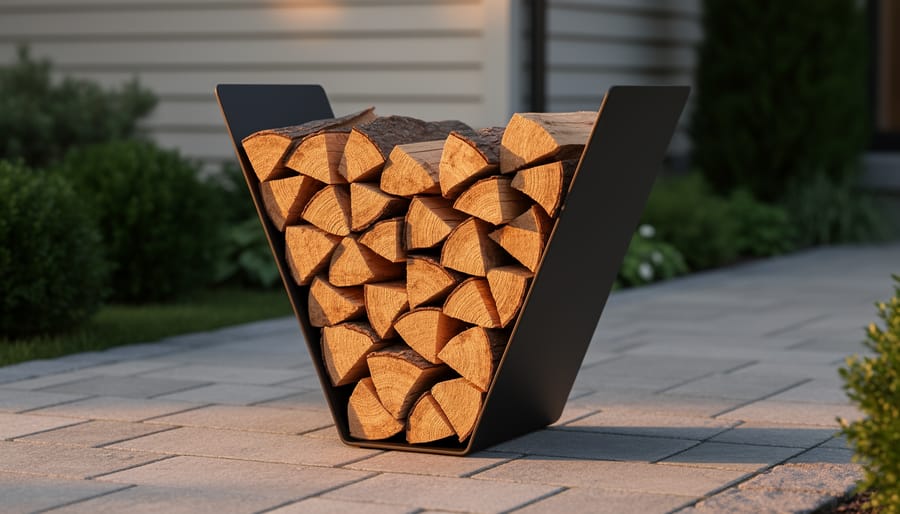
Burn only seasoned hardwoods with moisture content below 20% – use a moisture meter to verify – as wet wood produces half the heat output, creates dangerous creosote deposits in your chimney, and releases significantly more particulate pollution. Stack your wood in a sunny, well-ventilated area for at least six months before burning.
Control your burn rate using the air intake damper rather than loading less wood, maintaining stovetop temperatures between 300-500°F for maximum efficiency. Modern EPA-certified stoves extract 70-80% of available heat from wood, transforming this renewable resource into reliable warmth that reduces your dependence on fossil fuels while creating the unmatched ambiance of a living flame in your home.
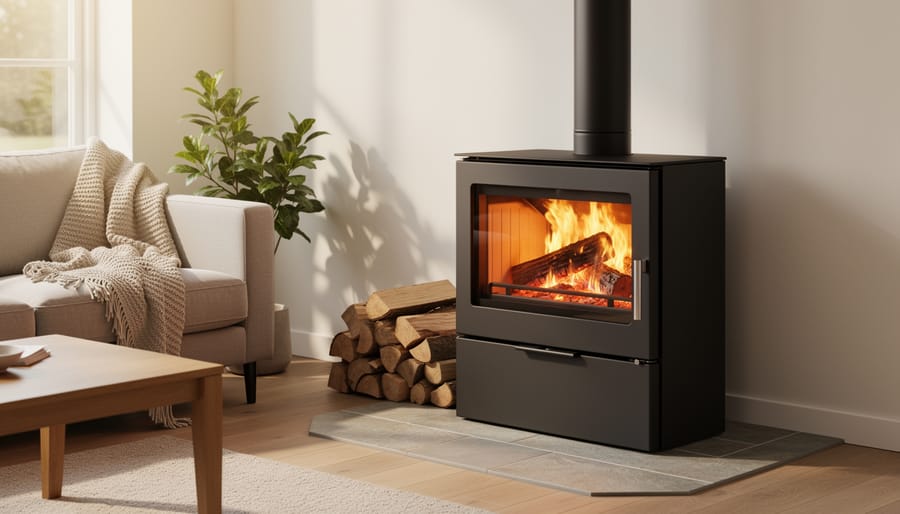
How Wood Stoves Actually Heat Your Home
Radiant Heat: The Warmth You Feel Directly
There’s something wonderfully primal about the warmth from a wood stove, and that’s because you’re experiencing radiant heat in its purest form. Unlike forced-air systems that heat the air around you, radiant heat travels directly from the stove to you and the objects in your home, much like the sun warming your face on a cool day.
When your wood stove glows, it sends out infrared waves that warm everything in their path. Your furniture, floors, walls, and even you absorb this energy directly, creating a deep, penetrating warmth that feels incredibly comfortable. This is why you can sit several feet from a wood stove and still feel cozy, even if the room’s air temperature hasn’t caught up yet.
This direct transfer of heat explains why wood stove warmth feels so different from the sometimes stuffy, uneven heat of forced-air systems. There’s no blowing air, no dust circulation, and no cold spots where the ductwork doesn’t reach. The surfaces in your room become secondary heat sources themselves, gradually releasing their absorbed warmth back into the space. This creates a more stable, enveloping comfort that many homeowners find irresistible, transforming heating from a mere utility into a genuine lifestyle enhancement.
Convection Currents: Moving Warm Air Through Your Space
Understanding how heat moves through your home is key to maximizing your wood stove’s effectiveness. When your stove heats up, it warms the air around it, creating a natural circulation pattern called convection. This heated air rises toward the ceiling while cooler air flows along the floor toward the stove, creating a continuous loop that gradually warms your entire space.
The beauty of this natural process is that you can enhance it with simple strategies. Position your stove centrally if possible, allowing warm air to flow freely in multiple directions. Keep doorways open between rooms to encourage air movement, and consider using doorway fans to gently push warm air into adjacent spaces. Ceiling fans set to reverse mode work wonders too, pulling warm air down from the ceiling and redistributing it throughout the room.
For multi-story homes, leaving stairway doors open allows heat to rise naturally to upper levels. Some homeowners install small vents or transfer grills in interior walls to boost circulation between rooms. Remember, the goal is creating gentle air movement that carries warmth throughout your home, transforming your wood stove from a single-room heater into a whole-home heating solution that’s both eco-friendly and wonderfully cozy.
Choosing the Right Wood Stove for Your Home
Sizing Your Stove: Why Bigger Isn’t Always Better
Choosing the right-sized wood stove is like finding the perfect pair of shoes—you want just the right fit. Many homeowners assume bigger is better, but an oversized stove can actually make your living space uncomfortable and inefficient.
Wood stove heating capacity is measured in BTUs (British Thermal Units). As a general rule, you’ll need about 20-30 BTUs per square foot of living space, depending on your climate and home insulation. For example, a 1,000-square-foot area typically requires a stove producing 20,000-30,000 BTUs per hour.
Here’s why proper sizing matters for your comfort and wallet. An oversized stove forces you to burn small, smoldering fires to avoid overheating your space. These low-temperature fires create excessive creosote buildup in your chimney, increasing fire risk and requiring more frequent cleaning. You’ll also waste wood and money keeping the fire deliberately inefficient.
On the flip side, an undersized stove runs constantly at maximum capacity, struggling to heat your home adequately. This overworks the stove, shortens its lifespan, and still leaves you reaching for blankets on cold nights.
The sweet spot is a properly sized stove that operates in its optimal efficiency range—typically 60-80% of maximum output. This produces clean-burning fires, minimal emissions, and consistent warmth throughout your space. Consider factors like ceiling height, open floor plans, and your home’s insulation quality when calculating your needs. When in doubt, consult with a certified stove dealer who can assess your specific situation and recommend the perfect match.
Modern Efficiency Standards Worth Knowing
Understanding efficiency standards helps you choose a wood stove that truly delivers warmth while protecting the environment. Today’s EPA-certified wood stoves represent a remarkable leap forward, burning up to 50% cleaner than older models while using less wood to heat your home more effectively.
When shopping, you’ll encounter two main technologies. Catalytic stoves use a honeycomb device that burns smoke and gases at lower temperatures, achieving efficiency ratings of 70-80% and providing longer, steadier heat output. They’re ideal if you prefer extended burn times and don’t mind occasional catalyst maintenance. Non-catalytic stoves rely on strategic airflow and baffle systems to achieve similar clean-burning results without the catalyst component, typically reaching 60-75% efficiency with less maintenance required.
These efficiency ratings translate directly to your real-world experience. A modern EPA-certified stove can heat the same space using one-third less firewood compared to older models, meaning fewer trips to the woodpile and lower heating costs. You’ll also notice dramatically less creosote buildup in your chimney, reducing fire hazards and cleaning frequency. Plus, cleaner combustion means less smoke entering your neighborhood, making wood heat a more considerate choice for your community. When selecting your stove, look for that EPA certification label as your assurance of proven performance and environmental responsibility.
Where to Place Your Wood Stove for Maximum Heat
Central Placement vs. Wall Installation
Where you place your wood stove dramatically affects how warmth flows through your home, and it’s one of those decisions that deserves careful thought before installation day arrives.
A centrally-located wood stove acts like the heart of your home’s heating system, radiating heat in all directions and allowing natural convection to distribute warmth more evenly throughout your living space. Think of it as creating a hub where family naturally gathers while enjoying balanced temperatures in adjacent rooms. This placement typically means shorter chimney runs and often proves more efficient for heating multiple rooms, making it an eco-friendly choice that maximizes your wood investment.
Wall installations, conversely, offer practical advantages in certain situations. They’re easier to install in existing homes since you’re working with an exterior wall rather than cutting through your roof’s center. You’ll find them particularly useful in open floor plans or when you want to heat a specific zone without complicated ductwork. However, heat distribution becomes more directional, creating warmer areas near the stove and cooler spots in distant rooms.
Consider your home’s layout, existing structural elements, and how you actually live in your space. A central stove embraces the lifestyle element of wood heating by becoming a natural gathering point, while wall placement might better suit practical constraints or specific heating needs.
Getting Heat Upstairs: What Actually Works
Getting heat upstairs from your wood stove doesn’t require complicated systems, but it does take some strategic thinking. The simplest and most effective approach is positioning your stove near a central stairwell. Heat naturally rises, so when warm air has a clear path up an open staircase, it will find its way to upper floors without much help.
Ceiling fans are your best friend here. Install them on upper floors and set them to run on low speed. This gently circulates the warm air that’s collected at the ceiling level, spreading it throughout the rooms. Avoid running them too fast, as that creates an uncomfortable draft.
Consider leaving bedroom doors open during the day to allow heat circulation, then closing them at night to trap warmth. Some homeowners install small through-wall or floor vents to create passive air movement between floors, though this works best during new construction or renovations.
Let’s be realistic though: a wood stove on the main floor typically raises upstairs temperatures by 5-10 degrees, not matching downstairs coziness. You’ll likely still need supplemental heating upstairs during extreme cold. Think of your wood stove as creating a comfortable, eco-friendly base temperature throughout your home rather than replacing your entire heating system. With proper air circulation and realistic expectations, you can definitely extend that wonderful wood heat warmth beyond just your main living space.
Burning Wood the Right Way for Consistent Heat
The Seasoned Wood Difference
The secret to a cozy, efficient fire lies in understanding moisture content. Properly seasoned firewood contains 20% moisture or less, while freshly cut wood can hold up to 50% moisture. That difference is enormous when it comes to heating your home.
Wet wood forces your stove to waste precious energy evaporating water instead of producing heat. You’ll notice excessive smoke, creosote buildup in your chimney, and temperatures that never quite reach that comfortable warmth you’re seeking. It’s like trying to boil water with the lid off—inefficient and frustrating.
Different wood species require varying seasoning times. Hardwoods like oak and maple typically need 12 to 18 months to properly dry, while softer woods like pine can season in 6 to 12 months. The best firewood species depend on your climate and availability, but patience is universal.
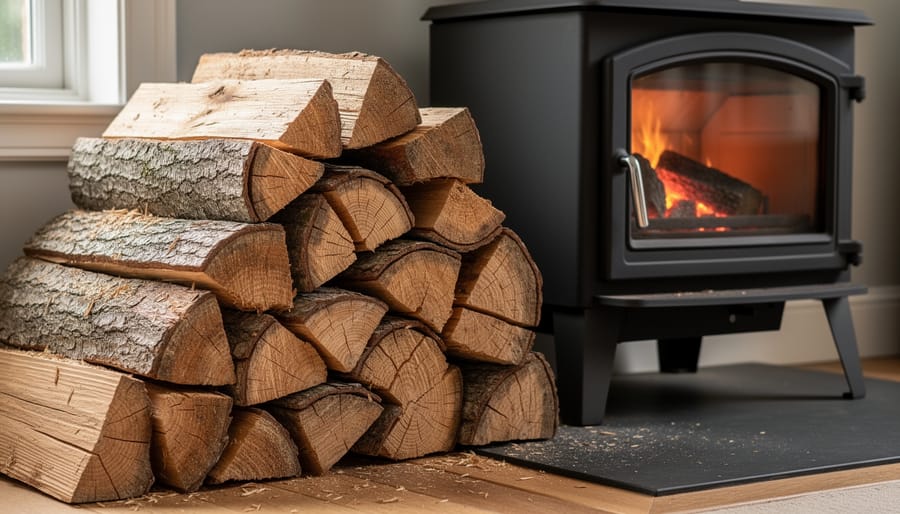
Store your wood in a covered area with good airflow, raised off the ground. Think of seasoning as an investment in your comfort and wallet—properly dried wood burns hotter, cleaner, and more efficiently, delivering the sustainable warmth your home deserves.
Building and Managing Your Fire
Starting and maintaining a fire in your wood stove is both an art and a science that becomes second nature with practice. Begin by creating a foundation of crumpled newspaper or natural fire starters at the bottom of your firebox. Stack small kindling in a crisscross pattern above this base, gradually increasing stick thickness. Top with two or three small split logs, leaving space between each piece for air circulation. Light the fire starter from below and open your air controls fully to establish a strong draft.
Once kindling catches and flames reach the larger wood, you’re ready to add your primary fuel load. Use seasoned hardwood split to 3-6 inches thick, arranging pieces front-to-back or east-west depending on your stove’s design. Avoid overcrowding, as wood needs oxygen to burn efficiently. This spacing ensures cleaner combustion and better heat output.
Air control is your primary tool for maintaining optimal burn temperatures. During the initial burn, keep air intake open until the wood is fully engulfed and the stove reaches operating temperature. Modern stoves typically perform best between 400-600°F on the stovetop. A magnetic thermometer helps you monitor these optimal burn temperatures and avoid the extremes of smoldering or overheating.
For daytime heating, reload when the fuel bed reduces to glowing coals, adding 2-4 logs depending on your heat needs. Overnight burns require a different approach: build a substantial coal bed in the evening, then tightly pack larger splits and reduce air intake once they’re burning well. This slower burn provides steady warmth through the night while maximizing fuel efficiency and reducing emissions. With time, you’ll develop an intuitive sense for reading your fire and adjusting accordingly.
Making Your Wood Stove Heat More Effectively
Heat-Powered Fans and Circulation Boosters
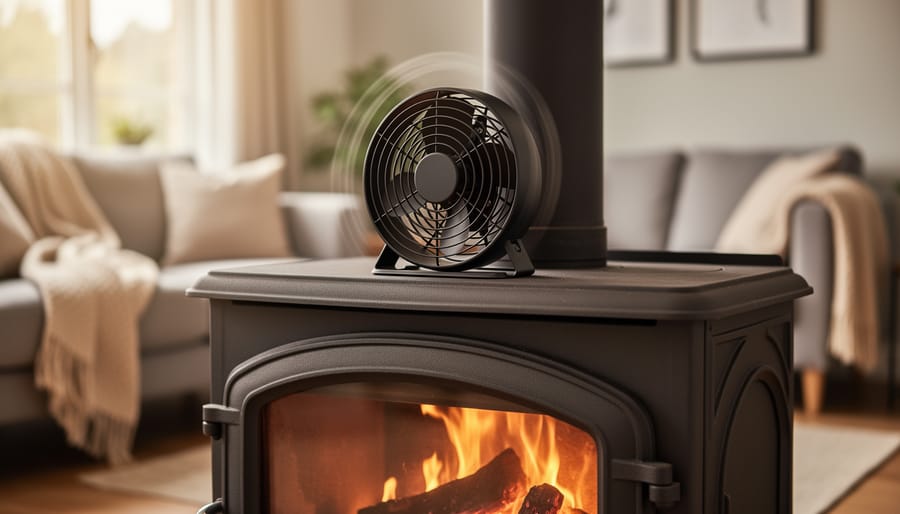
One of the simplest and most effective ways to spread your wood stove’s warmth throughout your home is with heat-powered fans. These clever devices sit right on top of your stove and use the heat itself to generate power through a thermoelectric generator. As the base warms up, the fan blades begin spinning automatically, gently pushing warm air forward and outward into your living space. No batteries, no electricity, just the magic of physics working in your favor.
These fans are particularly helpful in larger rooms or open floor plans where heat tends to rise and pool near the ceiling. By creating gentle air circulation, they help distribute warmth more evenly, making your whole space feel cozier without cranking up the stove. Most models can move air effectively once your stove reaches around 150-200 degrees Fahrenheit, and they’ll slow down as the fire dies, working in harmony with your heating cycle.
For rooms beyond your stove’s immediate area, consider adding simple battery-powered circulation fans on shelves or doorways to guide warm air down hallways. Position them strategically to create a natural flow pattern through your home, turning your wood stove into a more effective whole-home heating solution while keeping your energy costs wonderfully low.
Using Thermal Mass to Store and Release Heat
Think of thermal mass as a heat battery for your wood stove. Materials like stone, brick, and soapstone have a remarkable ability to absorb heat when your fire is roaring, then slowly release that warmth long after the flames have died down. This creates a more consistent, comfortable temperature throughout your home instead of the hot-and-cold rollercoaster you might experience otherwise.
When you surround your stove with these dense materials or place it near a stone wall, you’re essentially storing energy for later use. Soapstone stoves are particularly beloved for this quality, radiating gentle, steady heat for hours after you’ve stopped adding wood. Some homeowners enhance this effect by installing brick or stone hearth surrounds that extend several feet around the stove.
This approach isn’t just about comfort. It’s an eco-friendly heating solution that helps you burn less wood while maintaining warmth longer. You’ll find yourself tending the fire less frequently during cold nights, and your home will feel more evenly heated rather than swinging between too hot and too cool. It’s a natural, efficient way to maximize every cord of wood you burn.
Safety Essentials You Can’t Skip
Installation Clearances and Floor Protection
Proper clearances aren’t just recommendations—they’re essential safety measures that protect your home and family. Most wood stoves require at least 36 inches of clearance from unprotected combustible walls, though this can be reduced to 12-18 inches with proper heat shields installed. Always check your specific model’s installation manual, as requirements vary by manufacturer and stove design.
Your floor protection is equally critical. You’ll need a non-combustible hearth pad that extends at least 18 inches beyond the stove’s front loading door to catch any stray embers or ash. Side and rear protection should extend at least 8 inches beyond the stove’s footprint. Materials like brick, stone, tile, or specially-rated hearth pads work beautifully while adding to your room’s aesthetic appeal.
Keep furniture, curtains, and other combustibles well away from your stove’s heat zone—a good rule of thumb is maintaining at least 3 feet of clear space around the unit. This creates a safe buffer while allowing proper air circulation for efficient heating. Remember, corner installations typically require greater clearances due to heat reflection between walls.
Consider consulting a certified professional installer who can assess your specific space and ensure compliance with local building codes. This investment in proper installation creates peace of mind and allows you to enjoy your wood stove’s warmth safely for years to come.
Chimney Care and Creosote Management
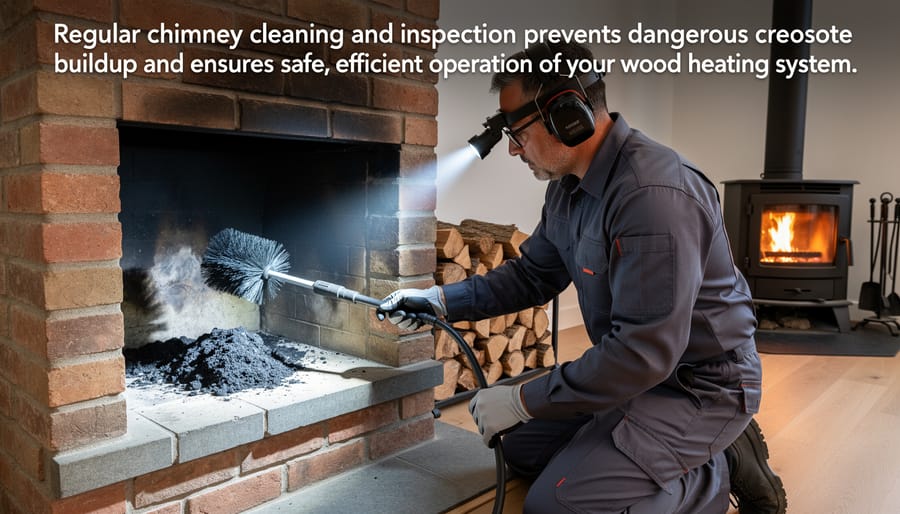
Regular chimney maintenance isn’t just about safety—it’s essential for keeping your wood stove burning efficiently and your home cozy all winter long. Think of it as caring for the heart of your heating system.
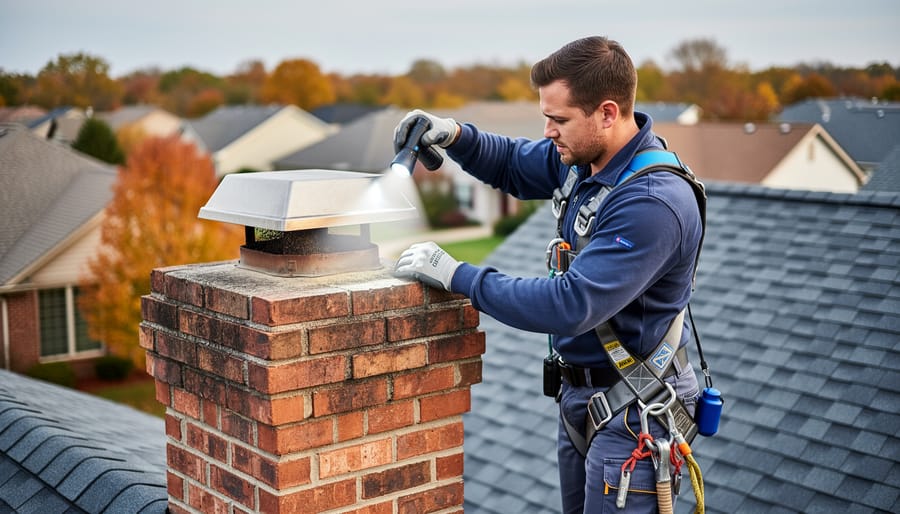
Schedule a professional chimney inspection at least once annually, ideally before heating season begins. If you’re burning more than three cords of wood per season, consider inspections twice yearly. These professionals can spot issues you might miss, from structural problems to dangerous creosote accumulation.
Speaking of creosote, this tar-like substance forms when wood smoke condenses on cooler chimney surfaces. It’s highly flammable and the primary cause of chimney fires. Watch for warning signs: reduced draft, excessive smoke entering your home, or a strong, acrid smell. If you notice thick, crusty black deposits inside your stove door, that’s creosote telling you it’s cleaning time.
The good news? Proper burning techniques dramatically reduce creosote buildup. Burn only seasoned hardwood with moisture content below 20 percent, maintain hot fires rather than letting them smolder, and ensure adequate air supply. These practices create complete combustion, sending less unburned material up your chimney.
Between professional cleanings, you’re investing in both your family’s safety and your wood stove’s longevity—a small effort that pays dividends in warmth and peace of mind.
The Real Cost: Wood Stove Heating vs. Other Options
Let’s be honest about the financial picture of wood stove heating, because it’s more nuanced than simply comparing fuel costs. Understanding both the upfront investment and ongoing expenses helps you make a confident decision that fits your lifestyle and budget.
The initial investment varies considerably. A quality EPA-certified wood stove ranges from $1,500 to $3,500, while professional installation adds another $2,000 to $4,000 depending on your home’s setup and chimney requirements. That’s $3,500 to $7,500 to get started, compared to essentially no upfront cost for existing electric or gas systems. However, this is where the story gets interesting.
Your wood procurement expenses depend largely on your sourcing strategy. If you’re purchasing seasoned firewood, expect to pay $200 to $400 per cord in most regions. An average home using wood as primary heat might burn 3 to 5 cords annually, totaling $600 to $2,000 per season. Compare this to typical heating costs: electric heating often runs $1,200 to $2,500 annually, natural gas averages $800 to $1,500, and heating oil can exceed $2,000 in colder climates.
The real game-changer is sourcing your own wood. Many homeowners with land access or connections to tree services secure free or low-cost wood, reducing fuel costs to nearly nothing beyond time and effort. This transforms wood heating from moderately economical to remarkably affordable.
The payback period typically falls between 3 to 6 years when replacing expensive heating methods, faster if you source wood yourself. Beyond savings, you’re gaining energy independence and creating a cozy, resilient home environment that doesn’t rely solely on utility companies. That’s a lifestyle benefit that’s harder to quantify but genuinely valuable.
Why Wood Stove Heating Is More Sustainable Than You Think
When you’re choosing wood heating for your home, you’re making a surprisingly eco-conscious decision—especially when you approach it thoughtfully. Here’s why: wood is actually a carbon-neutral fuel source when it comes from sustainably managed forests. The carbon dioxide released during burning is roughly equivalent to what the tree would naturally release as it decomposed on the forest floor. You’re simply speeding up nature’s cycle.
Unlike fossil fuels that release carbon locked away for millions of years, wood is a renewable resource that can be replanted and regrown within a human lifetime. This creates a sustainable cycle that reduces your dependence on oil, natural gas, or electricity generated from coal and gas plants. Many homeowners find this particularly appealing as part of a broader lifestyle shift toward self-sufficiency and environmental responsibility.
The key to maximizing these benefits lies in your choices and practices. Source your firewood from certified sustainable forestry operations or local tree services managing fallen or diseased trees. Modern EPA-certified wood stoves burn up to 90% cleaner than older models, dramatically reducing particulate emissions while extracting more heat from every log.
Proper seasoning of your firewood also matters enormously. Burning dry, well-seasoned wood produces minimal smoke and creosote while maximizing heat output. When you combine responsible sourcing, efficient equipment, and correct burning techniques, wood heating becomes an genuinely sustainable choice that warms your home while treading lightly on the planet.
Heating your home with a wood stove is more than just a practical decision—it’s an invitation to embrace a warming, sustainable lifestyle that connects you with the rhythms of the seasons. When you approach wood stove heating with proper knowledge and realistic expectations, you’ll discover it offers genuine heating value alongside those mesmerizing flames and cozy crackling sounds that transform a house into a home.
The key to success lies in understanding that wood stove heating is a learned skill, not an instant solution. You’ll need to invest time in selecting the right stove for your space, mastering efficient burning techniques, and maintaining a dry wood supply. But the rewards extend far beyond lower heating bills. There’s a profound satisfaction in watching the glow of a fire you’ve tended, knowing you’re reducing your carbon footprint while creating an ambiance that electric heat simply cannot match.
Start your journey with patience and commitment to safety. Educate yourself on proper installation, daily operation, and maintenance routines. As you develop your skills, you’ll find that wood stove heating becomes second nature—a fulfilling ritual that brings warmth, independence, and a genuine sense of accomplishment to your daily life.