

Large rooms demand heating solutions that can push warmth across 400 square feet or more without creating cold pockets or running up astronomical energy bills. Standard portable heaters simply lack the BTU output and air circulation capabilities to maintain comfortable temperatures in expansive living areas, leaving you layering blankets while your heater works overtime.
The right heater for your large space depends on three critical factors: heating capacity measured in BTUs or watts, circulation method that distributes warmth evenly, and energy efficiency that keeps operating costs manageable. You’ll need at least 10 watts per square foot for adequately insulated rooms, meaning a 400-square-foot space requires 4,000 watts minimum. However, older homes with poor insulation, high ceilings, or multiple exterior walls may need 15-20 percent more capacity.
Beyond portable electric options, consider alternative heating solutions that combine functionality with ambiance. Modern fireplaces and heating stoves offer substantial warmth for large spaces while creating an inviting focal point that electric heaters simply cannot match. Whether you choose infrared technology, oil-filled radiators, or combustion-based heating, understanding how each type performs in larger environments will prevent buyer’s remorse and ensure your investment actually solves your heating challenge.
This guide breaks down the most effective heater types for spacious rooms, explains the technical specifications that matter, and provides practical selection criteria so you can confidently choose a heating solution that transforms your cold, uncomfortable space into a cozy retreat.
Why Most Heaters Fail in Large Rooms
Understanding BTU Requirements for Your Space
Choosing the right heater for your large room starts with understanding BTU requirements—and don’t worry, it’s simpler than it sounds. BTU stands for British Thermal Unit, which measures the amount of heat energy a heater produces. Think of it as the horsepower for your heating system.
Here’s a practical rule of thumb: you’ll need approximately 20 BTUs per square foot of space in a room with standard 8-foot ceilings. For example, a 400 square foot living room requires about 8,000 BTUs, while a spacious 600 square foot area needs around 12,000 BTUs to stay comfortably warm.
However, several factors can increase your BTU needs. If your large room has high ceilings, lots of windows, poor insulation, or faces north, you’ll want to add 10-30% more heating capacity. Similarly, open floor plans where heat flows into adjacent spaces require higher BTU output to maintain comfortable temperatures.
For precise calculations, measure your room’s length and width to determine square footage, then multiply by 20. If you live in a particularly cold climate or your room has any of the factors mentioned above, bump that number up by at least 20%.
Keep in mind that while portable space heaters typically max out around 5,000-10,000 BTUs, larger solutions like fireplace systems or dedicated heating units can deliver 20,000 BTUs or more—making them ideal for truly expansive spaces. Getting your BTU calculation right from the start ensures you invest in a heater that actually solves your cold room problem rather than just making a small dent in it.
The Heat Distribution Problem
You’ve probably experienced this frustration: you buy a powerful heater, crank it up, and while the area right around it feels toasty, the far corners of your room remain stubbornly cold. This is the heat distribution problem, and it’s one of the biggest challenges when heating larger spaces.
Even heaters with impressive BTU ratings can create uncomfortable hot and cold zones without proper air circulation. Heat naturally rises and tends to stay concentrated near the source, leaving you with a room that’s technically heated but doesn’t feel evenly warm throughout.
The solution lies in choosing heaters with built-in features that actively move air around your space. Look for models with oscillating fans, which sweep warm air across the room rather than directing it in one spot. Multi-directional vents also help distribute heat more evenly. Some advanced units include circulation blowers that work specifically to push heated air into corners and across longer distances.
For those seeking both warmth and ambiance, fireplaces and wood stoves can be surprisingly effective at distributing heat, especially when paired with ceiling fans running in reverse to push warm air back down. The key is understanding that raw heating power alone won’t solve your comfort problem—you need equipment designed to move that warmth where you need it most.
Top Heater Types for Large Rooms Compared
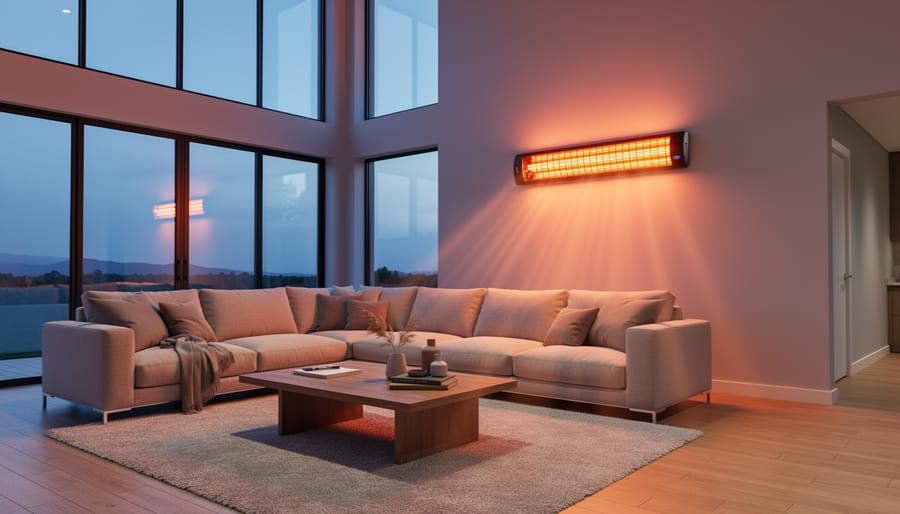
Infrared Heaters: Fast Heat Without the Wait
If you’ve ever stepped into a room warmed by infrared heat, you know there’s something different about it. Unlike traditional heaters that warm the air around you, infrared heaters work more like the sun, delivering radiant warmth directly to objects and people in the room. This fundamental difference makes them surprisingly effective for large spaces where conventional heating often falls short.
Think of it this way: when you sit near a fireplace, you feel the warmth on your skin immediately, even if the room is still cool. That’s radiant heat in action, and infrared heaters harness this same comforting principle. They emit electromagnetic waves that travel through the air without warming it, instead heating the surfaces they touch—your furniture, walls, floors, and yes, you. This means you feel warm almost instantly, without the lengthy wait time required for forced-air systems to cycle through a large room.
For homeowners with expansive living areas, this efficiency translates to real energy savings. Since infrared heaters don’t waste energy heating empty air that rises to the ceiling, they can reduce your heating costs by up to 40 percent compared to traditional space heaters. They’re also whisper-quiet, producing no fan noise or air circulation that stirs up dust, making them ideal for bedrooms, home offices, or open-concept living spaces where ambiance matters.
The best candidates for infrared heating are rooms where you spend extended periods in one area—a reading nook, home theater, or workshop. While infrared heater safety features have improved dramatically, look for models with tip-over protection and cool-touch exteriors, especially important in family homes where both warmth and peace of mind matter.
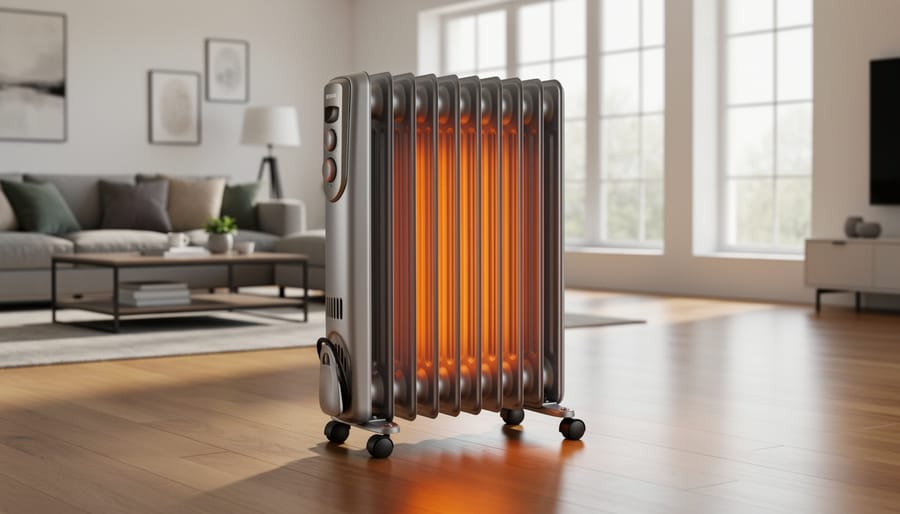
Oil-Filled Radiators: The Silent Powerhouse
If you’re looking for a heating solution that works quietly in the background while delivering consistent warmth throughout your large room, oil-filled radiators deserve serious consideration. These dependable units operate on a beautifully simple principle: electricity heats the oil sealed inside the radiator fins, which then radiates gentle, even heat for hours on end.
What makes oil-filled radiators particularly appealing for spacious areas is their ability to maintain warmth long after they’ve cycled off. Unlike forced-air heaters that stop producing heat the moment they shut down, the heated oil continues radiating warmth, creating a more stable temperature throughout your room. This sustained heating approach means fewer temperature swings and a more comfortable living environment overall.
Safety is another compelling advantage. These radiators typically feature cool-touch exteriors and tip-over protection, making them excellent choices for homes with children or pets. They’re also virtually silent—no whirring fans or clicking noises to disrupt your peace.
From an energy perspective, oil-filled radiators shine during extended use. While they take longer to heat up initially, their thermal retention makes them remarkably efficient for all-day or overnight heating. Many models include programmable thermostats and timers, letting you optimize energy consumption without sacrificing comfort.
For those who appreciate eco-friendly heating solutions, oil-filled radiators represent a responsible choice. Their efficient, zone-heating approach means you’re only warming the spaces you actually use, reducing overall energy waste while keeping your large room comfortably heated throughout the coldest months.
Forced Air Heaters: Maximum Coverage Power
If you need heat fast and powerful enough to tackle a large room, forced air heaters are your heavy hitters. These units combine heating elements with built-in fans that actively push warm air throughout your space, rather than waiting for natural convection to do the work. Think of them as the difference between letting a pot simmer and turning up the heat with a good stir—you get results much quicker.
Fan-forced heaters come in two main varieties: traditional coil models and ceramic heaters. Ceramic options use special ceramic plates that heat up quickly and retain warmth efficiently, making them particularly effective for large spaces. They’re also generally safer to the touch than exposed coil models, which matters when you’re heating a family room or living area where pets and children gather.
The standout advantage here is speed. A quality forced air heater can noticeably warm a chilly room within 15 to 20 minutes, which is impressive when you’re dealing with 300 square feet or more. Many models also include oscillating features that sweep warm air across a wider area, eliminating those frustrating cold pockets that plague large rooms.
The tradeoff? Noise. That fan means you’ll hear a constant hum while the unit operates. For some folks, it’s white noise that fades into the background. For others, especially in bedrooms or quiet reading spaces, it can be distracting. If noise sensitivity is a concern in your household, look for models specifically marketed as “quiet operation” or consider pairing your forced air heater with a more ambient heating solution like a fireplace for a balanced, comfortable environment.
Gas and Propane Heaters: High-Output Solutions
When electric heating isn’t practical or cost-effective for your large space, gas and propane heaters offer impressive high-output alternatives that can transform a chilly room into a comfortable retreat. These powerful solutions deserve serious consideration, especially if you already have a gas line or use propane for other household needs.
Gas heaters come in two main categories: vented and ventless models. Vented heaters direct combustion byproducts outside through a flue or chimney system, similar to traditional fireplaces. They’re ideal for spaces where you want sustained, worry-free heating without concerns about indoor air quality. These units can heat spaces up to 2,000 square feet or more, making them excellent choices for great rooms, workshops, or converted garages.
Ventless gas heaters, also called vent-free models, don’t require external venting. They’re incredibly efficient since all the heat stays in your room, and they’re easier to install in spaces where adding venting isn’t feasible. However, they do release water vapor and consume oxygen from your living space. Most building codes require rooms with ventless heaters to have adequate square footage and proper ventilation. You’ll need to crack a window periodically and ensure your carbon monoxide detector is functioning properly.
The heating power is undeniable. A mid-sized gas heater producing 30,000 BTUs can comfortably warm 1,000 to 1,500 square feet, while larger models handle even more. Operating costs typically run lower than electric resistance heating, particularly in areas where natural gas prices are favorable.
Safety requirements include annual professional inspections, proper clearances from combustible materials, and functioning safety sensors that shut off the unit if oxygen levels drop. While the upfront installation cost exceeds portable electric heaters, gas and propane solutions offer reliable, powerful heating that turns large, drafty spaces into genuinely livable areas throughout the coldest months.
Key Features That Make or Break Large Room Heating
Heating Capacity and Coverage Area
Getting the right heating capacity for your large room is like choosing the right size fireplace—too small and you’ll be left shivering, too large and you’re wasting energy and money. Here’s a simple rule of thumb to get you started: you’ll need approximately 10 watts of heating power per square foot of floor space for standard 8-foot ceilings.
For a 300-square-foot room, that means looking for a heater with at least 3,000 watts (roughly 10,000 BTUs). However, if you have vaulted or cathedral ceilings above 10 feet, increase your wattage requirements by 25-50 percent to compensate for the additional air volume. A 300-square-foot room with 12-foot ceilings would need closer to 4,000 watts to feel truly comfortable.
Keep in mind that insulation quality, window count, and climate also affect your needs. Drafty rooms or homes in northern climates may require higher capacity units. When comparing models, check both the maximum heating capacity in square feet and the actual wattage or BTU output. This ensures you’re choosing an eco-friendly heating solution that efficiently matches your space rather than constantly running at maximum capacity, which drives up energy costs and wears out components faster.
Safety Features You Can’t Compromise On
When heating a large room, safety becomes even more critical given the higher-powered equipment involved. Your heater should include fundamental protections that create a secure environment for everyone in your home.
Tip-over protection is non-negotiable, especially for family and pet safety. This feature automatically shuts off the heater if it gets knocked over, preventing potential fire hazards. If you have children or pets who might accidentally bump into the unit, this safeguard provides essential peace of mind.
Overheat shutoff protection acts as your heater’s built-in guardian. When internal temperatures reach unsafe levels, the unit automatically powers down before any damage occurs. This feature proves particularly valuable for heaters running extended periods in large spaces where you might not constantly monitor them.
Cool-touch exteriors prevent accidental burns when curious hands reach out. The housing remains safe to touch even during operation, protecting young children and pets from painful injuries. This feature also reduces fire risks if the heater comes into contact with furniture or curtains.
Look for ETL or UL certification marks, which indicate the heater has passed rigorous third-party safety testing. These certifications aren’t just decorative badges—they represent real protection for your household and offer accountability from manufacturers committed to safety standards.
Energy Efficiency and Operating Costs
When heating a large room, operating costs can vary significantly depending on your heater choice. Electric space heaters typically cost more to run than gas-powered options, especially in areas with high electricity rates. A 1,500-watt electric heater running eight hours daily might add $30-$50 to your monthly bill, while infrared heaters can be more economical since they heat objects directly rather than warming all the air in your space.
Investing in models with built-in thermostats and programmable timers makes a real difference in your energy bills. These features prevent your heater from working overtime once your room reaches the perfect temperature. Smart thermostats let you schedule heating only when you’re home, cutting unnecessary energy use by up to 30 percent.
For maximum efficiency, consider combining your heating solution with simple lifestyle adjustments. Keep doors closed to trap warmth, use ceiling fans on reverse to push warm air down, and ensure proper insulation around windows. Gas fireplaces and wood-burning options can also provide cost-effective supplemental heat while creating that cozy ambiance we all crave. For more guidance on reducing your environmental impact, check out our eco-friendly heating tips that help keep both your home and wallet warm.
Making Your Heater Work Smarter in Large Spaces
Strategic Placement for Maximum Coverage
Even the most powerful heater won’t warm your large room effectively if it’s positioned poorly. Think of heat distribution like water flowing through a space—you want it to circulate naturally rather than pooling in one area.
The sweet spot for most heaters is positioning them near where you spend the most time, but not directly against an exterior wall where cold surfaces will work against you. Instead, place your heater about three to four feet from the wall, allowing warm air to rise and create a convection current that pushes throughout the room. This circulation pattern is your friend, especially in rooms with high ceilings.
Avoid tucking your heater into corners where heat gets trapped, or placing it behind furniture that blocks airflow. You’re essentially creating warm pockets that never reach the rest of your space. Similarly, positioning a heater directly under a window might seem logical, but you’re just battling cold drafts—fix those drafts first with weatherstripping instead.
For rooms with multiple seating areas, consider two smaller-capacity heaters rather than one large unit. This strategy creates overlapping warmth zones and eliminates cold spots that single-source heating often misses. If you’re exploring more permanent solutions with better heat distribution, supplemental heating options like a well-designed fireplace can provide both targeted warmth and whole-room ambiance through natural convection patterns.
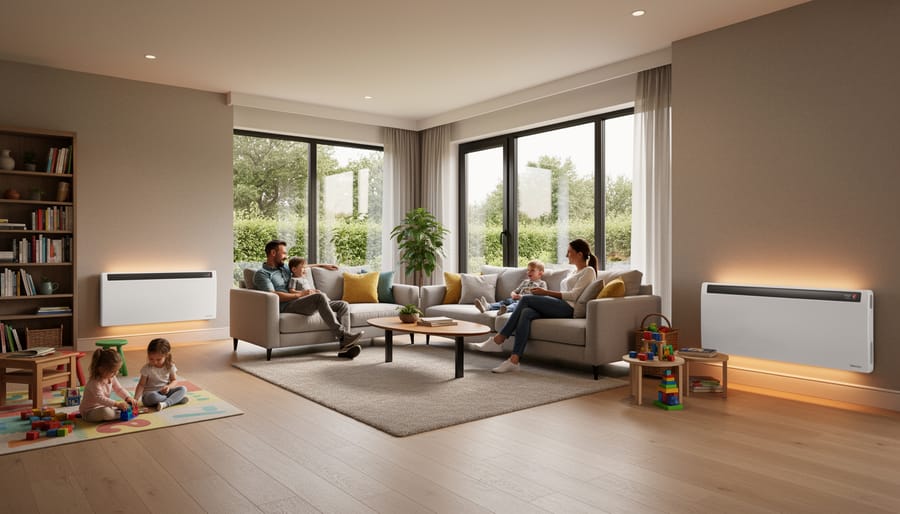
Combining Heaters with Your Home’s Heating System
Think of portable heaters as your home heating system’s helpful sidekick rather than its replacement. When you’re dealing with a large room that never quite gets warm enough, supplementing central heating with a targeted heater can be a smart, cost-effective strategy.
The beauty of this approach is zone heating. Instead of cranking up your thermostat to heat your entire home to 72 degrees, you can keep your central system at a comfortable 68 degrees and use a portable heater to add that extra warmth only where you need it. This focused heating method can significantly reduce your energy bills while keeping your favorite spaces cozy.
For best results, position your portable heater in the area where you spend the most time, whether that’s your reading nook, home office corner, or around the dining table. Let your central heating maintain a baseline temperature throughout the home, preventing pipes from freezing and keeping other rooms comfortable, while your large room heater handles the heavy lifting in your primary living space.
This dual approach works particularly well with programmable thermostats. You can lower your whole-home temperature during peak usage hours in specific rooms, then let the central system take over during sleeping hours when you’re tucked under blankets. It’s about working smarter with your existing heating infrastructure while giving those chilly large rooms the extra attention they deserve.
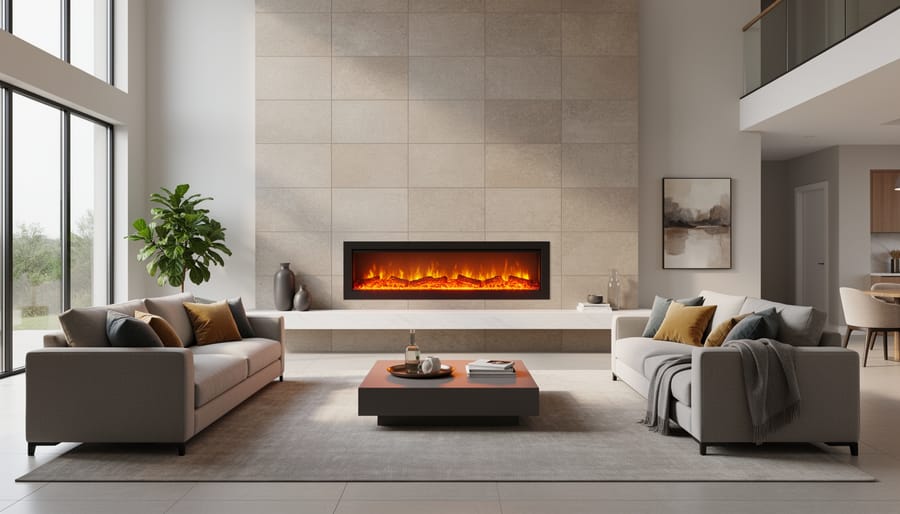
When to Consider a Fireplace Instead
While portable heaters and HVAC systems certainly have their place, there’s something to be said for the timeless appeal and practical benefits of a fireplace when heating a large room. If you’re finding that conventional heaters aren’t quite meeting your needs, it might be time to consider a fireplace solution that offers both substantial warmth and visual ambiance.
Modern fireplaces have evolved far beyond traditional wood-burning designs. Today’s electric, gas, and bioethanol options provide efficient heating without the maintenance hassles or installation restrictions of their predecessors. For large rooms, these contemporary fireplace solutions can often outperform standard space heaters while creating a focal point that transforms your entire living space.
Electric fireplaces are particularly worth considering if you’re dealing with a room of 400 square feet or more. They provide zone heating that can warm substantial areas while using less energy than running central heating for your entire home. The best models produce up to 5,000 BTUs, enough to heat spaces up to 500 square feet effectively. Plus, they require nothing more than a standard electrical outlet, making them incredibly versatile for any room layout.
Gas fireplaces take heating capacity even further, with many models generating 20,000 to 40,000 BTUs. This makes them ideal for great rooms, open-concept living areas, or any space where traditional heaters struggle to maintain comfortable temperatures. They offer the convenience of instant heat at the flip of a switch, with efficiency ratings that rival or exceed forced-air systems.
For those prioritizing eco-friendly heating solutions, bioethanol fireplaces present an compelling option. They burn clean, produce real flames, and require no venting or chimney installation. While they typically generate less raw heating power than gas models, they excel at providing supplemental warmth in large rooms while maintaining excellent indoor air quality.
Beyond pure heating performance, fireplaces bring something portable heaters simply cannot: they become a lifestyle element that enhances your home’s character and creates gathering spaces where memories are made. When a large room needs both warmth and soul, a fireplace often proves the superior choice.
Finding the perfect heater for your large room doesn’t have to feel overwhelming. By now, you understand that room size, insulation quality, and your specific heating priorities all play crucial roles in making the right choice. Whether you’re drawn to the powerful efficiency of infrared heaters, the whole-room warmth of oil-filled radiators, or the timeless appeal of a well-designed fireplace, the best solution is the one that fits your unique situation.
Remember that your budget matters, but so does long-term value. An energy-efficient model might cost more upfront but can save you significantly on utility bills throughout the winter months. Similarly, investing in eco-friendly heating solutions not only benefits your wallet but also reduces your environmental footprint, creating a warmer home in more ways than one.
Consider your lifestyle too. Do you need portable flexibility to move between rooms? Would you prefer the set-it-and-forget-it convenience of programmable thermostats? Perhaps you’re seeking more than just functional warmth and want a heating element that becomes a beautiful focal point in your living space.
The right heater transforms more than just the temperature. It creates a cozy sanctuary where your family gathers, where cold winter evenings become opportunities for comfort rather than discomfort. Take your time reviewing your options, measure your space accurately, and don’t hesitate to prioritize both performance and the ambiance that makes your house truly feel like home.