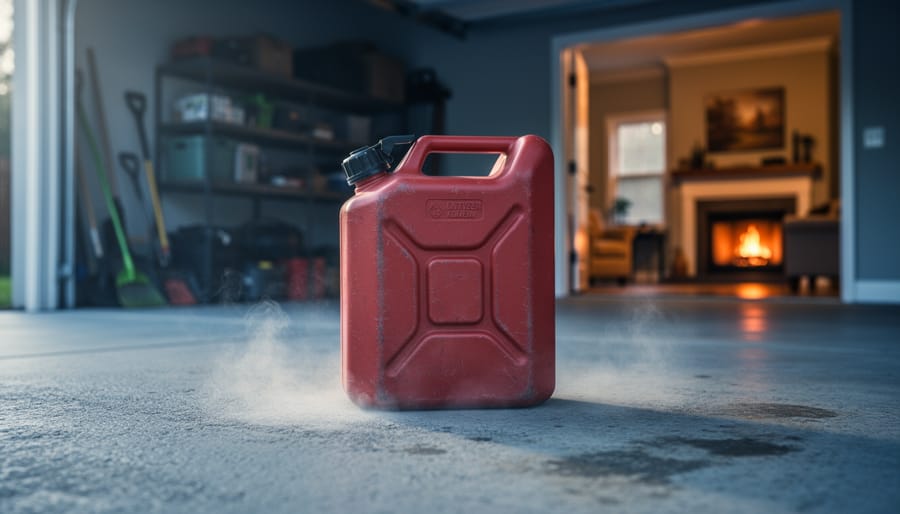


Gasoline evaporates faster than you might expect, turning from liquid to invisible vapor at temperatures as low as 45°F, which means that can sitting in your garage is releasing flammable fumes even on cool days. Understanding this volatile behavior isn’t just chemistry—it’s essential home safety knowledge, especially if you store fuel for lawnmowers, generators, or snow blowers near your living spaces.
Every gallon of gasoline can release pounds of vapor into your garage or shed, creating an invisible cloud that’s heavier than air, settles near the ground, and travels toward ignition sources like water heaters, furnaces, or that cozy fireplace you gather around on winter evenings. The evaporation rate accelerates dramatically as temperatures rise, with half-full containers losing fuel even faster due to increased air exposure inside the tank.
This reality matters more than ever as homeowners seek reliable heating solutions and store various fuels on their properties. While gasoline serves necessary purposes for outdoor equipment, recognizing its aggressive evaporation patterns helps you make smarter storage decisions and appreciate the comparative safety of modern heating alternatives. From proper container selection to strategic placement away from living areas, controlling gasoline evaporation protects both your investment and your family’s wellbeing.
The contrast between managing volatile petroleum products and enjoying stable, eco-friendly heating solutions becomes clear once you understand what’s actually happening inside that red plastic container, and why your home’s warmth doesn’t need to come with hidden risks.
What Makes Gasoline Evaporate So Quickly?
The Chemistry Behind the Fumes
Gasoline is essentially a cocktail of lightweight hydrocarbons, which are molecules that love to escape into the air. Think of it like water in a hot kettle, except gasoline doesn’t need heat to transform into vapor. Its chemical structure features weak bonds between molecules, making it incredibly eager to transition from liquid to gas at normal temperatures.
This volatility isn’t accidental. Refineries deliberately blend gasoline to evaporate quickly because your car’s engine needs that vapor to ignite efficiently. The lighter components, like butane and pentane, vaporize first, which is why you smell those fumes immediately when you open a gas cap. It’s similar to how other liquid fuels evaporate, though gasoline is significantly more aggressive.
For homeowners storing gasoline for lawn equipment or generators near living spaces, understanding this chemistry matters for safety. Unlike the controlled combustion in modern gas fireplaces or eco-friendly heating systems designed for your home, gasoline creates an invisible cloud of flammable vapor that spreads rapidly. Even at freezing temperatures, gasoline continues releasing vapors, creating potential hazards in garages and storage areas where proper ventilation becomes essential.
Temperature’s Critical Role
Temperature plays a starring role in gasoline evaporation, acting like an invisible accelerator that transforms liquid fuel into potentially hazardous vapors. When gasoline gets warm, its molecules become increasingly energetic and eager to escape into the air. Think of it like heating water on your stove—the hotter it gets, the faster it evaporates. The same principle applies to gasoline, except it happens at much lower temperatures.
This is precisely why storing gasoline anywhere near your fireplace, wood stove, or heating equipment creates a genuinely dangerous situation. Even moderate warmth from nearby heating sources can dramatically increase evaporation rates, flooding your cozy living space with flammable vapors that are heavier than air and tend to settle near floor level. These invisible fumes can travel surprisingly long distances to find an ignition source—whether that’s a pilot light, a glowing ember, or even a static spark.
As homeowners who value safe, comfortable living spaces, understanding this relationship between heat and fuel volatility helps us make smarter storage decisions. Keep gasoline and similar fuels in cool, well-ventilated areas far from any heat sources, and consider embracing eco-friendly heating solutions that eliminate the need to store volatile fuels altogether.
The Hidden Dangers of Gasoline Evaporation Near Your Fireplace
Why Gasoline Vapors Are More Dangerous Than Liquid Fuel
When gasoline spills, the real danger isn’t what you can see on the ground—it’s what’s invisibly rising into the air around you. Gasoline vapors are significantly more hazardous than the liquid itself, and understanding why can help you make safer choices for your home and family.
Unlike liquid gasoline that stays in one place, vapors behave like an invisible wave, traveling silently along the ground and through the air. They’re heavier than air, which means they sink and accumulate in low-lying areas like basements, garages, and floor-level spaces. This characteristic makes them particularly treacherous in enclosed environments where we often store equipment or work on projects.
The ignition properties of gasoline vapors present serious liquid fuel safety hazards. While liquid gasoline requires direct flame contact to ignite, vapors can catch fire from sources dozens of feet away—a pilot light, water heater, or even a static electricity spark. The explosive range of these vapors means that even a small amount of evaporated gasoline in a confined space can create a catastrophic situation.
This is precisely why so many homeowners are choosing safer heating alternatives. Modern gas fireplaces and eco-friendly heating solutions eliminate the need to store volatile fuels near your living spaces. By understanding these risks, you can create a warmer, safer home environment without compromising your family’s well-being. When it comes to home comfort, the smartest choice is always the safest one.
Common Storage Mistakes That Put Your Home at Risk
Many well-intentioned homeowners unknowingly create dangerous situations when storing gasoline around their properties. One of the most serious mistakes is keeping gas cans in attached garages, especially near water heaters, furnaces, or your beloved fireplace equipment. The invisible vapors from gasoline are heavier than air and creep along floors, potentially reaching pilot lights or electrical sparks that can ignite them without warning.
Another common error involves using improper containers. That old milk jug or random plastic container simply won’t cut it for gasoline storage. Always use approved fuel containers with proper sealing mechanisms and clear labeling. These containers are specifically designed to minimize vapor escape and prevent the catastrophic fuel storage risks associated with fuel degradation and pressure buildup.
Temperature fluctuations present another challenge. Storing gasoline in areas that experience extreme heat, like sun-exposed sheds or directly against exterior walls, accelerates evaporation and increases pressure inside containers. This creates a volatile situation that threatens your home’s safety and your family’s well-being.
Many homeowners also store excessive quantities of gasoline, keeping multiple five-gallon cans “just in case.” This practice multiplies your risk exponentially. Instead, store only what you need for immediate use, and consider whether you truly need gasoline-powered equipment at all. Modern eco-friendly heating solutions and electric alternatives often provide safer, more sustainable options that align better with a warm, secure home environment focused on long-term comfort rather than short-term convenience.
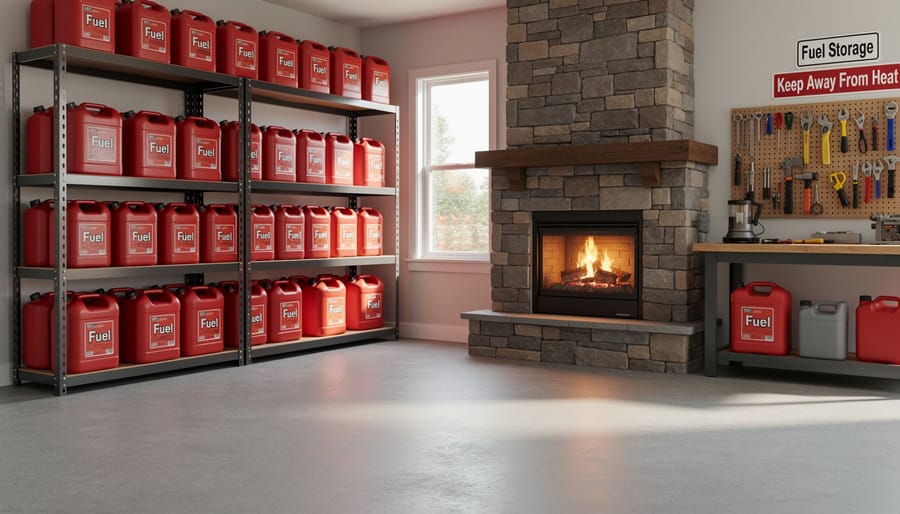
How Gasoline Evaporation Compares to Fireplace Fuels
Bioethanol: A Safer Liquid Fuel Alternative
If you’re concerned about fuel evaporation and indoor air quality, bioethanol offers a refreshing alternative that’s changed the game for home heating. Unlike gasoline, which releases harmful vapors that can linger for hours, bioethanol is specifically formulated to burn cleanly and completely.
Bioethanol is a plant-based alcohol fuel derived from renewable sources like corn, sugarcane, and wheat. When it evaporates, it doesn’t release the toxic compounds found in petroleum-based fuels. This fundamental difference is why bioethanol fireplaces can safely operate indoors without requiring a chimney or ventilation system.
The evaporation rate of bioethanol is carefully balanced for fireplace applications. It vaporizes efficiently enough to produce a beautiful, consistent flame, yet doesn’t create the overwhelming fumes associated with gasoline. When bioethanol burns, it primarily produces water vapor and carbon dioxide in amounts similar to burning a few candles, making it safe for your living space.
This eco-friendly heating solution gives you the ambiance of a real flame without the installation costs of traditional fireplaces or the safety hazards of storing volatile fuels. For homeowners seeking warmth and atmosphere without compromising indoor air quality, bioethanol represents a smart marriage of modern convenience and environmental responsibility.
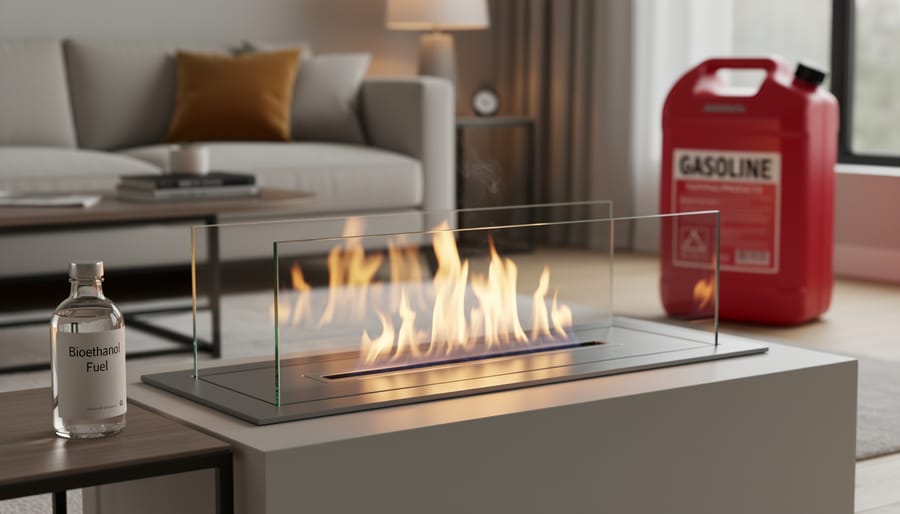
Understanding Your Fireplace Fuel Options
When you’re thinking about creating a cozy atmosphere in your home, understanding your fuel options makes all the difference in both safety and enjoyment. While gasoline’s volatile nature makes it unsuitable for indoor heating, several safer alternatives can transform your living space into a warm, inviting haven.
Bioethanol fireplaces have emerged as a popular choice for homeowners seeking clean-burning, eco-friendly heating solutions. This renewable fuel produces minimal emissions, requires no chimney or venting, and offers the authentic flame experience without the hazards associated with more volatile fuels. Natural gas fireplaces provide another excellent option, delivering consistent heat with modern efficiency and convenient controls that let you adjust ambiance at the touch of a button.
For those considering various heating fuels, it’s worth exploring how kerosene and other alternatives compare in terms of safety and practicality. Each fuel type has distinct characteristics that affect storage, evaporation rates, and indoor air quality.
The beauty of today’s fireplace technology lies in having multiple safe, environmentally conscious options that don’t compromise on warmth or visual appeal. By choosing appropriate fuels designed specifically for home heating, you’ll create the ambiance you desire while keeping your family safe and your home’s air quality pristine.
Smart Storage Solutions for Homeowners
Choosing the Right Fuel Containers
When storing gasoline for lawn equipment, generators, or outdoor tools around your home, selecting the right container is essential for preventing dangerous evaporation and vapor buildup. Always choose containers specifically approved for gasoline storage, which are typically made from heavy-duty plastic or metal and clearly labeled for flammable liquids. These approved safety cans feature self-closing lids, flame arrestors, and pressure-relief mechanisms that dramatically reduce evaporation while preventing vapors from escaping into your garage or storage area.
Look for containers with the UL or FM approval stamp, ensuring they meet rigorous safety standards. Red containers are the universal standard for gasoline storage, making them instantly recognizable. Avoid using milk jugs, glass containers, or any non-approved vessels, as these lack proper ventilation systems and can create hazardous situations in your home environment.
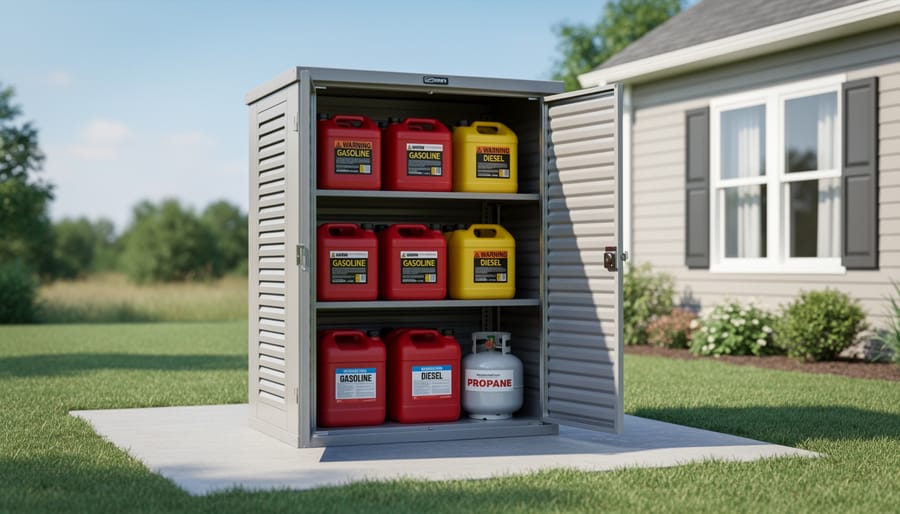
For homeowners committed to safer living spaces, understanding proper fuel container safety is crucial. Store approved containers in well-ventilated outdoor spaces away from living areas, ideally in a detached shed rather than attached garages. This approach aligns with creating a safer, more eco-conscious home while minimizing the risks associated with volatile fuels near your family’s living spaces.
The Best (and Worst) Places to Store Fuel
Storing gasoline safely around your home requires thoughtful planning, especially if you’re keeping fuel for lawn equipment, generators, or other tools. Let’s talk about creating the safest possible storage situation.
The absolute best location for gasoline storage is a detached shed or garage, positioned at least 50 feet from your home. This distance provides a crucial safety buffer between volatile fumes and your living space, including any heating appliances you might have. Never, and we mean never, store gasoline in your basement or anywhere near your fireplace, furnace, or water heater. These heat sources can ignite gasoline vapors, which are heavier than air and tend to settle in low areas.
Your storage area needs excellent ventilation to prevent dangerous vapor buildup. Look for a spot with natural airflow, away from direct sunlight and any potential ignition sources. Ground-level storage in a well-ventilated outbuilding beats attic storage every time, since heat rises and attics can become dangerously hot during summer months.
The worst places? Anywhere inside your home, attached garages without proper ventilation, spaces near pilot lights, or areas that experience temperature swings above 80 degrees. Also avoid storing fuel containers directly on concrete floors, as temperature fluctuations can accelerate evaporation. Instead, place approved containers on wooden shelves or pallets.
Remember, proper gasoline storage protects both your family and your home’s heating systems. When it comes to warmth and comfort, safer alternatives like modern eco-friendly fireplaces eliminate these storage headaches entirely while providing reliable, controlled heat.
Reducing Evaporation and Extending Fuel Life
Fuel Stabilizers and Their Benefits
If you’re storing gasoline for lawnmowers, generators, or snow blowers during off-seasons, fuel stabilizers can be your best friend. These additives work by slowing down the oxidation process that causes gasoline to break down and evaporate over time. Think of them as a protective shield that keeps your fuel fresh and ready to use when you need it again.
When you add a stabilizer to your gas tank before storing equipment for three months or longer, you’re preventing gum and varnish buildup that can clog carburetors and fuel lines. This simple step can save you costly repairs and frustrating start-up problems come spring or fall. For homeowners who maintain multiple pieces of outdoor equipment, stabilizers offer peace of mind during storage seasons. Just remember to run the engine briefly after adding the stabilizer so it circulates through the entire fuel system, ensuring complete protection throughout those quiet months.
Seasonal Storage Best Practices
When winter arrives and you’re relying on your fireplace to keep your home cozy, proper fuel storage for lawn equipment and generators becomes especially important. Cold temperatures actually slow gasoline evaporation, but storing fuel-powered equipment near your frequently-used fireplace or heating areas creates serious safety risks.
Always store gasoline-powered equipment in a detached garage or shed, well away from your living spaces and any heat sources. Keep fuel containers tightly sealed and at least 50 feet from your home’s heating appliances. Consider draining fuel from equipment that won’t be used for several months, as stale gasoline loses effectiveness and increases vapor buildup.
Before storing, add a fuel stabilizer to prevent degradation and reduce evaporation rates during the storage period. Label containers with storage dates to track freshness. Most importantly, never bring gasoline containers indoors, even temporarily, when temperatures drop. The warmth from your home’s heating system can accelerate evaporation and create dangerous vapor concentrations in enclosed spaces.
This winter focus on safer, eco-friendly heating solutions like your well-maintained fireplace while keeping volatile fuels properly isolated from your home’s warm environment.
Understanding how gasoline evaporates is crucial for anyone who stores fuel around their home, whether it’s for lawn equipment, generators, or other outdoor tools. While gasoline serves important purposes, its volatile nature and associated risks remind us that when it comes to creating warmth and ambiance in our homes, there are far better options available.
If you’ve learned anything from exploring gasoline’s evaporation properties, it’s that this fuel demands respect and careful handling. The vapors it releases pose fire hazards, health concerns, and environmental challenges that simply don’t align with a safe, comfortable home environment. This is exactly why modern fireplace solutions have evolved to offer the warmth and atmosphere you crave without the risks associated with volatile fuels.
Today’s homeowners have access to incredible heating alternatives that blend safety, convenience, and environmental responsibility. From clean-burning natural gas and propane fireplaces to electric models that require no fuel storage whatsoever, you can enjoy flickering flames and cozy evenings without worrying about fuel vapors or storage containers in your garage. Ethanol fireplaces offer another innovative solution, burning cleanly with minimal emissions and no need for venting systems.
As you consider your home heating needs, think beyond simply storing dangerous fuels near your living space. Modern fireplace technology has transformed how we heat our homes and create ambiance, offering solutions that are safer for your family, easier to maintain, and gentler on the environment. By choosing the right fireplace system for your home, you’re investing in comfort without compromise, creating a warm gathering space that enhances your lifestyle while prioritizing what matters most: your family’s safety and wellbeing.