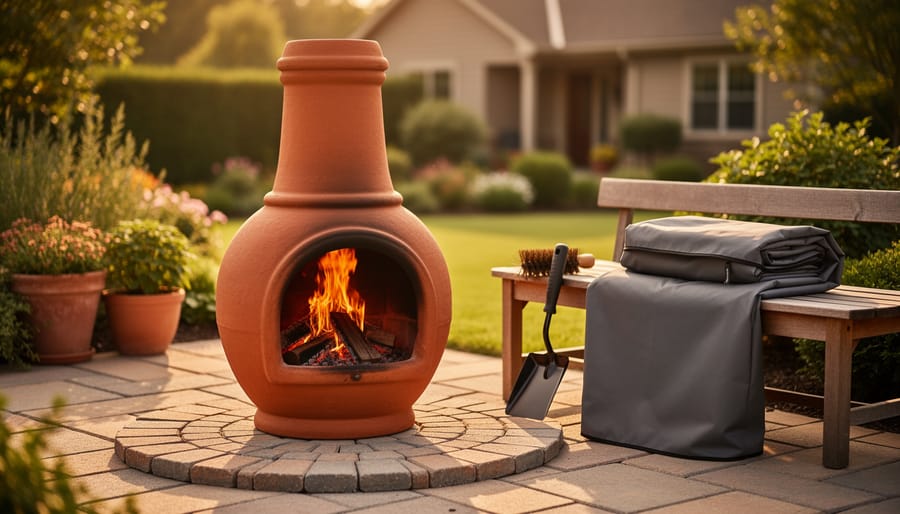


Inspect your chiminea before and after winter storage, checking for cracks in clay models or rust spots on cast iron that could worsen with temperature swings. Apply a high-temperature sealant to clay chimineas each spring to prevent moisture absorption that leads to crumbling, and use a wire brush followed by rust-resistant spray on metal versions showing oxidation. Cover your chiminea with a waterproof, breathable cover during off-season months, ensuring it’s completely cool and dry first to prevent trapped moisture from causing deterioration. Clear ash after every three to four burns rather than letting it accumulate, as leftover debris holds moisture against interior surfaces and accelerates wear regardless of your chiminea’s material. Season new clay chimineas with progressively larger fires over five sessions to cure the material properly, preventing thermal shock cracks that void most warranties. Position your outdoor fire feature on a stable, non-flammable base at least ten feet from structures, and establish a seasonal cleaning schedule that aligns with your regional climate patterns for maximum longevity and safe operation year-round.
Why Chimineas Need Seasonal Love (Unlike Other Fire Features)
Unlike their built-in cousins like permanent outdoor fireplaces or fire pits, chimineas require more attentive seasonal care because of their unique construction. Think of your chiminea as the difference between a cherished garden pot and a concrete patio – both serve outdoor purposes, but one needs considerably more protection from Mother Nature’s mood swings.
The vulnerability comes down to materials and design. Traditional clay chimineas, originally crafted in Mexico centuries ago, are essentially fired pottery. While beautifully rustic and authentic, clay is naturally porous and prone to cracking when exposed to moisture that freezes and expands. Temperature fluctuations are particularly harsh on these earthenware beauties – imagine heating and cooling a ceramic plate repeatedly and you’ll understand the stress.
Cast iron chimineas fare better with temperature changes but wage a constant battle against rust and corrosion. Moisture is their nemesis, and even morning dew can start oxidation if the protective finish has worn thin. Steel versions offer more durability but aren’t immune to rust, and both metals can warp under extreme temperature swings if not properly maintained.
UV exposure adds another layer of challenge. Direct sunlight gradually breaks down protective sealants on clay models and can fade or crack painted finishes on metal versions. This sun damage compromises the barrier against moisture infiltration.
The enclosed design that makes chimineas so efficient at radiating warmth also creates vulnerability. Water can pool inside if left uncovered, and the narrow opening means moisture takes longer to evaporate. Built-in features typically have better drainage and aren’t moved seasonally, but your chiminea needs that extra seasonal attention to remain a welcoming source of warmth and ambiance for years to come. It’s a small investment of time that protects your larger investment in outdoor comfort.
Spring: Waking Up Your Chiminea After Winter
The Post-Winter Inspection
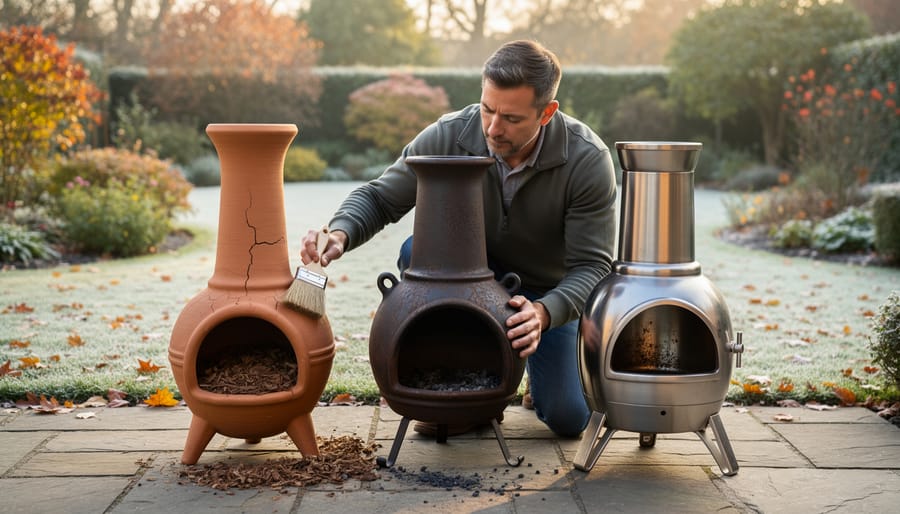
After winter’s harsh weather subsides, your chiminea deserves a thorough health check before you light that first spring fire. Think of this as a wellness visit for your beloved outdoor companion.
Start by examining the entire exterior surface in bright daylight. For clay and ceramic chimineas, look carefully for hairline cracks, especially around the mouth and base where stress concentrates. Run your hand gently over the surface to detect any rough spots or flaking. Cast iron models need scrutiny for rust spots, particularly in joints and seams. Don’t panic if you find surface rust; it’s often treatable. However, deep pitting or flaking metal signals serious deterioration.
Check the chimney thoroughly, peering inside with a flashlight to spot hidden cracks or blockages from nesting materials. Give the structure a gentle shake to test stability. Any wobbling indicates weakened joints that need attention.
For steel chimineas, inspect welds and seams where moisture penetrates most easily. Look underneath the base where pooled water causes hidden damage.
Document any issues with photos and measurements. Minor surface cracks in clay can often be sealed, while structural damage may require professional assessment. Remember, catching problems early protects both your investment and your family’s safety for seasons of cozy fires ahead.
Deep Cleaning After Dormancy
After months of winter rest, your chiminea deserves a thorough awakening. Start by removing all ash and debris from the firebox using a small shovel and stiff brush. Winter winds often deposit leaves, twigs, and even nesting materials inside, so check carefully for any surprises before lighting your first fire of the season.
For the interior, create a simple cleaning solution with warm water and mild dish soap. Use a long-handled brush to scrub away soot and built-up residue, paying special attention to the chimney opening where creosote may have accumulated. Rinse thoroughly with a garden hose and allow it to dry completely in the sun for at least 24 hours.
The exterior needs attention too. Clay chimineas may have developed a chalky appearance over winter, which is normal. Gently brush away surface dust and apply a coat of chiminea sealant if needed. Cast iron models might show rust spots, so use a wire brush to remove corrosion and touch up with high-temperature paint.
If you stored your chiminea with a cover, inspect it for mold or mildew. Clean fabric covers with a solution of one part white vinegar to four parts water, then air dry completely before storing. This eco-friendly approach keeps your outdoor living space fresh and ready for cozy evenings ahead.
Repairs and Protective Treatments
Even with careful maintenance, your chiminea may need occasional repairs to keep it functioning safely and beautifully. For clay models, hairline cracks are common but manageable—seal them with specialized chiminea sealant or high-temperature furnace cement before they worsen. After completing the proper curing process, apply a clay sealant annually to protect against moisture absorption and prevent cracking. Metal chimineas require different care: address rust spots promptly by scrubbing with a wire brush, then apply high-heat resistant paint designed for outdoor use. For cast iron models, a light coating of vegetable oil helps prevent rust between uses. Before each season begins, inspect your chiminea thoroughly for structural issues and apply protective coatings as needed. These simple repairs extend your investment’s lifespan while maintaining safe operation, ensuring many more cozy evenings gathered around the warmth of dancing flames.
Summer: Active Season Care and Quick Maintenance
After Each Fire: The Five-Minute Routine
Making post-fire maintenance part of your routine is like giving your chiminea a quick health check after each use. Once your fire has completely burned out and the chiminea has cooled for at least 12 hours, it’s time for a five-minute inspection that can prevent bigger problems down the road.
Start by gently removing ash with a small metal scoop or brush, but here’s an important tip: leave a thin layer of ash at the bottom. This acts as insulation for future fires and protects the base from direct heat exposure. Check the interior and exterior surfaces for any new hairline cracks or chips that may have developed during heating and cooling cycles. Catching these early means you can address them before they expand.
Give the opening and chimney a quick wipe-down to remove soot buildup, which improves airflow and reduces smoke during your next fire. This simple routine keeps your outdoor gathering spot inviting and extends your chiminea’s lifespan significantly.
Monthly Deep Checks
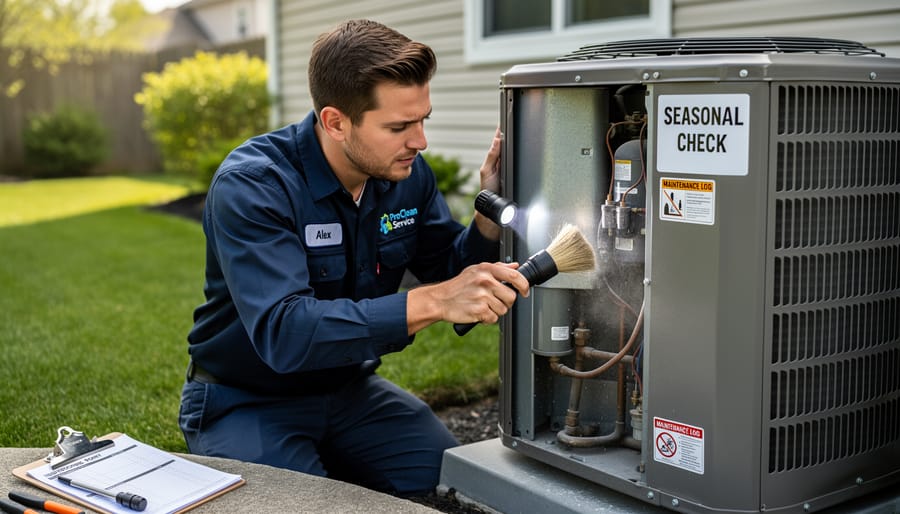
During the months when you’re actively enjoying your chiminea, set aside time for more comprehensive monthly inspections to catch potential issues early. Think of this as your outdoor fireplace’s wellness check—it keeps your investment performing beautifully throughout the season.
Start by examining the chimney or stack closely for any cracks or deterioration, paying special attention to the top opening where weather exposure is greatest. Look for signs of structural weakness, particularly on clay models where hairline cracks can expand quickly. The fire bowl deserves equal attention—inspect the interior for excessive ash buildup, cracks in the base, or weakening around the opening.
Check that ventilation remains unobstructed by removing any debris, nests, or leaves that might have accumulated in the stack. Proper airflow is essential not just for efficient burning, but also for your safety and the chiminea’s longevity. For cast iron chimineas, verify that the protective coating hasn’t worn thin in high-heat areas.
These monthly deep checks take just fifteen minutes but can prevent costly repairs down the road. Document any changes you notice—this seasonal awareness helps you track your chiminea’s condition and maintain it as a cherished gathering spot for years to come.
Protecting Against Summer Storms
Summer storms can appear without warning, so having a quick protection plan is essential for preserving your chiminea. Keep a waterproof cover nearby that’s easy to secure, even in windy conditions. If rain catches you off-guard, don’t panic. Allow your chiminea to cool naturally rather than moving it while hot, as sudden temperature changes can cause cracking, especially in clay models.
After unexpected rain exposure, tip the chiminea forward slightly to drain any collected water once it’s safe to handle. This prevents moisture from sitting inside, which can lead to deterioration or mold growth. During extreme heat, position your chiminea in partial shade when not in use to minimize sun damage and prevent the exterior from becoming brittle.
Consider investing in a storage shed or covered patio area where you can quickly relocate your chiminea during severe weather warnings. This proactive approach protects your investment while maintaining the warm, welcoming outdoor ambiance you’ve created for summer gatherings.
Fall: Preparing for the Transition
The Pre-Winter Tune-Up
Before winter’s harsh conditions arrive, your chiminea deserves one final thorough checkup to ensure it survives the cold months ahead. Think of this as preventive care that saves you from costly spring repairs.
Start by examining every inch of your chiminea for cracks, chips, or wear patterns. Clay models are particularly vulnerable to freeze-thaw damage, so even hairline cracks need attention. Apply a high-quality outdoor sealant designed for your chiminea’s material to create a protective barrier against moisture infiltration.
For cast iron chimineas, inspect for rust spots and treat them immediately with a wire brush, followed by high-heat resistant paint. This prevents minor surface rust from becoming structural damage during winter’s wet weather. Check all joints, seams, and the chimney connection for stability, tightening any loose components.
Don’t overlook the base and legs. Winter winds can topple an unstable chiminea, so reinforce wobbly stands or replace worn feet pads. If you’re storing your chiminea for winter, this inspection helps you decide whether it needs indoor protection or if a weatherproof cover suffices. Taking these steps now means you’ll be ready to enjoy cozy fires the moment spring arrives.
Dealing with Fall Debris
Fall brings a beautiful cascade of leaves and pine needles, but these picturesque elements can quickly become your chiminea’s worst enemy. As debris accumulates in and around your outdoor fireplace, it creates multiple problems: moisture retention that leads to rust or cracking, blocked ventilation, and potential fire hazards from dry leaves catching unexpected sparks.
Make it a weekly habit to clear fallen leaves from your chiminea’s opening, chimney, and surrounding area. A simple leaf blower or soft broom works perfectly for this task. Pay special attention to pine needles, which can wedge into small crevices and hold moisture against metal or clay surfaces.
Consider creating a debris-free zone extending at least three feet around your chiminea. This not only protects your investment but also adds an important safety buffer. If you’re dealing with heavy leaf fall, a breathable cover between uses prevents buildup while allowing moisture to escape.
Think of this maintenance as part of your cozy fall ritual. A quick five-minute cleanup before each use ensures your chiminea stays ready for those spontaneous autumn evenings when you want nothing more than gathering around warming flames with loved ones, celebrating the season’s simple pleasures.
Winter: Storage and Cold-Weather Protection
Should You Store It or Leave It Out?
The storage-versus-leaving-out debate really depends on three key factors: your local climate, your chiminea’s material, and your storage options.
If you live in an area with harsh winters featuring heavy snow, ice, or frequent freeze-thaw cycles, storing your chiminea is the safer bet. Clay and cast iron models especially benefit from indoor storage during extreme weather. Mild climates with occasional rain? A quality waterproof cover might be all you need, though storage still offers maximum protection.
Consider your chiminea’s material too. Clay models are more vulnerable to moisture damage and temperature swings, making storage almost essential. Cast iron handles the elements better but still risks rust without proper covering. Steel chimineas fall somewhere in between.
The pros of storage include complete weather protection, extended lifespan, and peace of mind. The downside? You’ll need adequate garage or shed space, plus energy for moving it.
Leaving it out with a cover saves effort and keeps your outdoor space visually complete year-round. However, even covered chimineas face some weathering and require more frequent inspections. Your lifestyle as a fireplace enthusiast should guide this practical decision.
Proper Winter Storage Steps
Preparing your chiminea for winter storage is like tucking in a cherished outdoor companion until spring arrives. Start with a thorough final cleaning once your last autumn fire has completely cooled. Remove all ash, debris, and any lingering moisture using a soft brush and cloth. For clay chimineas, inspect carefully for any hairline cracks that developed during the season, as water can seep in and cause serious damage when it freezes.
Once cleaned, let your chiminea dry completely in a covered, well-ventilated area for at least 48 hours. This step is crucial because any trapped moisture becomes your chiminea’s worst enemy during temperature fluctuations. For cast iron models, consider applying a thin coat of high-temperature stove polish or vegetable oil to prevent rust formation during dormancy.
Choose your storage location wisely. The ideal spot is a dry garage, shed, or covered patio where your chiminea stays protected from rain, snow, and extreme temperature swings. If outdoor storage is your only option, invest in a breathable, waterproof cover that allows air circulation while keeping moisture out. Avoid plastic tarps that trap condensation. Position your chiminea on blocks or a pallet to keep it elevated off cold concrete floors, ensuring airflow underneath and preventing moisture absorption from below.
Protecting Outdoor Chimineas Through Winter
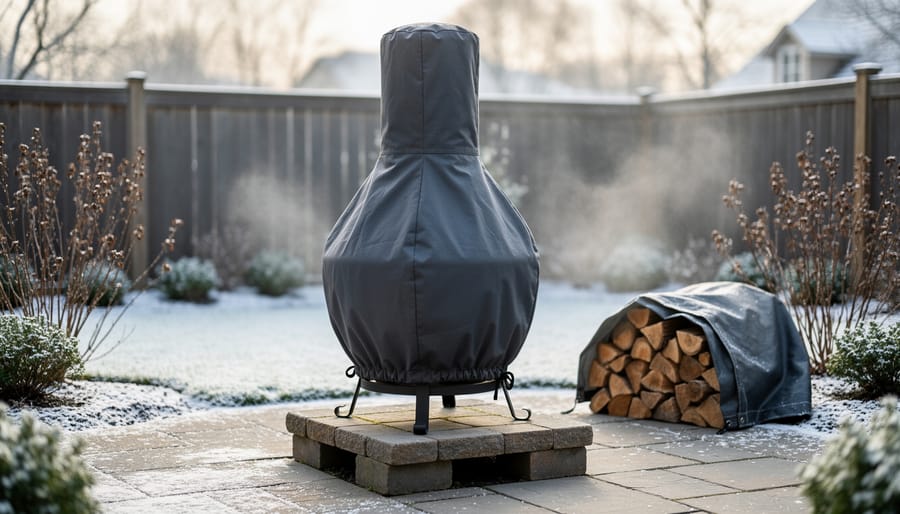
If you’re leaving your chiminea outdoors through winter, proper protection becomes essential to preserve this wonderful lifestyle element. Start by investing in a high-quality, waterproof cover specifically designed for chimineas, ensuring it fits snugly but allows some ventilation to prevent moisture buildup and mildew. Look for covers with tie-down straps or drawstrings that can withstand winter winds.
Elevate your chiminea at least a few inches off the ground using bricks, pavers, or a dedicated chiminea stand. This simple step prevents ground moisture from seeping into the base and allows air circulation underneath, which helps avoid freeze-thaw damage that can crack even the sturdiest materials.
Water accumulation is your winter enemy. Position the cover so water runs off rather than pooling on top, and regularly check after storms to remove any collected precipitation. For snowy climates, gently brush off snow buildup before its weight stresses the structure. Never let ice form inside the fire bowl, as expanding ice can cause serious cracks. During particularly harsh weather, consider adding extra insulation around clay chimineas with blankets or moving them to more sheltered locations like covered porches.
Material-Specific Maintenance Tips
Clay and Terracotta Chimineas
Traditional clay and terracotta chimineas bring authentic charm to your outdoor space, but they need special attention to thrive. These natural materials are beautifully porous, which means they’re also sensitive to moisture and temperature changes. Curing your clay chiminea properly before first use is essential, creating a protective layer that prevents cracking from sudden heat exposure.
Apply a waterproof sealer every few months during active use, and always before storing for winter. Unlike metal alternatives, clay absorbs water like a sponge, so never leave it exposed to rain or snow without a waterproof cover. Temperature shifts are the enemy here. Avoid lighting fires during freezing weather or immediately after rainfall, as trapped moisture expanding can cause hairline cracks. Think of your clay chiminea as an outdoor companion that rewards gentle handling with years of cozy ambiance and rustic beauty.
Cast Iron Chimineas
Cast iron chimineas bring timeless charm to your outdoor space, but they need some extra love to keep them looking their best. The good news? A little preventive care goes a long way.
Start by seasoning your new cast iron chiminea before its first use. Light several small fires gradually increasing in size over three to four sessions. This cures the metal and creates a protective layer. For rust prevention, apply a thin coat of vegetable oil or specialized high-temperature finish to exterior surfaces when cool, especially before storing for winter.
If rust appears, don’t panic. Use a wire brush or fine steel wool to remove it, then re-season and protect the area. Think of it as giving your chiminea a spa treatment.
Weight is both blessing and curse with cast iron. While stability is rarely an issue, positioning matters since these beauties aren’t easily moved. Choose your spot wisely and use a sturdy, level base to prevent tipping.
For paint touch-ups, select high-temperature paint rated for at least 1200°F. Clean the area thoroughly, apply thin coats, and cure according to manufacturer instructions. Regular maintenance transforms your cast iron chiminea from a seasonal purchase into a lasting backyard centerpiece.
Steel and Copper Chimineas
Steel and copper chimineas bring a modern aesthetic to your outdoor living space, but they require specific care to maintain their beauty and function. For steel models, the protective finish is your first line of defense against rust. Inspect this coating seasonally, touching up any chips or scratches with high-temperature paint designed for outdoor use. If surface rust appears, address it immediately with a wire brush and rust-inhibiting primer before repainting.
Copper chimineas develop a distinctive greenish patina over time, which actually protects the metal beneath. If you prefer the original copper glow, use a specialized copper cleaner and apply a clear sealant. However, many homeowners embrace the natural aging process as part of their fire feature’s character.
Both materials benefit from dry storage during harsh weather. Apply a thin coat of mineral oil to steel surfaces before winter to create an additional moisture barrier. Check welded joints and seams twice yearly for separation or stress cracks, as these compromise structural integrity and safety. With proper attention, your metal chiminea becomes a lasting centerpiece for outdoor gatherings.
Eco-Friendly Maintenance Practices
Caring for your chiminea doesn’t mean compromising your environmental values. In fact, sustainable maintenance practices can protect both your investment and the planet while keeping your outdoor space warm and inviting.
Start with natural cleaning solutions instead of harsh chemicals. A simple mixture of warm water and white vinegar works wonderfully for removing soot and residue from the interior. For stubborn buildup, create a paste using baking soda and water, apply gently, and rinse thoroughly. These gentle alternatives clean effectively without introducing harmful substances into your garden soil.
When it comes to protective coatings, seek out water-based, low-VOC sealants specifically designed for outdoor use. These eco-friendly options provide excellent weather protection for clay chimineas without releasing harmful volatile organic compounds into the atmosphere. Apply them during mild weather for best results and proper curing.
Ash disposal deserves thoughtful consideration too. Once completely cooled, wood ash can actually enrich your garden as a natural fertilizer, adding potassium and raising soil pH. Just ensure you’re using ash only from untreated wood, never from treated lumber or artificial logs which contain harmful chemicals.
Speaking of what you burn, choosing sustainable fuel sources makes a significant difference. Opt for seasoned hardwoods from responsibly managed forests, or consider compressed wood pellets made from sawmill waste. These burn cleaner and produce less smoke than soft woods or manufactured fire logs.
By adopting these eco-friendly chiminea practices, you’ll maintain your outdoor fireplace beautifully while staying true to sustainable living principles that benefit your home and the environment.
Warning Signs Your Chiminea Needs Immediate Attention
Your chiminea is more than just a backyard accessory—it’s a fire feature that demands respect and attention. Knowing when your chiminea has crossed from needing routine maintenance to requiring immediate action can prevent dangerous situations and keep your outdoor gatherings safe.
Large cracks or fractures in clay chimineas are serious red flags. If you can see through a crack or it runs more than a few inches, stop using your chiminea immediately. These structural compromises can cause the unit to collapse during use, potentially spreading hot coals and embers. Similarly, if your chiminea wobbles or leans significantly, the base may be compromised.
Metal chimineas face different threats. Rust-through—where holes develop from corrosion—eliminates the protective barrier between flames and your surroundings. Check the bottom and sides regularly, especially after wet seasons. If you can poke through the metal with light pressure, replacement is necessary.
Pay attention to any pieces that have separated or fallen off, particularly around the chimney opening or base. Missing chunks create unpredictable heat flow and spark dispersal patterns.
Remember that proper placement and safety practices begin with a structurally sound unit. When in doubt, consult with a fireplace professional or consider replacement. Your family’s safety is worth far more than attempting to salvage a compromised chiminea. These aren’t just maintenance concerns—they’re critical safety issues that deserve immediate attention.
Your chiminea isn’t just another backyard accessory—it’s an invitation to countless evenings wrapped in warmth, conversation, and the mesmerizing dance of flames. With a thoughtful approach to seasonal maintenance, you’re not simply preserving a purchase; you’re nurturing a lifestyle element that brings comfort and connection to your outdoor living space year after year.
The difference between a chiminea that lasts a season or two and one that becomes a cherished fixture for decades comes down to consistent, simple care. Creating a basic maintenance calendar takes just minutes but pays dividends in extended lifespan and performance. Mark your calendar for spring cleaning and inspection, summer safety checks, fall weatherproofing, and winter protection. These quarterly touchpoints ensure you’ll catch small issues before they become costly problems.
Think of seasonal maintenance as an investment in your quality of life. Each hour spent cleaning ash, applying protective coatings, or storing your chiminea properly translates into many more cozy evenings gathered around the fire. The rituals of care become part of the experience itself—a satisfying way to honor the warmth and ambiance your chiminea brings to your home. With proper attention, your outdoor fire feature will continue creating memories for years to come.