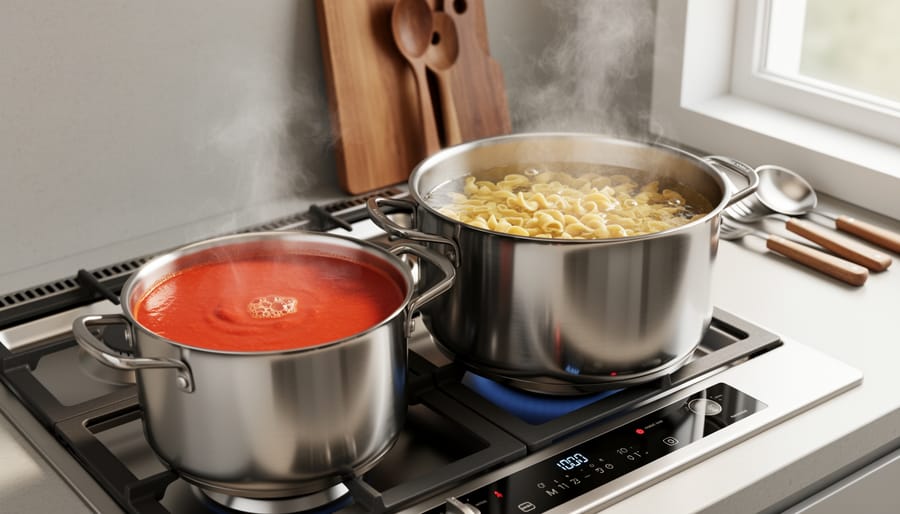


Choose your saucepan size based on how many people you regularly cook for and what dishes you make most often. A 3-quart saucepan handles everyday cooking for one to three people, perfect for heating soups, making sauces, cooking grains, and preparing side dishes. The 4-quart model accommodates families of four or more and excels at batch cooking, larger pasta portions, and recipes that need extra headroom to prevent boiling over.
Consider your stovetop and storage space before committing to either size. The 3-quart fits comfortably on smaller burners and tucks away easily in compact kitchens, while the 4-quart requires more real estate both during cooking and in your cabinet. If you already own a stockpot for big jobs, the 3-quart covers your daily needs without redundancy.
Think about your cooking style and ambitions. Home cooks who meal prep, make double batches to freeze, or frequently entertain guests will use every inch of a 4-quart saucepan. Those who cook fresh meals in smaller quantities or live alone typically find the 3-quart more practical and easier to handle. The weight difference matters too—a full 4-quart pan becomes notably heavier, especially when pouring or transferring contents.
The decision ultimately comes down to matching capacity with your lifestyle rather than simply choosing the larger option for versatility. Both sizes have distinct advantages, and understanding your cooking patterns helps you invest in the right tool that will earn its place in your kitchen for years to come.
Understanding Saucepan Capacity: What the Numbers Really Mean
When you’re standing in the kitchen aisle deciding between saucepans, those quart measurements can feel a bit abstract. Let’s break down what these numbers actually mean for your everyday cooking.
A quart is simply a unit of volume measuring liquid capacity. One quart equals four cups or 32 fluid ounces. So a 3-quart saucepan holds 12 cups of liquid, while a 4-quart holds 16 cups. But here’s the thing: you rarely fill a saucepan to the brim when cooking, just like you wouldn’t fill your fireplace right to the opening with logs.
In practical terms, a 3-quart saucepan comfortably handles about 2 to 2.5 quarts of working volume. That translates to making soup for two to three people, cooking a box of pasta, or preparing four servings of oatmeal. Think of it as your cozy, weeknight companion, perfect for warming up comfort foods after a long day.
A 4-quart saucepan gives you more breathing room, with a comfortable working capacity of 3 to 3.5 quarts. This means you can cook pasta for four to six people, prepare a larger batch of soup for the week, or make a full pot of chili for family gatherings. Quality stainless steel saucepans in this size become true workhorses in your kitchen.
To visualize the difference: a 3-quart holds about three standard soup cans worth of liquid, while a 4-quart holds four. That extra quart might not sound like much, but it’s roughly the difference between cooking for a couple versus cooking for a family, or making dinner versus meal-prepping for several days ahead.
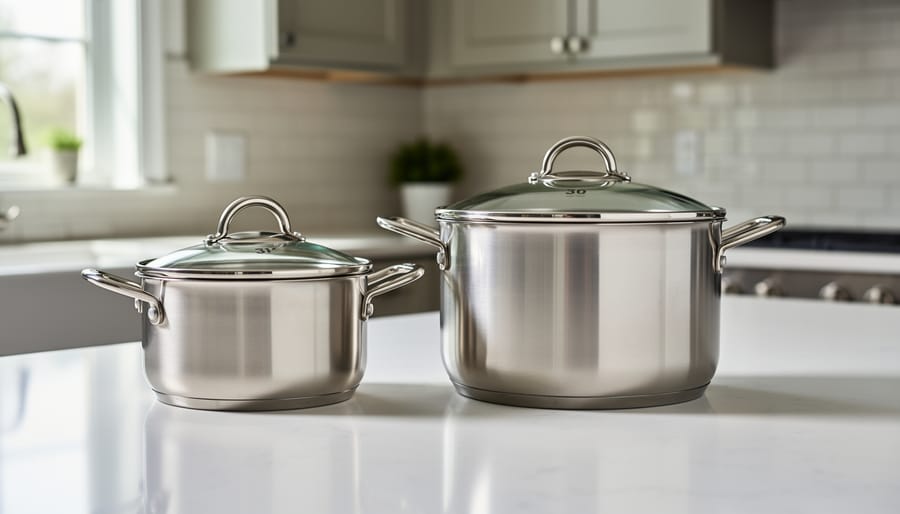
The 3-Quart Saucepan: Your Everyday Workhorse
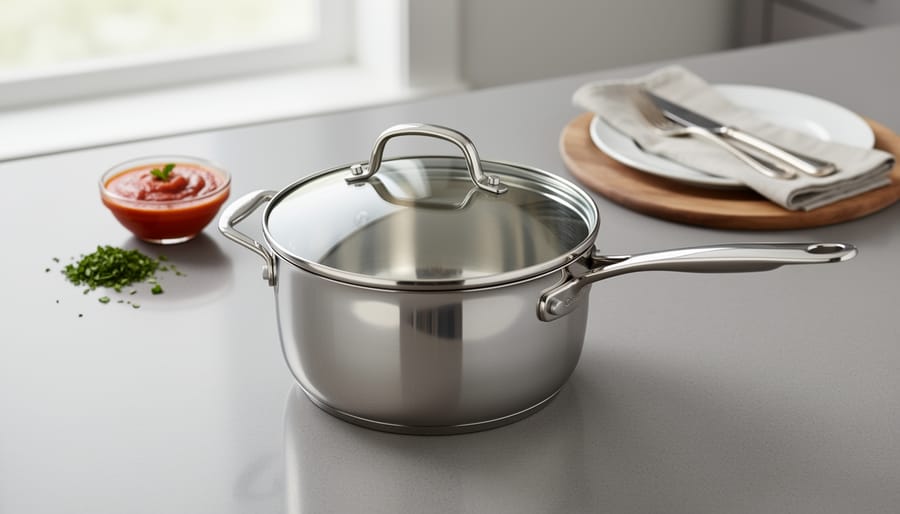
Perfect Scenarios for 3-Quart Cooking
The 3-quart saucepan is your reliable companion for everyday cooking tasks that don’t require feeding a crowd. Think of it as the perfect size for intimate, cozy meal preparation—much like how a smaller fireplace creates warmth in a personal reading nook rather than heating an entire great room.
This size truly excels when you’re cooking for two to three people. Morning oatmeal or cream of wheat becomes effortless, giving you just enough room to stir without the mixture climbing the sides of an oversized pot. For couples or small families, it’s the ideal vessel for preparing side dishes like steamed vegetables, rice, or quinoa without wasting stovetop space or energy.
Small-batch soups are where the 3-quart really shines. Whether you’re making a comforting tomato soup for lunch or a healing chicken broth when someone’s under the weather, this size provides adequate depth for flavors to develop without leaving you with excessive leftovers. It’s an efficient, eco-friendly approach to cooking—using only what you need reduces energy consumption and food waste.
The 3-quart also handles sauces beautifully. From marinara to béchamel, you’ll have enough room to whisk and simmer without spillage. Reheating leftovers becomes simple and quick, and the smaller size means faster heating times, which translates to lower energy use—a practical benefit for both your utility bills and the environment.
For those who value efficiency and intentional living, the 3-quart saucepan delivers exactly what you need without excess, making everyday cooking feel less like a chore and more like a mindful practice.
Storage and Handling Benefits
When it comes to everyday practicality, the 3-quart saucepan offers several compelling advantages that make kitchen life easier. Its lighter weight means less strain on your wrists when pouring or transferring food, which becomes especially noticeable if you deal with arthritis or simply cook frequently throughout the day.
Storage is another meaningful benefit. The smaller footprint fits more readily into crowded cabinets, stacks efficiently with other cookware, and doesn’t dominate your stovetop when you’re preparing multiple dishes. This compact design also translates to faster heating times, which saves energy and gets meals on the table quicker—a win for both your utility bills and the environment.
Cleaning becomes noticeably simpler with the 3-quart size. There’s less surface area to scrub, it fits more comfortably in standard sinks, and the reduced weight makes handling during cleanup much easier. Whether you’re considering induction cookware compatibility or traditional gas ranges, the 3-quart option heats more uniformly across its smaller surface, reducing hot spots and potential burning that require extra scrubbing effort later.
Where 3-Quart Falls Short
Let’s be honest about where the 3-quart comes up short. If you’re feeding a family of four or more, you’ll quickly feel the squeeze. That pot of pasta you’re planning? You’ll be cooking it in shifts or dealing with an overflow situation. The same goes for batch cooking soups or stews for the week ahead. When you’re preparing meals for gatherings or trying to make extra portions for freezing, the 3-quart simply doesn’t offer enough real estate. You’ll find yourself constantly adjusting recipes downward or making multiple batches, which defeats the purpose of efficient cooking. Think of it like trying to heat a large room with a small fireplace—technically possible, but not the ideal match for the job. For households that regularly cook larger quantities or enjoy hosting, the 3-quart saucepan becomes a limitation rather than a helpful kitchen companion.
The 4-Quart Saucepan: When You Need Extra Capacity
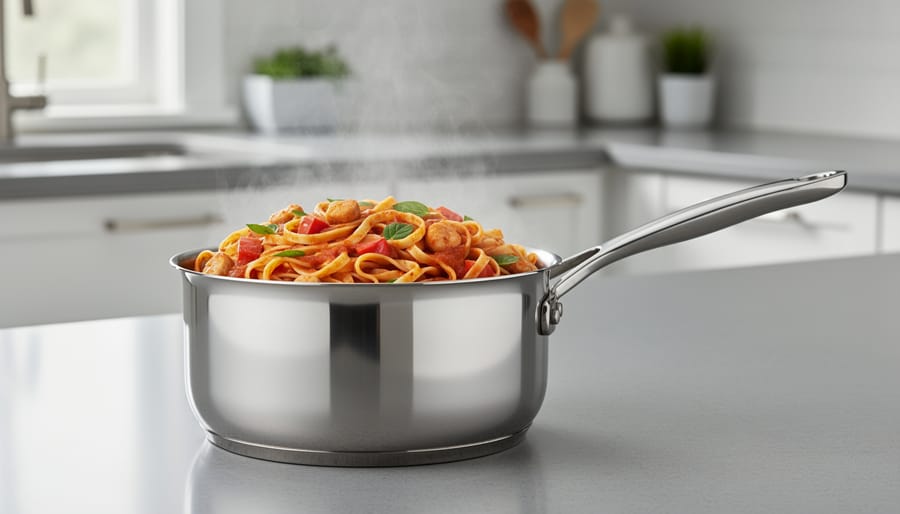
Where the Extra Quart Makes All the Difference
Think of that extra quart like adding another log to the fire—it transforms what you can accomplish. When you’re cooking for family dinners or hosting friends, a 4-quart saucepan becomes your reliable workhorse. Picture this: you’re preparing a hearty pasta dish for six people. In a 3-quart pan, you’re constantly watching to prevent boil-overs, stirring carefully to avoid splashing. With a 4-quart, you’ve got breathing room. The water boils without drama, and there’s space to stir comfortably.
This larger capacity truly shines during batch cooking sessions. Making a double batch of tomato sauce for freezing? Cooking a big pot of soup that’ll warm your family through the week? The 4-quart handles these tasks with ease. You can brown more meat at once, add all your vegetables without overcrowding, and simmer everything together without worrying about spillage.
The difference becomes especially noticeable when you’re preparing side dishes for gatherings. A full pound of pasta fits comfortably, corn on the cob for everyone cooks at once, and you can steam generous portions of vegetables without stacking them awkwardly. Many oven-safe saucepans in the 4-quart size offer even more versatility for braising and finishing dishes.
For households that regularly cook for four or more people, or for anyone who enjoys meal prepping, that extra quart isn’t just convenient—it’s essential. It’s the difference between cooking with confidence and cooking with caution.
Versatility for Growing Households
Think of your household like a hearth that naturally draws people in—the more it grows and evolves, the more capacity you need to keep everyone comfortable. A 4-quart saucepan becomes an invaluable companion when your family expands or when you find yourself hosting more frequently.
Life has a way of changing our cooking needs. Maybe you’re welcoming a new baby, your teenagers have suddenly developed bottomless appetites, or you’ve discovered the joy of having friends over for casual Sunday suppers. The extra quart of capacity means you’re prepared for these beautiful shifts without needing to cook in multiple batches or upgrade your cookware later.
For meal prep enthusiasts, that additional volume translates to real efficiency. You can prepare a week’s worth of oatmeal, batch-cook grains, or simmer larger quantities of soup that’ll warm your family through busy weeknights. It’s particularly useful when you’re cooking dried beans or making stock—those recipes that naturally expand as they cook.
The 4-quart also shines during holiday gatherings or potluck preparations. Whether you’re making cranberry sauce for Thanksgiving or preparing a generous side dish for the neighborhood block party, you’ll appreciate not having to worry about overflow. It’s about creating abundance without stress, much like ensuring your home has the warmth and capacity to welcome whoever walks through your door.
The Trade-Offs to Consider
Let’s be honest—while a 4-quart saucepan offers wonderful versatility, it’s not without trade-offs. The larger size means more cabinet space, which matters in cozy kitchens where every inch counts. You’ll also notice the weight difference, especially when full. A 4-quart pan holding soup or stock requires a firmer grip and more effort to move around your stovetop. Heating times are longer too, since you’re warming more metal and potentially more liquid, which means waiting a bit longer for that pot of water to boil. Perhaps most importantly, using a 4-quart pan for small tasks—like warming a single cup of sauce or melting butter—feels like overkill. It’s similar to lighting a full fireplace when you only need a candle’s warmth. The pan heats unevenly with minimal contents, wastes energy, and makes cleanup more tedious than necessary. If you primarily cook for one or two people, that extra quart capacity might sit unused while taking up valuable storage real estate. Consider your actual cooking patterns before committing to the larger size.
Making the Right Choice for Your Cooking Style
Choosing between a 3-quart and 4-quart saucepan comes down to understanding your unique cooking rhythm and household dynamics. Let’s walk through some practical questions that will guide you toward the right decision.
Start by considering your household size. If you’re cooking for one or two people most of the time, a 3-quart saucepan handles everyday tasks beautifully. You’ll make just the right amount of soup for dinner, cook pasta for two, and reheat leftovers without wasting energy heating a larger pan. However, if you regularly cook for three or more people, or if you enjoy meal prepping for the week ahead, that extra quart of capacity becomes genuinely valuable. The 4-quart size gives you breathing room when recipes naturally expand or when unexpected dinner guests arrive.
Think about your kitchen storage situation. Smaller kitchens benefit from the space-saving profile of a 3-quart pan, especially if cabinet space feels precious. It stores more easily, stacks better with other cookware, and feels less cumbersome when you’re washing dishes. On the flip side, if you have adequate storage and prefer having versatile tools that handle various situations, the 4-quart option offers more flexibility without being dramatically larger.
Consider your cooking frequency and style too. Busy weeknight cooks who prepare simple, straightforward meals often find the 3-quart perfectly adequate. Weekend chefs who experiment with recipes, prepare larger batches, or regularly make stocks and sauces appreciate the extra capacity. Much like choosing the right heating solution for your home creates the perfect ambiance for gathering, selecting cookware that matches your lifestyle makes time in the kitchen more enjoyable.
Finally, think about your budget and long-term needs. If you’re building your cookware collection gradually, a 4-quart saucepan offers more versatility as your go-to medium saucepan. However, if you already own larger pots for big-batch cooking, the 3-quart fills a specific niche without overlap. Trust your instincts about how you actually cook, not how you think you should cook.
The Smart Compromise: Building Your Cookware Collection Wisely
When building a cookware collection that truly serves your household, think of it like choosing the right hearth for your home—you want pieces that’ll warm your kitchen for years to come, not clutter it temporarily.
For most home cooks, the 3-quart saucepan makes the smartest first purchase. It handles everyday tasks beautifully, from morning oatmeal to weeknight pasta sauces. If you’re cooking for one or two people regularly, this size covers about 80% of your saucepan needs without taking up precious cabinet space. You’ll reach for it constantly, making it a worthwhile investment in quality cookware brands rather than settling for budget options that need replacing within a year or two.
Consider adding a 4-quart when you regularly host gatherings, batch-cook for the week ahead, or have a growing family. This isn’t about having every possible size—it’s about intentionally expanding your collection as your cooking life evolves. Think of it as adding a second hearth to your home when the first no longer meets all your needs.
The sustainable approach means investing in fewer, better pieces rather than accumulating a kitchen full of mediocre cookware. Look for materials that last generations, like stainless steel or ceramic cookware options that don’t leach chemicals and can handle the intensity of gas flames. A single well-made saucepan used for decades has far less environmental impact than replacing cheap ones every few years.
If budget allows for both sizes, you’ve created genuine versatility without redundancy. Use the 3-quart for everyday cooking and the 4-quart for larger batches, keeping both pans working rather than collecting dust. This approach mirrors the eco-friendly mindset of choosing quality over quantity—every piece earns its place through regular use, making your kitchen as efficient and purposeful as a well-designed living space centered around a crackling fire.
Just as choosing the right fireplace transforms your living space into a warm gathering place, selecting the perfect saucepan size makes your kitchen a more inviting place to create. There’s no universal right answer between a 3-quart and 4-quart saucepan because your home and household are wonderfully unique. The key is understanding how you cook, who you’re feeding, and what brings you joy in the kitchen.
Think of this decision as investing in your daily comfort. When you reach for a pot that fits your needs perfectly, cooking becomes less of a chore and more of a pleasure. Whether you’re simmering a small batch of soup on a quiet evening or preparing sides for a family gathering, the right tool makes all the difference. Consider your storage space, your typical recipes, and your household size. Some homes thrive with both sizes, while others find their sweet spot with just one.
Take your time with this choice. A quality saucepan is like a good hearth—it becomes the heart of countless warm moments and nourishing meals for years to come.